Daily Structure For Divorce Recovery
Divorce changes more than your relationship status. It changes the shape of an ordinary Tuesday. It changes what happens when you wake up, who you speak to before work, what time dinner happens, how the house sounds at night, and what you do when no one else is expecting anything from you.
Many men prepare for the legal and financial impact of divorce but underestimate the loss of routine. The paperwork eventually slows down. The calls with attorneys become less frequent. Yet the empty morning, the quiet evening, and the unplanned weekend remain. That is often when the emotional weight becomes most noticeable.
If you have more free time than before but somehow feel more exhausted, you are not imagining it. A marriage—even an unhappy one—contains thousands of small automatic decisions. After divorce, those decisions return to you all at once. What time should you eat? What should you do tonight? Who should you call? Should you clean, rest, work, exercise, or distract yourself? That constant decision-making creates mental friction.
The answer is not to design a perfect new life. During the first 90 days after divorce, the more useful goal is to build a day that can hold you steady even when your emotions change.
Why Divorce Disrupts More Than Your Schedule
Routines are not merely habits. They are cues that tell your nervous system what comes next. A familiar morning signals that the day has started. A regular evening meal signals that work is over. A bedtime pattern signals that it is safe to slow down.
After divorce, many of those signals disappear. The result can feel like disorientation rather than simple sadness. You may stay up later because no one else is going to bed. You may skip meals because there is no shared dinner. You may work too long because home feels too quiet. You may spend Saturday waiting for the day to become meaningful instead of deciding what it will contain.
This is why rebuilding a daily routine after divorce is not a minor productivity project. It is part of emotional recovery. A stable routine lowers the number of decisions you must make while your mind is already carrying grief, uncertainty, anger, and practical responsibility.
Do Not Reinvent Yourself Before You Stabilize Yourself
Some men respond to divorce by attempting a total transformation. They change their appearance, join multiple groups, begin an extreme diet, make expensive purchases, start dating, train twice a day, and consider moving—all in the same month.
Big changes can feel powerful because they create momentum. They can also become another form of emotional escape. When the initial surge fades, the man is left with too many commitments and no reliable foundation.
The First 90 Days Are About Stabilization
Think of your routine as the frame of a house. Before you decorate a new life, make sure the basic structure can carry your weight: sleep, food, movement, work, parenting, finances, and a small amount of meaningful contact with other people.
Start With Your Morning Before You Fix The Rest Of Your Life
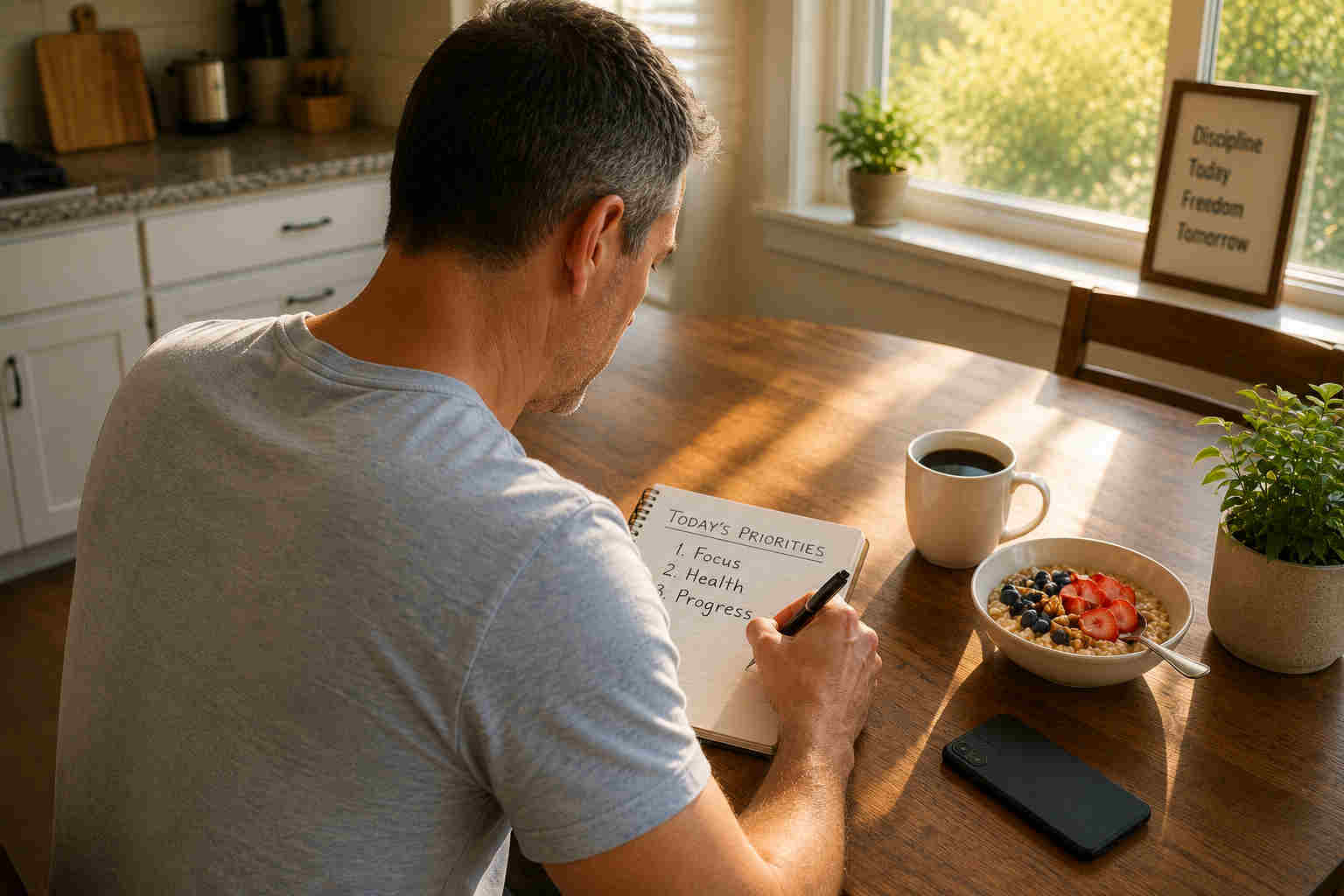
The first hour of the day is disproportionately important after divorce because it is often when the mind begins replaying the past. Reaching for your phone before your feet reach the floor gives old messages, social media, news, and your ex-wife's life the first claim on your attention.
A useful morning routine does not need to be impressive. It needs to be repeatable. Wake at approximately the same time. Make the bed. Drink water. Open the blinds. Eat something with protein. Write down three priorities. The entire routine can take twenty minutes.
The three priorities should be concrete, not emotional. “Feel better” is not a task. “Walk for thirty minutes,” “call the insurance company,” and “prepare dinner before 7:00” are tasks. Completing them provides evidence that your life is moving, even on a difficult day.
Do not judge the routine by whether it makes you happy immediately. Judge it by whether it reduces chaos. The emotional benefit often arrives after the behavior has been repeated long enough to feel normal.
Reclaim Your Evenings Before Loneliness Claims Them

Work can hide loneliness. Evening reveals it. That is why many unhealthy post-divorce habits begin after dinner: drinking nightly, scrolling for hours, checking an ex-wife's accounts, replaying old conversations, falling asleep with the television on, or staying up until exhaustion finally overrides thought.
Do not leave the entire evening undefined. Create a closing sequence for the day. It might include preparing dinner, cleaning the kitchen, taking a short walk, reading, showering, laying out tomorrow's clothes, and putting the phone away thirty minutes before bed.
The point is not to turn your home into a military schedule. The point is to prevent the most emotionally vulnerable hours from becoming a nightly improvisation. A familiar sequence quietly communicates that the day is complete and that nothing else must be solved tonight.
Plan The Week Before Empty Time Becomes Heavy
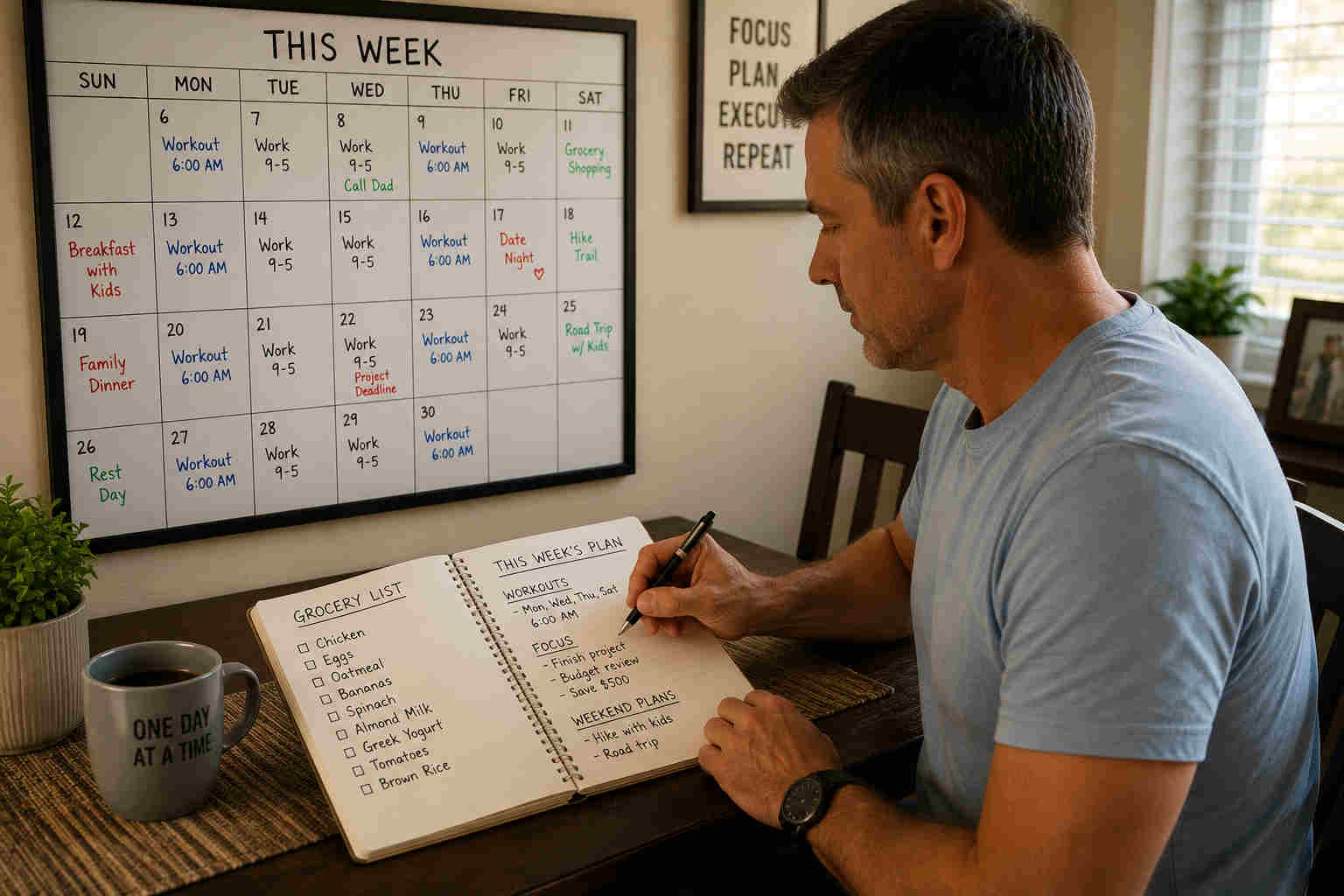
Unplanned weekends are especially difficult during the first 90 days after divorce. Friday evening may feel like relief, but by Saturday afternoon the silence can become oppressive. Hours pass without purpose, and the mind naturally fills the empty space with memory.
Every Thursday or Friday, place at least one anchor in each part of the weekend: one practical task, one physical activity, one social contact, and one restorative activity. Grocery shopping, a trail walk, lunch with a friend, and two hours reading on the porch are enough. You do not need a packed calendar. You need a reason to get out of bed and a few points of contact with the world.
Schedule household responsibilities too. Laundry and cleaning become more manageable when they occur at a regular time instead of waiting until the house becomes another source of stress.
Exercise For Mental Recovery, Not Revenge

Exercise after divorce is often framed as a revenge transformation: get in shape, look younger, and make someone regret losing you. That motivation may create a dramatic start, but it usually does not support a stable life.
A better reason to exercise is that movement changes the quality of the next few hours. Walking reduces agitation. Strength training restores a sense of physical competence. Cycling, swimming, or hiking creates distance from repetitive thoughts. Improved sleep and energy follow when exercise becomes regular rather than extreme.
Choose a schedule you can maintain on an ordinary week. Three strength sessions and several walks may be more valuable than seven punishing workouts followed by two weeks of quitting. Your routine should make you more dependable, not more exhausted.
Stop Living Inside Your Phone

Your phone can keep the marriage psychologically active long after it has ended. Old photographs, archived messages, social media, shared accounts, and mutual contacts provide endless ways to reopen the emotional wound.
Create physical boundaries, not just promises. Charge the phone outside the bedroom. Keep it face down during breakfast. Leave it behind during short walks. Remove shortcuts to accounts you repeatedly check. Mute unnecessary notifications. These small barriers create a pause between impulse and action.
You are not trying to become unreachable. You are trying to stop allowing a device to decide what your mind will think about next.
Eat Like Someone Who Expects To Have A Future

Cooking for one can initially feel like proof that the marriage is over. That is why some men stop preparing real meals. They eat over the sink, order takeout repeatedly, or skip dinner and snack late at night.
Reframe the act. Cooking is one of the clearest ways to demonstrate that your health still matters even when no one else is watching. Keep the system simple: choose two proteins, two vegetables, a breakfast option, and a few easy lunches each week. Prepare enough for leftovers but not so much that every meal feels identical.
A consistent dinner time also gives the evening a beginning. Without it, work, television, alcohol, and scrolling can blend together until bedtime.
Build A Routine Around Your Children Without Performing Happiness

If you have children, your new routine must account for two realities: the days they are with you and the days they are not. Both can be emotionally difficult in different ways.
On parenting days, create small traditions that belong to your home. Saturday pancakes, Wednesday board games, a regular evening walk, or choosing music while cooking can provide stability without forcing artificial cheerfulness.
On non-parenting days, resist the urge to leave the entire schedule empty. Those are the days most likely to trigger a sense of absence. Place exercise, errands, meaningful work, and one social contact into the calendar before the day arrives.
Your children do not need a father who pretends divorce had no effect. They need one whose home is calm, predictable, and emotionally safe.
Replace Empty Time With Purpose, Not Constant Distraction

There is a difference between filling time and using it. Endless entertainment fills time. Purpose develops you.
Choose one activity that creates visible progress: photography, woodworking, cooking, a certification, language study, volunteering, or learning a practical skill. The activity should produce something you can point to—a finished project, an improved ability, a new relationship, or a measurable result.
Purpose matters because divorce can reduce identity to what was lost. A skill-based routine creates a competing story: you are also the man learning, building, teaching, helping, or improving.
Expect Emotional Setbacks Without Abandoning The Routine
A good routine will not prevent every difficult day. A song, legal document, empty room, anniversary, or unexpected message may still knock you sideways. Recovery is not a straight line, and a painful day does not mean the structure is failing.
On those days, shrink the routine rather than discarding it. Take a ten-minute walk instead of a long workout. Eat a simple healthy meal instead of cooking something complicated. Write one priority instead of three. Go to bed on time even if the rest of the day felt unproductive.
The ability to return is more important than the ability to perform perfectly. Your routine should be durable enough to survive sadness.
Track Evidence, Not Mood
Asking “Do I feel better yet?” every day creates frustration because emotion changes from hour to hour. Instead, track behaviors that can be measured.
A Simple Daily Scorecard
- Did I wake up within my planned time range?
- Did I eat at least two proper meals?
- Did I move my body for twenty minutes or more?
- Did I complete the most important practical task?
- Did I avoid checking my ex-wife's social media?
- Did I have one real conversation with another person?
- Did I begin winding down at a reasonable time?
Confidence is built from evidence. Every completed action tells you that you can still direct your life. Over several weeks, those small pieces of evidence become more persuasive than the emotional story that everything has fallen apart.
A 30-Day Routine Reset
For the next thirty days, choose a small number of non-negotiable behaviors. Keep them boring enough to repeat and important enough to matter.
Morning
- Wake within the same thirty-minute window.
- Make the bed and drink water.
- Write three priorities before checking social media.
- Eat a simple breakfast with protein.
Daytime
- Complete the hardest necessary task before the day becomes reactive.
- Take at least one short walk.
- Handle one piece of divorce-related administration without letting it consume the entire day.
Evening
- Eat dinner at a consistent time.
- Prepare one thing for tomorrow.
- Place the phone away from the bed.
- Begin a quiet activity before sleep.
Thirty days will not erase grief. It will prove that chaos does not have to control every part of the day.
Common Routine Mistakes After Divorce
Trying to stay busy every waking minute. Activity can become avoidance. Leave some quiet space, but make it intentional rather than endless.
Waiting to feel motivated. Motivation is unreliable during emotional stress. Use time and place as cues: walk at 6:30, cook in the kitchen, read in the chair.
Building a routine around your ex-wife's behavior. Do not let messages, social media updates, or speculation determine whether you exercise, eat, sleep, or complete your work.
Using alcohol as the evening transition. A drink can quickly become the only signal that the day is over. Build a closing routine that works without it.
Believing one bad day resets the clock. It does not. Resume at the next decision.

Your Routine Will Eventually Become Your New Life
At first, these habits may feel artificial. You are making the bed because you decided to, not because life naturally feels orderly. You are walking because it is on the schedule, not because you woke up inspired. You are cooking because your future health matters, even if the meal still feels quiet.
Then something changes. The morning no longer feels like an empty space. The evening no longer automatically pulls you backward. The weekend contains plans. Your home begins to feel like yours. The actions that once felt like recovery become ordinary life.
You do not rebuild after divorce through one dramatic breakthrough. You rebuild through hundreds of small decisions made when no one is applauding. One breakfast. One walk. One completed task. One phone left on the counter. One bedtime kept. One new skill practiced.
The first 90 days are not about becoming a completely different man. They are about becoming dependable to yourself again. Once that happens, the rest of your life has something solid to stand on.