
Dating Readiness for Men
When the Mirror Starts Feeling Like a Judgment
There is a particular kind of loneliness that arrives when a long marriage ends: the feeling that you have become invisible. You may be managing work, bills, and family responsibilities perfectly well while quietly wondering whether anyone could look at you with desire again.
For many divorced men, the question is not simply “How do I look?” It is “Am I still someone worth noticing?” Those are very different questions, and buying a new shirt cannot answer both.
This guide is about rebuilding confidence after divorce for men without pretending that a haircut, a gym membership, or a dating app can erase years of rejection. We will address your appearance, but also the social habits, interests, and assumptions that influence how you carry yourself. The goal is not to become a different man. It is to stop treating the end of your marriage as the end of your attractiveness.
Why Your Ex-Wife’s Opinion Still Feels Like a Verdict
There is a strange moment after divorce when you catch yourself looking in the mirror and wondering whether your ex-wife was right about you. Maybe she criticized your weight, your clothes, your age, or the way you carried yourself. Maybe she never said anything directly, but years of emotional distance made you feel unwanted. Either way, her reaction can become the imaginary audience for every decision you make about your appearance.
A marriage is an unusually powerful feedback system. One person's affection, indifference, or criticism can become the primary measure of how desirable you feel. When that relationship ends, you may continue using the same measuring instrument even though the relationship itself is over.
Here is the distinction worth practicing: your former spouse's attraction to you was a relationship-specific experience, not a universal assessment of your value. People lose interest for complicated reasons. A failed marriage cannot tell you how every future person will see you.
When you notice yourself thinking, “She didn't want me, so why would anyone else?” replace the conclusion with a more accurate sentence: “That relationship ended, and I don't yet know what my next connection will look like.” It is less dramatic, but it leaves room for reality.

Stop Comparing Yourself to Men Who Never Went Through Your Marriage
You may walk into a restaurant and instantly notice the younger man with a full head of hair, the confident man wearing an expensive jacket, or the couple who seem effortlessly attracted to one another. Before you have ordered a drink, you have quietly ranked yourself below three strangers.
This habit is especially corrosive after divorce because you are comparing your private history with someone else's public appearance. You know every disappointment, insecurity, and awkward moment in your own life. You know almost nothing about the man across the room.
Try a different social exercise. When you enter a gathering, deliberately notice what people contribute rather than how they rank. Who makes others comfortable? Who listens carefully? Who tells a good story without dominating the table? Who appears genuinely interested in the people around him?
These are forms of attractiveness that do not show up in a mirror. You can develop them without becoming someone else. The goal is not to win an imaginary contest with every man in the room. It is to become someone whose company people enjoy.

Conduct an Appearance Audit Without Attacking Yourself
Some men respond to divorce by avoiding mirrors. Others become obsessive, inspecting every wrinkle, extra pound, or thinning patch of hair. Neither approach gives you useful information. What you need is an appearance audit: a practical review of what is working and what could be improved.
Start with fit. Try on the clothes you wear most often. Do your shirts pull at the middle or hang too loosely at the shoulders? Are your pants the correct length? Does your favorite jacket make you stand taller, or does it belong to a version of your life that no longer fits?
Next, consider color and texture. A shirt that complements your complexion can make more difference than a fashionable brand name. A clean, properly fitted jacket can create structure without making you look as though you are trying to dress twenty years younger.
Take two or three photographs in natural light, wearing different outfits. Evaluate the clothing, not your worth as a person. Ask: “What small adjustment would make this look more intentional?” A tailor, a new pair of shoes, or one versatile jacket may do more than an expensive shopping spree.
The point of the audit is to identify choices you control. It is not to collect evidence against yourself.

Fix the Small Things You’ve Been Ignoring
After a difficult separation, personal upkeep can slide almost invisibly. You postpone the haircut, keep wearing scratched glasses, ignore the worn-out shoes, and tell yourself that none of it matters. Individually, these details seem minor. Together, they can reinforce the feeling that you have stopped paying attention to your own life.
Choose three manageable improvements this month. Book a haircut that suits your current hair rather than trying to recreate an old photograph. Trim or shape facial hair deliberately. Replace a tired everyday shirt. Schedule the dental or eye appointment you have been putting off.
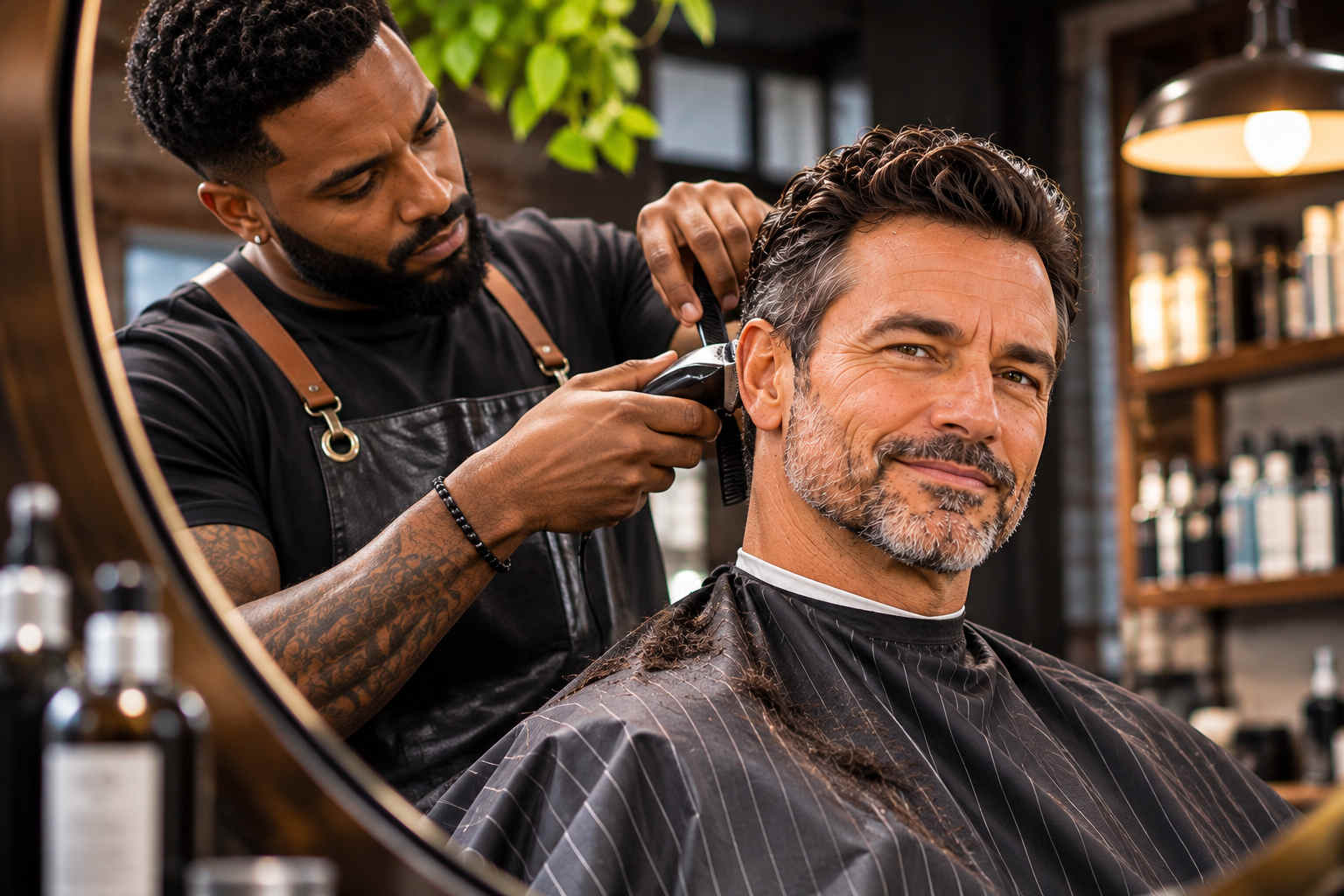
A good barber can be more useful than an entire shelf of grooming products. Ask what cut works with your hairline and face shape, and how to maintain it without a complicated routine. You are not looking for a disguise. You are looking for a polished version of yourself.
The deeper benefit is psychological. Each completed task tells you that your appearance deserves some attention again. Not because a date is coming, but because you are worth showing up for on an ordinary Tuesday.
Stop Waiting Until You Lose Weight to Enjoy Your Life
“I'll start dating when I lose twenty pounds.” “I'll buy better clothes when I get back in shape.” “I'll go to that party once I look like I used to.” These promises sound disciplined, but they can become a sophisticated way to postpone living.
You can work toward better health and still participate in your life today. Those two things are not in conflict. Movement is especially valuable when it reconnects you with enjoyment rather than punishment. Try racquetball, swimming, cycling, a beginner's strength class, or a recreational league where the activity itself is interesting.
Choose something you can repeat, not something designed to prove your toughness on day one. If you have been inactive, build gradually and check with a healthcare professional when appropriate. Consistency matters more than dramatic intensity.
Buy clothes that fit the body you have now. Accept invitations before you reach an arbitrary number on the scale. Let improving fitness be part of a fuller life, not the entrance requirement for one.
Attraction is not a reward reserved for people who have finished a physical transformation. Confidence often grows when you discover that your body can still participate in challenging, enjoyable experiences.

Rebuild the Personality That Marriage Put on Hold
One of the most overlooked consequences of a long marriage is the gradual disappearance of individual interests. You may have stopped playing music because the house was busy. You abandoned a hobby because it seemed impractical. You quit telling certain stories because your spouse had heard them a hundred times.
After divorce, men sometimes concentrate so heavily on looking attractive that they forget to become interesting to themselves again. But curiosity, enthusiasm, and a sense of personal direction are part of what make a person compelling.
Think of an interest you once pursued without needing anyone else's approval. It might be playing the bagpipes, restoring furniture, photography, cooking unfamiliar dishes, learning a language, or studying local history. Give it a protected place in your week.
You do not have to become exceptional at it. In fact, being a beginner can be refreshing. It gives you something to discuss other than your divorce and reminds you that your identity is still expanding.
A man who is genuinely absorbed in something he loves carries a different energy into a conversation. He has stories, opinions, mistakes, and discoveries that belong to him. That is not a dating technique. It is the result of having a life that interests you.

Understand Why Compliments Feel Unbelievable
A woman says, “That's a great shirt on you,” and instead of enjoying the moment you immediately search for an explanation. She is being polite. She must say that to everyone. Maybe she wants something. Or perhaps you deflect with a joke about your age or your stomach.
When you have felt rejected for a long time, a compliment can clash with your established self-image. Your first reaction may be disbelief, not pleasure. You do not need to force yourself to believe every compliment completely. You only need to stop arguing with the person who offered it.
Practice a simple response: make eye contact, smile naturally, and say, “Thank you. That's kind of you to say.” Then let the conversation continue. Do not demand reassurance. Do not turn the compliment into a discussion of your flaws.
Also learn to receive attention without turning it into a romantic prediction. A friendly remark may simply be friendly. You can appreciate it without deciding that someone is interested in dating you.
Over time, these small interactions help loosen the old story that nobody could find you appealing. You begin allowing other people to form their own impressions rather than supplying your negative verdict in advance.

Practice Being Social Before Trying to Be Romantic
A first date can feel like a final examination when you have not flirted, met new people, or made casual conversation in years. Every pause becomes evidence that you are awkward. Every uncertain reaction feels like rejection. That is an enormous amount of pressure to place on one evening.
Build social confidence in lower-stakes environments first. Have lunch with friends. Attend a neighborhood event. Join a class. Accept an invitation where you know only one person. Practice starting conversations that do not need to lead anywhere.
Ask specific questions rather than relying on rehearsed lines. “How did you get interested in that?” is often more inviting than “So, what do you do?” Listen to the answer instead of planning your next impressive statement. Share your own experience without making the conversation a performance.
Notice how you feel afterward. Were you curious? Did you contribute? Did you make someone laugh? Did you relax for a few minutes? These are more useful measures than whether anyone appeared romantically interested.
Dating readiness is partly the ability to enjoy human connection without needing every interaction to validate your attractiveness. When you can do that, a date becomes a chance to discover compatibility rather than a desperate test of whether you still measure up.

The Moment You Feel Attractive Again
The change may not arrive during a date. It might happen while you are getting ready for dinner, noticing that your jacket fits well and your posture feels natural. Or while you are walking past a storefront window and catching your reflection without immediately criticizing it.
That moment is easy to miss because it is usually quiet. You are not suddenly convinced that everyone will find you attractive. You are simply comfortable being seen. You are less preoccupied with what your ex-wife thought, less interested in comparing yourself with strangers, and more engaged with the evening ahead.
This is the kind of confidence worth building. It does not depend on compliments arriving on schedule. It survives a disappointing date. It allows you to improve your appearance without treating your body as an unfinished project. And it makes room for another person to like you without assigning them the job of repairing your self-worth.
You may still have insecure days. You may still dislike certain photographs. That does not erase your progress. Feeling attractive again is not the permanent absence of doubt; it is the growing ability to participate in life without letting doubt make all your decisions.

A 30-Day Confidence Reset
Week 1 — Notice: Write down the three most common negative assumptions you make about your attractiveness. Challenge each one as an interpretation rather than a fact.
Week 2 — Refresh: Choose one grooming appointment, one clothing improvement, and one health-supporting activity you genuinely enjoy.
Week 3 — Reconnect: Spend time on a personal interest and accept at least one low-pressure social invitation.
Week 4 — Participate: Dress for an occasion you would normally avoid, have a real conversation, and notice what feels different without scoring yourself on romantic results.
Remember This
You Do Not Have to Earn the Right to Be Seen
Take care of your appearance, develop your interests, and reenter the world as you are. Confidence grows when you stop waiting for someone else to certify that you are attractive.