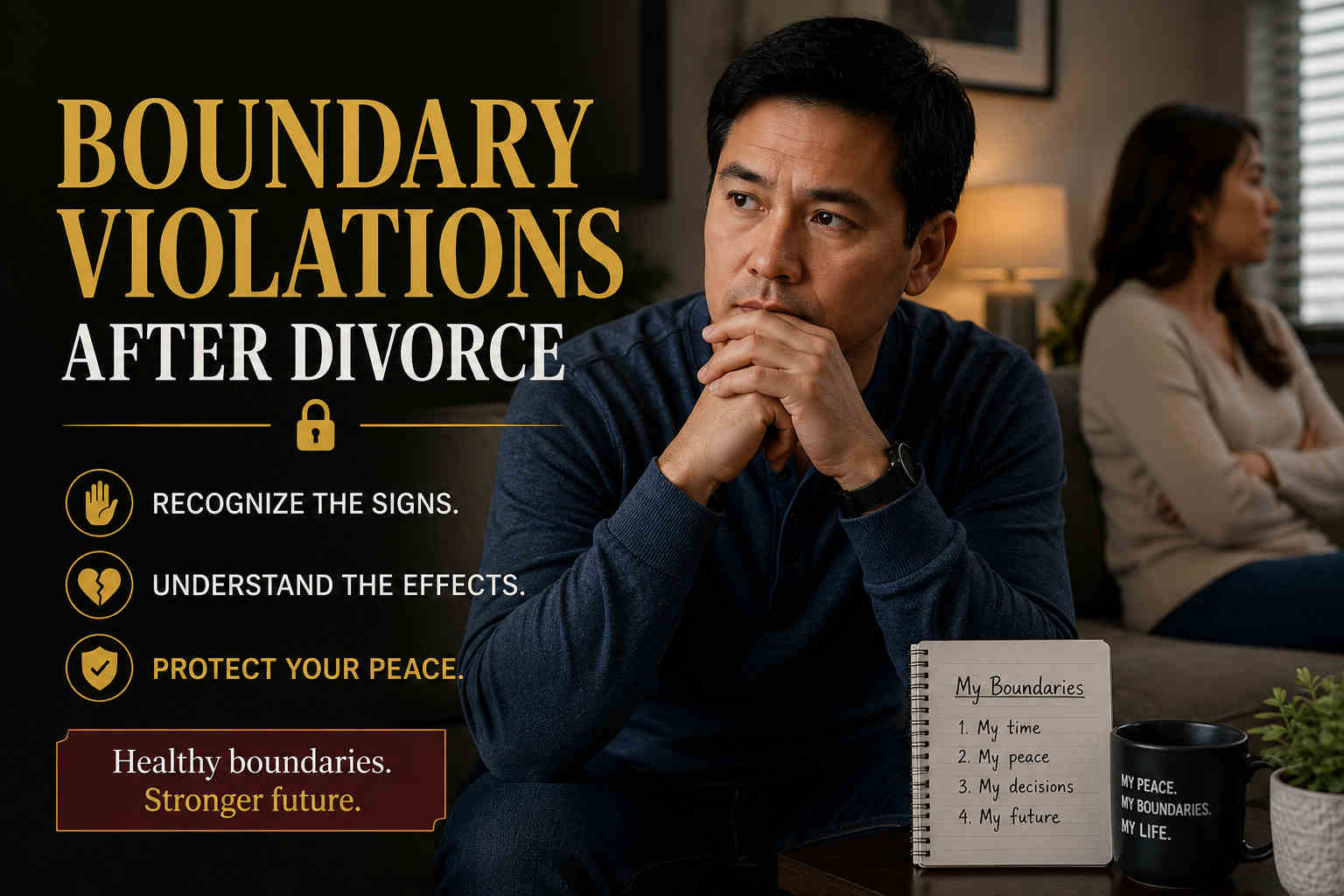
Boundary Violations After Divorce
Divorce changes more than your relationship status. It changes your responsibilities, routines, priorities, and expectations. One of the most important parts of rebuilding your life after divorce is learning how to establish and protect healthy boundaries.
Unfortunately, many divorced men encounter boundary violations while trying to move forward. These violations can come from an ex-spouse, family members, friends, children, coworkers, or new dating partners. Boundary violations after divorce happen when someone ignores, challenges, manipulates, or repeatedly crosses limits you have clearly established.
Sometimes these violations are obvious. Other times they are subtle and disguised as concern, loyalty, friendship, family responsibility, or love. Many men leave a difficult marriage hoping to experience greater peace and freedom. Instead, they discover that unhealthy people continue demanding access to their time, emotions, finances, and decision-making.
Learning to recognize and respond to boundary violations is essential if you want to build a healthier future. Boundaries are not about becoming cold or selfish. They are about protecting your emotional health, your money, your time, your parenting stability, and your ability to move forward after divorce.
What Are Boundary Violations After Divorce?
Boundary violations after divorce occur when another person refuses to respect the limits that separate your life, choices, emotions, and responsibilities from theirs. A boundary might involve when you answer your phone, how you communicate with an ex-spouse, what financial help you are willing to provide, what topics you will discuss, or what behavior you will no longer tolerate.
A boundary violation is not always a single dramatic event. Often, it is a repeated pattern. Someone keeps texting after you said you are unavailable. A dating partner pressures you to move faster than you want. A family member keeps criticizing your decisions. An ex-spouse turns every co-parenting conversation into a personal argument. Over time, these repeated violations create stress, resentment, and emotional exhaustion.
Why Boundaries Matter After Divorce
Divorce is often a season of rebuilding. You may be rebuilding confidence, financial stability, parenting routines, friendships, physical health, and personal identity. Without healthy boundaries after divorce, these rebuilding efforts become much harder.
Boundaries define where your responsibilities end and someone else's begin. They help protect your emotional health, mental focus, financial future, personal freedom, and self-respect. They also make relationships clearer. When boundaries are weak, people often assume they can keep taking more of your time, energy, attention, and resources.
Healthy boundaries are not walls designed to keep everyone out. They are guidelines that allow healthy relationships to function properly. Without them, resentment, manipulation, conflict, and emotional burnout often follow.
Common Boundary Violations After Divorce
Many people think boundary violations only occur in romantic relationships. In reality, they can show up in nearly every area of life after divorce.
Excessive Contact From An Ex-Spouse
One of the most common post divorce boundary issues involves excessive communication. Some ex-spouses continue behaving as though the marriage never ended. They may text constantly, call about non-emergencies, show up unannounced, demand immediate responses, or create unnecessary drama.
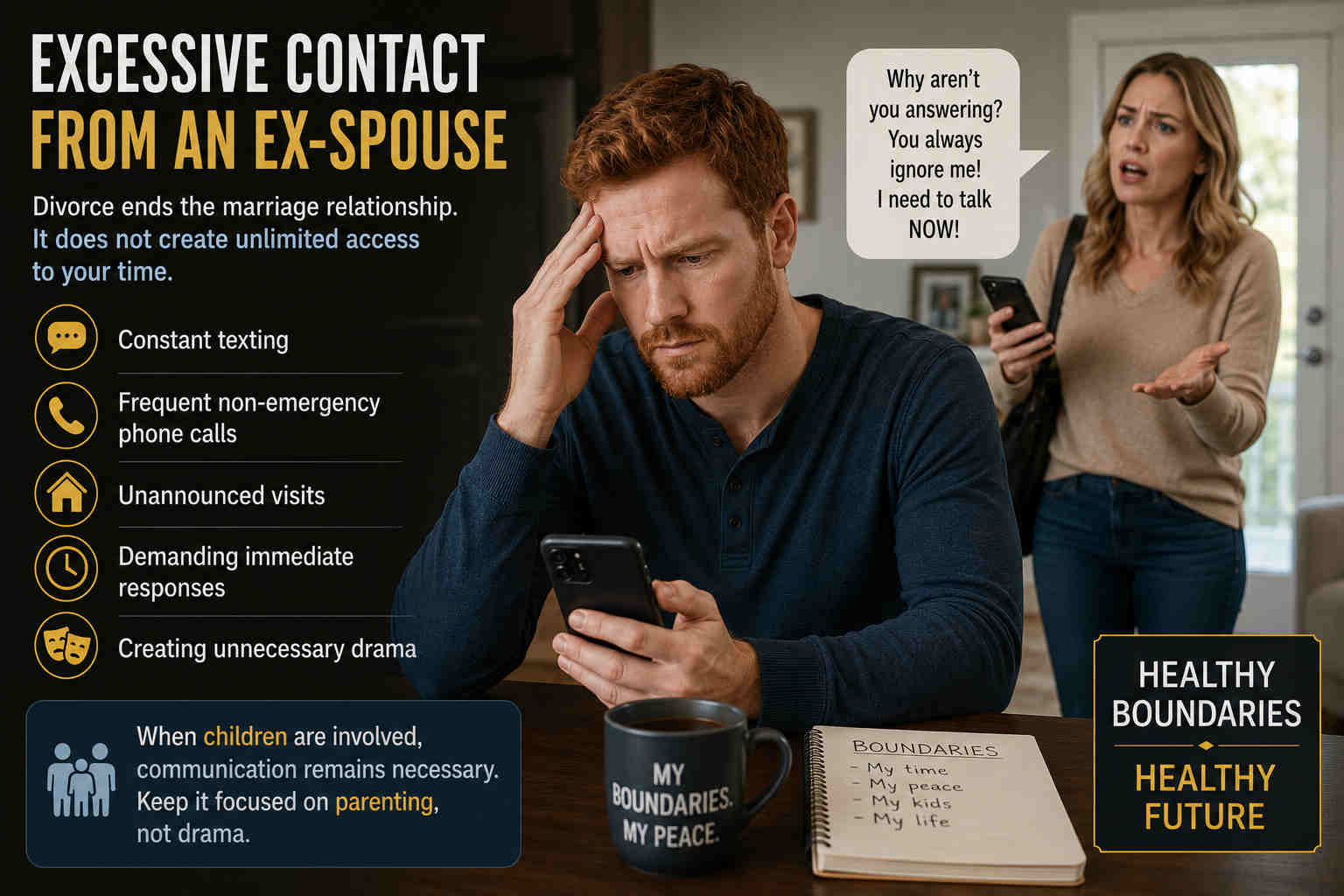
When children are involved, communication remains necessary. However, communication should focus on parenting rather than emotional dependence or control. A co-parent may need information about school, medical appointments, schedules, and emergencies. That is different from using the children as an excuse to keep emotional access to your life.
Family Members Who Refuse To Respect Your Decisions
Some family members struggle to accept changes after divorce. They may criticize your dating choices, pressure you to reconcile, question your parenting decisions, offer unwanted advice, or share private information with others. While family support can be valuable, control disguised as support can become exhausting.
Healthy family relationships respect your right to make decisions about your own life. They can disagree without trying to dominate. They can offer advice without demanding obedience.
Friends Who Ignore Your Boundaries
Divorce sometimes reveals which friendships are healthy. Some friends constantly demand your time, pressure you to date before you are ready, encourage reckless behavior, share personal information without permission, or minimize your concerns. True friends support recovery. They do not pressure you to live according to their preferences.
Dating Partners Who Push Boundaries
Many divorced men encounter boundary violations while dating. A new dating partner may pressure for commitment too quickly, demand passwords, text excessively, use jealousy as proof of love, try to isolate you from friends, or pressure you to abandon hobbies and parenting priorities.
One of the clearest relationship red flags after divorce is someone who becomes upset whenever you enforce reasonable limits. Healthy dating partners respect boundaries. Controlling partners challenge them.
Financial Boundary Violations
Money often becomes a major source of conflict after divorce. Financial boundary violations may include requests for unnecessary financial assistance, pressure to pay expenses outside agreements, attempts to control spending decisions, manipulation through guilt, or repeated borrowing without repayment.

Strong financial boundaries are particularly important after divorce because many people are rebuilding savings, paying legal expenses, supporting children, managing debt, and creating a new financial foundation. Protecting your resources is not selfish. It is part of protecting your future.
Why Boundary Violations Are So Common After Divorce
Many divorced men struggle with boundaries because they spent years compromising during marriage. Some became accustomed to avoiding conflict, keeping the peace, prioritizing others, and ignoring their own needs. After divorce, these habits often remain.
Unfortunately, unhealthy people quickly recognize individuals who struggle to enforce boundaries. Boundary violators often seek people who feel guilty saying no, fear rejection, avoid confrontation, want approval, or place everyone else first. The inability to enforce boundaries can attract controlling, manipulative, and emotionally unhealthy people.
Emotional Effects Of Boundary Violations
Boundary violations can have serious emotional consequences. Many people underestimate the impact because each individual violation may seem small. Over time, however, the effects accumulate.
Chronic Stress
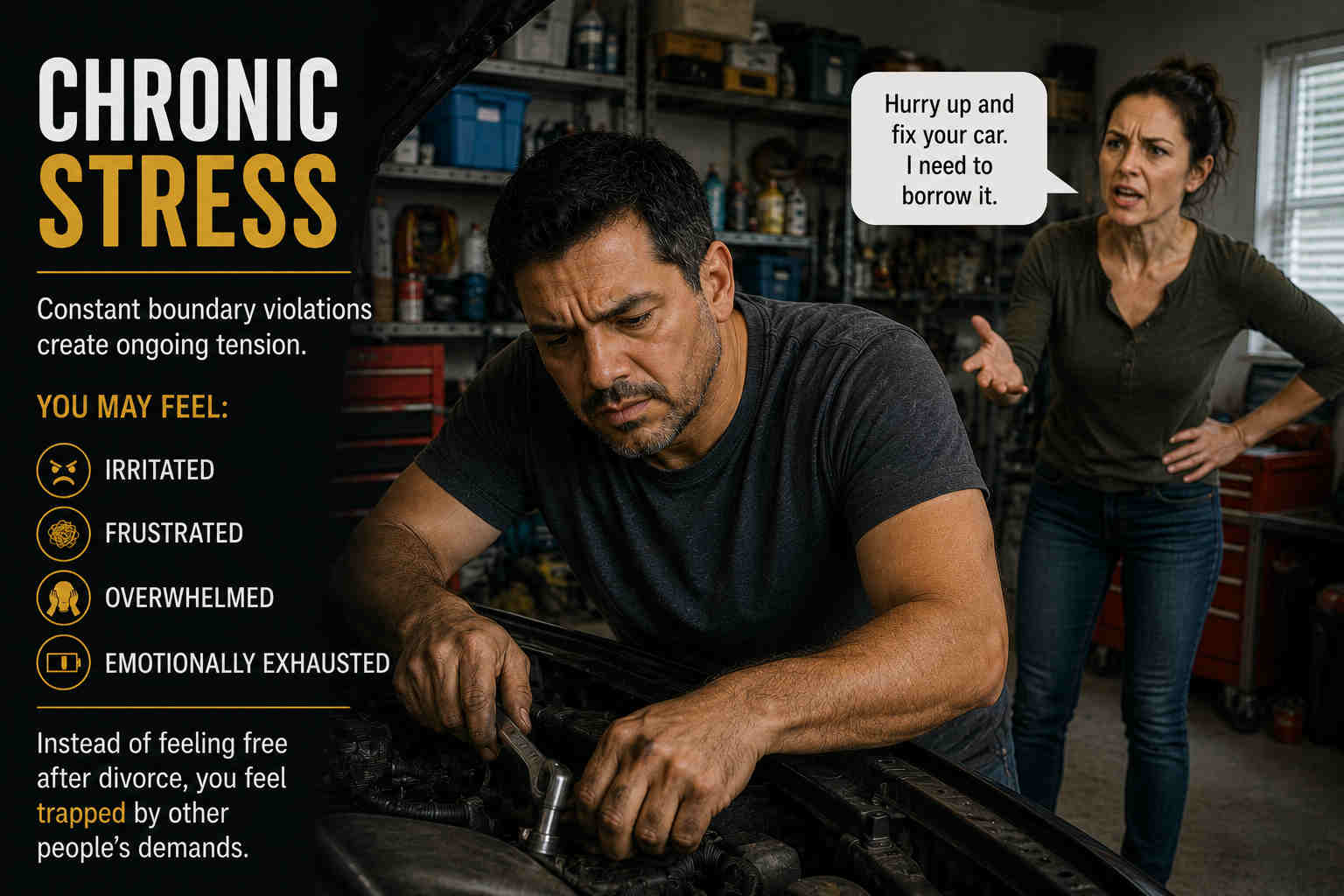
Constant boundary violations create ongoing tension. You may feel irritated, frustrated, overwhelmed, and emotionally exhausted. Instead of feeling free after divorce, you feel trapped by other people's demands.
Increased Anxiety
When people repeatedly ignore your boundaries, you may become hypervigilant. You begin wondering what will happen next, how they will react, or whether you are causing conflict. This ongoing stress can contribute to anxiety and emotional burnout.
Loss Of Confidence
Repeated boundary violations can gradually weaken self-confidence. You may start questioning your decisions, your judgment, and your priorities. When people continually challenge your boundaries, it becomes easier to doubt yourself.
Resentment
One of the most common effects is resentment. You may continue saying yes while secretly becoming angry. Eventually, frustration builds until it damages the relationship entirely. Healthy boundaries help prevent resentment before it develops.
How Boundary Violations Affect Future Relationships
Many men enter new relationships without addressing boundary issues. This creates problems. When boundaries are weak, controlling partners gain influence, emotional manipulation becomes easier, independence decreases, and self-respect suffers.
Healthy relationships require healthy boundaries. Without them, relationships often become unbalanced. One partner gives while the other takes. Over time, dissatisfaction grows.
Signs You May Need Stronger Boundaries
You may need stronger boundaries if you frequently feel guilty saying no, others regularly take advantage of you, you feel emotionally exhausted, or you constantly prioritize others over yourself. You may also need stronger boundaries if you avoid conflict at all costs, people become angry when you set limits, or you feel responsible for other people's emotions.
Recognizing these patterns is the first step toward change. You cannot protect your peace if you keep explaining away every person who violates it.
How To Set Healthy Boundaries After Divorce
Setting boundaries is a skill. Like any skill, it improves with practice. Start by being clear and direct. Vague boundaries rarely work. Instead of saying, “I'll try,” say, “No.” Instead of saying, “Maybe later,” say, “I am not available.”
Stop over-explaining. Many people feel compelled to justify their boundaries, but long explanations often create opportunities for debate. You do not need permission to have boundaries.
Expect pushback. Not everyone will welcome your new boundaries. People who benefited from weak boundaries often resist change. They may argue, guilt-trip, criticize, or manipulate. Their reaction does not mean your boundary is wrong. It often confirms that the boundary is necessary.
Boundaries And Co-Parenting
Co-parenting creates unique challenges. Parents must communicate, but communication should remain focused on parenting. Healthy co-parenting boundaries may include using parenting apps, limiting communication to child-related issues, avoiding personal arguments, respecting parenting time, and maintaining separate personal lives.
Strong co-parenting boundaries often reduce conflict and improve stability for children. They also prevent your ex-spouse from using parenting communication as a back door into your emotional life.
The Difference Between Healthy Boundaries And Control
Some people misunderstand boundaries. A boundary controls your behavior. Control attempts to manage someone else's behavior. A healthy boundary says, “I will not remain in conversations where I am being insulted.” A controlling statement says, “You are not allowed to disagree with me.”
Healthy boundaries protect freedom. Control removes it. That difference matters, especially after divorce, when you are rebuilding your own identity and direction.
How Healthy People Respond To Boundaries
Healthy individuals generally respond with respect. They may not always agree. They may ask questions. They may feel disappointed. But they respect your right to have boundaries.
Unhealthy individuals often respond with anger, guilt trips, manipulation, silent treatment, criticism, or personal attacks. The way someone responds to a boundary often reveals their character.
Healthy Boundaries Create Healthy Relationships
Contrary to popular belief, boundaries do not damage relationships. They improve them. Healthy boundaries create respect, trust, honesty, accountability, and emotional safety.
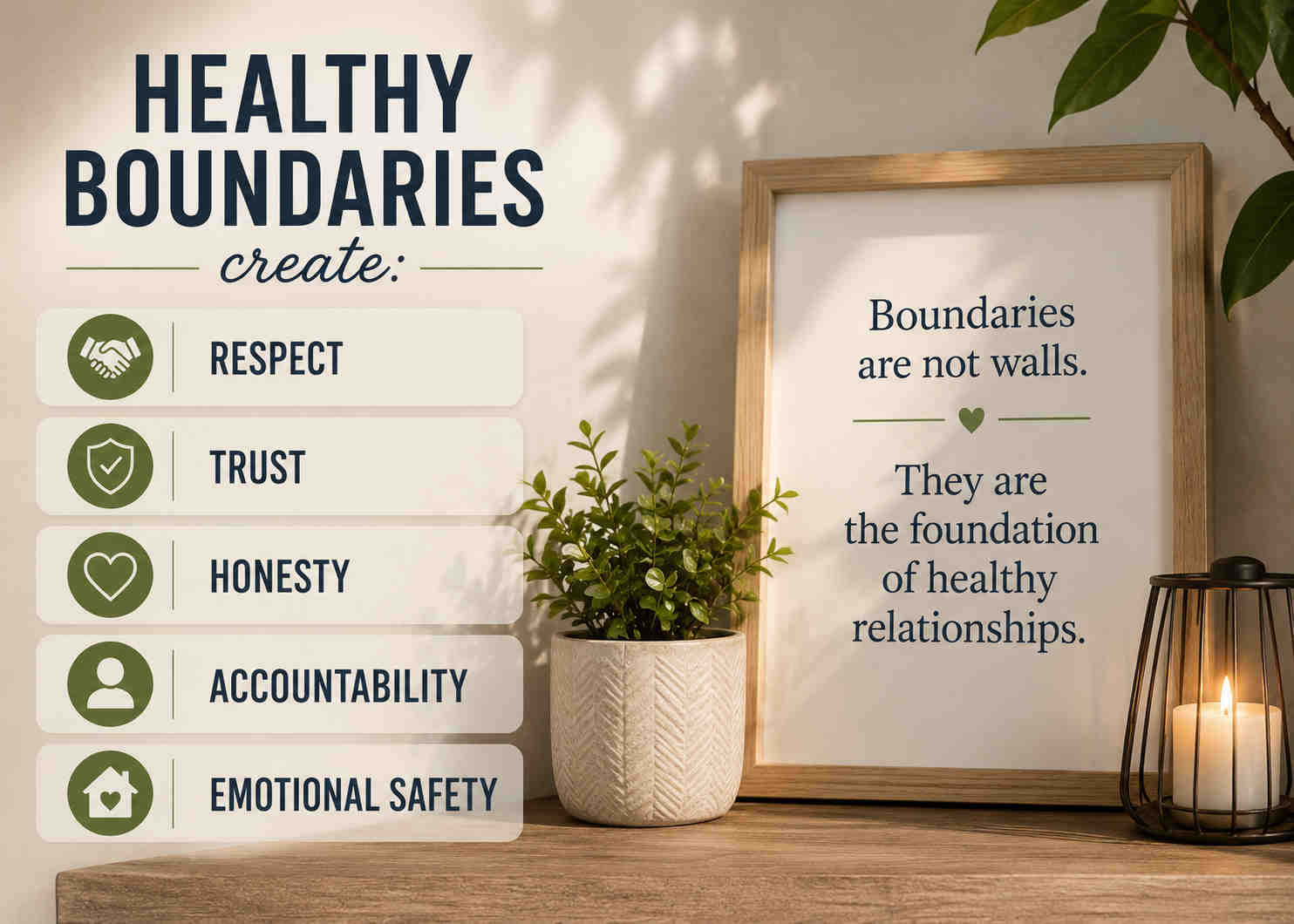
Without boundaries, relationships often become dominated by resentment, manipulation, and conflict. With boundaries, both people retain their individuality while remaining connected. That is what healthy love looks like.
Rebuilding Self-Respect Through Boundaries
One of the greatest benefits of healthy boundaries after divorce is renewed self-respect. Each time you enforce a reasonable boundary, you send yourself a powerful message: my needs matter.
Over time, this improves confidence, emotional stability, decision-making, and relationship quality. You begin trusting yourself again. That trust becomes the foundation for healthier relationships in the future.
Final Thoughts
Boundary violations after divorce can affect every part of your life. They can damage confidence, increase anxiety, create resentment, and make it difficult to move forward. The good news is that boundaries can be learned.
Every time you say no when necessary, enforce a reasonable limit, or protect your time and energy, you strengthen your ability to create a healthier future. The right people will respect your boundaries. The wrong people will fight them.
After divorce, protecting your peace is not selfish. It is necessary. Healthy boundaries are one of the most important tools you can develop as you rebuild confidence, relationships, and the next chapter of your life.
Keep Reading
This article is part of the Dating Red Flags After Divorce section. Keep building the awareness and confidence to recognize unhealthy patterns before they become another painful chapter.
Back To Dating & Relationships