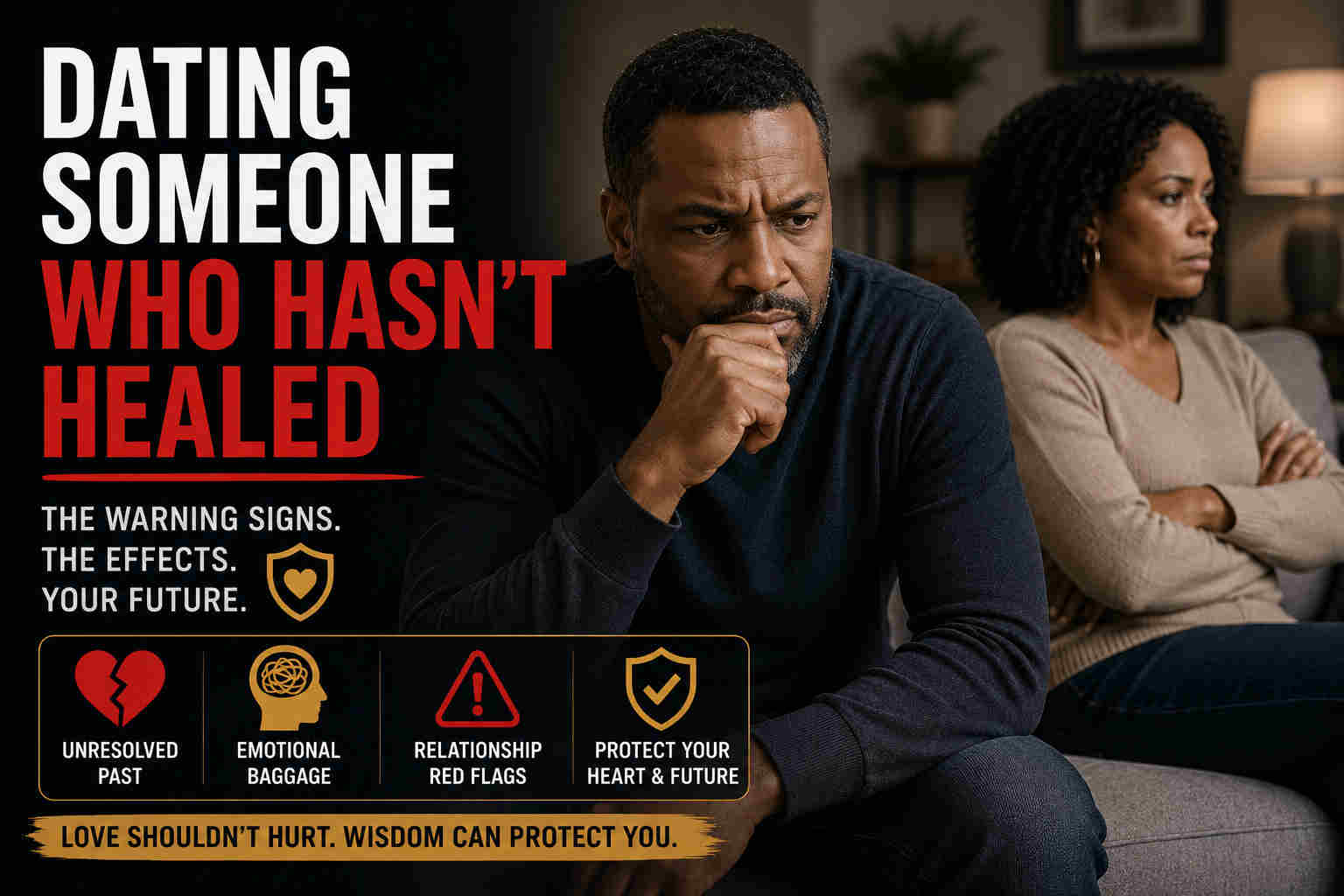
Dating Someone Who Hasn't Healed: Warning Signs, Effects, and How to Protect Yourself
Dating someone who hasn't healed can pull you into emotional chaos that began long before you arrived. The issue is not whether someone has a past. Everyone does. The issue is whether their past still controls the way they treat you.
When you are dating after divorce, it is normal to meet people who have been hurt. Many adults have experienced betrayal, rejection, abandonment, disappointment, or a painful breakup. A person having a difficult history does not automatically make them a bad partner. In fact, people who have been through pain can become deeply compassionate, mature, and loyal once they have processed what happened.
The problem begins when someone enters a new relationship before doing the emotional work required to move forward. They may say they are ready. They may want love. They may be attractive, interesting, and enjoyable in the beginning. But if they have not healed from a past relationship, divorce, or emotional trauma, their unresolved pain can show up as mistrust, anger, emotional distance, insecurity, overreaction, or pressure.
For a divorced man trying to rebuild his life, this can be especially confusing. You may want companionship. You may want to believe the new connection is a fresh start. You may also be more patient than you should be because you understand what it feels like to be hurt. Compassion is good. But compassion without boundaries can turn your new relationship into someone else's recovery project.
What Does It Mean When Someone Hasn't Healed?
Healing does not mean a person has forgotten the past. It does not mean they never feel sadness, anger, or caution. Healing means the past has been processed enough that it no longer controls their present behavior. A healed person can talk about painful experiences without turning every conversation into a courtroom. They can recognize old wounds without making a new partner responsible for them.
Someone who has not healed often reacts to the present through the lens of the past. A delayed text may feel like abandonment. A disagreement may feel like rejection. Your request for space may feel like betrayal. Your normal boundaries may be interpreted as proof that you are just like the person who hurt them before.
That is when dating becomes exhausting. You are no longer simply getting to know someone. You are being measured against ghosts from their past.
Why This Happens So Often After Divorce
Divorce can create deep emotional disruption. Even when a marriage needed to end, the aftermath can include grief, shame, resentment, financial stress, custody issues, loss of identity, loneliness, and fear of starting over. Some people take time to process those realities. Others try to outrun the pain by quickly entering another relationship.
That new relationship may feel exciting at first because it offers attention, validation, affection, and distraction. But a new person cannot erase unresolved grief. If the emotional wound is still open, the relationship often becomes a place where that wound gets acted out.
This is why dating after divorce requires discernment. You are not looking for someone with a perfect past. You are looking for someone who has enough self-awareness to avoid making their past the center of your future.
Warning Sign #1: They Constantly Talk About Their Ex
Occasional discussion of a former spouse or past relationship is normal. Adults have histories, and those histories sometimes matter. But when someone constantly talks about an ex, complains about an ex, compares you to an ex, or brings old relationship wounds into every conversation, it is often a sign they have not moved on emotionally.
The attachment may not be love. It may be anger, bitterness, humiliation, resentment, or unfinished grief. But any emotional obsession with the past takes up space that should belong to the relationship happening now.
You may begin to feel like there are three people in the relationship: you, the person you are dating, and the ex who is still dominating their emotional world.
Warning Sign #2: They Have Trust Issues With Everyone
Trust should be earned gradually. Healthy caution is not a problem. But when someone assumes everyone will betray them, lie to them, abandon them, or use them, the relationship can become a constant trial where you are always defending yourself.
They may question your motives, become jealous easily, monitor your behavior, overanalyze your words, or need constant reassurance. You may be asked to prove your loyalty before you have done anything wrong.
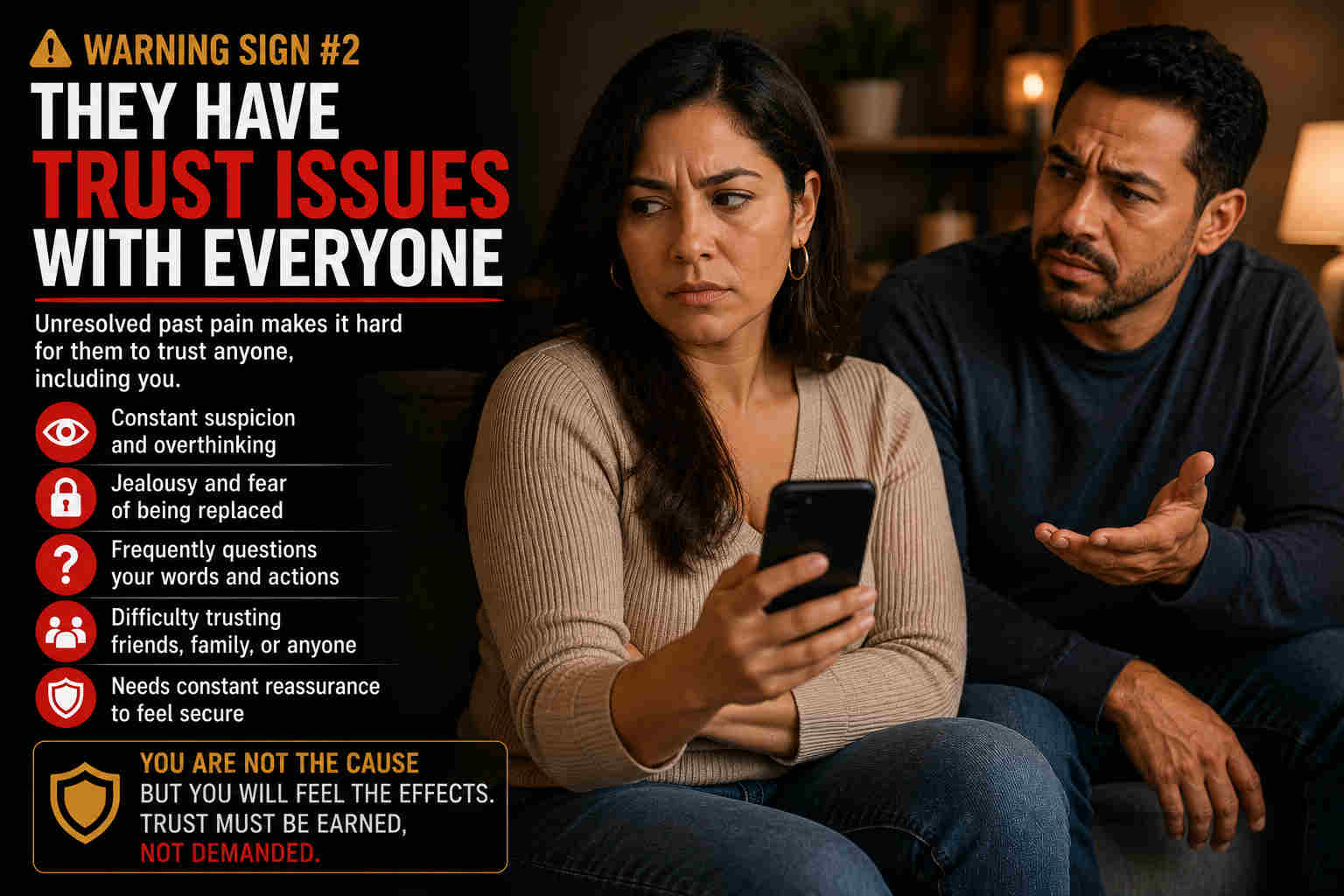
Over time, this can make you anxious. You start choosing your words carefully. You avoid harmless situations because you do not want to trigger suspicion. You begin managing their insecurity instead of enjoying the relationship.
If someone cannot separate you from the people who hurt them before, they are not fully available for a healthy relationship.
Warning Sign #3: They Overreact to Small Situations
Unhealed emotional wounds often create reactions that are much larger than the situation deserves. A late reply becomes a crisis. A different opinion becomes disrespect. A scheduling conflict becomes proof that you do not care.
The emotional reaction may seem confusing until you understand that the current event is not the only thing being reacted to. Old pain is being activated. The problem is that you may become responsible for calming a storm you did not create.
A relationship should have room for mistakes, misunderstandings, and ordinary human limitations. If every small issue turns into a major emotional event, the relationship may become draining very quickly.
Warning Sign #4: They Seek Constant Validation
Everyone likes appreciation. Everyone wants to feel wanted. But when someone has not healed, validation can become an emotional need that no partner can fully satisfy.
They may constantly need compliments, reassurance, attention, or proof that you are not losing interest. No matter how much you give, it may not seem to last. That is because external reassurance cannot permanently repair internal insecurity.
You can encourage someone. You can appreciate them. You can be kind and consistent. But you cannot become the foundation of their self-worth. If they need you to constantly prove that they are lovable, the relationship may become emotionally one-sided.
Warning Sign #5: They Move Too Fast
People who have not healed sometimes rush relationships because they are trying to escape loneliness, pain, or insecurity. They may talk about love, exclusivity, living together, marriage, or a future together before the relationship has had time to reveal its true character.
Fast emotional intensity can feel flattering. After divorce, it may even feel like proof that you are finally desired again. But speed is not the same as stability. Sometimes the person is not connecting with you as much as they are connecting with the relief you provide.
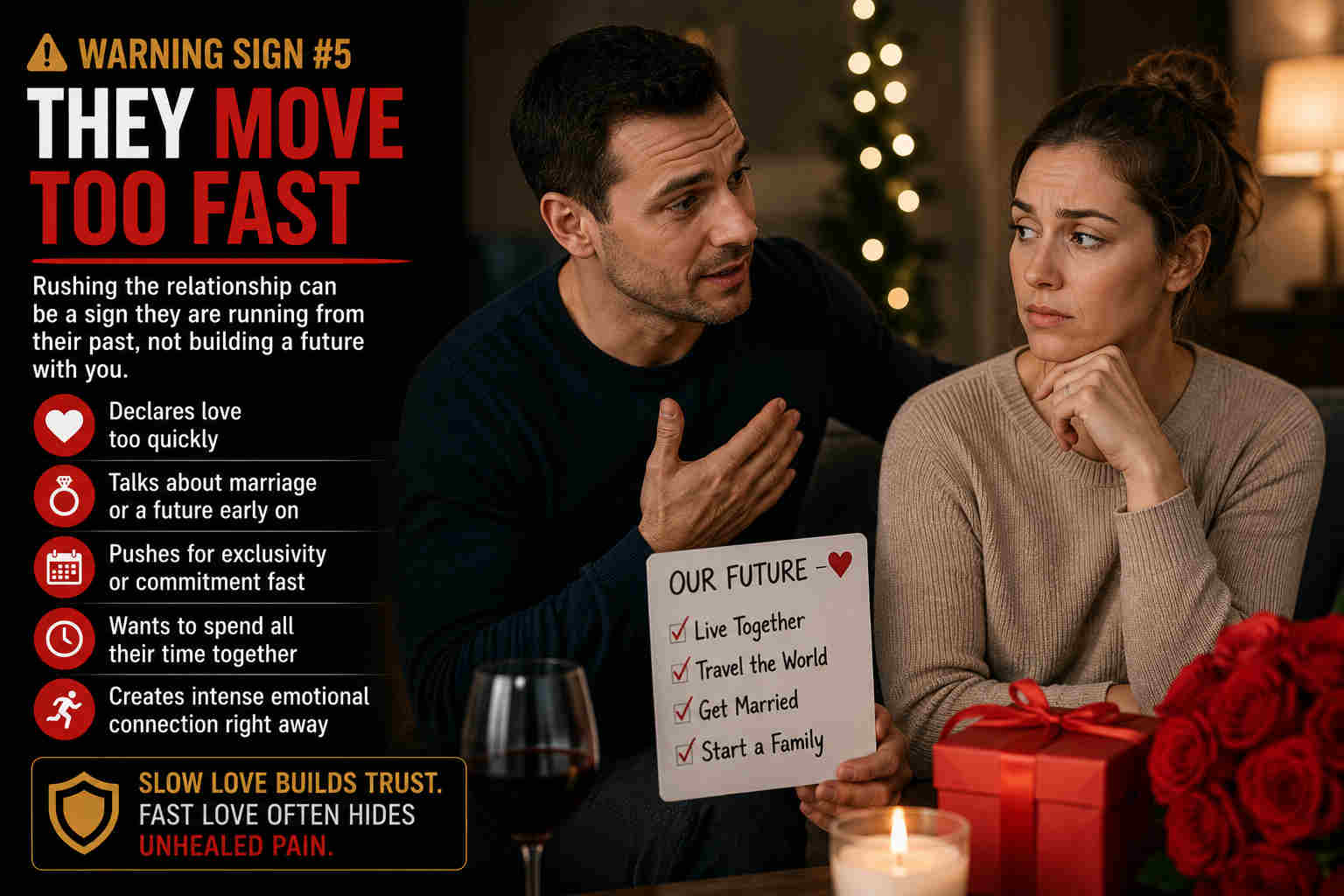
A healthy relationship can be exciting without being rushed. It can have chemistry without pressure. It can move forward without skipping the stages where trust, consistency, and compatibility are supposed to be tested.
Warning Sign #6: They Avoid Difficult Conversations
Healing requires emotional accountability. Someone who has not healed may avoid difficult conversations because those conversations bring up shame, fear, or old pain. They may shut down, become defensive, change the subject, blame you, or disappear emotionally when serious issues arise.
This creates a major problem because healthy relationships require honest conversations. You cannot build something strong with someone who refuses to discuss what is weak. If every attempt to talk turns into withdrawal, blame, or silence, the relationship cannot mature.
A person does not need to be perfect to be a good partner. But they do need to be willing to look at themselves honestly.
Warning Sign #7: They Still Carry Significant Anger
Unresolved anger is one of the most obvious signs someone has not healed. They may make bitter comments about an ex, speak cynically about all men or women, criticize relationships in general, or carry resentment years after the events took place.
Anger is not always wrong. Sometimes anger is a natural response to betrayal or mistreatment. But when anger becomes a person's identity, it poisons the present. Eventually, that anger can spill onto you even if you were not the one who caused it.
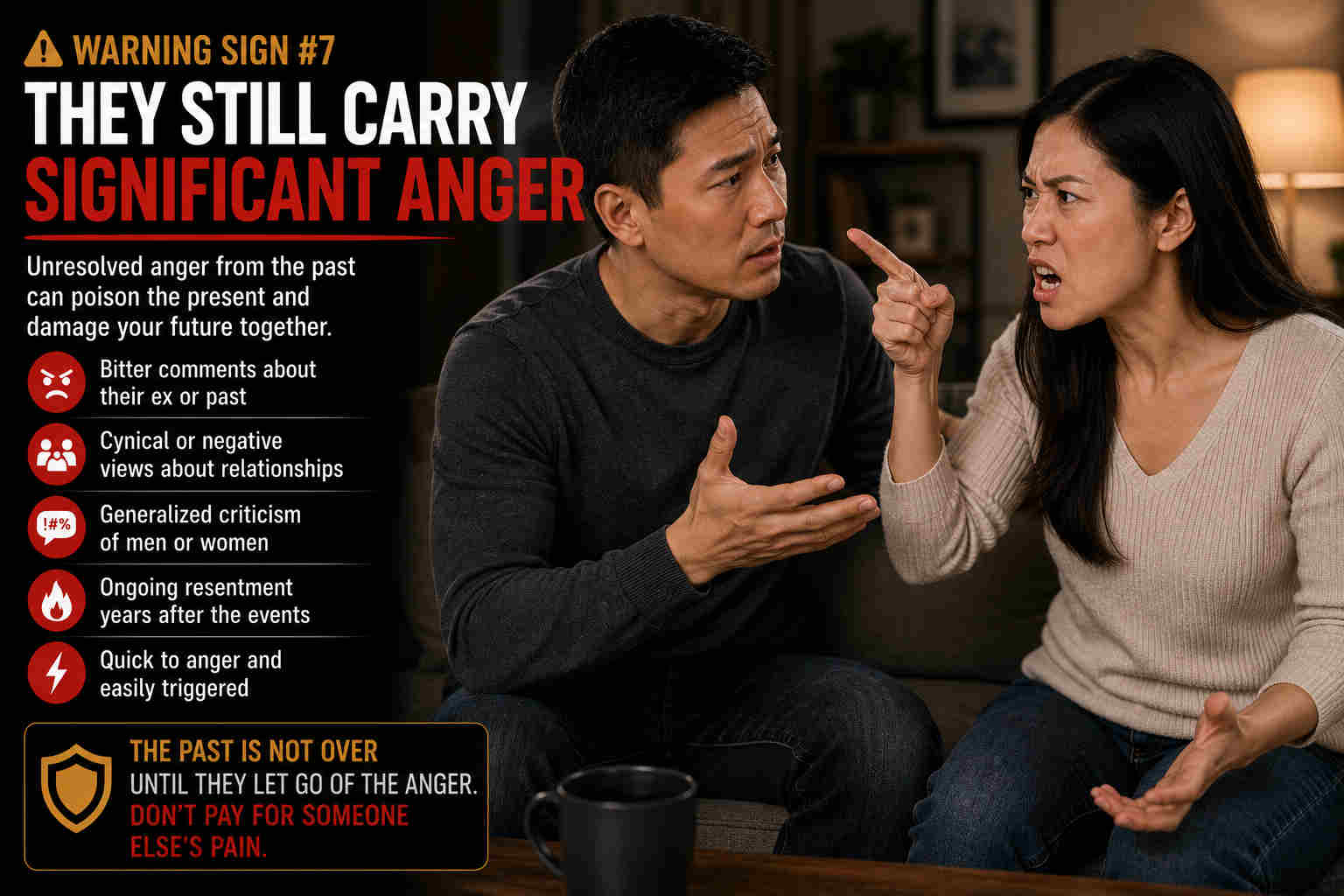
You may start feeling like you are always paying for someone else's pain. Their ex hurt them, but you are the one being questioned, criticized, or punished. That is not fair, and it is not sustainable.
The Emotional Effects of Dating Someone Who Hasn't Healed
The emotional effects of dating someone who has not healed can be serious. At first, you may think you are simply being patient. You may tell yourself that everyone has baggage. But over time, the relationship may begin to change how you feel about yourself and your life.
You may experience emotional exhaustion because you are constantly trying to manage their reactions. You may feel anxious because small moments can turn into conflict. You may lose confidence because repeated suspicion or criticism makes you question your own behavior. You may feel lonely inside the relationship because your needs are always secondary to their wounds.
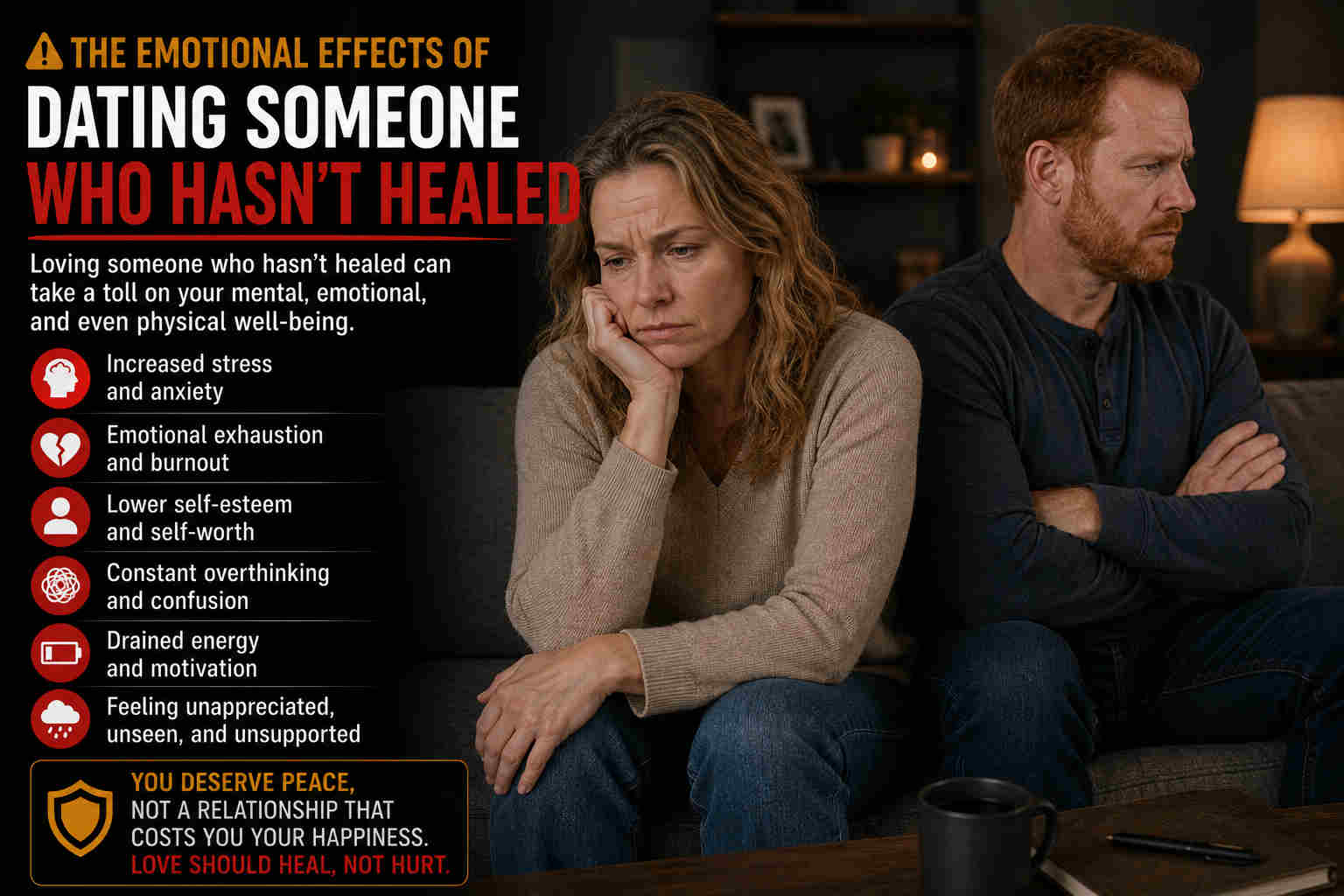
The relationship may also create frustration. No matter how supportive you are, the same patterns keep returning. You reassure them, but insecurity comes back. You apologize for things you did not mean, but suspicion returns. You try to prove you are different, but the past still wins.
This is how emotional burnout develops. You stop feeling like a partner and start feeling like a therapist, firefighter, or emotional caretaker.
How Unhealed Trauma Impacts Relationships
Unresolved trauma can create patterns that repeat again and again. A fear of abandonment may create clinginess, jealousy, or controlling behavior. A fear of vulnerability may cause emotional withdrawal. A history of betrayal may lead someone to assume dishonesty even when there is no evidence.
Some people also self-sabotage. If stability feels unfamiliar, they may unconsciously create conflict because chaos is what they know. They may test you, push you away, or create drama to see whether you will stay.
These patterns are not always intentional. But whether intentional or not, they still affect you. Understanding the source of someone's behavior does not mean you must accept the damage it causes.
The Financial Effects of Dating Someone Who Hasn't Healed
Emotional wounds can also affect money. A person who has not healed may make impulsive financial decisions, seek comfort through spending, rush cohabitation, or push for financial support too soon. Some people use relationships to find rescue rather than partnership.
For divorced men, this matters. You may already be rebuilding financially after legal fees, support payments, property division, or lifestyle changes. A new relationship should not put your recovery at risk.
Be cautious with loans, shared accounts, expensive gifts, co-signing, or moving in together too quickly. Emotional intensity can cloud judgment. Financial boundaries protect your future.
Why You Cannot Heal Someone Else
One of the biggest mistakes people make is believing that enough love can heal another person's wounds. Love can support healing, but it cannot replace personal responsibility. You can be kind. You can be patient. You can listen. You can encourage growth. But you cannot process someone's trauma for them.
If they refuse to take responsibility, avoid self-reflection, reject counseling, blame everyone else, or expect you to absorb their pain, the relationship will eventually become unbalanced.
How to Protect Yourself While Dating
Protecting yourself does not mean becoming cold or cynical. It means staying grounded. You can care about someone while still watching their patterns. You can be compassionate while still having standards.
Pay attention to actions more than words. A person may say they are over the past, but their behavior will reveal whether that is true. Maintain your own routines, friendships, fitness, hobbies, work goals, and family responsibilities. Do not let a new relationship consume your entire life too quickly.
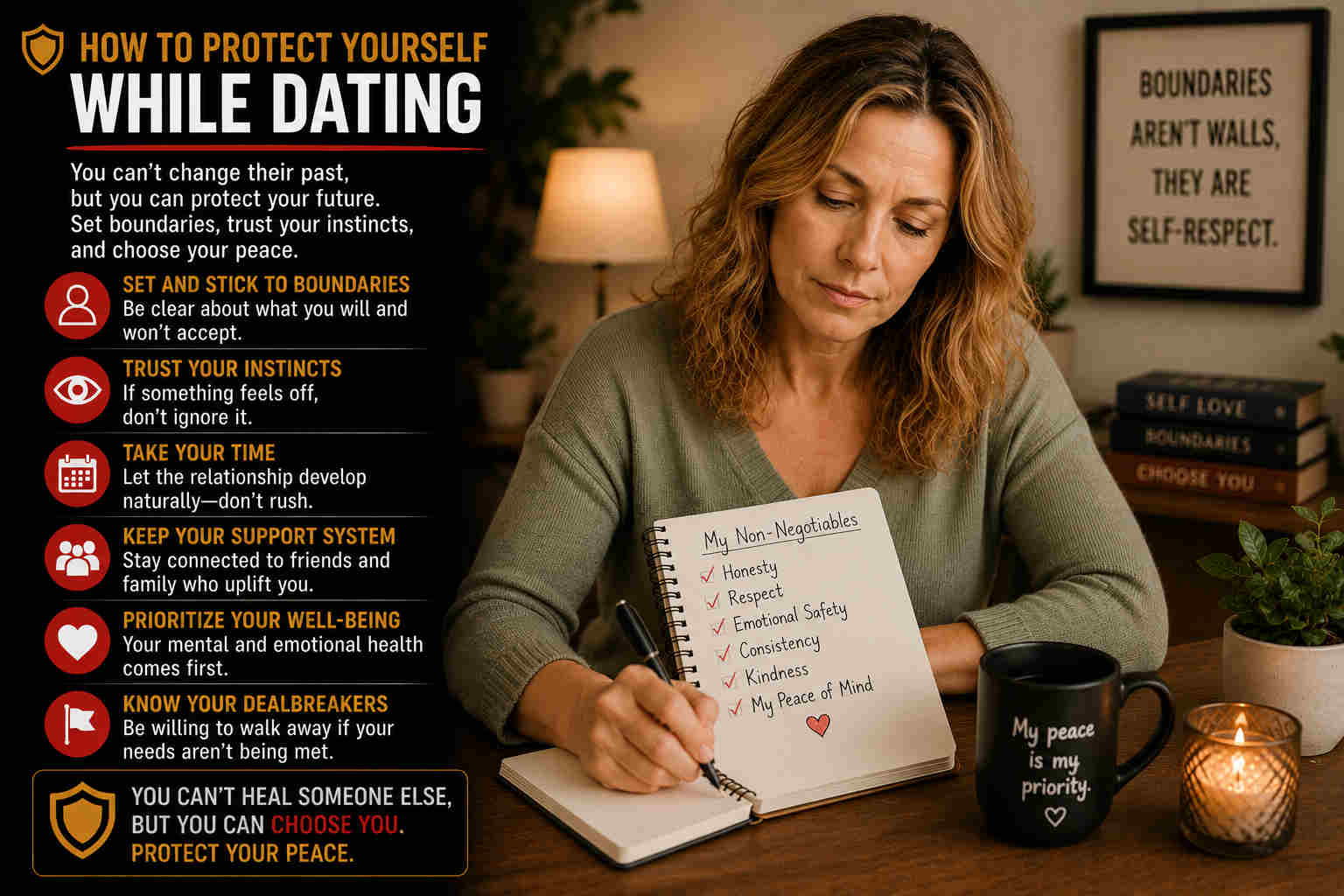
Set clear boundaries early. For example, you can say, “I enjoy spending time with you, but I do not move fast in relationships.” Or, “I understand you have been hurt, but I need to be judged by my own actions.” A healthy person may need time to adjust, but they will respect your boundaries. An unhealed person may treat your boundaries as rejection.
That reaction tells you something important.
What Healthy Healing Looks Like
A healed person is not perfect. They may still have painful memories. They may still have fears. The difference is that they can manage those feelings without making you responsible for them.
Healthy healing looks like accountability. It looks like being able to discuss the past without living there. It looks like trusting gradually but reasonably. It looks like handling conflict without attacking, withdrawing, or punishing. It looks like respecting boundaries instead of demanding constant proof.
Most importantly, a healed person sees you as an individual. They do not treat you like a replacement, a rescuer, or a suspect.
Can Someone Heal While in a Relationship?
Yes, someone can continue healing while dating. No one enters a relationship completely finished. Growth should continue throughout life. But there is a major difference between someone actively healing and someone avoiding healing.
An actively healing person acknowledges their issues, takes responsibility, communicates honestly, seeks help when needed, and makes visible progress. A person avoiding healing blames others, repeats patterns, refuses accountability, and expects the relationship to fix what they will not face.
One creates hope. The other creates exhaustion.
Final Thoughts
Dating someone who hasn't healed can affect your peace, confidence, finances, and future. The issue is not that they have been hurt. The issue is whether they have done enough healing to love you without punishing you for what someone else did.
If you are dating after divorce, take your time. Look for consistency. Watch how they handle disappointment. Notice whether they respect your boundaries. Pay attention to whether the relationship makes you feel more grounded or more anxious.
You deserve a relationship where both people are building a future, not one where the past keeps taking over the present. Compassion matters, but so does wisdom. Love should not require you to lose your peace in order to prove your loyalty.
Keep Reading
This article is part of the Dating Red Flags After Divorce section for men who want to date with more clarity, confidence, and emotional discipline.
Back To Dating & Relationships