
Emotional unavailability is when a person cannot or will not build a deeper emotional connection, even if they enjoy your attention, companionship, or attraction.
Why Emotional Availability Matters More Than Chemistry
Many divorced men enter the dating world hoping to find someone who is attractive, enjoyable to be around, and interested in building a future together. Physical attraction matters. Shared interests matter. Good conversation matters. But there is another quality that often determines whether a relationship becomes peaceful or painful: emotional availability.
An emotionally available person can communicate openly, connect on a deeper level, handle conflict maturely, and gradually build trust. An emotionally unavailable person often struggles with those things. They may like your attention, enjoy dates, and even say they want a relationship, but when the connection requires vulnerability, consistency, commitment, or emotional honesty, they pull back.
For a man dating after divorce, this can become one of the most frustrating relationship red flags. You may feel chemistry, but not closeness. You may spend time together, but still feel alone. You may hear encouraging words, but their actions leave you uncertain about where you stand.
What Is Emotional Unavailability?
Emotional unavailability means a person is unable or unwilling to participate in the emotional depth required for a healthy relationship. They may resist vulnerability, avoid hard conversations, send mixed signals, or keep parts of themselves closed off.
This does not always mean the person is cruel or intentionally manipulative. Some emotionally unavailable people have been hurt before. Some are still recovering from divorce. Some are afraid of being controlled, rejected, or disappointed. Others simply enjoy companionship but do not want the responsibility that comes with real intimacy.
The problem is that your emotional needs still matter. A relationship cannot survive on potential alone. If someone consistently keeps one foot in and one foot out, the relationship becomes confusing and unstable.
Why Emotional Unavailability Is Common After Divorce
Divorce changes people. Some take time to heal, reflect, rebuild, and understand what went wrong before they date again. Others begin dating while still carrying unresolved wounds from the marriage. They may want attention and companionship, but they may not be ready for emotional intimacy.
A recently divorced person may still be dealing with anger toward an ex-spouse, fear of commitment, distrust, guilt, financial stress, custody pressure, or a sense of failure. They may genuinely want a new connection while still being afraid of what that connection requires.
This is why emotional unavailability after divorce often shows up as mixed signals. A woman may move closer when she feels lonely, then pull away when things become serious. She may want your support but resist your expectations. She may enjoy the comfort of your presence while avoiding the vulnerability of real partnership.
Signs Of Emotional Unavailability
1. They Avoid Deep Conversations
One of the clearest signs of emotional unavailability is avoiding meaningful conversations. You can talk about daily routines, work, movies, restaurants, travel, or casual plans, but when the conversation moves toward feelings, needs, fears, or the future, they shut down.
They may change the subject, make jokes, become irritated, stare at their phone, or act as if you are creating pressure. Over time, this leaves you feeling like you are trying to build a relationship with someone who refuses to let you inside their emotional world.

2. They Send Mixed Signals
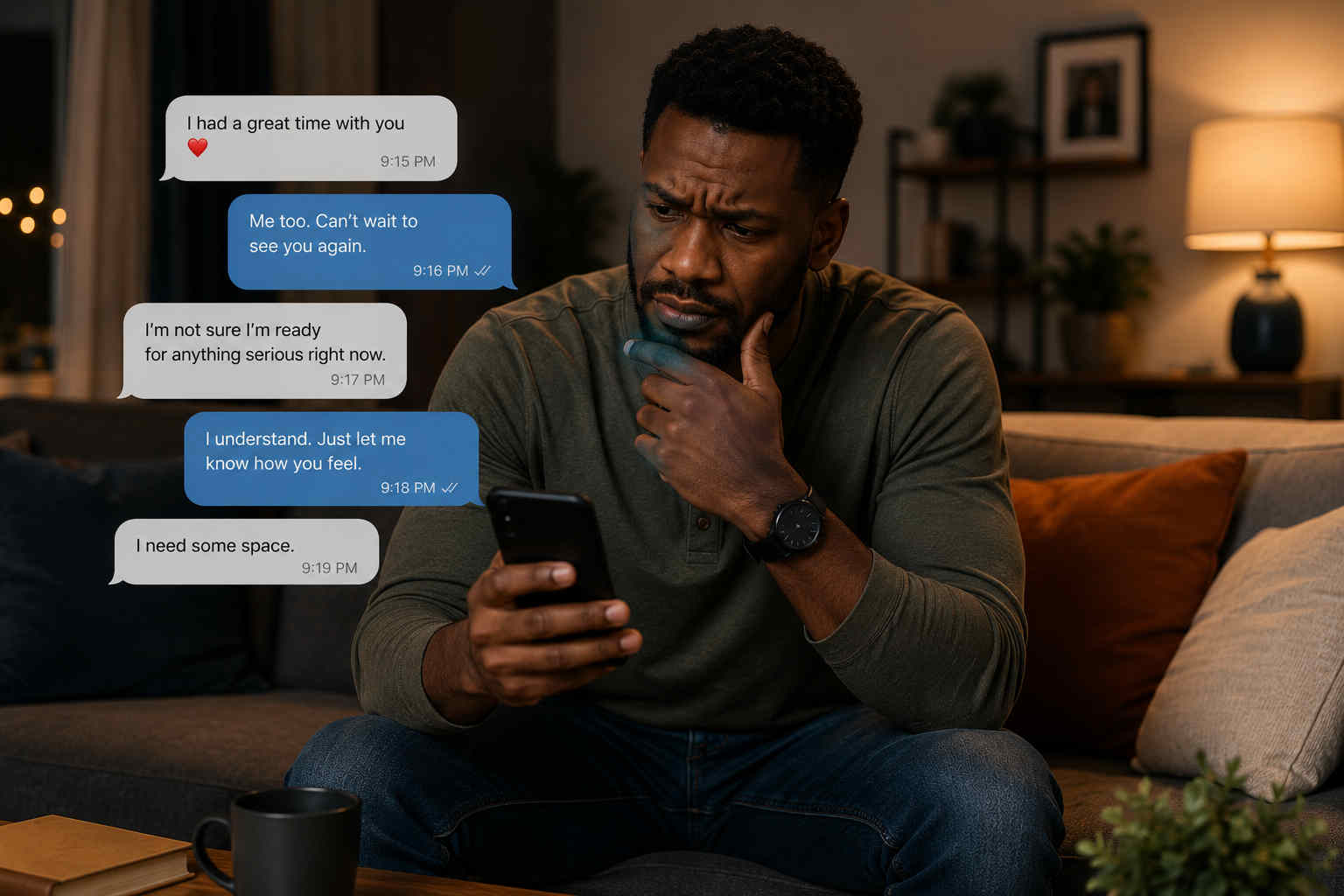
Mixed signals are one of the most common emotional unavailability warning signs. One day they seem warm, interested, and excited. The next day they become distant, vague, or hard to reach. They may text constantly for a week, then disappear without explanation.
This hot-and-cold behavior can make you question yourself. You may wonder whether you said something wrong, asked too much, or misread the connection. In reality, the inconsistency may be telling you that the person is not emotionally ready for a stable relationship.
3. They Struggle With Commitment
Emotionally unavailable partners often resist commitment even when they benefit from your time, attention, and emotional support. They may say they like you but are not ready to define anything. They may want exclusivity in practice but avoid clarity in words. They may enjoy relationship benefits while avoiding relationship responsibility.
Early caution is normal. Nobody needs to promise forever after a few dates. But if months pass and the relationship still lives in uncertainty, you need to pay attention. A person who keeps delaying clarity may be comfortable keeping you emotionally invested without offering real security.
4. They Keep Bringing Up Their Ex
Another common red flag is a partner who constantly brings up their ex. This can happen through anger, nostalgia, comparison, curiosity, or unresolved grief. They may talk about what their ex did, how badly they were treated, what they miss, or why they will never trust again.
Occasional mentions of the past are normal. Divorce is part of someone’s story. But when the ex becomes a regular presence in your conversations, the person may still be emotionally attached to that previous relationship. If their attention is still living in the past, they may not have enough emotional room for the present.

5. They Avoid Vulnerability
Vulnerability is how emotional intimacy is built. It does not mean oversharing every detail of your life. It means being willing to speak honestly about feelings, fears, needs, mistakes, and hopes. An emotionally unavailable partner often avoids this kind of openness.
They may keep their emotional life hidden, refuse to discuss personal struggles, or act uncomfortable when you share yours. They may appear strong and independent, but the relationship remains shallow because they never allow genuine closeness to develop.
6. They Prioritize Independence Above Everything
Independence is healthy. A strong relationship should not erase your identity, routines, friendships, or personal goals. But extreme independence can become a shield against connection. Some emotionally unavailable partners treat emotional closeness as a threat to their freedom.
They may keep rigid distance, avoid compromise, resist making plans, or treat your desire for closeness as neediness. The relationship begins to feel like two separate lives that occasionally overlap instead of two people building something together.

The Emotional Effects Of Dating An Emotionally Unavailable Partner
Dating an emotionally unavailable partner can wear you down slowly. Because the person may not be openly cruel, you may keep hoping the relationship will improve. You may focus on the good moments and ignore the pattern that keeps repeating.
The first major effect is self-doubt. You may ask yourself whether you are expecting too much. You may wonder whether your divorce made you insecure or whether you are misreading normal caution. Over time, you can start minimizing your own emotional needs just to keep the relationship alive.
The second effect is anxiety. Inconsistent attention creates uncertainty. You never know where you stand. A text, a silence, a canceled plan, or a vague answer can send you into analysis mode. Instead of feeling relaxed, you begin managing the relationship like a problem you have to solve.
The third effect is emotional loneliness. You may have someone to go out with but no one who truly meets you emotionally. That kind of loneliness can feel worse than being single because it makes you feel alone while technically being with someone.
Why Divorced Men Are Especially Vulnerable
Divorced men can be especially vulnerable to emotionally unavailable partners because divorce often leaves a need for validation, companionship, and hope. After the pain of a marriage ending, a new connection can feel like proof that life is opening again.
That desire is normal. It is not weakness. The danger comes when you confuse attention with emotional availability. Someone may like your company, enjoy your support, and feel attracted to you while still being unable to build the kind of relationship you want.
This is why dating after divorce requires patience. Do not judge the relationship only by chemistry. Judge it by consistency, emotional maturity, communication, and whether you feel more grounded or more confused over time.
Can An Emotionally Unavailable Person Change?
Yes, but only if they recognize the issue and want to work on it. Emotional availability requires self-awareness, accountability, honest communication, and a willingness to confront fear. Some people can grow. Some do. But you cannot do that work for them.
What does not work is trying to love someone into availability. You cannot prove your worth enough to make a person ready. You cannot be patient enough to heal wounds they refuse to face. You cannot keep sacrificing your peace while waiting for potential to become reality.
How To Protect Yourself
Start by paying attention to patterns. Anyone can be distracted, tired, guarded, or overwhelmed sometimes. The question is whether emotional distance is temporary or consistent. If the same behavior keeps returning, believe the pattern.
Next, listen to actions more than words. A person may say they care, but do they show up? Do they communicate clearly? Do they respect your needs? Do they make space for the relationship to grow?
Set boundaries early. You can say, “I enjoy spending time with you, but I need consistency and clear communication.” You can say, “I am not looking for pressure, but I am looking for emotional honesty.” Healthy people may need time, but they will respect your clarity.
Also maintain your own life. Continue investing in your friends, children, fitness, work, faith, hobbies, and goals. An emotionally unavailable relationship becomes more dangerous when it becomes the center of your emotional world.
Green Flags To Look For Instead
Instead of only watching for red flags, learn to recognize emotional availability. A healthy partner communicates openly, follows through, respects boundaries, discusses the future honestly, takes accountability, and handles conflict without disappearing.
They do not punish you for wanting clarity. They do not make you feel needy for wanting connection. They do not leave you constantly guessing where you stand. They may not be perfect, but their presence is steady enough for trust to grow.
Final Thoughts
Emotional unavailability is one of the most common dating red flags after divorce because it often hides behind reasonable explanations. Someone was hurt before. Someone is busy. Someone needs time. Someone is afraid. Sometimes those explanations are true, but they still do not make the relationship healthy.
A healthy relationship requires more than attraction, chemistry, and companionship. It requires emotional presence. It requires a person who can move toward connection instead of away from it.
As you rebuild your life after divorce, remember that the goal is not simply to find someone who likes you. The goal is to build a relationship with someone capable of showing up emotionally, communicating honestly, and creating peace instead of confusion.
That kind of relationship is worth waiting for.
Keep Reading
This article is part of the Dating Red Flags After Divorce section. Use the main hub to explore other red flags including love bombing, boundary violations, online dating scams, financial pressure, and relationship rushing.
Back To Dating Red Flags