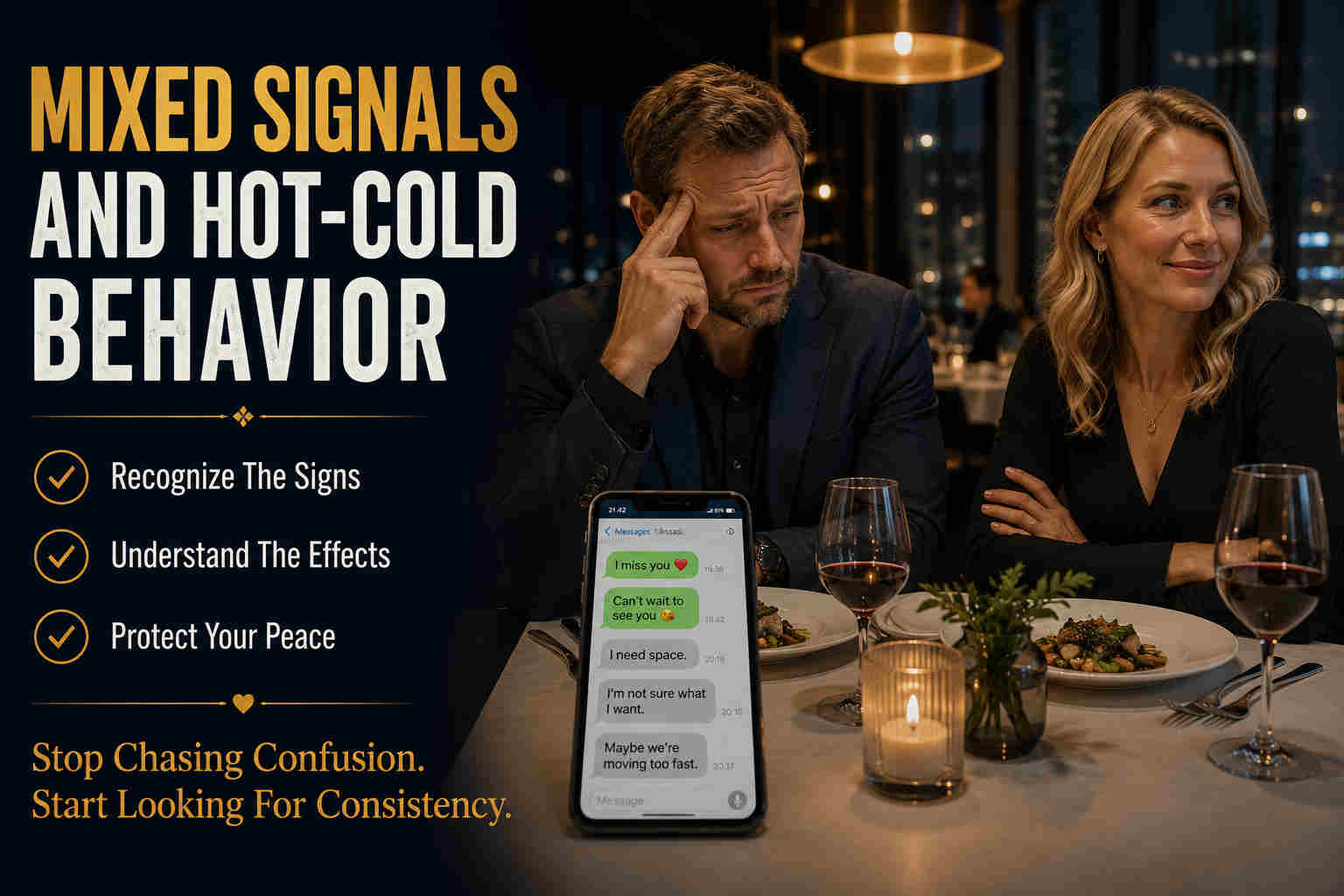
Mixed signals and hot-cold behavior create confusion because affection, attention, and availability become unpredictable. One day the connection feels strong. The next day you are left wondering where you stand.
Few dating experiences are more confusing than dealing with someone who seems highly interested one day and distant the next.
One week they are texting constantly, planning future dates, and acting excited about the relationship. The next week they become unavailable, slow to respond, emotionally distant, or difficult to reach.
This pattern is often called mixed signals or hot-cold behavior. For someone dating after divorce, this behavior can be especially damaging because it creates uncertainty, emotional confusion, and self-doubt.
Many divorced men have already experienced significant emotional upheaval. When a new relationship seems promising but constantly changes direction, it can trigger anxiety and make it difficult to determine what is actually happening.
Healthy relationships are generally consistent. People may have busy days, stressful weeks, or temporary distractions. However, their overall level of interest remains relatively stable. Hot-cold behavior creates a cycle of emotional highs and lows that can become exhausting.
What Are Mixed Signals And Hot-Cold Behavior?
Mixed signals happen when a person’s words, actions, and level of investment do not align. They may say they care about you, but their behavior leaves you feeling uncertain. They may talk about future plans, but avoid consistent communication. They may act affectionate in person, then disappear for days.
Hot-cold behavior is the emotional pattern behind many mixed signals. The person comes close, then pulls away. They show interest, then withdraw. They create hope, then confusion. The problem is not one delayed text or one busy week. The problem is the repeated pattern of emotional inconsistency.
Common examples include:
- Frequent texting followed by sudden silence
- Strong interest followed by emotional withdrawal
- Making future plans, then canceling repeatedly
- Expressing affection while avoiding commitment
- Acting jealous while refusing exclusivity
- Pursuing you intensely, then becoming distant
- Saying one thing while doing another
One day they may act like they want a serious relationship. The next day they seem uncertain whether they even want to date. That inconsistency creates confusion because their behavior sends contradictory messages.
Why Mixed Signals Feel So Powerful
Human beings naturally seek clarity and certainty. When someone behaves inconsistently, your mind often works harder to understand them. Instead of calmly evaluating whether the relationship is healthy, you may become focused on solving the mystery.
You begin asking questions such as:
- What changed?
- Did I do something wrong?
- Why are they pulling away?
- How can I get things back to how they were?
Ironically, uncertainty can increase emotional attachment. The relationship begins to feel like a puzzle that needs solving. The more unpredictable the other person becomes, the more attention they often receive.
This is why mixed signals in dating can feel so addictive. The good moments feel meaningful because they are not consistent. When affection returns after distance, it can feel like relief. That relief can be mistaken for love, progress, or proof that the relationship still has potential.
Why Divorced Men Are Vulnerable To Hot-Cold Behavior
After divorce, many men are rebuilding their lives. They may be recovering from rejection, loneliness, loss of companionship, damaged confidence, or emotional isolation.
A new relationship often represents hope. When someone initially shows strong interest, it can feel incredibly validating. Their attention may temporarily relieve feelings of loneliness or self-doubt.
Because of this, many divorced men become highly invested when the relationship appears promising. When the other person suddenly becomes distant, it can trigger fears of abandonment or rejection.
Instead of viewing the inconsistency as information, they may view it as a problem they need to fix. This often leads to chasing, overthinking, and emotional exhaustion.

Common Reasons People Send Mixed Signals
Not everyone who sends mixed signals is intentionally manipulative. Sometimes people behave inconsistently because they are confused, emotionally unavailable, or not ready for the kind of relationship they seem to be suggesting.
Emotional Unavailability
Some people enjoy companionship but fear true intimacy. They move closer when they feel lonely and pull away when the relationship becomes serious.
Unresolved Past Relationships
Someone who has not healed from a previous relationship may struggle to fully invest in a new one. They may want connection while simultaneously fearing vulnerability.
Multiple Dating Partners
Some people date several individuals at the same time. Their level of interest may fluctuate depending on who currently has their attention.
Fear Of Commitment
A person may genuinely like you but become anxious when the relationship begins progressing. Rather than discussing their concerns openly, they withdraw.
Need For Validation
Certain individuals enjoy attention more than they enjoy genuine relationships. They pursue people intensely, receive emotional validation, then lose interest once they feel secure.
Regardless of the reason, the effect on the receiving person is often the same. Confusion increases. Trust decreases. Emotional stability suffers.
The Emotional Effects Of Hot-Cold Behavior
The emotional effects of hot-cold behavior can be significant because the relationship does not feel clearly good or clearly bad. Instead, it keeps shifting. You may feel hopeful during the warm moments and rejected during the cold ones.
Anxiety
One of the most common effects is anxiety. You begin constantly monitoring the relationship.
Questions dominate your thoughts:
- Why haven’t they texted?
- Are they losing interest?
- Did I say something wrong?
- Should I reach out first?
Instead of enjoying the relationship, you become preoccupied with managing uncertainty.

Emotional Exhaustion
The emotional rollercoaster becomes draining. One day you feel optimistic. The next day you feel rejected. The cycle repeats itself until the relationship consumes energy that could be invested in your health, work, children, or future.
Self-Doubt
Mixed signals often cause people to question themselves. You may begin wondering whether you are attractive enough, interesting enough, or asking for too much. In reality, the issue may have little to do with you. The inconsistency belongs to the other person.
Obsession
Many people become emotionally attached to hot-cold partners because they keep chasing clarity. The uncertainty creates a powerful desire for answers. Instead of evaluating whether the relationship is healthy, they become focused on winning approval.
The Dopamine Trap
Hot-cold behavior often works through intermittent reward. One day you receive affection. The next day you receive distance. Then affection returns. Because you never know when the next positive interaction will occur, you may become increasingly focused on obtaining it.
This can create a cycle where occasional affection feels far more valuable than it should. The relationship becomes emotionally addictive, even when it is not emotionally healthy.
Mixed Signals Versus Genuine Interest
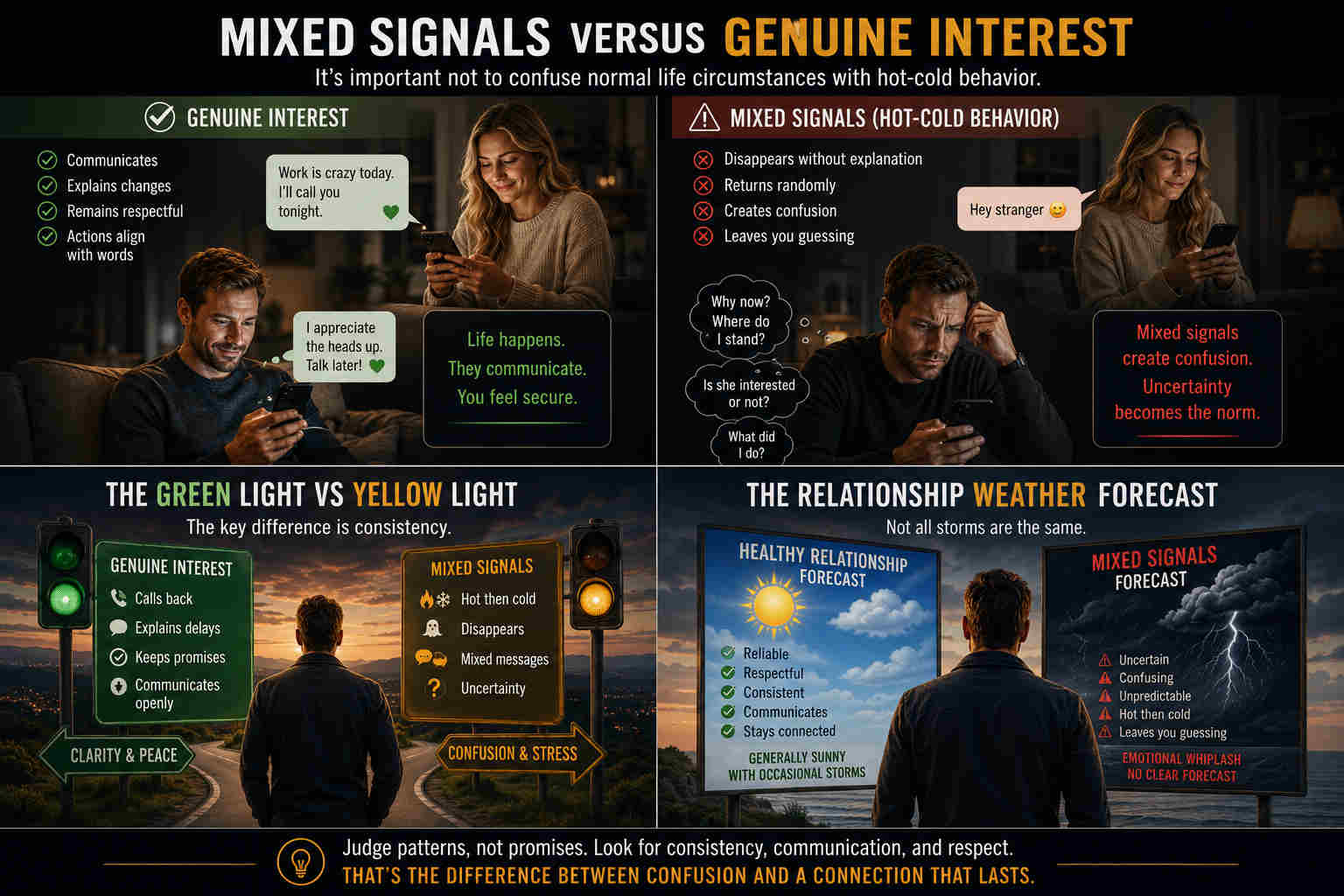
It is important not to confuse normal life circumstances with hot-cold behavior. Healthy people have busy work schedules, family obligations, stressful periods, and personal challenges.
The key difference is consistency.
A genuinely interested person communicates. They explain changes. They remain respectful. Their actions generally align with their words.
Someone displaying hot-cold behavior creates recurring patterns of confusion. You frequently feel uncertain about where you stand. That uncertainty becomes the defining feature of the relationship.
How Mixed Signals Affect Trust
Trust develops through consistency. When someone’s behavior constantly changes, trust struggles to grow. You begin questioning their intentions, honesty, commitment, and reliability.
Even if the relationship continues, the foundation remains weak. Trust requires predictability. Without it, emotional security becomes difficult to achieve.
Healthy relationships should create confidence. Mixed signals create doubt.
Financial Consequences Of Emotional Confusion
Many people do not realize mixed signals can create financial risks. When someone alternates between affection and distance, you may begin making decisions based on fear.
Examples include:
- Paying for expensive trips
- Buying excessive gifts
- Providing financial assistance
- Making premature commitments
- Moving too quickly into shared financial arrangements
The desire to strengthen the relationship can cloud judgment. This is particularly dangerous after divorce when financial recovery may still be underway.
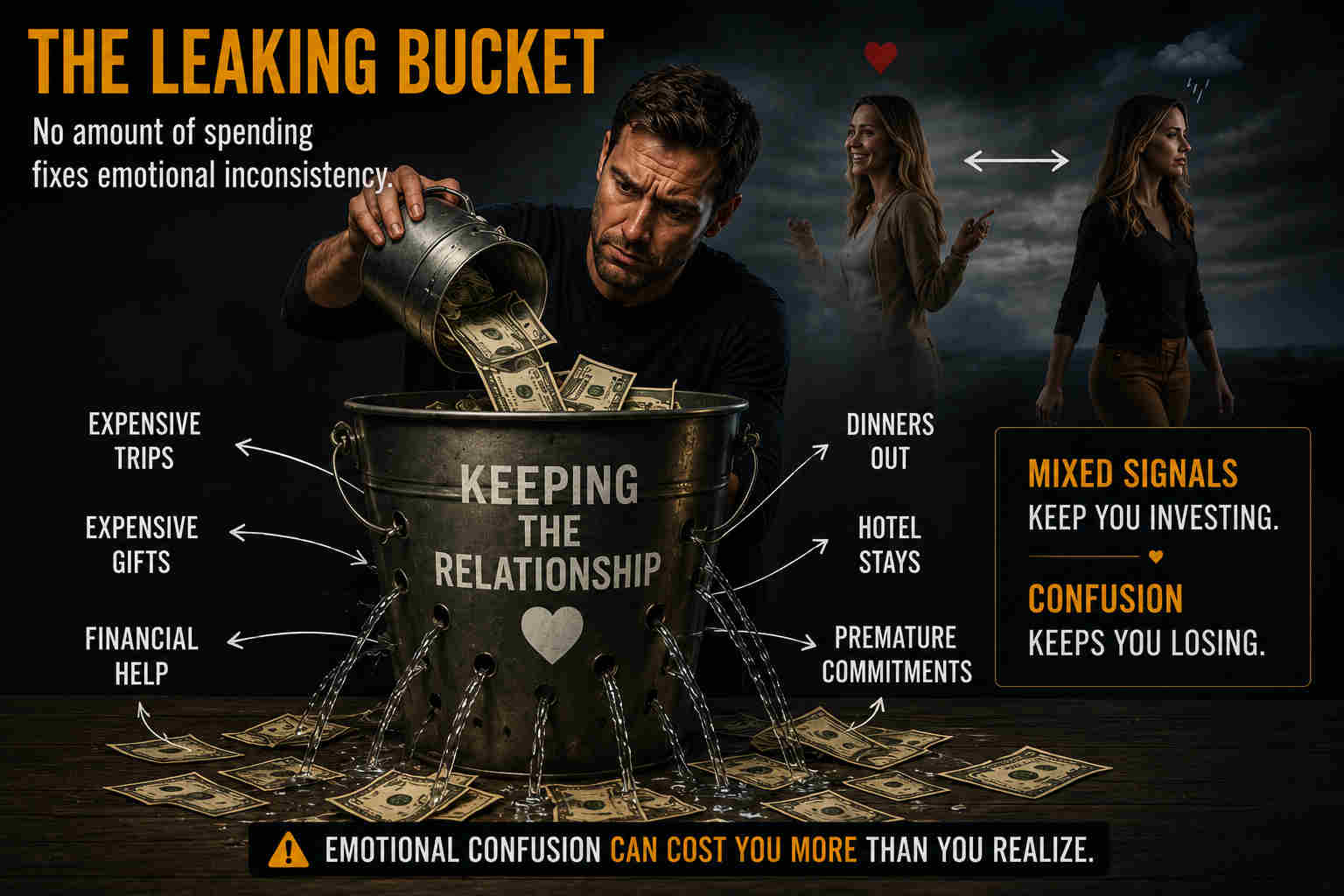
Emotional confusion often leads to poor financial decisions. You may spend money not because the relationship is stable, but because you are hoping to make it stable.
How Mixed Signals Affect Children
For divorced parents, relationship instability affects more than the adults involved. Children often notice emotional changes. When a parent becomes deeply invested in a hot-cold relationship, children may experience reduced emotional availability, household stress, inconsistent routines, and confusion about new partners.
If children meet a partner who repeatedly enters and exits the picture, emotional attachment and disappointment can occur. Children benefit from stability. They should not be exposed to relationship chaos whenever possible.
Warning Signs Of Hot-Cold Behavior
Watch for recurring patterns such as intense pursuit followed by withdrawal, frequent cancellation, inconsistent communication, emotional whiplash, future talk without action, avoiding relationship conversations, and keeping you guessing.
One isolated incident does not necessarily indicate a problem. Repeated patterns should be taken seriously.
Why People Ignore The Warning Signs
Many individuals recognize mixed signals but choose to ignore them. Strong chemistry can cloud judgment. Fear of being alone may make red flags seem less important. Hope causes people to focus on potential rather than reality.
The more time and emotion invested, the harder it becomes to walk away. Dating again can feel difficult, so some people tolerate unhealthy behavior rather than face uncertainty.
Unfortunately, ignoring red flags rarely improves the situation. Time usually amplifies existing patterns.

How To Respond To Mixed Signals
The first step is to pay attention to actions. Someone may say they care deeply about you, but their behavior should support those claims. If the actions repeatedly contradict the words, believe the pattern.
Avoid chasing. When someone pulls away, resist the urge to pursue excessively. Healthy relationships do not require constant pursuit.
Ask direct questions. You can respectfully ask:
- What are you looking for?
- How do you see this relationship progressing?
- Are you genuinely interested in continuing?
Their response provides valuable information. Clarity should not require begging, chasing, or emotional guessing.
Maintain Your Life And Set Boundaries
Do not make the relationship your entire world. Continue seeing friends, exercising, pursuing hobbies, spending time with children, and building your future.
A strong independent life protects your emotional health. It also keeps you from becoming overly dependent on a person whose behavior is uncertain.
You also have the right to expect consistency and respect. Communicate your standards clearly. If someone repeatedly ignores them, that is your answer.
What Healthy Consistency Looks Like
Healthy relationships are not perfect. People make mistakes. Schedules change. Life becomes stressful.
However, healthy relationships generally include consistent communication, emotional availability, reliable behavior, respect for boundaries, honest conversations, and steady effort.
You feel secure more often than confused. Trust gradually increases. The relationship becomes calmer rather than more chaotic.
The Importance Of Patience
One of the biggest mistakes people make after divorce is rushing emotional attachment. Time provides valuable information. Over months rather than weeks, you discover how someone handles stress, how they communicate during conflict, whether they follow through, how they treat others, and whether their words match their actions.
Consistency can only be observed through time. Patience protects you from becoming emotionally invested in someone who cannot provide stability.
Final Thoughts
Mixed signals and hot-cold behavior are among the most confusing relationship red flags after divorce. The inconsistency creates anxiety, emotional exhaustion, self-doubt, and uncertainty.
While not everyone who sends mixed signals is intentionally manipulative, the effects can still be significant. Healthy relationships are built on consistency, trust, honesty, and emotional stability.
You should not have to constantly guess how someone feels about you. You should not have to earn basic respect. You should not spend more time analyzing a relationship than enjoying it.
The right relationship does not keep you confused. It provides clarity. It allows trust to grow. It creates peace rather than chaos.
Most importantly, it helps you build a future based on reality instead of uncertainty. When actions and words consistently align, healthy relationships become much easier to recognize and much easier to trust.
Keep Reading
This article is part of the Dating Red Flags After Divorce section. Use it as a guide to recognize emotional inconsistency, protect your peace, and make better dating decisions after divorce.
Back To Dating & Relationships