A Different Kind Of Fresh Start
You Don't Need to Destroy Your Old Life
Reinventing yourself after 40 is often described as if you need to blow up your life and replace it with something dramatic. Quit the job. Move across the country. Buy the motorcycle. Become the man nobody from your old life recognizes.
That makes for a good movie. It is usually a poor strategy for real life.
At 40, 45, or 50, you already have evidence about yourself. You know which environments drain you, which responsibilities you handle well, what kind of people bring out your better side, and which compromises eventually make you resentful. Divorce can make this knowledge feel like wreckage, but it can also become raw material.
The useful question is not, “How do I become a completely different person?” It is: What parts of me are worth carrying forward, what am I finished tolerating, and what deserves a place in the next version of my life?

Start With the Saturday Test
Forget the five-year plan for a moment. Picture an ordinary Saturday two years from now. There is no vacation, wedding, promotion, or special event. Nobody is visiting. What time do you wake up? What does your home look like? Who do you talk to? What do you do between breakfast and dinner?
This is the Saturday Test. It works because a satisfying life is mostly made of ordinary days. Men often design a future around impressive nouns—career, house, relationship, travel—while ignoring the verbs that fill their week.
Write down your ideal ordinary Saturday from morning to night. Keep it realistic. Maybe you train early, make breakfast, work on a woodworking project, meet a friend for lunch, spend the afternoon with your son, cook dinner, and play guitar. Maybe your version is quieter. The point is to identify what you actually want to do, not what you want your life to look like from the outside.

Make a “Never Again” List
Most reinvention advice begins with goals. Start with boundaries instead. Make a private list titled “Never Again.” Do not fill it with anger toward your ex-wife or declarations about relationships. Make it about your own participation.
Never again stay in a job for years without learning anything. Never again let every friendship disappear because a relationship becomes your entire social life. Never again ignore your health until a doctor scares you. Never again buy things to impress people you do not even like. Never again agree to something important just to avoid an uncomfortable conversation.
Your “Never Again” list is useful because pain can teach you something without being allowed to run your future. It turns regret into design specifications.
Stop Trying to “Find Yourself”
You are not a missing set of car keys. After 40, finding yourself can become an excuse for endless reflection. A better approach is to run small experiments.
Take a class. Volunteer somewhere for six weeks. Join a group that meets every Thursday. Learn a skill badly. Spend a Saturday helping on a project. Try the activity long enough to gather evidence before deciding whether it belongs in your life.

Use the 100-Hour Rule
Choose one ability that would make your next chapter more interesting or useful and give it 100 focused hours. Not ten minutes when you feel inspired. One hundred hours recorded on paper.
That could be guitar, photography, cooking, Spanish, woodworking, public speaking, coding, home repair, drawing, or a professional skill. The exact subject matters less than the process. One hundred hours is long enough to get past the awkward beginner stage and short enough to feel achievable.
At two hours a week, you can accumulate roughly 100 hours in a year. At four hours a week, you can do it in about six months. The deeper benefit is that you stop defining yourself by what you used to be good at. You create fresh evidence that you can still learn.
Make Your Home Prove That Your Life Changed
After divorce, a home can feel like a waiting room. Furniture lands where it fits, boxes stay unopened, and empty spaces quietly preserve the feeling that the “real” life is somewhere else.
Change that deliberately. You do not need an expensive renovation. Hang the photograph you like. Create a reading chair. Set up the garage so you can work on something. Put records where you will actually play them. Remove objects you keep only because they belonged to a previous version of the household.

Your home should begin answering a simple question: who lives here now?
Build One Thing That Didn't Exist During Your Marriage
This is one of the strongest ways to separate reinvention from recovery. Create something that has no history with your marriage.
It could be a garden, a side business, a Sunday hiking group, a workshop project, a volunteer commitment, a certification, or a tradition with your children. The important part is that it is new territory.

When everything in your life is an attempt to restore what was lost, the past remains the reference point. A new project gives you a different reference point: what you are creating now.
Choose a Physical Standard, Not Just a Weight
Men over 40 often reduce health to a number on a scale. Weight matters, but capability is more motivating. Pick a physical standard that would make you proud of what your body can do.
Walk a demanding trail without stopping. Complete ten strict push-ups. Carry your own luggage through an airport without feeling exhausted. Run or walk a 5K. Train three days a week for six months. Get strong enough to help move furniture without spending the next two days recovering.

The goal is not to pretend you are 25. It is to make 45, 50, or 60 stronger than it would have been if you did nothing.
Upgrade Your Social Infrastructure
A social life built entirely around a marriage can collapse surprisingly fast after divorce. The solution is not to “make more friends” as an abstract goal. Build recurring places where friendship has a chance to happen.
Join something that meets on a schedule: a workshop, volunteer crew, recreational league, men's group, class, church team, hobby club, or regular breakfast. Adult friendship usually grows from repeated contact, shared activity, and small acts of reliability—not one dramatic conversation.
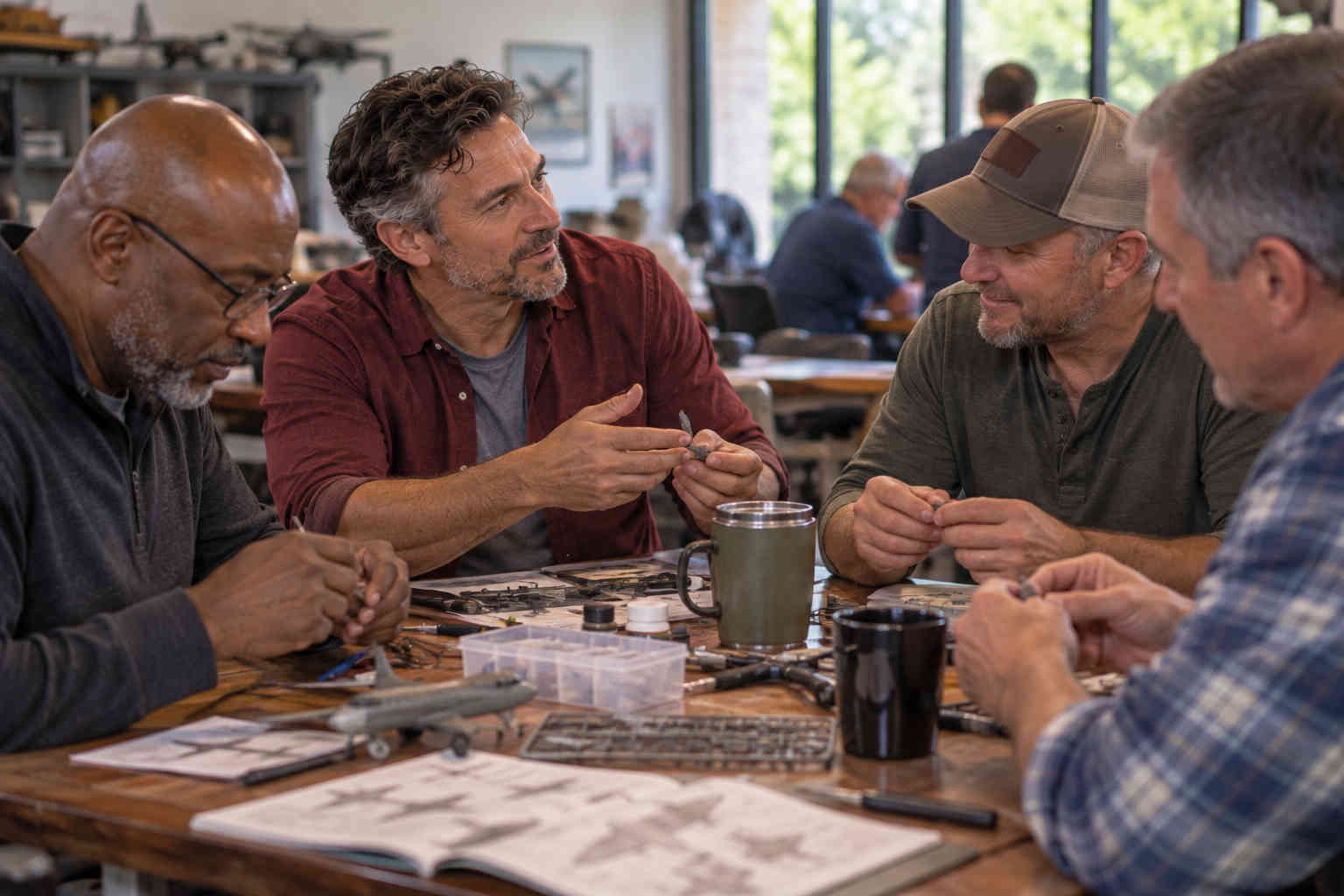
Become the man who shows up. Learn names. Ask a second question. Invite someone for coffee after the activity. Send the text instead of waiting for someone else to organize everything.
Create a Life With Multiple Pillars
One reason divorce can feel like total collapse is that too much identity was resting on one pillar. If husband, provider, and family man were all tied to the same structure, losing the marriage can make it seem as if you lost yourself.
The next version of your life needs more supports. Think in pillars: health, fatherhood, friendships, work, money, interests, home, service, learning, and—if you eventually want it—a healthy romantic relationship.

Not every pillar needs equal attention every week. The point is structural. If work becomes difficult, you still have your health and relationships. If dating disappoints you, you still have friends, purpose, interests, and a home you enjoy. A life with multiple pillars bends without collapsing.
Stop Using Your Age as a Courtroom
There is a strange habit that appears after 40: putting every new idea on trial. “Shouldn't I already have this figured out?” “Is it ridiculous to start now?” “What will people think?”
Your age is information, not a verdict. Yes, some choices carry different costs at 45 than at 25. You may have children, financial obligations, aging parents, or less appetite for reckless risk. That calls for better planning, not surrender.
Use age as an advantage. You can recognize patterns faster. You have more evidence about what does not work. You may care less about impressing strangers. You can make a change because it fits your values rather than because it earns applause.
Give the New Version of You a Weekly Schedule
Reinvention becomes real when it appears on Tuesday at 6:30 p.m. If your new life exists only in your head, the old routine will win.
Put the important pieces on the calendar before the week begins: workouts, time with your children, the class, the project, meal preparation, the friend you intend to call, the hour devoted to a new skill. Leave room for rest and spontaneity, but do not leave everything meaningful to chance.
You are not trying to become a productivity machine. You are protecting the activities that make your life feel like yours.
The Goal Isn't to Become Unrecognizable
A successful reinvention after 40 may look surprisingly ordinary from the outside. You may live in the same town. You may keep the same career. You may still love the music, food, sports, and hobbies you loved before.
The difference is that more of your life is chosen.
You know why you kept certain things and why you let others go. Your home reflects you. Your body can do more. Your friendships do not depend on a spouse organizing them. You have something new you are learning, something useful you are building, and several parts of life that matter to you.

That is what reinventing yourself after 40 can mean. Not erasing the man you were. Not pretending the difficult years never happened. Not performing a dramatic transformation for other people.
Keep what earned its place. End what repeatedly costs you more than it gives. Add experiences that have no connection to the old chapter. Build enough structure that your intentions survive ordinary weeks.
You do not need to wake up tomorrow as a new man.
You need to make one decision the old version of your life would not have made—and then give that decision somewhere to live.
Your Reinvention Rule
Build Evidence, Not A New Persona
Choose one part of your next life and give it a recurring place on your calendar. Reinvention becomes believable when your ordinary week starts producing evidence that your life has changed.