
Housing After Divorce
Do Not Start With The Mortgage Payment
Divorce has a way of turning familiar financial decisions into completely different questions.
Before the divorce, choosing a house may have meant thinking about two incomes, two schedules, a shared retirement plan, and a family budget. After divorce, the same decision has to work with one household, one financial safety net, and a future that may still be taking shape.
That is why deciding whether to buy a house or rent after divorce should not begin with the usual argument that buying builds equity while renting “throws money away.” That is too simple.
After divorce, flexibility has financial value. Cash has value. A shorter commute to your children has value. A smaller house that leaves room in your budget has value. And sometimes the smartest housing decision is deliberately choosing a temporary home while you figure out what your permanent life actually looks like.
The question is not simply, “Can I afford to buy a house after divorce?”
A better question is: “Which housing choice gives me the strongest financial position three years from now?”
Do Not Try To Replace Your Old House
One of the most expensive mistakes a divorced man can make is shopping for a replacement version of his former home.
Maybe you left a four-bedroom house with a two-car garage, a large yard, and enough room for everyone. Moving into a two-bedroom apartment or smaller townhouse can feel like going backward.
It is not necessarily going backward. Your household changed. Your housing needs probably changed with it.
Trying to recreate your previous lifestyle on one income can leave you with a mortgage payment that technically fits your budget but consumes the money you need to rebuild everything else.
Instead of asking what kind of house you used to have, ask what your life requires now. If your children stay with you every other weekend, you may need bedrooms for them without needing 2,800 square feet. If you are living alone most of the month, a large yard may become another Saturday obligation rather than an advantage.
The best home after divorce may look very different from the best home during your marriage. You are buying or renting for the household you have now.

Why Renting After Divorce Can Be A Financial Strategy
There is a difference between being unable to buy and deliberately choosing not to buy yet.
The second can be a smart financial move.
Renting after divorce can give you something homeownership cannot easily provide: the ability to change your mind.
Imagine that you sign a 12-month lease. During that year, you discover that you want to live closer to your children. Your job changes. You realize you hate your commute. You decide you would rather live in a townhouse than maintain a yard.
At the end of the lease, you can move.
Now imagine discovering those things six months after purchasing a house. Selling involves transaction expenses, moving costs, possible repairs, and another round of closing-related costs. If the home’s value has not increased enough, moving quickly can be expensive.
That makes flexibility a real financial asset during the first stage of your financial recovery after divorce.
Renting May Be Especially Useful If You Are Still Figuring Out:
- where your children will attend school;
- how often they will stay with you;
- whether your current job is stable;
- what your true post-divorce monthly expenses are;
- whether you want to remain in the same city;
- how much house you actually need; or
- what your long-term lifestyle will look like.
A lease can effectively buy you a year of information. Information can prevent a six-figure mistake.
When Buying A House After Divorce Makes More Sense
Renting is not automatically safer, just as buying is not automatically smarter.
There are circumstances in which buying a house after divorce can make excellent financial sense.
Suppose your divorce is finalized, your income is stable, your debts are manageable, you have adequate emergency savings, and you know you want to remain in the same area for years.
In that situation, buying may give you stability while allowing you to begin building home equity again.
The key is that you are buying because the numbers and your life support the decision—not because owning a house feels like proof that you have recovered.
A strong post-divorce homebuyer should be able to answer several questions confidently: Do I know where I want to live for the next several years? Can I comfortably afford the total cost of the house on my income alone? Will I still have substantial savings after the purchase? Are my divorce-related financial obligations settled and predictable? Does this house fit my new lifestyle rather than my old one?
The more uncertain your answers are, the more valuable renting becomes.
The One Paycheck Test
Here is a useful way to evaluate housing costs after divorce.
Forget the maximum mortgage a lender says you qualify for.
Instead, perform what we will call the One Paycheck Test.
Calculate your normal monthly take-home income. Then subtract everything that will exist regardless of where you live: child support or alimony payments, car payments, insurance, groceries, utilities, credit-card payments, student loans, retirement contributions, medical expenses, transportation, children’s expenses, subscriptions, and ordinary spending.
Now add the complete cost of the house you are considering—not just principal and interest.
- property taxes;
- homeowners insurance;
- homeowners association fees;
- utilities;
- routine maintenance;
- lawn care;
- pest control;
- repairs;
- appliance replacement; and
- a monthly reserve for major future expenses.
Then ask yourself something lenders do not necessarily ask: Would this payment still feel manageable during a bad six months?
Your post-divorce housing budget should not merely survive a normal month. It should have enough breathing room to survive an expensive one.
A $1,700 Mortgage Is Not A $1,700 House Payment
This is where buying can become deceptive.
Suppose your estimated principal-and-interest mortgage payment is $1,700.
You may mentally compare that with an apartment renting for $1,850 and conclude, “Why would I rent for $1,850 when I can own for $1,700?”
But those are not comparable numbers.
The house may also require property taxes, homeowners insurance, higher utilities, lawn maintenance, HOA fees, and repairs.
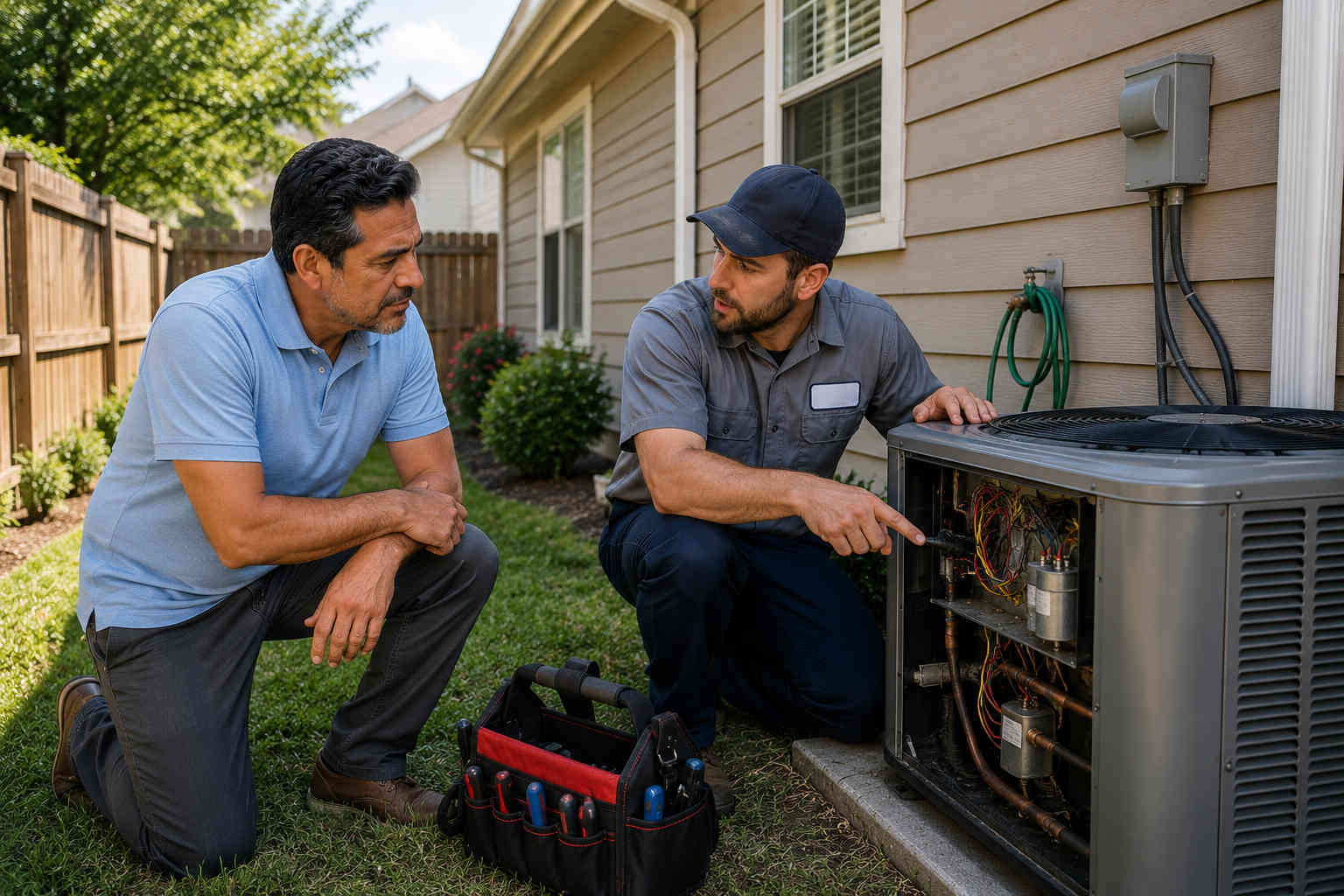
Then the water heater fails. The air conditioner stops cooling. A tree needs to be removed. The refrigerator dies.
When you rent, many major property repairs are generally the landlord’s responsibility under your lease. When you own, there is no landlord to call.
That is why your rent vs. buy after divorce calculation should compare the apartment’s complete cost with the house’s complete cost—not rent against the mortgage payment.

Do Not Put Your Entire Divorce Settlement Into A Down Payment
After a divorce settlement, you may suddenly have more cash available than you have had in years.
That can create an opportunity—and a trap.
Suppose you receive $100,000 from the division of marital assets. Putting $80,000 down on a house may seem responsible. You are reducing the mortgage and converting settlement money into home equity.
But consider what happens afterward.
You may now own a house while having relatively little liquid cash available for emergencies.
Your car needs replacing. You lose your job. The roof needs work. Your child has an unexpected expense.
You cannot buy groceries with the equity in your kitchen.
Home equity is valuable, but post-divorce cash reserves are valuable too.
Before using settlement money for a down payment, decide how much cash you want available after closing. That number should come first. The down payment comes second.
Your Emergency Fund Matters More When You Are Single
A married household sometimes has a hidden financial shock absorber.
If one spouse loses a job, the other may still be earning money. If one person’s car needs a major repair, another vehicle may be available. If an unexpected $2,000 bill arrives, two incomes may help absorb it.
After divorce, you may be the entire backup plan.
That means the emergency fund you considered adequate while married may no longer be adequate now.
Before buying, think beyond the down payment and closing costs. Ask: How much cash would I have the morning after closing?
If buying the house would leave you almost broke, you may be buying too soon—even if the lender approves the loan.
Mortgage qualification tells you whether a lender is willing to finance the property. It does not tell you whether purchasing it is the best decision for your financial recovery.
Divorce Can Complicate Mortgage Qualification
Before applying for a new mortgage, make sure you understand what happened to the financial obligations from your marriage.
A divorce decree does not necessarily make a jointly held mortgage disappear from your financial life.
If your name remains attached to the old mortgage or other joint obligations, those debts can complicate qualifying for another home loan. Income, support obligations, credit, and documented debts can also affect mortgage underwriting.
That makes your divorce paperwork part of your home-buying preparation.
Before shopping seriously, review your credit reports, remaining joint accounts, the status of the former marital home’s mortgage, your divorce decree, support obligations, current debt balances, available cash, and individual income.
You want your financial separation to exist on paper—not just in your personal life.

Do Not Let The Bank Set Your Housing Budget
There is another number you should treat cautiously: the maximum amount you are approved to borrow.
A $350,000 mortgage approval does not mean you should shop for a $350,000 house.
It means the lender’s underwriting system determined that you may qualify for financing within its requirements.
Your personal target could be $300,000. Or $250,000.
After divorce, deliberately buying below your maximum can create something extremely valuable: margin.
That extra money each month can rebuild retirement savings, pay down debt, replenish the emergency fund, cover expenses with your children, or simply make your new life less financially stressful.
The goal is not to own the most expensive house you can qualify for. It is to own a house that does not control the rest of your financial life.

Consider The “Dad Radius” Before Buying
For divorced fathers, location deserves its own calculation.
Call it your Dad Radius: the practical area in which you can live without making fatherhood unnecessarily difficult.
Your former marital home may no longer be where you want to live, but moving too far away to get a cheaper or larger house can create hidden costs.
Suppose moving 35 minutes farther away saves $250 a month. Sounds good.
But now you are making longer school pickups, weekend exchanges, practices, games, doctor visits, and emergency trips.
That means additional gasoline, vehicle mileage and—more importantly—time.
A slightly smaller or more expensive place near your children may actually provide better value than a larger house farther away.
When evaluating a neighborhood, do not only calculate the commute to work. Calculate the commute to your life.
Buying A House To Impress Your Children Can Backfire
Some divorced fathers feel pressure to make Dad’s new house exciting.
You want your children to have their own rooms. You want a backyard. Maybe you want a game room so they will look forward to staying with you.
Those are understandable goals.
But children do not benefit from an impressive house if maintaining it leaves Dad financially stretched every month.
Your children need a comfortable place where they feel that they belong. That does not require reproducing their other home.
A modest townhouse where they have drawers for their clothes, familiar routines, photos on the wall, food they like, and a father who is not constantly worried about money can feel more like home than a large house purchased beyond your comfortable budget.
Do not confuse square footage with fatherhood.
Renting Can Help You Discover What You Actually Want
One overlooked advantage of renting after divorce is the opportunity to experiment.
Maybe you have always lived in the suburbs because that is what worked for the marriage. Do you still want that?
Perhaps you would rather live closer to restaurants, a gym, friends, work, or outdoor recreation.
Maybe you discover that you enjoy having a small apartment with almost no maintenance. Or perhaps six months in an apartment makes one thing absolutely clear: you want a garage and a backyard again.
Either result is useful.
A temporary rental can function as a test drive for your new life.
Instead of immediately committing hundreds of thousands of dollars to what you think you want, you spend a year discovering what you actually want.
When Renting Becomes The Expensive Choice
There is also a point when flexibility stops being especially valuable.
If you have rented for several years, your finances are stable, you have adequate savings, you know exactly where you want to live, and you expect to remain there long term, continuing to rent deserves another look.
Homeownership can provide long-term stability and the opportunity to build equity as mortgage principal is paid down and, potentially, as the property appreciates.
At that point, you are no longer paying for much uncertainty.
You may simply be postponing a purchase you are financially prepared to make.
That is why the rent-or-buy decision should be reviewed periodically rather than made once and forgotten.

The Five-Year Question
Before buying, ask yourself: “If I could not sell this house for five years, would I still want to own it?”
It is a powerful filter.
Would the location still work? Would there be enough room for your children as they grow? Could you handle the maintenance? Would the payment remain comfortable? Would the house still fit if you changed jobs? Would you regret being tied to the area?
If the idea of being stuck there makes you uncomfortable, renting may be the better decision right now.
Buying becomes more attractive when staying put sounds perfectly reasonable.
A Better Post-Divorce Housing Scorecard
Instead of thinking only in terms of “rent versus mortgage,” judge each option in five categories.
- Financial margin: Which choice leaves more room every month?
- Cash preservation: How much accessible savings remains afterward?
- Location: Which option works best for your job, children, and daily life?
- Flexibility: How likely are your circumstances to change?
- Long-term usefulness: Will this home still make sense several years from now?
You may discover that renting wins four categories today.
Two years from now, buying may win all five.
That does not mean the original decision was wrong. It means the circumstances changed.
Signs You May Be Ready To Buy A House After Divorce
Buying deserves serious consideration when your divorce finances are settled, your income is dependable, your credit is in reasonable shape, and your remaining debts are under control.
More importantly, you should have money left after the transaction.
You should understand your new monthly spending patterns and know the area where you want to live.
And the property should comfortably fit within your budget without relying on overtime, bonuses, future raises, or other income that is not dependable.
You are not looking for a house you can somehow make work. You are looking for one that already works.
Signs You Should Consider Renting After Divorce
Renting may be the stronger choice when your divorce was recently finalized, you are still unwinding joint debts, your employment may change, or you are uncertain where you want to live.
It is also worth considering if purchasing would consume most of your available cash.
And if you are looking at houses mainly because you are embarrassed to say you are renting after divorce, stop.
That is an emotional reason for making a financial commitment.
A one-year lease costs considerably less than purchasing the wrong house simply to prove you are doing well.

Your First Home After Divorce Does Not Have To Be Your Forever Home
There is a useful middle ground between a temporary apartment and your dream house.
You can buy something intentionally modest.
Maybe it is a two-bedroom condo, a small three-bedroom house, or a townhouse that gives your children space without giving you a huge property to maintain.
That can allow you to become a homeowner again without committing too much of your income to housing.
Your first post-divorce house does not have to represent the final version of your life.
It only needs to support the next version.

So, Should You Buy A House Or Rent After Divorce?
If your financial situation is still changing, renting can be one of the smartest decisions you make.
It preserves cash. It preserves mobility. It gives you time to understand your single-income budget and determine where you actually want to live.
But if your finances have stabilized, you have sufficient savings after the purchase, your divorce-related obligations are clear, and you expect to stay in the same location for several years, buying can become an important part of rebuilding your financial foundation.
The biggest mistake is believing that one choice represents success and the other represents failure.
It does not.
A man renting a modest apartment while rebuilding savings may be in a much stronger financial position than a man sitting in a beautiful house he can barely afford.
And a man who is financially prepared to buy should not keep renting forever simply because divorce made him afraid to make another major commitment.
Your home after divorce has a different job than your marital home did.
It does not need to prove that you have replaced what you lost.
It needs to provide a stable base for what you are building next.
Choose the option that leaves you with enough money, flexibility, and breathing room to do that.

Your Housing Rule
Choose The Home That Leaves You Financial Breathing Room
Do not buy to recreate your old life or prove that you have recovered. Compare the complete monthly cost, protect your cash reserves, consider your Dad Radius, and choose the housing option that still works when life gets expensive.