
Starting Over at 50
The Bachelor Pad Trap
There’s a strange moment that happens after divorce when you find yourself standing in a new house or apartment surrounded by boxes. The place may be perfectly adequate. It may even be nicer than you expected. But it does not feel like home. It feels like evidence that your old life ended.
For a lot of men, the first instinct is to treat that new place as temporary. You buy the cheapest furniture that works, leave pictures leaning against walls, eat over the sink, and tell yourself you will make the place better later. Months pass. Sometimes years pass. The temporary setup becomes permanent.
That is the bachelor pad trap. It is not about being single. It is about living as though your real life is somewhere else. Creating a home after divorce means deciding that the life you are living now deserves a proper setting.

Stop Treating Your New Place Like a Waiting Room
A waiting room contains only what you need until something else happens. That is exactly how many post-divorce homes feel: one chair, a television, boxes that never get unpacked, and bare walls. The unspoken message is that you are waiting for another relationship, another house, or another chapter before you fully settle in.
Do the opposite. Unpack everything. Decide what stays. Give ordinary objects a permanent place. Hang the artwork. Replace the cardboard box being used as a side table. These small decisions tell your brain that you are not passing through your own life.
Don’t Recreate Your Married House
You do not need to rebuild the house you had with your former wife. Some furniture may come with you because it is useful or meaningful, but your new home should not become a museum of the marriage. Nor do you need to reject everything simply because it came from that period of your life.
Keep what genuinely works. Let go of what makes the room feel like a leftover. The goal is not erasure. It is ownership. Your home should reflect who you are now rather than an argument with the past.
Figure Out How You Actually Live
Before buying furniture, pay attention to your routines. Where do you drink coffee? Do you read at night? Do your adult children stay over? Do friends come by to watch a game? Do you work from home? A good room supports real behavior instead of an imaginary lifestyle.
If you never host twelve people, you probably do not need a huge dining table. If you read every evening, a comfortable chair and good lamp may matter more. If your children visit, a usable guest room matters more than a decorative room nobody enters.
Buy Less, but Buy Better
Starting over can make a man want to fill every empty space immediately. Resist that urge. A room with a few solid pieces usually feels more grown-up than a room packed with cheap furniture bought in one weekend.
Prioritize the things you touch every day: a good mattress, a comfortable sofa or chair, a sturdy table, useful storage, and lighting. You do not need luxury. You need furniture that fits the room, works properly, and does not look disposable.

Start With Your Bedroom
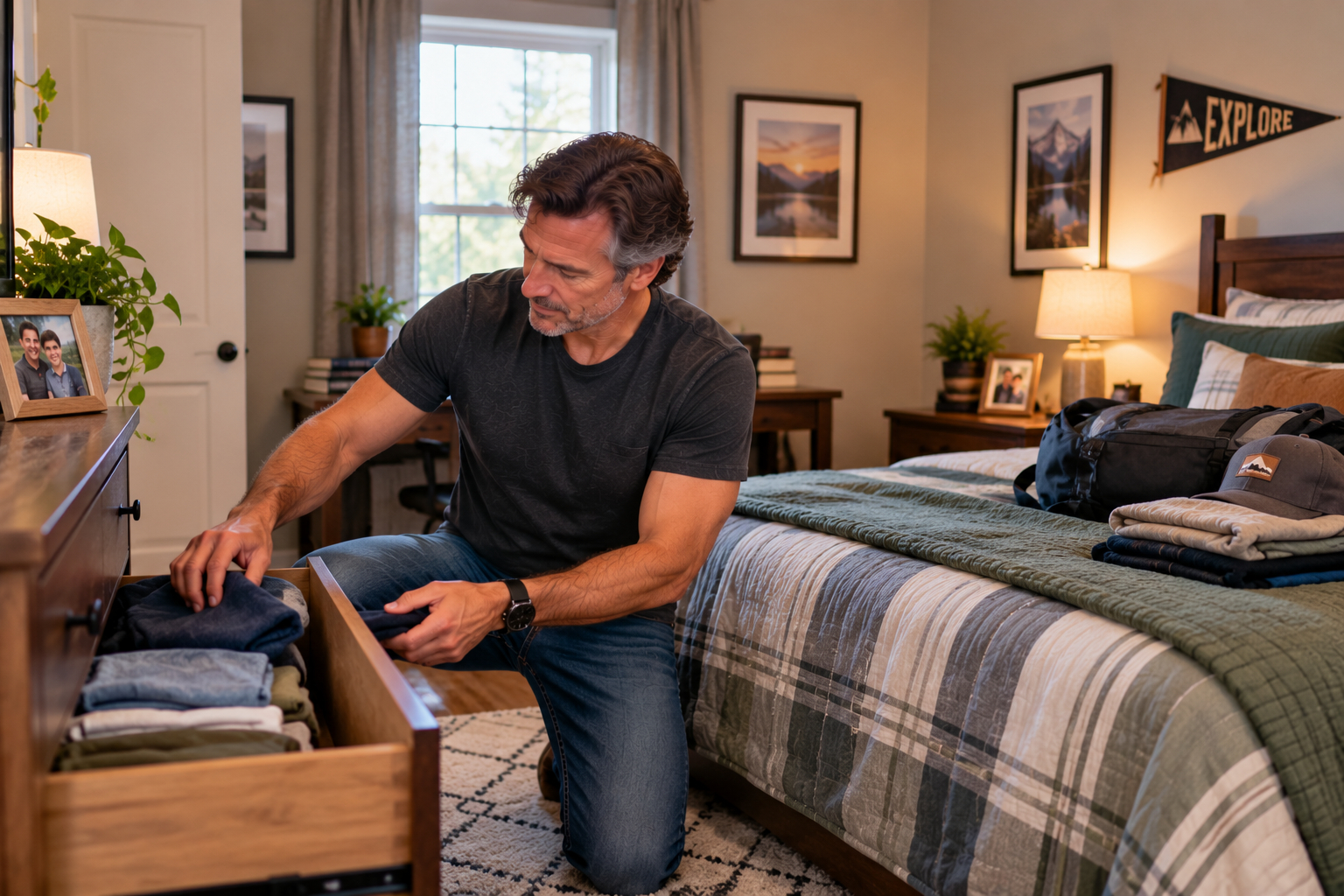
Your bedroom should not look like a college apartment with a mattress, television, and pile of clothes. It is the first room you see in the morning and the last one you see at night. Give it enough attention to create order.
Use a proper bed frame, clean bedding, bedside tables, lamps, and a place for clothing. Keep the floor clear. The room does not need to be styled for a magazine. It should communicate that an adult lives there and takes care of himself.

Build a Living Room for Living
The television can be part of the room without becoming the entire reason the room exists. Arrange seating so another person can sit down and have a conversation. Add a table where a drink can be placed. Use a rug if the room needs warmth. Keep enough open space that the room feels calm rather than crowded.
A grown man’s living room should work when you are alone and when someone visits. That simple standard prevents the room from becoming either a showroom or a cave.
Put Something Meaningful on the Walls
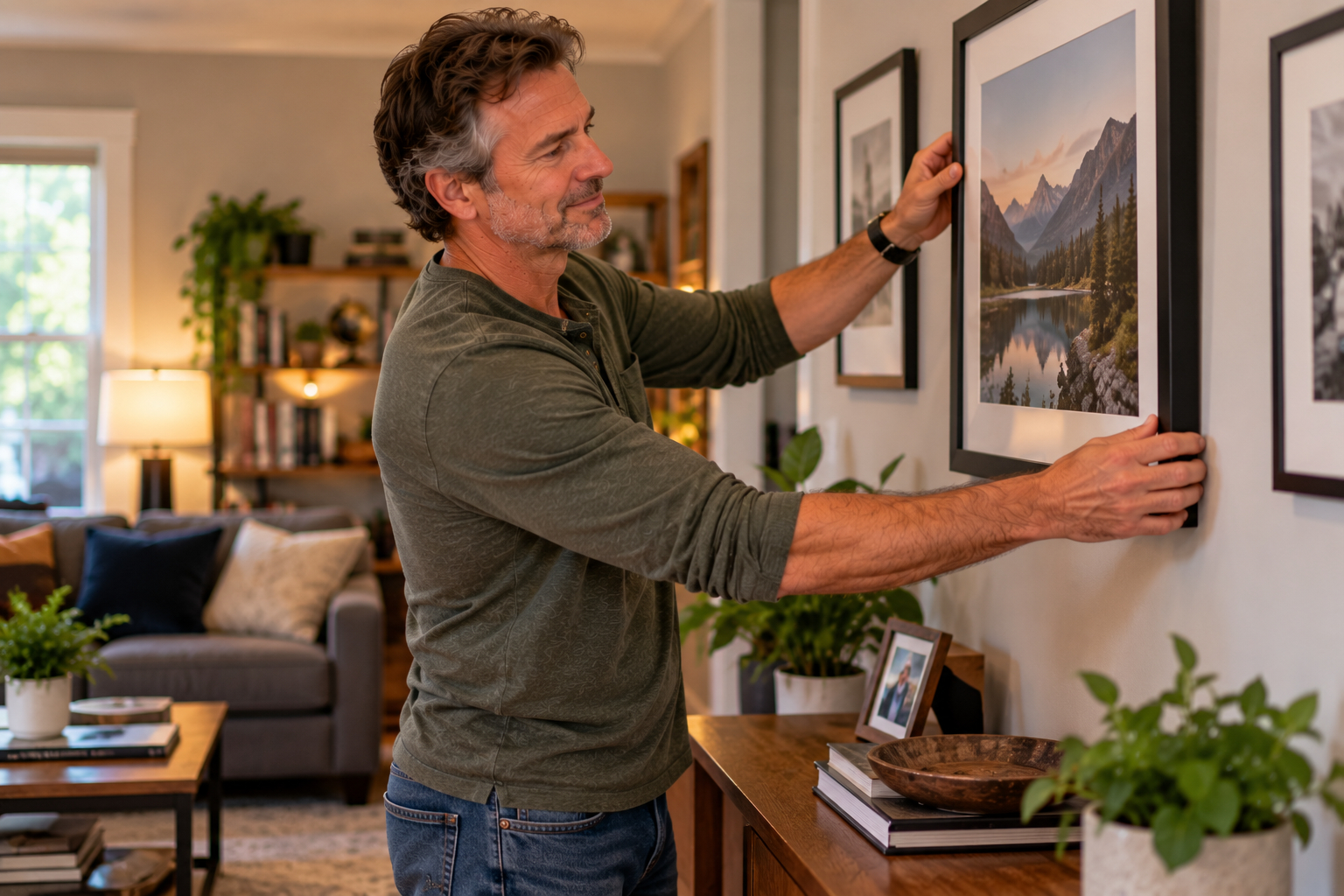
Bare walls make a place feel temporary. You do not need expensive art. Frame photographs you actually care about. Hang a print from a place you visited, a map, landscape photography, or something connected to an interest. The important thing is that you chose it.
A few well-placed pieces are better than filling every wall. Personal does not mean cluttered. It means the room contains evidence of a life.
Create a Kitchen You Can Actually Use
Living alone after divorce can expose how much of your old household routine depended on someone else. The kitchen is where that becomes obvious. You do not need to become a chef, but you should be able to prepare several decent meals without treating takeout as your permanent food plan.
Keep the equipment simple: a good skillet, saucepan, sheet pan, cutting board, sharp knife, basic utensils, food-storage containers, and enough dishes for yourself and guests. Stock ingredients you actually use. A functional kitchen saves money and makes the house feel inhabited.

Make Room for Your Children
If your children visit—even if they are grown—make room for them in a way that feels intentional. They should not feel as though they are sleeping in a storage room that happens to contain a bed.
Provide clean bedding, towels, a place for a bag or clothes, and enough empty space that they can settle in. A photograph or familiar object can quietly communicate that this home includes them too. You are not recreating the old family house. You are showing them that your relationship still has a place in your new one.
Have a Bathroom You’re Not Embarrassed for Someone Else to Use
This is basic, but it matters. Keep the bathroom clean. Use decent towels. Replace the worn shower curtain. Have soap, toilet paper, and a wastebasket. Put personal clutter away.
A bathroom is one of those rooms that reveals whether a home is being maintained or merely occupied. You do not need spa-level decoration. You need cleanliness, working fixtures, and evidence of routine care.
Learn What Good Lighting Can Do
One overhead light can make even a decent room feel harsh. Lamps change a room faster and more cheaply than many pieces of furniture. Use light at different heights: a floor lamp beside a chair, table lamps in the bedroom, and task lighting where you work or cook.
Warm evening light makes a room feel settled. It also creates a clear difference between a space that was merely furnished and one that was considered.
Cleanliness Is Part of Creating a Home
Decorating cannot rescue a dirty house. Make the bed. Wash dishes before they become a project. Vacuum. Wipe down the bathroom. Put laundry away. Create a short weekly routine instead of waiting until the place becomes unpleasant.
This is not about impressing a woman who might visit. It is about respecting the environment you live in every day. A clean home reduces friction. You know where things are, you can invite someone in without panic, and you are not constantly surrounded by unfinished chores.
Don’t Design Your Home Around Dating
It is easy to imagine how a future date will judge the place and then decorate for an audience that does not exist yet. That is another version of the waiting-room problem. Your home should work for you first.
Make it welcoming, clean, and adult because those are good standards, not because you are building a set for dating. If a future partner eventually becomes part of your life, she should be entering a home that already reflects a functioning man—not rescuing an unfinished one.
Give Yourself One Space That’s Completely Yours
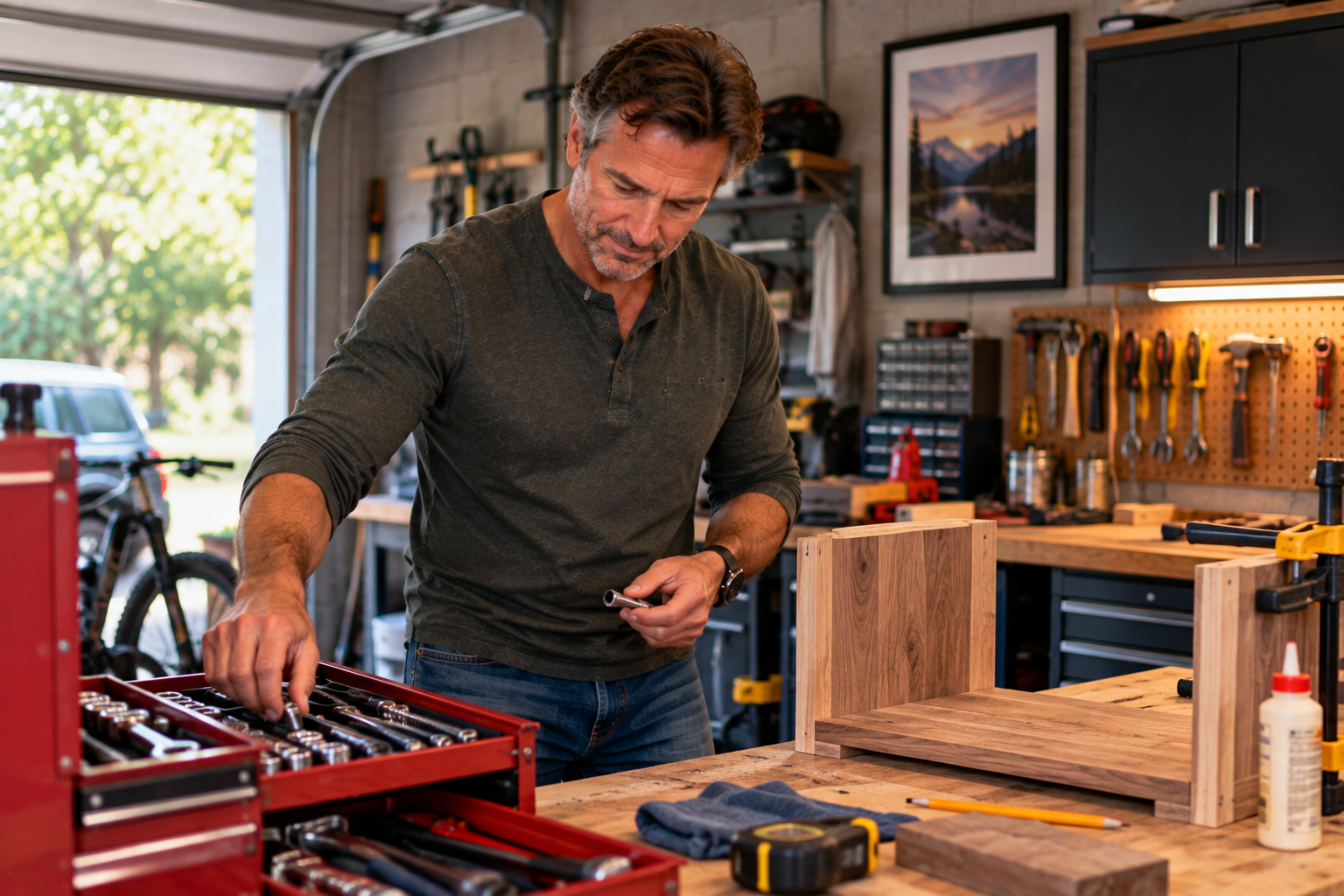
One benefit of starting over is that you can create space around an interest without negotiating every detail. That may be a workbench, reading corner, music room, home gym, desk, photography area, or place to restore something with your hands.
Do not confuse this with filling a room with expensive toys. The point is to create a place that invites you to do something rather than merely consume something. A hobby space can become one of the strongest symbols that independence is not only loss. It also creates room for parts of you that may have been neglected.
Don’t Buy Everything in the First Month
Your first version of the house will not be the final version. Live in it long enough to discover what is missing. You may think you need another chair and discover that you really need better storage. You may plan a formal dining area and realize you would use a desk more often.
Allow the home to develop. Buying slowly also gives you time to choose pieces you like rather than accepting whatever was available on the day you felt impatient.
Make It a Place Where People Want to Stay
A good home has a subtle generosity to it. There is somewhere comfortable to sit. The room is clean without feeling sterile. You can offer coffee, a meal, or a cold drink. People do not feel as though they are intruding on a private recovery bunker.
Invite friends over before the house feels perfect. A home becomes a home partly through use. Conversations, meals, laughter, visits from your children, and ordinary evenings create the emotional history that a newly purchased sofa cannot provide.

Remember That This House Doesn’t Have to Be Forever
You may be downsizing after divorce. You may be renting when you expected to own. You may be living in a neighborhood you never imagined choosing. None of that means you should withhold effort until the next move.
You can make a temporary address feel like home without pretending it is permanent. Buy things that can move with you. Improve what you can. Learn what kind of space suits you. This home can be both a real home now and one step in a longer rebuilding process.
The Goal Isn’t a Bachelor Pad
The phrase “bachelor pad” often suggests a place designed around freedom from responsibility: a giant television, minimal furniture, empty refrigerator, and no sign that anyone expects much from the man living there. That image may feel amusing for a few weeks after divorce. It is a poor long-term vision for a man starting over at 50.
The goal is not to prove that you are single. The goal is to build a place that supports the man you are becoming. Comfortable. Functional. Clean. Personal. Welcoming. Stable.
Eventually, you should be able to walk into the room at the end of the day and feel something different from the first night you arrived with boxes. You may still live alone, but alone no longer has to mean displaced. The room can contain your books, your photographs, your routines, your work, your people, and the evidence that you kept building.

The Grown Man’s Home
Make Your Current Life Worth Coming Home To
You do not need a luxury house, a designer, or a new relationship to make a home. Give your life a proper bedroom, a usable kitchen, a welcoming living room, space for your children and friends, and one corner that belongs to your interests. The goal is simple: stop living as if your real life has not started yet.