
Brazilian Dating Culture For Divorced Men
Dating In Brazil: Relationship Norms And Traditions—and Their Effects
The most useful question is not what Brazilian women are like. It is how two specific people can understand affection, commitment, family, money, language, and everyday life without replacing observation with stereotypes.
For a divorced man, dating in Brazil can feel familiar enough to be comfortable and different enough to force him to reconsider some of his assumptions about relationships.
Brazilian dating culture is often described with predictable words: passionate, romantic, affectionate, and spontaneous. Those descriptions are not necessarily wrong, but they are incomplete. Brazil is a vast and socially diverse country where relationship expectations can vary according to age, region, family background, religion, education, social class, and whether someone lives in a major city or a smaller community.
A date in São Paulo may unfold differently from one in Rio de Janeiro, Salvador, Recife, Curitiba, Belo Horizonte, or a smaller town in the interior. A Brazilian woman in her twenties may have different expectations from a divorced woman in her forties who has children, a career, and years of relationship experience.
For an American man dating after divorce, the important question is not, “What are Brazilian women like?” The better question is: How might Brazilian relationship norms affect the way two specific people communicate, date, handle family involvement, define commitment, express affection, and build trust?
Dating In Brazil After Divorce: Why It Can Feel Different
Divorce changes the way many men approach dating. After years or decades of marriage, a man may be more cautious about emotional vulnerability, financial entanglement, commitment, and repeating past mistakes. He may value independence more than he did when he was younger. He may also have children, an established career, property, financial obligations, and a life that cannot easily be rearranged around a new romance.
Then he begins dating someone from Brazil. Suddenly, behaviors he considers intense may be normal expressions of interest to her. Questions he considers personal may be signs of sincere curiosity. Frequent communication may feel reassuring to one person and overwhelming to the other. Family involvement may be welcomed by one partner and interpreted as intrusion by the other.
This is where cultural differences in Brazilian dating have real effects. The difference itself is rarely the biggest problem. The bigger problem is the meaning each person assigns to that difference.
If she messages several times during the day, is she affectionate or controlling? If he wants a night alone, is he independent or losing interest? If her family asks about his divorce, children, work, and intentions, are they intrusive or trying to understand the man who has entered her life?
Without communication, both people may interpret unfamiliar behavior through the lens of their own culture and relationship history. That is how misunderstandings begin.

The Difference Between “Ficar,” Dating, And A Serious Relationship
One of the most useful things an American man can understand about Brazilian dating culture is that not every romantic interaction carries the same definition of commitment.
The Portuguese verb ficar can describe a romantic or physical involvement that does not necessarily mean the couple has entered an exclusive, committed relationship. The exact meaning depends on context, age, social circle, and the people involved. It might describe anything from kissing someone at a party to seeing the same person casually over a period of time.
This matters because an American man may assume that repeated dates, regular messaging, physical affection, and emotional closeness automatically mean exclusivity. That assumption can create trouble anywhere, but cross-cultural dating makes explicit communication even more important.
These questions may feel unromantic, but clarity is more valuable than guessing. A divorced man should be especially careful not to assume that strong chemistry equals commitment. After a painful marriage or a long period of loneliness, intense attention can feel enormously significant. It may be significant—but only a conversation can establish what the relationship actually means.
Affection Can Be More Visible—But It Is Not Compatibility
One of the commonly noticed differences when dating a Brazilian woman after divorce is the potential for greater comfort with visible affection. Holding hands, touching an arm during conversation, sitting close together, hugging, and kissing in public may feel more natural in many Brazilian social settings than they do to some Americans.
For a divorced man who spent years in a cold, distant, or affectionless marriage, this can be powerful. Being touched warmly again can feel like rediscovering a part of life that disappeared.
But this creates a potential emotional blind spot. Affection is not the same thing as compatibility. A woman can be warm and affectionate while having completely different expectations about money, marriage, children, jealousy, religion, lifestyle, or where to live. A man can feel desired without actually being understood.

Physical warmth may make a relationship feel emotionally advanced before the difficult conversations have happened. Enjoy the affection. Appreciate the connection. But still ask the questions that determine whether two lives can actually fit together.
Communication May Be Frequent And Emotionally Expressive
Some divorced American men become accustomed to independence. They may spend most of the day without checking in with anyone. They may view communication as functional: send a message when there is something specific to say.
A romantic partner may have a very different expectation. Regular messages throughout the day—good morning, how is your day going, did you eat, when will you be home, good night—can become part of the rhythm of a relationship.
To one person, this feels intimate. To another, it feels like surveillance. Neither interpretation should automatically be assumed.
The effect of different communication norms becomes particularly important in long-distance relationships between the United States and Brazil. Text messages, video calls, voice messages, and photographs may be the primary ways a couple maintains intimacy between visits.
That creates another challenge: constant digital contact can produce emotional intimacy faster than real-world compatibility can be tested. You can spend hundreds of hours messaging someone and still not know how that person handles stress, disappointment, boredom, money, illness, family conflict, travel delays, or ordinary domestic responsibilities.
Family May Have A Larger Role Than You Expect
For some American men, meeting the family happens after a relationship has become serious. In Brazil, family connections can play a highly visible role in everyday social life, although the degree of involvement varies considerably between families.
You may meet parents, siblings, cousins, aunts, uncles, or close family friends. You may be invited to a birthday celebration, Sunday lunch, barbecue, holiday gathering, or another occasion where the number of people seems to grow every time the door opens.
For a divorced man who has built a highly independent life, this can be either refreshing or overwhelming. The key is not to romanticize Brazilian family culture or fear it. Pay attention to the actual dynamics of the specific family.
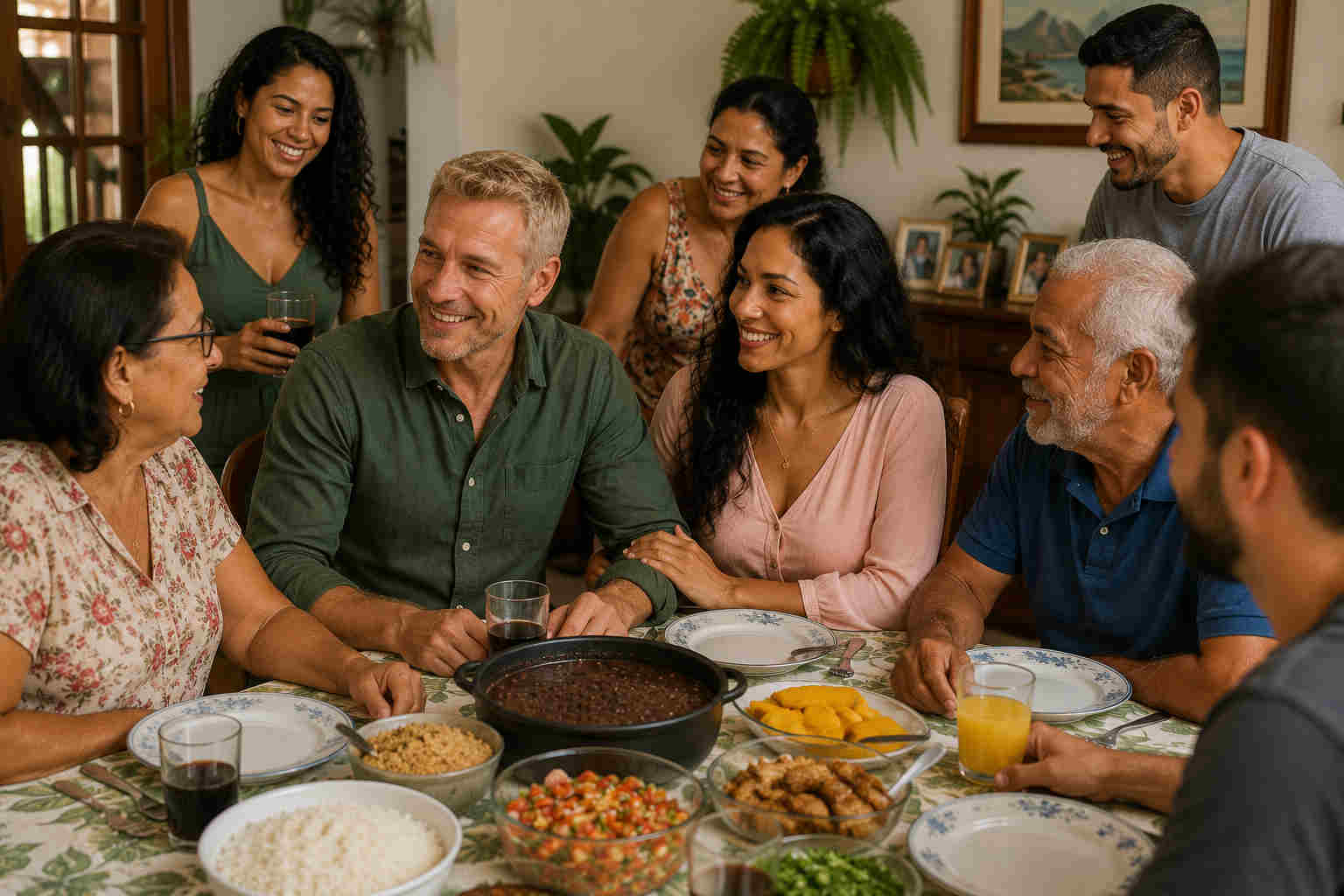
Is the family warm but respectful of boundaries? Does your partner make her own decisions? Can the two of you disagree privately without relatives becoming involved? Are financial expectations reasonable? Can you build a relationship as two adults while still maintaining family connections?
Family closeness can provide community, emotional support, and belonging. But closeness without boundaries can create pressure. The issue is not how many relatives are involved in someone’s life. The issue is whether the couple remains capable of making its own decisions.
Meeting Her Family May Carry Emotional Weight
If a Brazilian woman introduces an American man to her family, he should not automatically assume that marriage is imminent. At the same time, he should recognize that meeting relatives may have emotional significance.
The best approach is neither overconfidence nor suspicion. Observe. How does she introduce you? How does her family interact with you? Does she seem comfortable discussing the relationship openly? Do her words about the future match her behavior?
A divorced man should be careful about one particular temptation: interpreting family warmth as proof that the relationship is guaranteed to succeed. You can be welcomed warmly and still discover incompatibilities later.
A wonderful lunch with her parents cannot answer questions about where you will live, whether you want to remarry, how finances will work, whether either person wants children, or how existing children from previous relationships will fit into the future.
Jealousy, Trust, And Personal Boundaries
Discussions about relationship norms in Brazil sometimes include jealousy, but broad stereotypes are dangerous. Not every Brazilian is jealous, possessive, or emotionally intense, just as not every American values extreme independence.
What matters is that two people may have different definitions of acceptable behavior. Is it appropriate to maintain close friendships with former partners? Is flirting harmless? Is dancing closely with someone else acceptable? Should passwords remain private? How much communication is expected during a night out? Are social-media interactions meaningful?

What one person calls harmless may feel disrespectful to the other. A divorced man should not wait for a conflict to discover these differences. Talk about exclusivity and boundaries before emotions become explosive.
Healthy affection should never require surrendering privacy, friendships, freedom of movement, financial independence, or the right to say no. Culture can explain a difference. It does not excuse controlling behavior.
Time, Plans, And Spontaneity
Americans often stereotype Brazilians as relaxed about time, but reality is more complicated. Expectations differ according to person, city, professional environment, and type of event. Still, a man who values precise scheduling may occasionally encounter a more flexible attitude toward social plans.
A 7:00 p.m. dinner may not always mean the same thing to both people. For one person, arriving at 7:15 is late. For another, the evening has barely begun.
This may seem trivial, but small differences become important in relationships because they repeat. One partner feels rushed; the other feels disrespected. One wants a detailed itinerary; the other wants freedom to change plans.
The solution is not deciding which culture is correct. The solution is specificity. If you have a flight, medical appointment, tour reservation, or event that begins at a fixed time, say so clearly. If the evening is flexible, allow it to be flexible.
Gender Roles, Money, And Shared Expectations
Some American men travel internationally expecting to find a universally “traditional” dating culture. This expectation can create disappointment because Brazil cannot be reduced to a single model of relationships.
You may meet highly independent professional women who have no interest in traditional gender roles. You may meet women who value more conventional courtship. You may meet someone whose views are traditional in one area and progressive in another.
The same is true of American men. Instead of searching for a stereotype, discuss actual expectations. Who pays for dates? What does each person expect from marriage? Would both partners work? Who manages household responsibilities? Does either person expect financial support for relatives? How would decisions be made? Where would the couple live? What happens if one person earns substantially more than the other?

These questions matter far more than labels such as “traditional” or “modern.”
How Money Can Change The Relationship
Financial differences deserve special attention in international dating. If an American man earns significantly more than the woman he is dating, generosity may feel natural. He may want to pay for dinners, travel, hotels, experiences, or gifts.
But money can quietly change the emotional structure of a relationship. If he begins paying her rent, debts, living expenses, family expenses, or recurring bills before they have built a real-world relationship, it becomes harder to evaluate the connection objectively.
Would she still be there without the financial support? Does he feel free to end the relationship? Does she feel able to disagree with him? Has generosity created an invisible obligation?
The healthiest early relationship is one in which both people can freely choose each other without becoming financially trapped. A divorced man who has already experienced the financial consequences of separation should be particularly careful. Romance does not require financial recklessness.
Why Learning Portuguese Matters
You do not need perfect Portuguese to begin dating in Brazil, particularly in major cities and international circles. But relying entirely on translation apps or expecting your partner to speak English all the time can limit the relationship.
Language affects more than information. It affects humor, vulnerability, personality, family interactions, arguments, affection, and the ability to understand subtle emotional meaning.
A woman may appear quieter in English simply because she cannot fully express her personality. An American man may sound less warm in translated Portuguese because his natural humor and nuance disappear.
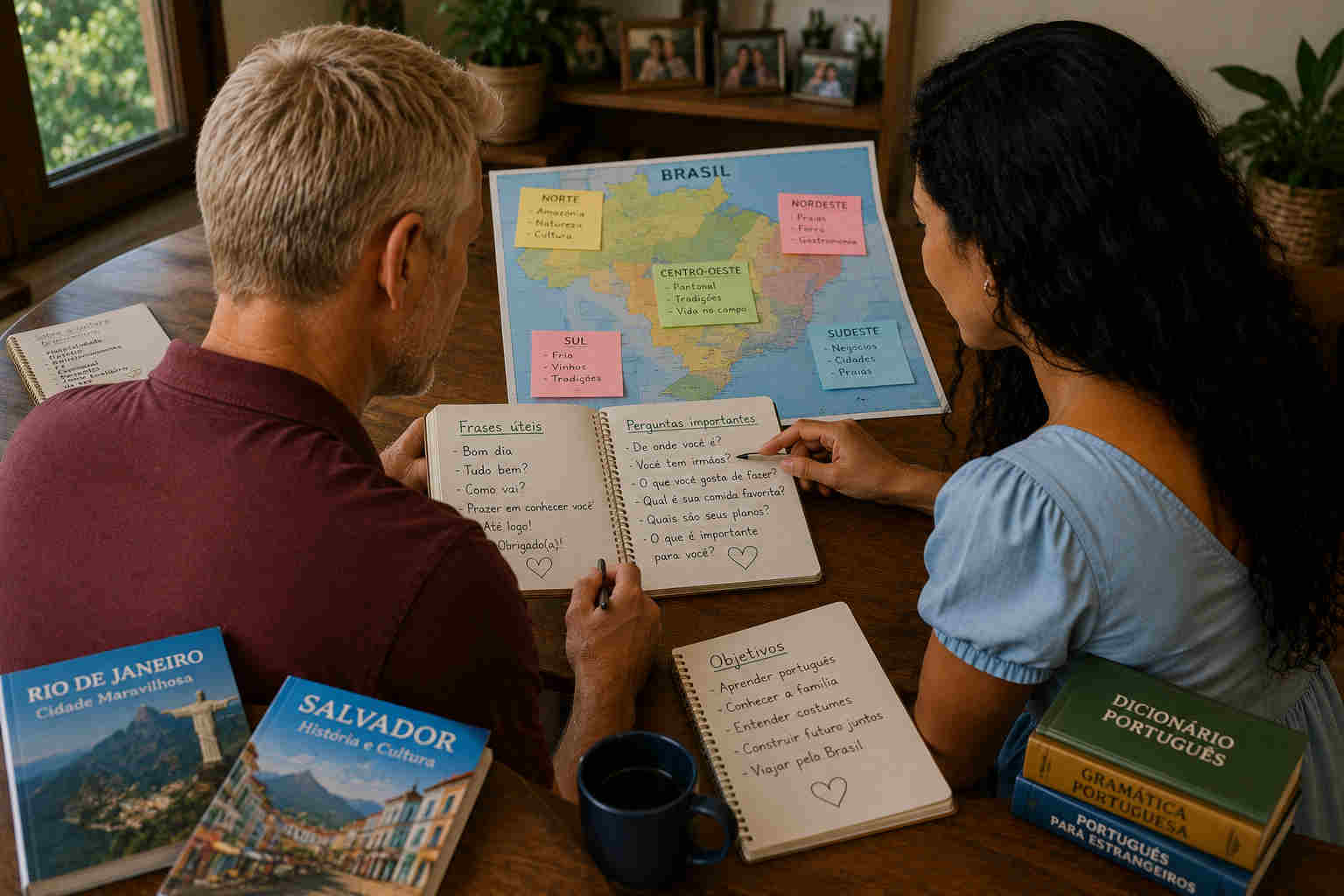
Learning Portuguese sends a meaningful message: I want to enter your world, not simply bring you into mine. Even basic conversational Portuguese can improve interactions with family members, reduce misunderstandings, and reveal dimensions of a partner’s personality that might otherwise remain hidden.
Regional Differences Across Brazil
Brazil is enormous. Dating in São Paulo is not identical to dating in Rio de Janeiro, Recife, Salvador, Brasília, Porto Alegre, Manaus, Fortaleza, or a smaller inland city.
Regional identity can influence accent, food, music, pace of life, religion, family traditions, social habits, and expectations about relationships. São Paulo may offer the pace and anonymity of an international megacity. Rio has its own social rhythms. Northeastern cities carry distinct regional identities and traditions. Southern Brazil has different historical and cultural influences. Smaller cities may have tighter social networks where family and community relationships are more visible.
An American man should therefore avoid saying, “I understand Brazilian women.” A better attitude is: “I want to understand this woman, her family, her city, and the experiences that shaped her.”
How Divorce History Affects Cross-Cultural Dating
A divorced man does not arrive in Brazil as a blank page. He brings his past with him.
Perhaps his former marriage became emotionally cold. Perhaps communication collapsed. Perhaps infidelity destroyed trust. Perhaps financial disputes became brutal. Perhaps he stayed too long in an unhappy relationship because he feared starting over.
These experiences can affect how he interprets a new relationship. Frequent messages may trigger fears of control. A request for help may trigger fears of financial exploitation. Strong affection may feel suspicious because he has forgotten what healthy affection feels like. A disagreement may seem like the beginning of another failed relationship.
This is why self-awareness matters. Do not make a Brazilian woman pay emotionally for what your former spouse did. But do not ignore lessons learned from your divorce either. The goal is neither blind trust nor permanent suspicion. It is informed judgment.
Online Chemistry Versus Meeting In Person
Many international relationships begin online. This can be exciting, but long-distance communication has a hidden weakness: both people control much of what the other person sees.
Video calls may happen when everyone is prepared and in a good mood. Messages can be edited. Difficult conversations can be delayed. The boring parts of daily life remain invisible.
Then the first meeting happens. Suddenly there are airports, traffic, fatigue, restaurant choices, language barriers, missed plans, different sleeping habits, and hours spent together without a screen.

This is not a problem. It is valuable information. The goal of meeting in Brazil should not be to force a fantasy to succeed. It should be to discover whether the online connection can exist comfortably in the real world.
A successful first meeting does not require perfection. In fact, small problems may teach you more than perfect dates. How does she respond when something goes wrong? How do you respond? Can you solve a problem together without blame? Can you enjoy ordinary time together? Can you sit in silence without panic?
Leaving The Tourist Bubble
Rio’s beaches, Brazilian music, beautiful restaurants, tropical weather, historic neighborhoods, and exciting nightlife can create an intense romantic atmosphere. But vacation chemistry is not daily-life compatibility.
A man should eventually see something beyond hotels, tourist attractions, and carefully planned dates. Go grocery shopping together. Spend an ordinary afternoon without an itinerary. Meet friends. See how each person handles tiredness. Make a simple meal. Navigate a disagreement. Experience a day when nothing exciting happens.

Real relationships are not built entirely during sunsets and vacations. They are built on Tuesdays when someone is tired, the internet stops working, plans change, and dinner still needs to be figured out.
Brazilian Social Warmth Can Be Misread
A particularly important lesson for an American man is that friendliness does not automatically equal romantic interest.
Brazilian social interactions can include warmth, physical proximity, animated conversation, eye contact, hugs, and expressive communication. A foreign man unfamiliar with these norms may interpret friendliness as attraction.
Do not assume. Pay attention to context and explicit interest. The same principle applies online. Compliments, affectionate language, and frequent communication can feel intensely romantic, but they should be evaluated alongside consistency, honesty, real-world behavior, and willingness to respect boundaries.
Religion, Holidays, And Traditions
Brazil has diverse religious traditions, and personal beliefs vary enormously. Catholicism has historically played a major cultural role, while evangelical Protestant communities have grown substantially, and Afro-Brazilian religions such as Candomblé and Umbanda are also part of the country’s religious landscape. Many Brazilians may also be nonreligious or combine cultural traditions in ways that do not fit simple categories.
For a serious couple, religion can affect marriage expectations, family acceptance, holidays, raising children, and lifestyle choices.
Traditions may also shape the rhythm of the year. Christmas gatherings, New Year’s celebrations, Carnival, birthdays, weddings, family lunches, and regional festivals can carry deep personal meaning.
An international relationship becomes stronger when both people show genuine curiosity about each other’s traditions rather than treating one culture as the default and the other as an exotic addition.
Safety And Independent Travel
Brazil contains wonderful cities, communities, and people, but a foreign visitor should use normal travel judgment. Do not carry unnecessary valuables. Protect your passport. Use appropriate transportation. Be careful with excessive alcohol. Do not give a new romantic interest control of your money, documents, phone, or travel arrangements.
Maintain independent access to your hotel, transportation, and return flight. These precautions are not accusations against the person you are dating. Independence is simply wise when traveling internationally to meet someone.
A healthy partner should not be threatened by reasonable safety precautions.
Watch How A Person Responds To The Word “No”
One of the most revealing moments in any relationship comes when someone does not get what they want.
Say no to an expensive request. Change a plan. Ask for a night alone. Set a financial boundary. Decline to make an immediate commitment. Then observe.
Does the other person remain respectful? Do they become angry? Do they use guilt? Do they threaten to end the relationship? Do they suddenly withdraw affection? Do they respect your decision even when disappointed?
The response to a reasonable boundary can reveal more than weeks of romantic messages. This principle is universal. It applies in Brazil, the United States, and everywhere else.
What A Divorced Man Should Look For In A Healthy Brazilian Relationship
The healthiest cross-cultural relationships are not built on one person abandoning his or her identity. They are built when both people become curious about the other’s world.
Look for a relationship where you can ask questions without being mocked. Where cultural differences can be discussed without every disagreement becoming an accusation. Where affection does not require surrendering independence. Where financial boundaries are respected. Where both partners make sacrifices rather than one person carrying the entire relationship.
Look for consistency between words and actions. Look at how the person treats waiters, drivers, family members, strangers, and people who cannot offer anything in return. Notice how conflict is handled. Pay attention to whether you feel increasingly clear or increasingly confused.
A healthy relationship does not mean the absence of uncertainty, particularly when distance, language, and immigration questions are involved. But over time, a good relationship should create greater understanding—not a permanent state of emotional chaos.
Final Thoughts: Date The Person, Not The Fantasy Of Brazil
Brazil can be an extraordinary place to build a relationship. Its diverse cities, strong social connections, family traditions, expressive culture, and warmth can offer experiences very different from the world a divorced American man has known.
But Brazil should never become a fantasy solution to divorce. A Brazilian woman is not a symbol of escape from American dating. She is an individual with her own history, ambitions, flaws, family relationships, boundaries, disappointments, and expectations.
That is precisely what makes the possibility of a genuine relationship meaningful.

The goal is not to find someone who conforms to a stereotype about Brazilian women. It is to meet a person whose values, character, lifestyle, and vision for the future are compatible with yours.
Learn about Brazilian dating culture, but do not let cultural generalizations replace observation. Respect traditions, but maintain your judgment. Enjoy affection, but do not mistake intensity for compatibility. Be generous, but maintain financial boundaries. Learn some Portuguese. Meet the family. Experience ordinary life together. See what happens when plans go wrong. Pay attention to how both of you handle the word “no.”
And above all, remember what divorce may have already taught you: the right relationship is not simply the one that begins with the strongest excitement. It is the one that continues to make sense after reality arrives.