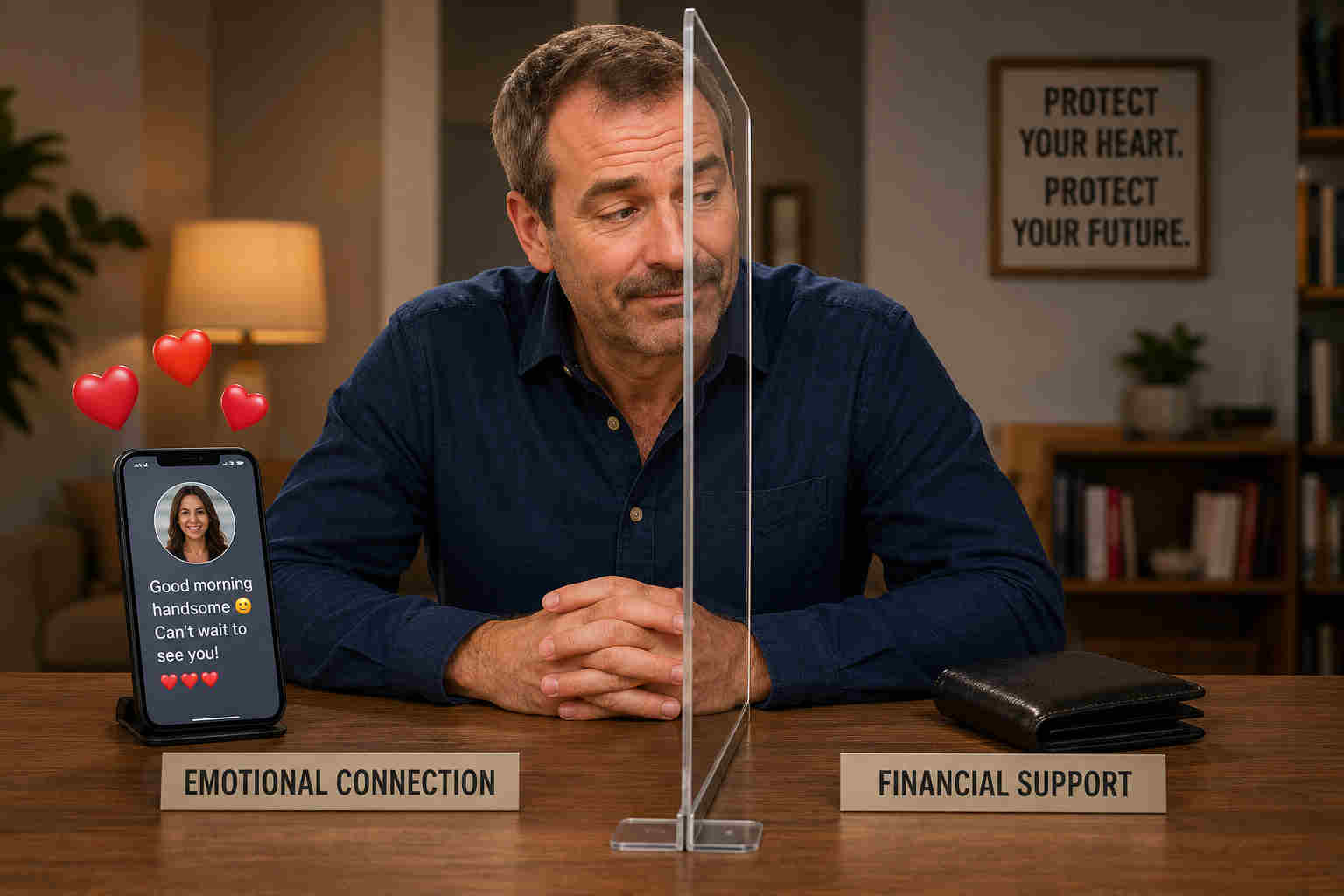
The moment money enters an untested relationship, the relationship itself changes
There is a moment in some online relationships when everything quietly changes. It may not involve an obvious scam, a stranger claiming to be trapped at an airport, or an outrageous request for thousands of dollars. A woman you have been talking to simply mentions a problem. Her laptop stopped working. Her rent is late. Her daughter needs something. She cannot afford a medical appointment. She may not even ask directly. She tells you the story and lets the silence do the work.
You send her money. Perhaps it is only $100. Perhaps you tell yourself it is a one-time gift and that you can easily afford it. Yet something important has happened: you have changed the conditions under which the relationship is developing.
Before the transfer, you were discovering whether two people who had never met were genuinely drawn to each other. After the transfer, you can no longer be completely certain what is keeping the connection alive. Would she have messaged tomorrow anyway? Would her tone have remained as affectionate? Would she still be making plans to meet? Maybe she would. The problem is that you no longer know.
You Contaminated the Experiment
Imagine meeting a woman for a normal first date. You talk for two hours, laugh together, and discover that conversation feels natural. At the end of the evening, she says she wants to see you again. That tells you something useful. She experienced your personality, voice, mannerisms, appearance, humor, and presence—and chose another date.
Now imagine that before the first date you paid her rent, replaced her phone, or covered an unexpected family expense. Does she want the next date because she likes you? She may. But you have introduced another motive. She can genuinely enjoy you and appreciate the financial help at the same time. Human motivation is rarely pure or simple.
That is precisely why you should never send money to someone you have not met. It is not only about identifying criminals. It is about protecting the integrity of courtship. You want to learn whether she chooses you when there is nothing to gain except the experience of being with you.
The Relationship May Become More Intense After the First Payment
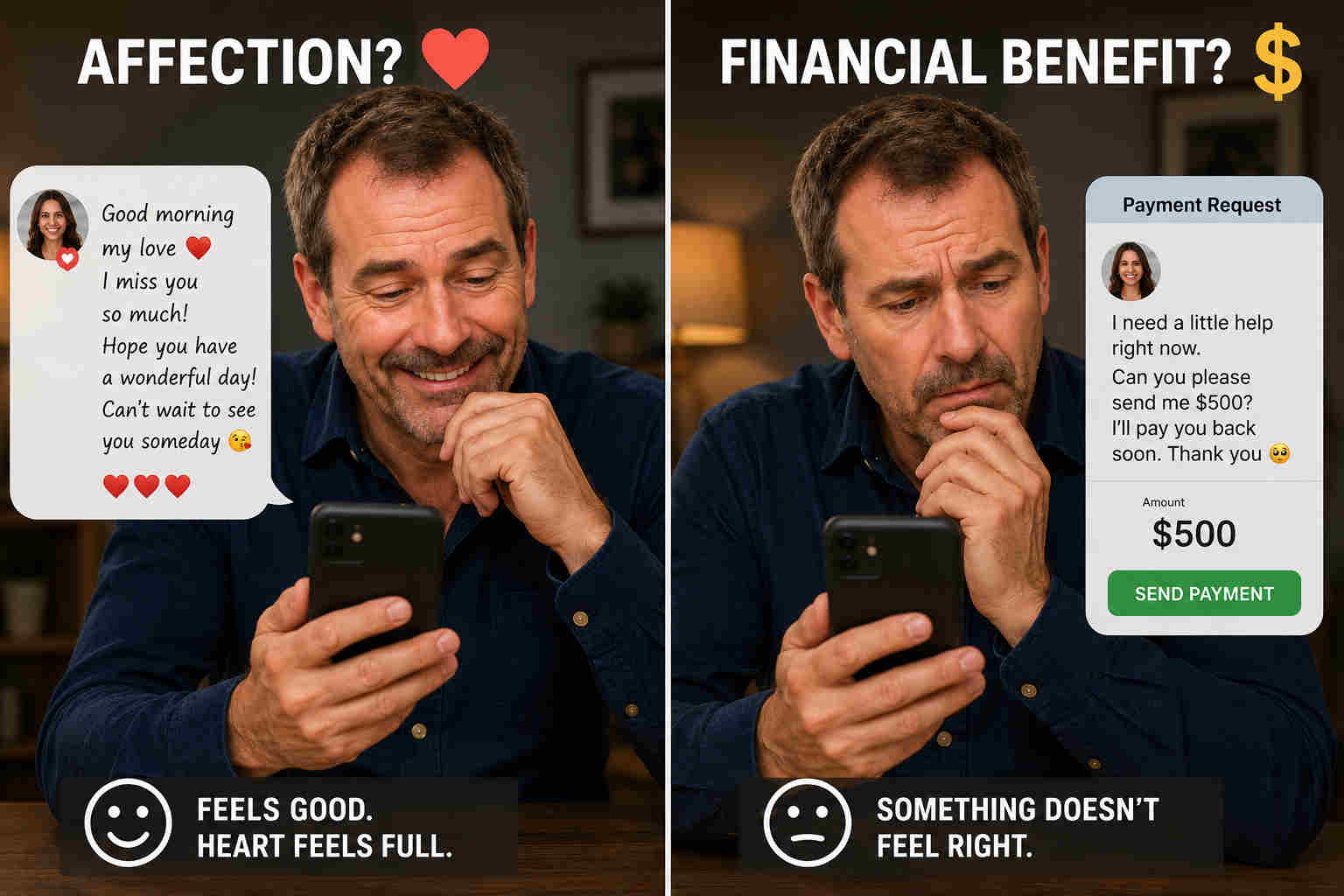
Pay close attention to what happens after the first financial gift. Sometimes the relationship suddenly becomes warmer. Messages arrive more often. Pet names appear. She talks more confidently about your future. She tells you that no man has ever treated her this well.
That emotional acceleration can feel wonderful, especially after divorce. But it raises a question you may not want to ask: did the relationship deepen because emotional intimacy grew, or because money changed the dynamic?
This does not always involve deliberate deception. People naturally become more attentive to someone who makes their life easier. Gratitude can resemble affection. Relief can resemble romantic excitement. Dependence can resemble commitment. Even the woman may not fully understand where one feeling ends and another begins.
Keeping money out of the relationship before meeting protects both people. It gives attraction an opportunity to develop without being mixed with rescue, obligation, or financial relief.

You May Begin Buying the Relationship You Want to Believe In
Money does not only influence her behavior. It influences yours. Once you send money, you become psychologically invested in believing that the relationship is genuine. The alternative is uncomfortable because it would require you to consider that your judgment may have been wrong.
You begin collecting evidence that supports the conclusion you prefer. She calls without asking for anything. She remembers your birthday. She sends photographs. She talks for hours. She says she loves you. You focus on these details because they help prove that the connection is real.
Contradictory evidence receives a different treatment. She could not meet because something happened. She became distant because she was stressed. Another request appeared because the first problem became worse. She has not introduced you to family because they are private. Each explanation could be true. The danger is developing a habit of explaining everything.
The more you send, the more emotionally expensive doubt becomes. You are no longer evaluating a new relationship. You are defending the meaning of decisions you have already made.
A Divorced Man May Be Trying to Prove He Still Has Value
Some men are not only sending money to help a woman. Without realizing it, they are using money to answer a private question: Am I still desirable?
Divorce can damage a man's perception of his value. Perhaps his former wife stopped showing affection years before the marriage ended. Perhaps he was criticized, rejected, or left for someone else. Dating apps may have produced few matches and even fewer meaningful conversations. Then an attractive woman appears online and gives him the attention he has been missing.
When she has a problem, he solves it. Each solution produces an emotional reward: gratitude, admiration, reassurance, and affection. A hidden exchange can develop. He gives financial support. She gives him the feeling that he is wanted and important.
Both people may insist that the connection is sincere. That may be true. But the important test is whether it survives when the exchange stops.
The Money Can Turn You Into a Role Instead of a Man
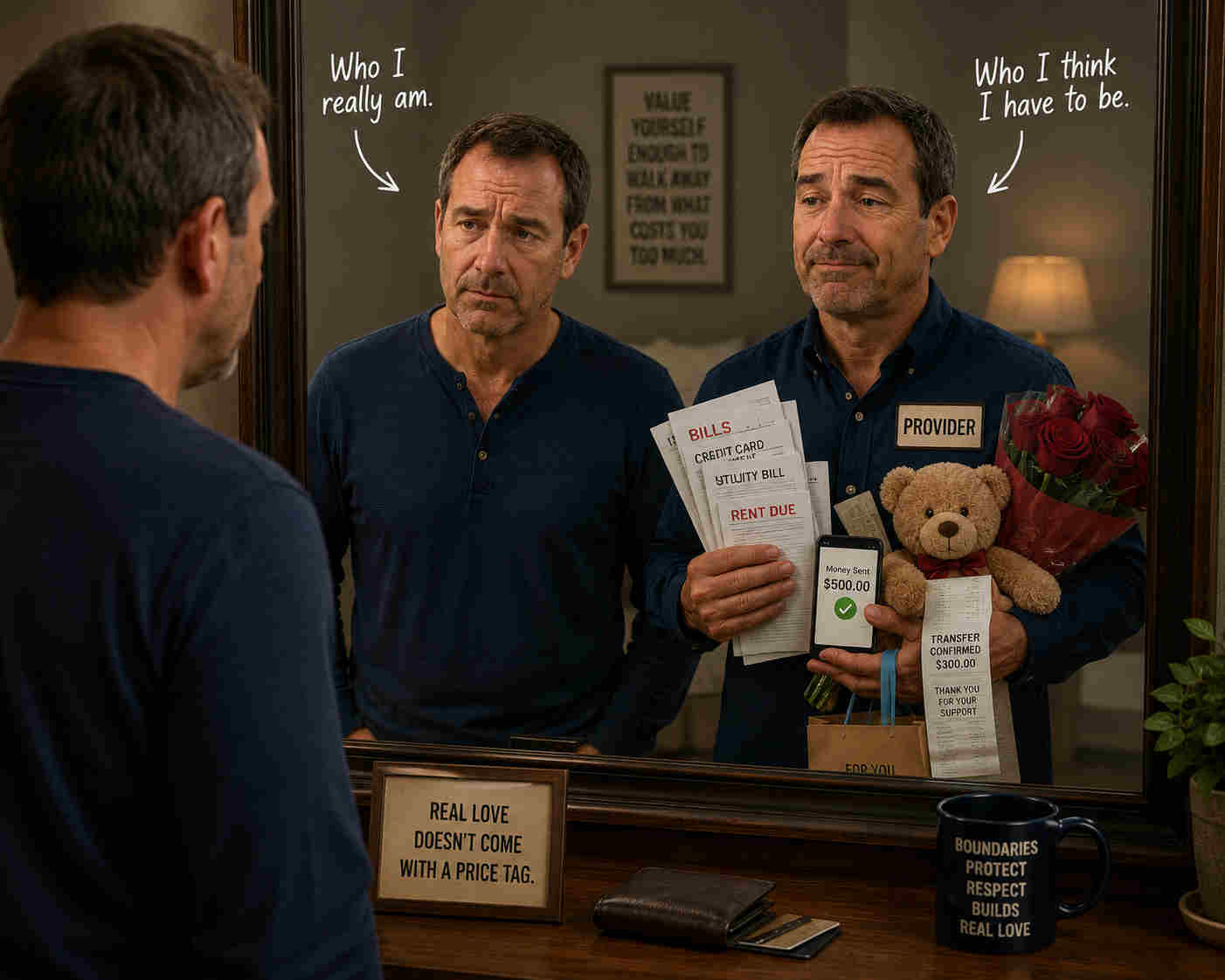
When you begin sending money before meeting, you risk being assigned a role: the provider, the rescuer, the generous foreigner, or the successful older man who fixes problems. At first, that role may feel meaningful. After a divorce in which you felt unnecessary or unwanted, being needed can be intoxicating.
But being loved and being useful are not the same thing. A woman may genuinely appreciate what you do while feeling less attraction to who you are. If your importance rests on solving problems, what happens when you are tired, have expenses of your own, or simply say no?
A healthy relationship must eventually make room for the complete man, including his limitations and needs—not merely the function he performs.
You Can Accidentally Train the Relationship
Every relationship develops patterns. In an online relationship, those patterns can become established before you have ever occupied the same room. She mentions a financial problem, you solve it, and relief follows. A month later another difficulty appears. You solve that one too.
Soon, neither person views this pattern as unusual. She has a problem. She tells you. You fix it. You may think you are demonstrating love, while she begins to interpret financial rescue as the way you demonstrate commitment.
This pattern is difficult to reverse. The first time you say no, she may feel that you have changed—and technically you have. You are trying to establish a boundary after teaching the relationship that the boundary did not exist.
The First Meeting Can Become a Debt Collection
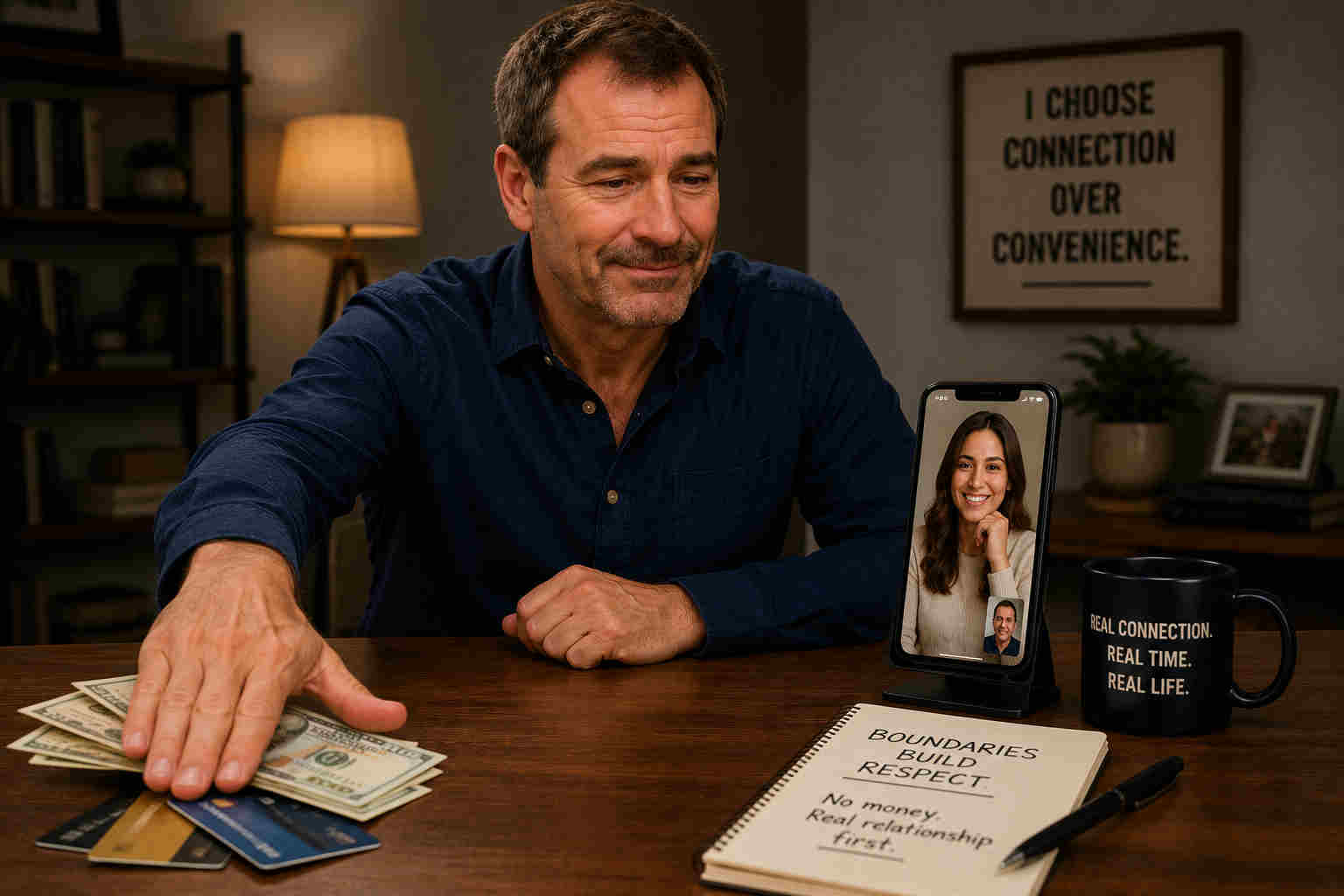
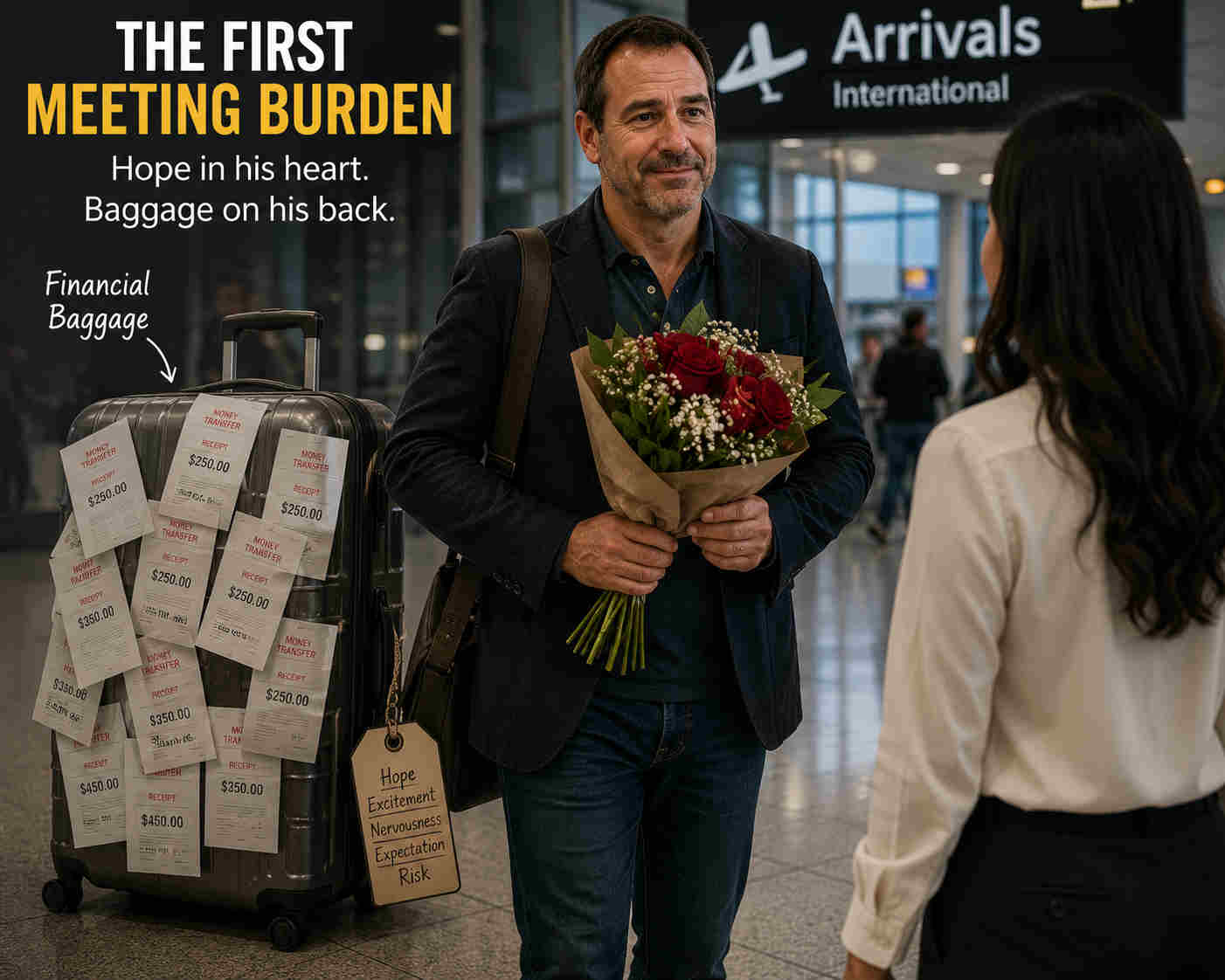
Suppose you spend six months talking to someone and send $3,000 before finally meeting. You do not arrive at that meeting emotionally neutral. You have invested money, time, hope, imagination, and pride. You want the encounter to work. More than that, you may feel that it needs to work.
That pressure changes perception. Awkward silence becomes nervousness. A lack of chemistry becomes jet lag. Emotional distance becomes a cultural difference. Visible discomfort becomes shyness. You are no longer meeting a woman simply to discover whether you connect in person. You are trying to obtain a return on an emotional investment.
The first meeting should be a discovery, not a verdict on whether the previous six months and thousands of dollars were a mistake.
You May Feel Entitled Without Realizing It
Men also need to confront the way giving can distort their own expectations. You may sincerely say that you expect nothing in return, yet repeated financial support can quietly create invisible demands.
You expect faster replies, more affection, greater availability, exclusivity, gratitude, or physical intimacy when you meet. You may never say these things directly. You may not know you expect them until she disappoints you and one sentence enters your mind: After everything I have done for her.
That sentence is a warning. She may feel obligated to maintain affection because you helped her. You may feel entitled to affection because you helped her. Neither person is entirely free, and freedom is essential to genuine romantic choice.
Money Can Delay the Moment of Truth
One of the healthiest outcomes in online dating is discovering early that someone is not right for you. It may be disappointing, but it prevents months or years of wasted time.
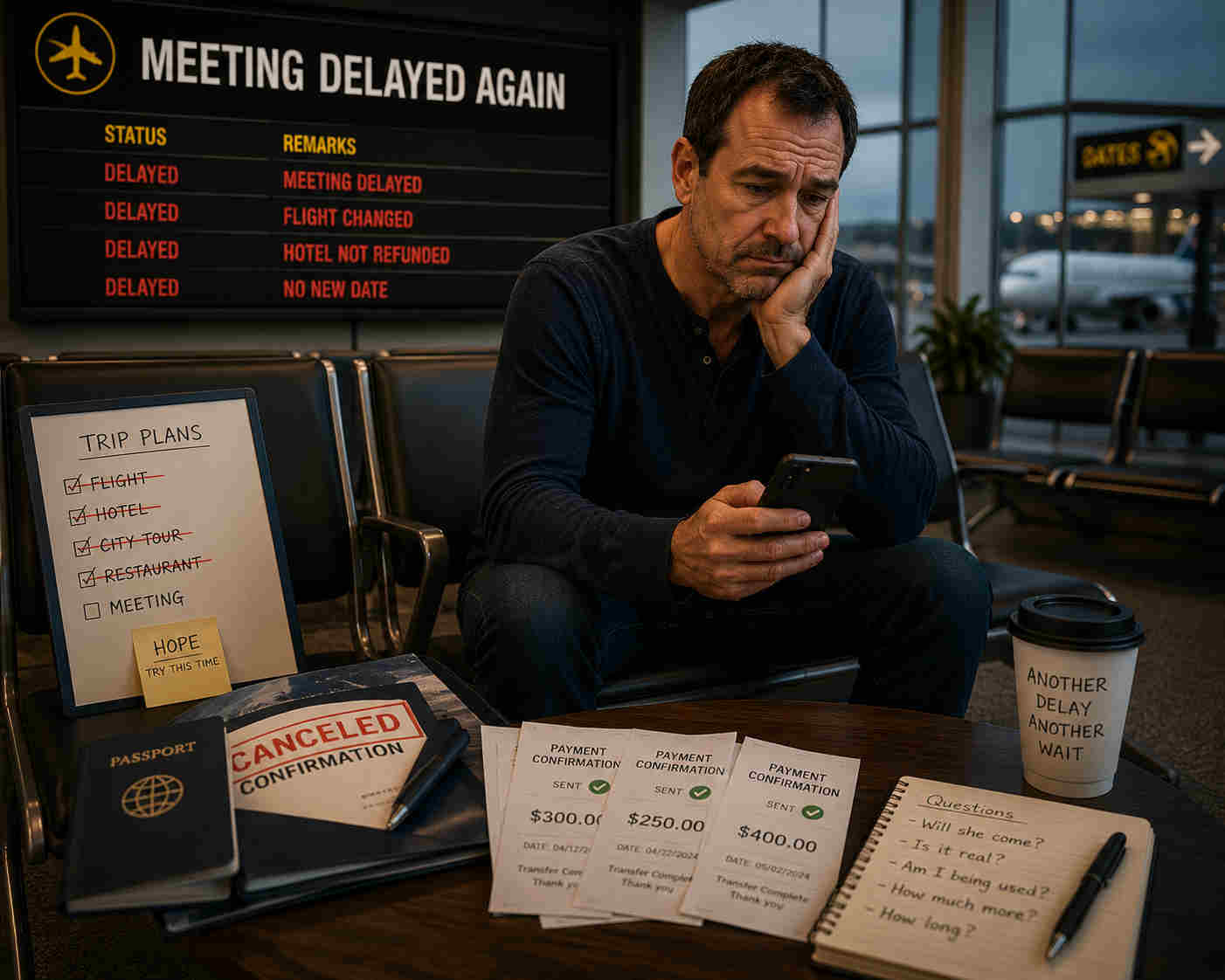
Money can postpone that discovery. A woman who might otherwise lose interest has a practical reason to maintain contact. A man who might otherwise notice incompatibility keeps trying because he has invested financially. The connection continues beyond its natural expiration date.
The relationship becomes a waiting room. There are morning messages, nighttime calls, nicknames, promises, and recurring plans. But the meeting is always delayed, or one meeting occurs without any realistic movement toward a shared future.
The Woman May Not Have Started With Bad Intentions
The familiar image of a romance scammer is a criminal who creates a false identity with the deliberate goal of stealing money. That happens, but real situations can be more ambiguous.
A real woman may join a dating site because she genuinely wants a relationship. She meets a man she likes. Later, she faces a legitimate problem, and he offers financial help. Over time, his support becomes part of her life. If her romantic interest begins to fade, ending the relationship also means losing that support.
She may not think, “I am going to scam this man.” She may tell herself that her feelings could grow, that he is a good person, that she does not want to hurt him, or that she needs help for only a little longer.
Not every financially unhealthy relationship begins with a villain. Sometimes two people gradually create an arrangement neither would have consciously chosen at the beginning.
The Rich Foreigner Problem
International dating adds the complication of relative wealth. You may not consider yourself wealthy. You have housing costs, insurance, taxes, retirement concerns, perhaps alimony, and adult responsibilities. Yet to someone living where average wages are much lower, your normal income may appear substantial.
You think, “It is only $200.” She thinks, “He can easily afford $200.” Both perspectives may feel reasonable, but repeated transfers create an economic imbalance that can reshape the relationship.
The solution is not to distrust every woman in another country. It is to prevent money from answering a question that only time and real-world experience can answer: would you choose each other if financial benefit disappeared?
What Happens When You Stop?
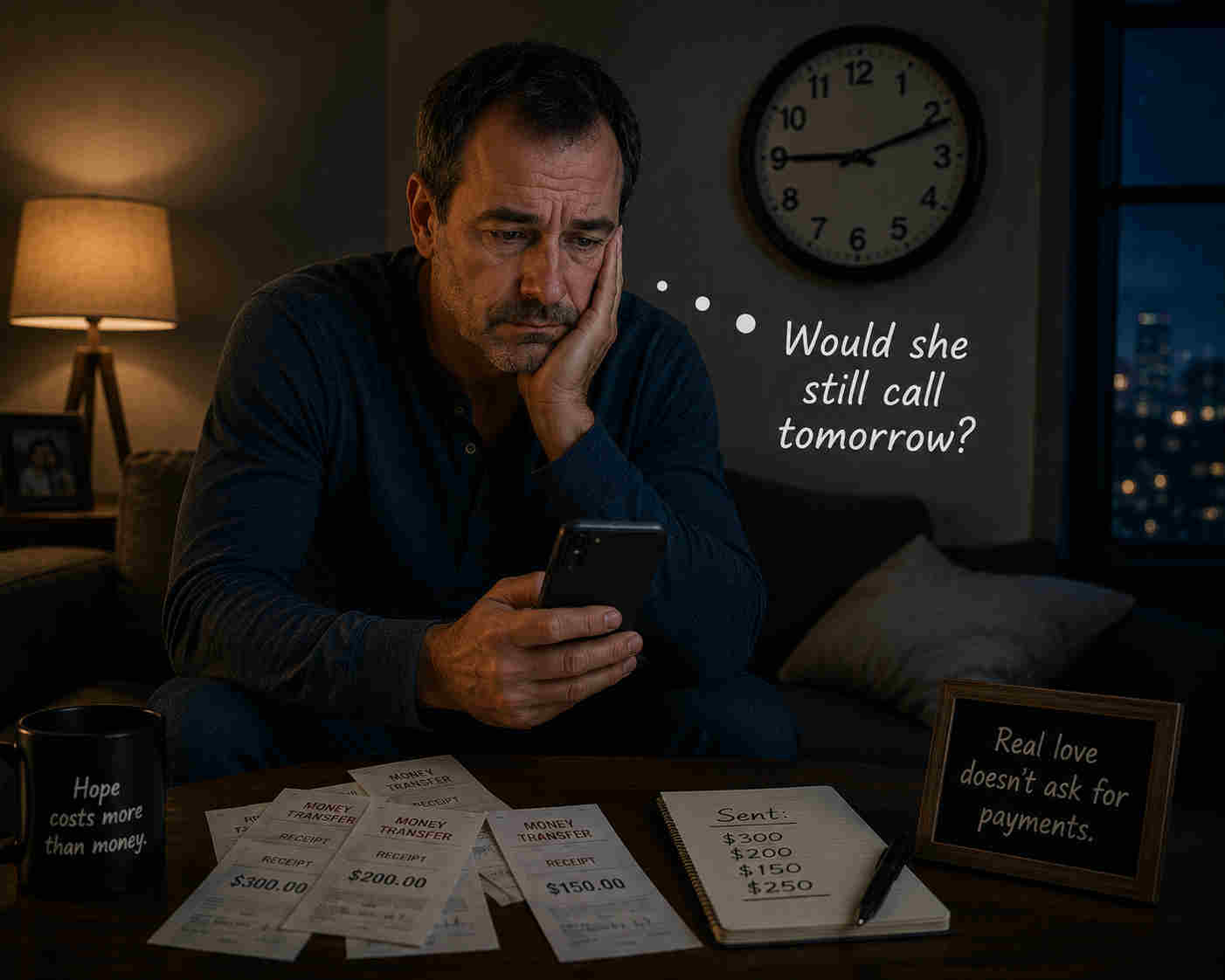
If money has already become part of the relationship, calmly establish a boundary: “I have decided that I will not send money or provide financial support before we have met and developed a real-world relationship.” Do not present it as a trick or a test. Present it as your standard.
Then observe the relationship over time. Does she continue initiating conversations? Is she still interested in your life? Does she remain willing to make realistic plans to meet? Or does affection become coldness? Do new emergencies appear? Does she imply that the boundary proves you do not love or trust her?
The reaction is information. Removing money allows you to see what financial support may have been hiding.
Would She Still Call Tomorrow?
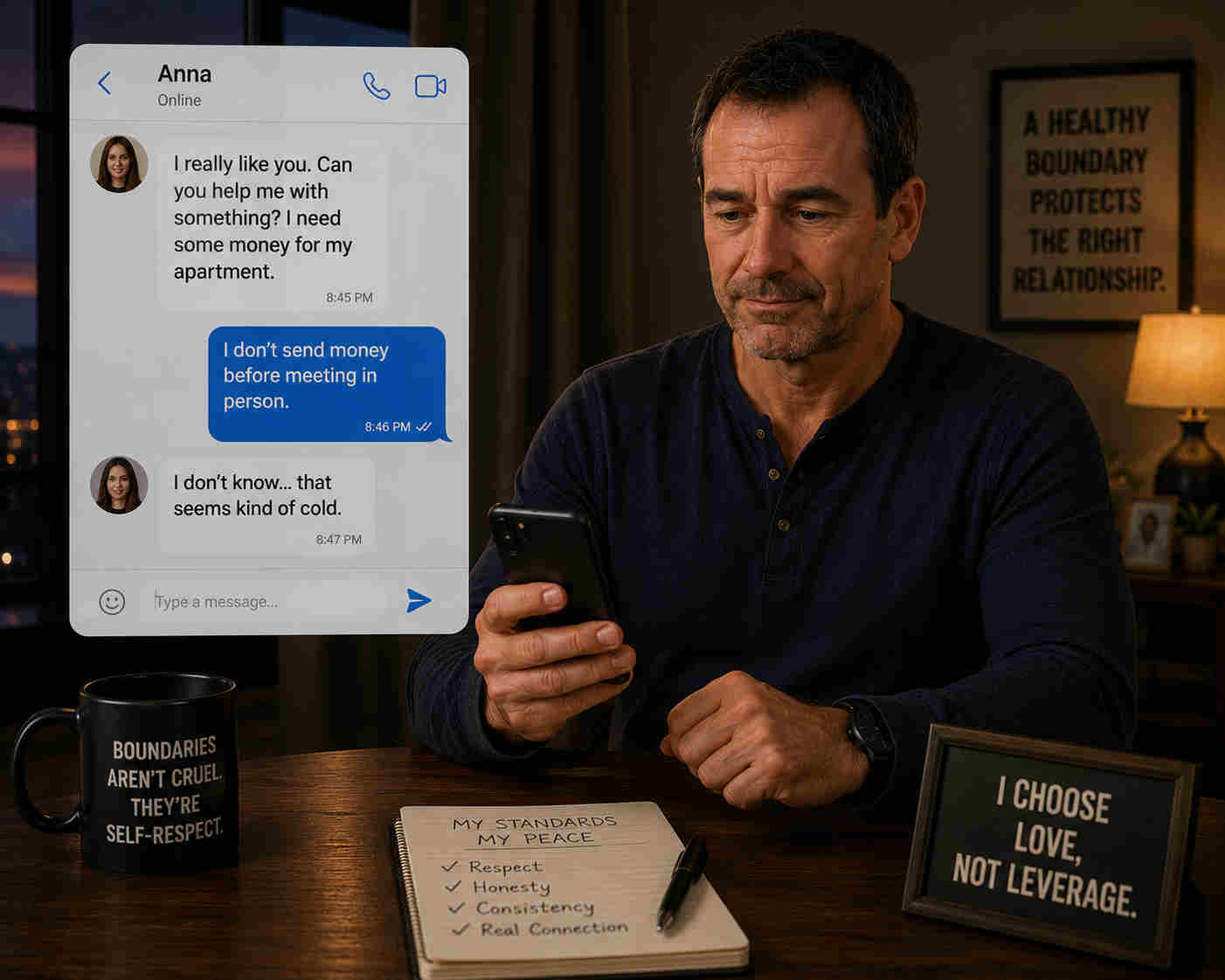
After sending money, some men find themselves staring at a silent phone. The concern is not only whether the payment was a mistake. The deeper fear is that the woman may disappear unless another transfer follows.
This uncertainty can create a cycle of anxiety. A delayed response feels threatening. A short message feels cold. Another request may feel like the price of restoring warmth. Instead of enjoying the relationship, the man begins managing it through payments.
Ask yourself whether communication feels voluntary or financially maintained. A real connection should be able to survive ordinary delays, honest boundaries, and periods when no one is receiving material help.
Five Questions to Ask Before You Send Anything
- Would I make this gift if I knew for certain that we would never become romantically involved?
- If she never repaid me, would I feel resentment or betrayal?
- Am I hoping this money will make her feel closer, safer, or more committed to me?
- Would I be comfortable telling a trusted friend or adult child exactly how much I am sending and why?
- If she became less affectionate immediately after receiving the money, would I regret sending it?
The Best First Gift Is Your Presence
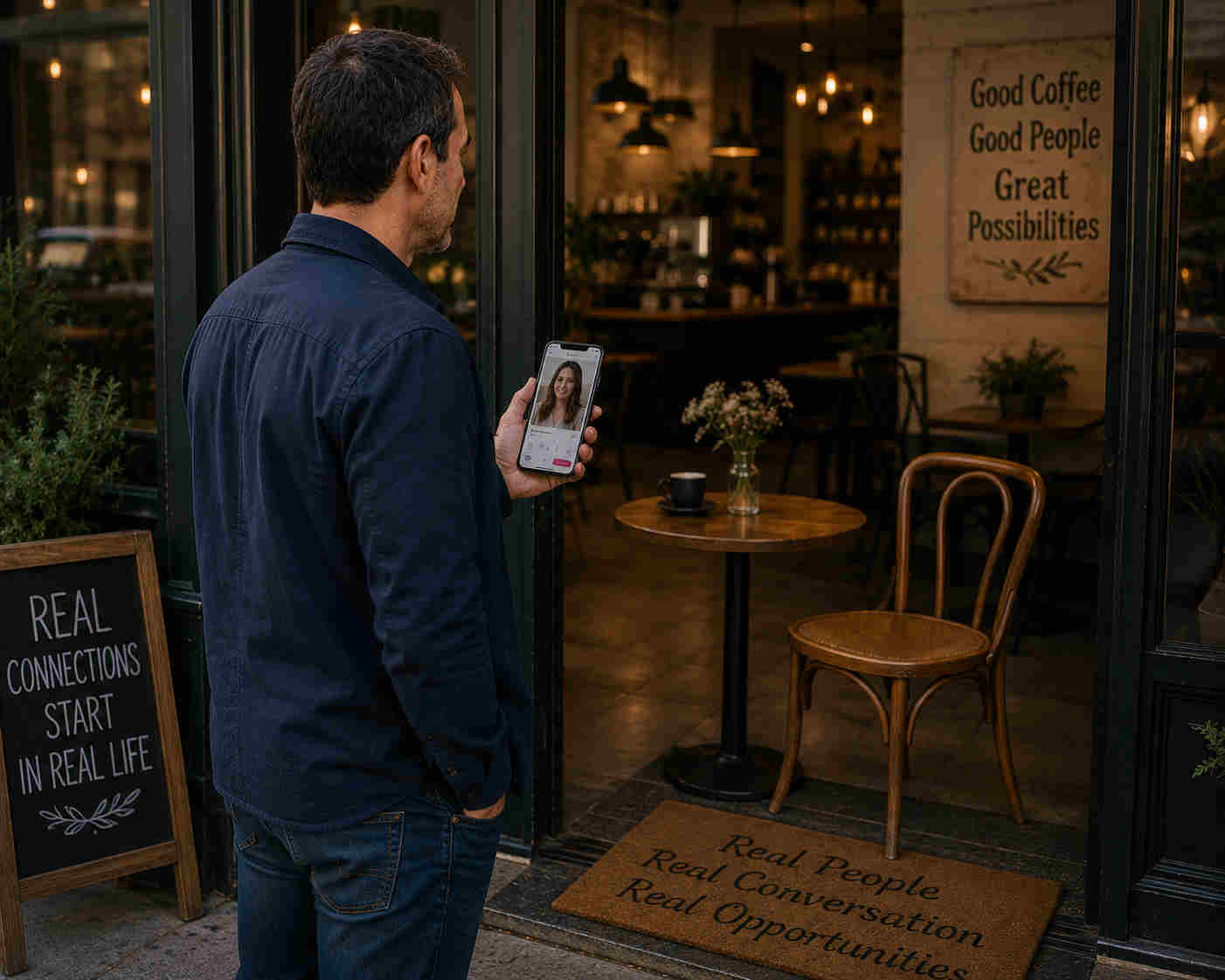
If you are serious about someone you met online, the goal should be to move carefully and realistically toward meeting—not to finance a relationship that remains entirely inside messages, photographs, and video calls.
Meet safely in a public place. Spend ordinary time together. Notice how conversation feels without a screen. See how both of you handle delays, misunderstandings, boring moments, meals, transportation, fatigue, and unexpected changes.
You may learn more during a delayed order at a café than during a hundred perfectly composed messages. Real relationships live in ordinary moments. Before financing someone's life, find out whether you can enjoy an ordinary Tuesday together.
Final Thoughts: Do Not Pay to Avoid Finding Out the Truth
The deepest reason you should never send money to someone you have not met is not simply that she could be a scammer. It is that money can prevent you from learning what you most need to know.
Would she still choose you without financial help? Would you still choose her without the need to rescue her? Is the affection genuine, or has gratitude become mixed with romance? Are you building a relationship, or paying to maintain one? Are you being loved, or are you being useful?
And perhaps the hardest question is this: are you sending money because she truly needs it, or because you are afraid of what might happen if you refuse?
After divorce, you deserve the opportunity to build a relationship in which you do not have to purchase attention, prove your value through rescue, or wonder whether affection would disappear if financial help stopped.
Keep money out of the relationship before you meet—not because every woman online is dishonest, not because international dating is inherently dangerous, and not because generosity is a weakness. Do it because a new relationship deserves a fair test.
Let her discover who you are without your wallet influencing the answer. Let yourself discover who she is without your money changing the experiment. If the connection survives distance, time, boundaries, real-world meetings, ordinary days, and the gradual work of building trust, you will have something more valuable than a promise delivered through a screen.
You will have evidence.