
Cross-Cultural Relationships
The Benefits Of Cross-Cultural Relationships: Why Differences Can Create Stronger Love After Divorce
The strongest cross-cultural relationships are not built because two people ignore their differences. They become strong because both people learn how to ask better questions, listen more carefully, and build a shared life with intention.
For many divorced men, dating again begins with familiar expectations. You know what your previous relationship looked like. You know what hurt. You know what failed. You may assume that the next relationship should look similar to the last one, only with a different woman and fewer problems.
Then a conversation begins with someone who grew up in another country or inside a different cultural tradition. At first, the differences may seem small. She may celebrate holidays differently. She may have a different relationship with family. She may express affection in ways that feel quieter, warmer, more practical, or more reserved than you expected. She may ask questions you have never been asked before.
That is when something important happens. The relationship stops running on automatic assumptions. Both people become students again. Instead of assuming, they ask. Instead of reacting, they explain. Instead of repeating old habits, they begin building new ones.
This is one of the least understood benefits of cross-cultural relationships. Cultural difference can slow people down in a healthy way. It forces communication to become intentional. It makes hidden expectations visible. And for a man dating after divorce, that can be exactly the kind of reset he needs.

Divorce Leaves More Than Memories
Divorce does not only end a marriage. It often leaves behind a pattern of expectations. Some men expect conflict to escalate because that is what happened before. Some expect silence to mean rejection. Some assume disagreement means disrespect. Others become overly cautious because they are afraid of repeating old mistakes.
These habits are not always obvious. They live beneath the surface. They show up in small moments: how you interpret a delayed reply, how quickly you explain yourself, how you handle disappointment, whether you apologize easily, whether you expect your partner to already understand what you need.
Dating someone from another culture can reveal these hidden patterns because you cannot assume the two of you are using the same relationship script. That does not make the relationship harder in a bad way. It makes it more conscious. You are required to explain what you mean, ask what she means, and make room for the possibility that different does not mean wrong.

Different Does Not Mean Wrong
One of the biggest relationship breakthroughs comes when a couple stops treating difference as a problem to correct. Perhaps one person prefers direct communication while the other values gentleness. Perhaps one person grew up with highly independent family boundaries while the other expects regular involvement from parents, siblings, cousins, or grandparents. Perhaps one person sees punctuality as respect while the other grew up in a culture where time is handled more flexibly.
None of these differences automatically predict failure. What matters is how the couple responds. Immature couples turn difference into accusation. Mature couples turn difference into information.
Instead of saying, "Why are you like that?" they learn to ask, "Is that common in your family?" Instead of saying, "That makes no sense," they ask, "What does that mean to you?" Those questions lower defensiveness. They create space for understanding. Over time, that skill becomes one of the strongest foundations of a healthy multicultural relationship.
Learning Each Other's Traditions Builds Respect
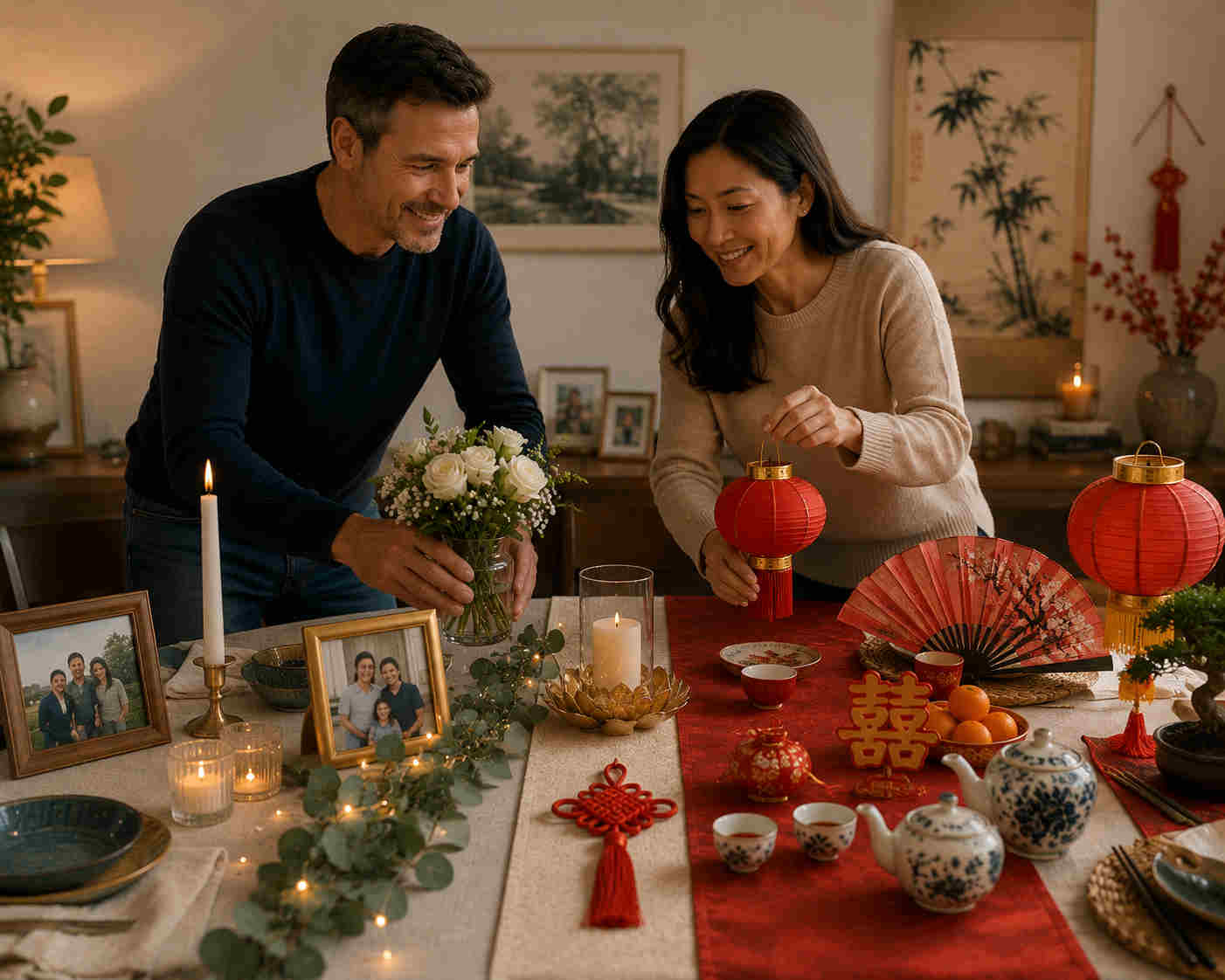
Every culture carries rituals that may seem ordinary to insiders but meaningful to outsiders. Food, holidays, religious customs, family gatherings, music, table manners, wedding traditions, gift-giving expectations, and even the way guests are welcomed into a home can all reveal deeper values.
In a strong cross-cultural relationship, traditions are not treated like decorations. They are treated as windows into someone's story. A meal may represent childhood. A holiday may represent family loyalty. A textile, song, prayer, or photograph may carry decades of memory.
When a divorced man takes interest in those traditions, he communicates something powerful: "I am not only attracted to you. I want to understand the life that shaped you." That kind of respect often matters more than expensive gifts or dramatic romantic gestures.
Curiosity Before Judgment
Curiosity is one of the most underrated relationship skills. It is easy to judge what you do not understand. It is harder, but far healthier, to slow down and ask questions before forming conclusions.
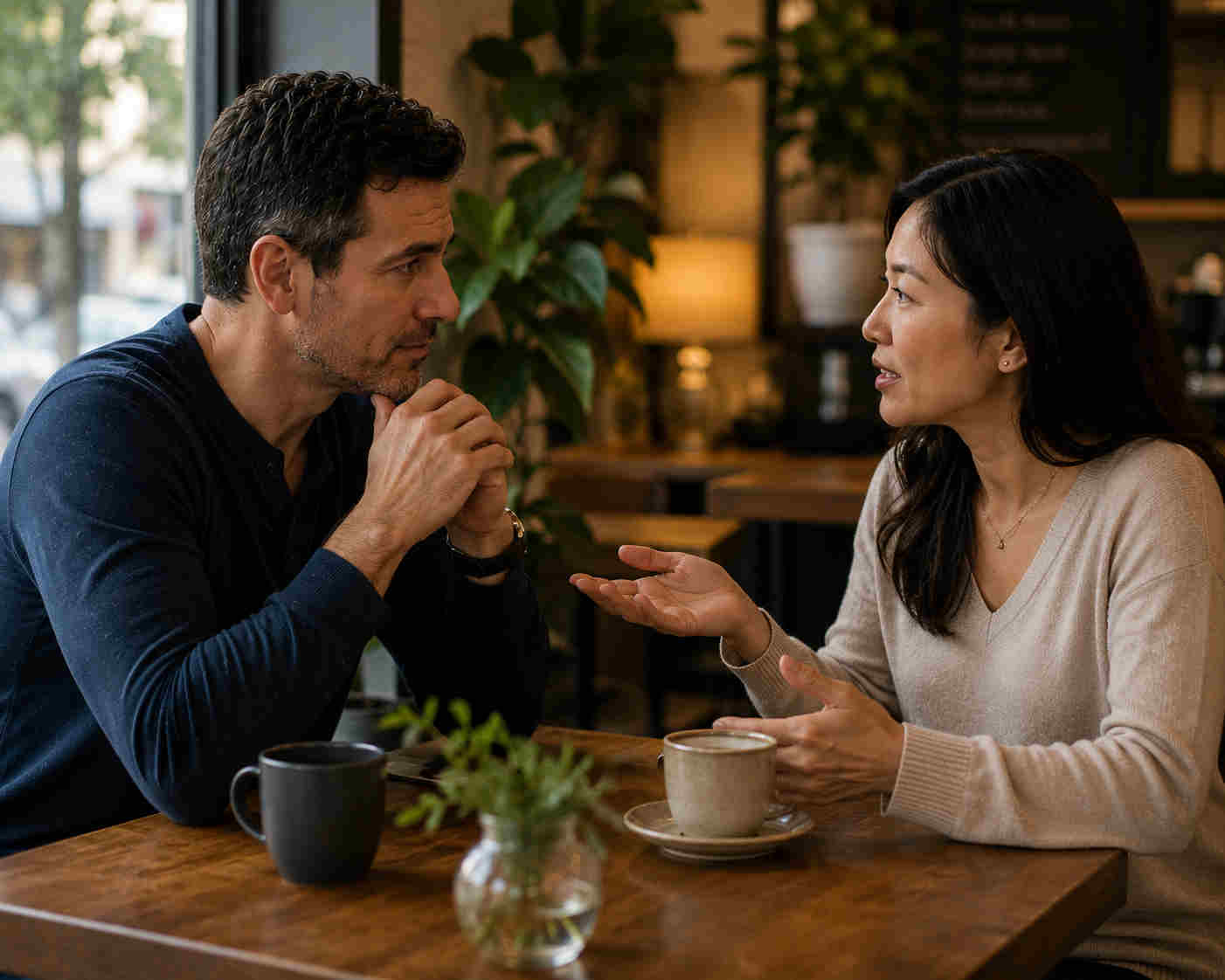
Cross-cultural couples practice this constantly. They may ask about words, habits, family expectations, childhood memories, religious customs, food, holidays, or dating norms. The point is not to interrogate each other. The point is to stay open long enough for the relationship to become clearer.
This is especially valuable after divorce because many divorced people have learned to protect themselves by assuming the worst. Protection is understandable. But constant suspicion can damage a new relationship before trust has time to form. Curiosity gives you a better tool. It allows you to remain observant without becoming cynical.

The Language Beyond Words
When people hear "cross-cultural relationship," they often think first about language barriers. But the deepest translation is not always about words. It is about emotional meaning.
A phrase like "I'm fine" can mean something different depending on upbringing, personality, and culture. A pause can mean respect, discomfort, patience, disagreement, or thoughtfulness. A quiet act of service may be a stronger expression of love than verbal affection. A family invitation may signal serious interest. A modest response may reflect humility rather than lack of excitement.
Couples who succeed learn to read context. They notice tone, timing, behavior, consistency, and effort. They also clarify instead of guessing. This creates emotional intelligence. It teaches both people to listen with more than their ears.

Cross-Cultural Dating Interrupts The Comparison Cycle
Many divorced men compare new relationships to the old marriage without realizing it. A new woman's communication style is measured against an ex-wife's. A new disagreement triggers an old memory. A new silence feels like an old wound. This is normal, but it can prevent a new relationship from being seen clearly.
Dating someone from another culture can interrupt that cycle because the relationship does not fit the same familiar template. The routines are different. The assumptions are different. The family patterns are different. The relationship asks you to pay attention instead of running old emotional software.
That does not mean a cross-cultural relationship magically heals divorce pain. It does not. But it can create enough freshness that you stop trying to recreate the past. Instead, you begin asking what this relationship is actually becoming.
Building A Third Culture Together
The best international relationships do not require one person to abandon his or her identity. They gradually create what might be called a third culture: not fully his, not fully hers, but something unique to the couple.
Maybe the couple celebrates holidays from both families. Maybe dinner includes recipes from two countries. Maybe the home contains artwork, photographs, books, and keepsakes from both lives. Maybe children learn words from two languages. Maybe anniversaries are celebrated with a tradition neither person had before they met.
This is one of the most beautiful parts of cross-cultural relationships. The relationship becomes creative. Instead of fitting into a ready-made script, the couple writes one together.

Shared Learning Keeps The Relationship Alive
Relationships weaken when people stop learning about each other. Cross-cultural relationships naturally create opportunities for shared learning. A couple may explore unfamiliar foods, visit cultural festivals, study language, compare family traditions, learn regional history, or discuss how each person grew up.
The advantage is not novelty by itself. Novelty fades. The deeper benefit is that both people stay engaged. They keep discovering. They keep asking. They keep having experiences that create stories.
For a man dating after divorce, this can be refreshing. Instead of simply repeating dinner dates, text messages, and predictable conversations, the relationship becomes an active process of discovery. You are not only dating a woman. You are learning a world.

Everyday Partnership Matters More Than Exotic Romance
Some men are drawn to international dating because it feels exciting. The travel, accents, food, music, and cultural differences can create a powerful sense of possibility. That excitement is real, but it is not enough to sustain a relationship.
The real test is everyday partnership. Can you grocery shop together? Can you handle small misunderstandings? Can you make practical decisions? Can you laugh when something feels unfamiliar? Can you respect each other's habits without turning every difference into a debate?
Long-term relationships are not built only during vacations. They are built in ordinary moments. Cross-cultural couples who become strong are usually not the ones who chase constant romance. They are the ones who become good at daily life together.

Respect Creates Trust
Respect is not the same as agreement. You can respect a tradition you do not practice. You can respect a family expectation you did not grow up with. You can respect a communication style that differs from yours while still explaining your own needs honestly.
In cross-cultural dating, respect becomes visible through behavior. Do you listen before responding? Do you ask before assuming? Do you avoid mocking customs that feel unfamiliar? Do you speak carefully about her country, family, religion, language, and history?
A woman who is serious about a relationship will notice these things. She will notice whether your curiosity is sincere or superficial. She will notice whether you treat her culture as something meaningful or merely exotic. Trust grows when respect is consistent.
The Biggest Myth About Cross-Cultural Relationships
The biggest myth is that cultural differences are the main reason relationships fail. Usually, assumptions cause more damage than culture itself. So do dishonesty, impatience, unresolved divorce wounds, financial irresponsibility, poor communication, resentment, and lack of follow-through.
Culture influences relationships, but character sustains them. Kindness matters in every language. Integrity matters in every country. Reliability matters across every border. A man who is impatient, bitter, or emotionally unavailable will not become a better partner simply because he dates internationally. A woman from another culture is not a cure for an unhealed heart.
But when two emotionally healthy people meet across cultures, the differences can become strengths. They force clarity. They invite humility. They require both people to build intentionally instead of drifting on assumptions.
Dating After Divorce Across Cultures
For divorced men, cross-cultural dating can offer a meaningful new chapter. But it works best when you are not using it as emotional replacement. The goal is not to find someone "opposite" from your ex-wife. The goal is to find someone whose values, temperament, life goals, and character fit the man you are becoming now.
This requires honesty. Are you ready to listen? Are you ready to learn? Are you ready to be patient with language, family, travel, paperwork, distance, and different expectations? Are you willing to respect a woman's culture without idealizing it or judging it through old assumptions?
If the answer is yes, cross-cultural relationships can help you become more thoughtful, more flexible, and more emotionally present. The relationship will not always be easier. But it may be more intentional from the beginning.
Final Thoughts: One Home. Two Histories.
The deepest benefit of a cross-cultural relationship is not that two people come from different places. It is that they choose to build one shared life without erasing either history.
A favorite family recipe. A holiday tradition. A language. A song. A childhood memory. A way of showing love. Over time, these pieces stop belonging only to one person or one country. They become part of the couple's shared story.

For a divorced man, that can be powerful. It means the future does not have to be a copy of the past. It can be built with more intention, more humility, and more appreciation for difference.
Successful cross-cultural relationships are not built on passports, distance, or novelty. They are built the same way every lasting relationship is built: one conversation, one act of respect, one shared experience, one promise kept, and one ordinary day at a time.