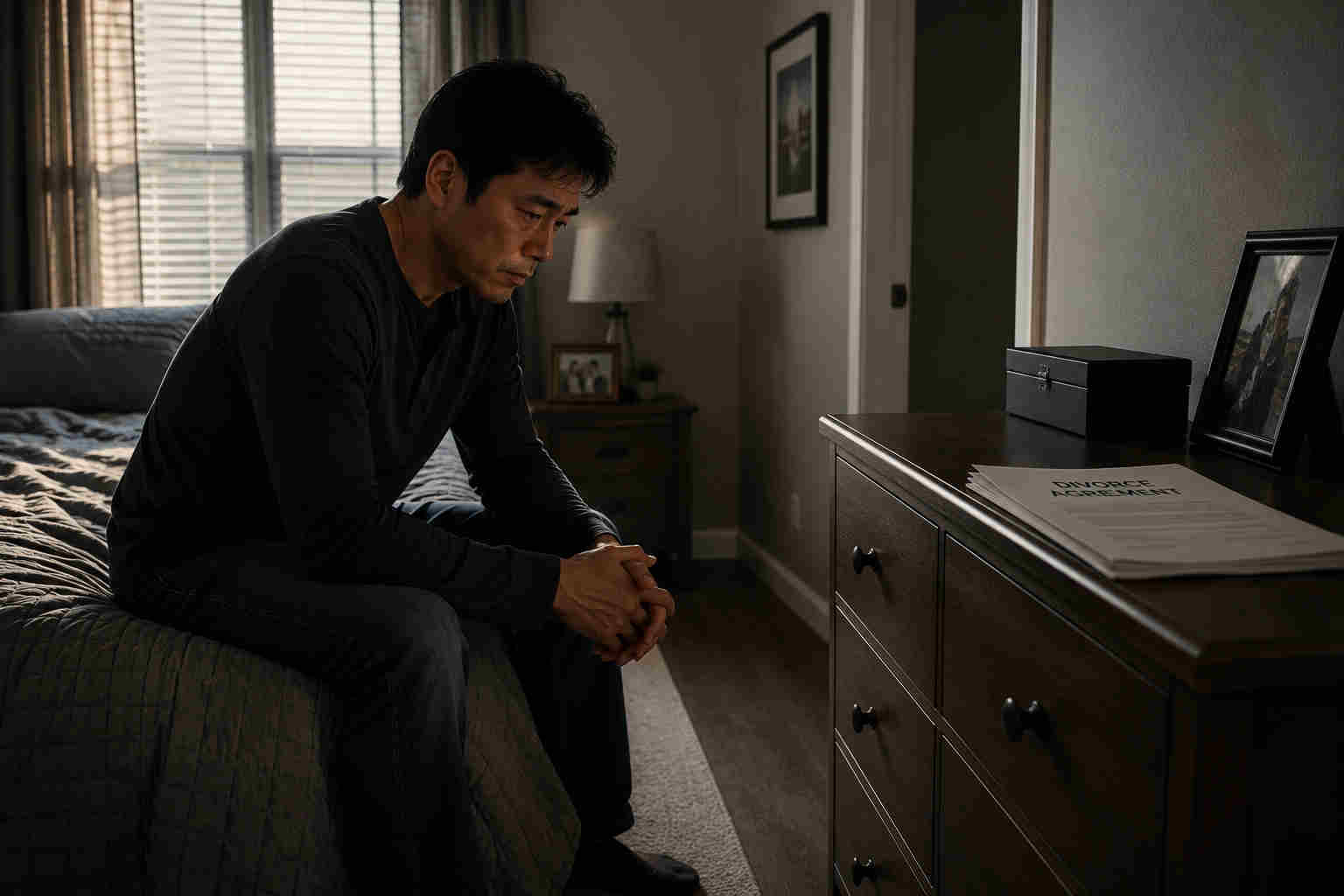
Emotional Healing After Divorce
Divorce changes more than a man's relationship status. It can change the way he interprets his own face in the mirror, the way he enters a room, the way he makes decisions, and the way he imagines the rest of his life.
Many men expect to miss their wife, worry about money, or struggle with an empty house. What catches them off guard is the quieter damage: the loss of confidence. A man who once handled pressure at work, solved family problems, and made difficult decisions may suddenly hesitate over ordinary choices. He may wonder whether the marriage ended because he was not attractive enough, successful enough, emotionally available enough, or simply not enough.
These questions do not mean he is weak. They mean divorce has disturbed the structure around which he built part of his identity.
Confidence after divorce does not return because you convince everyone else that you are fine. It returns when you gather evidence that you can trust yourself again.
Divorce Doesn't Just End A Marriage—It Challenges Your Identity
For many men, confidence is closely connected to usefulness. You may have measured yourself by how well you provided, protected, repaired, planned, solved, earned, or remained dependable. Being a husband may have been woven into the answer to a basic question: Who am I?
When the marriage ends, the role does not merely disappear from a legal document. Daily evidence of that identity disappears too. There may be no shared morning routine, no spouse asking for your opinion, no familiar household rhythm, and no future plan that automatically includes another person. Even men who wanted the divorce can feel unsteady when the identity of “husband” is suddenly removed.

This is why rebuilding confidence after divorce requires more than dating again or improving your appearance. You are not simply replacing a relationship. You are rebuilding an identity that can stand without one.
Confidence And Self-Worth Are Not The Same Thing
Confidence is the belief that you can perform, decide, adapt, and handle what happens next. Self-worth is the deeper belief that your life has value even when you fail, lose, age, struggle, or get rejected.
A man can have one without the other. He may be confident at work but privately believe he is impossible to love. He may be physically fit yet feel embarrassed to tell people he is divorced. He may appear calm in public but interpret the end of the marriage as proof that something is fundamentally wrong with him.
This matters because external success cannot permanently repair damaged self-worth. A promotion, a new car, a younger girlfriend, or compliments on a dating app may create a temporary lift. But if the private belief remains “I was not worth staying for,” the confidence disappears as soon as the attention does.

The Silent Questions Most Divorced Men Ask
Some of the most damaging questions are never spoken aloud. They surface late at night, during a quiet drive, or while sitting in a room that suddenly feels too large:
- Did I waste twenty years?
- Will anyone want me now?
- Was the divorce entirely my fault?
- Am I too old to begin again?
- Can I trust my judgment after choosing the wrong relationship?
- Do my children see me as a failure?
- What if I repeat the same mistakes?
These questions feel like requests for information, but they often behave like accusations. Instead of helping you understand the marriage, they invite you to prosecute yourself. Your mind collects every mistake, every argument, and every moment you wish you had handled differently, then uses them to build a permanent verdict about your character.

A better question is not “What does the divorce prove about me?” It is “What can I learn without turning the lesson into an identity?”
Why Confidence Can Collapse Even When You Did Not Cause The Divorce
Men sometimes believe they should remain confident if their wife cheated, left unexpectedly, or repeatedly violated trust. After all, if she caused the rupture, why should his self-esteem suffer?
Because rejection is not processed like a courtroom verdict. The nervous system does not calmly review evidence and assign responsibility. It often experiences abandonment as danger. A man can logically know that his former wife made destructive choices while emotionally wondering why he was not valuable enough for her to choose differently.
Betrayal can also damage confidence in your own judgment. You may replay warning signs you missed, explanations you accepted, or instincts you ignored. The question becomes larger than whether you can trust another woman. You begin wondering whether you can trust yourself.
Rebuilding confidence therefore includes learning from the marriage without demanding that your past self should have known everything you know now.
Where The Loss Of Confidence Shows Up
At Work
Emotional exhaustion can make concentration harder. You may avoid leadership opportunities, second-guess familiar decisions, or mistake temporary mental overload for permanent incompetence.
In Fatherhood
Reduced parenting time can make a good father feel replaceable. You may try to compensate with gifts, overplanning, or guilt-driven promises. Confidence returns when you focus less on creating perfect visits and more on being consistent, attentive, and emotionally available.
In Your Appearance
Gray hair, weight gain, hair loss, clothing, and age may suddenly feel like urgent problems. Caring for your body is healthy. Treating your body as the explanation for the divorce is not.
In Social Situations
You may assume married friends are judging you or that everyone sees the divorce before they see you. Avoiding people then creates the isolation that seems to confirm the fear.
In Decision-Making
A man who believes he made the wrong choice in marriage may stop trusting himself in unrelated areas. He delays purchases, career moves, travel, and even small plans because every decision feels capable of becoming another regret.
Why Chasing Validation Does Not Repair Confidence
Attention can feel medicinal after rejection. Dating apps, flirtation, expensive purchases, dramatic fitness goals, and carefully staged social-media posts can produce a quick sense of being visible again. The problem is not that these activities are automatically wrong. The problem is asking them to answer a question they cannot answer: Am I still worth something?
When validation becomes the foundation of confidence, another person controls the supply. A message makes you feel attractive. Silence makes you feel unwanted. Praise makes you feel successful. Indifference makes you question yourself again.
Real confidence is less theatrical. It comes from becoming someone whose behavior earns his own respect.
Physical Health Can Become Your First Reliable Promise
Exercise is often recommended after divorce, but the most important benefit is not looking better for dating. It is rebuilding the relationship between intention and action.
You decide to swim, walk, lift weights, or prepare a healthier meal—and then you do it. That completed promise becomes evidence. Your brain begins to relearn: When I say I will take care of myself, I follow through.

The goal is not punishment. It is not to erase the married version of you or become impressive enough to make your former wife regret leaving. Choose movement you can repeat. Progress that belongs to you is far more powerful than a transformation designed for an audience.
Build Competence In Areas That Have Nothing To Do With Dating
Confidence follows competence. Learning something new is especially valuable after divorce because it creates an identity that is not organized around loss.
A woodworking class, cooking course, photography group, language program, volunteer project, or home-repair skill gives you a beginner's challenge with visible progress. You are no longer only the man recovering from a marriage. You are also the man learning how to build a shelf, prepare a meal, use a camera, or contribute to a community.

Do not dismiss an interest because it will not make money or impress anyone. An activity can be valuable simply because it makes you curious, present, and capable again.
Stop Defining Yourself By The Divorce
Listen to the labels you use internally. “I am divorced.” “I am the man she left.” “I am the father who only sees his children part time.” “I am the one who failed.” These descriptions may contain facts, but they are not complete identities.
You may also be a dependable father, loyal friend, experienced professional, brother, son, volunteer, athlete, traveler, student, neighbor, or mentor. Divorce is part of your history. It is not entitled to occupy every room in your identity.

Reconnecting with friends is not merely distraction. It gives you a setting in which you are known for more than what happened in court or what your former wife thinks of you.
Small Wins Rebuild Confidence Faster Than Grand Reinvention
Some men respond to divorce by trying to become an entirely different person in thirty days. They set extreme fitness goals, redesign the house, start dating, plan international travel, pursue a new career, and announce a complete transformation. The intensity feels powerful until exhaustion arrives.
Confidence is better rebuilt through smaller evidence:
- You keep the kitchen clean for a week.
- You complete three workouts you actually planned.
- You pay a bill before it becomes a crisis.
- You attend a class even though you feel awkward.
- You call a friend instead of isolating.
- You make one calm decision without asking what your ex would think.
Each useful action tells you that your life can still be directed. The win may look ordinary to everyone else. That is exactly why it matters: confidence is built in real life, not only in dramatic moments.
Build A Future That Does Not Depend On Someone Else Choosing You
The strongest form of confidence is not certainty that another relationship will work. It is knowing that your life can remain meaningful whether you are partnered or single.
This does not mean rejecting love or becoming emotionally unavailable. It means building enough structure, friendship, health, purpose, and curiosity that a future partner joins your life rather than becoming responsible for giving it value.

Plan the next few months around more than dating. Schedule a trip, class, medical appointment, financial review, home project, fitness goal, and time with people who matter. The point is not to stay busy enough to avoid grief. It is to prove that your future contains more than waiting to be wanted.
Learn To Trust Yourself Again
Many men think confidence means believing they will make the correct choice. A more durable definition is believing they can respond well even when a choice does not work out.
You cannot guarantee that every relationship, job, investment, or plan will succeed. You can become more observant, establish stronger boundaries, ask better questions, slow down when something feels wrong, and leave situations that repeatedly violate your values.
Self-trust is not built by promising never to make another mistake. It is built by knowing you will not abandon yourself inside the next one.
A Practical Confidence-Rebuilding Framework
- Keep one daily promise: movement, food, sleep, cleaning, or a useful task.
- Develop one skill: choose progress you can see and measure.
- Maintain one connection: regularly speak with someone trustworthy.
- Make one independent plan: schedule something that does not depend on a relationship.
- Review one lesson: learn from the marriage without turning the lesson into self-hatred.
Confidence After Divorce Looks Different Than Before
Earlier confidence may have been louder. It may have depended on achievement, being needed, appearing strong, or receiving approval. Rebuilt confidence is often quieter.
You stop explaining the divorce to everyone. You stop monitoring whether your former wife appears happier. You become less interested in proving that you “won.” You make decisions without imagining how they will look online. You can enjoy an ordinary afternoon without interpreting solitude as rejection.

This kind of confidence is not fragile because it does not require constant applause. It comes from knowing who you are, what you value, and how you intend to live.
When Low Confidence Needs More Support
There is a difference between having a difficult season and becoming unable to function. Consider speaking with a licensed mental health professional if low self-worth, hopelessness, anxiety, anger, isolation, sleep problems, or loss of interest continues for weeks and interferes with work, parenting, health, or daily responsibilities.
Seek immediate emergency or crisis support if you are thinking about harming yourself or someone else. Asking for help is not evidence that divorce defeated you. It is evidence that you are taking your recovery seriously.
Final Thoughts: Become Someone You Respect Again
Divorce may have damaged your confidence, but it did not reveal a final truth about your value. It exposed the areas in which too much of your identity may have depended on a role, a relationship, another person's approval, or a future that no longer exists.
The work now is not to return to exactly who you were before the marriage. It is to become a man who understands himself more clearly, chooses more carefully, speaks more honestly, and refuses to hand another person complete authority over his self-worth.

Confidence returns every time you keep a promise to yourself, complete something useful, tolerate discomfort without escaping, reconnect with people who matter, and make a decision consistent with your values.
Eventually you will notice that you entered a room without wondering what everyone thought. You made a plan without imagining your former wife's reaction. You looked in the mirror without searching for evidence of failure.
Your confidence will not have returned because someone else finally chose you. It will have returned because you stopped abandoning yourself.
Frequently Asked Questions
Why does divorce affect a man's confidence so deeply?
Divorce can disrupt several identities at once: husband, provider, father, homeowner, and partner. It can also make a man question his judgment and whether the future he planned was ever secure.
How long does it take to regain confidence after divorce?
There is no fixed timetable. Confidence usually returns through repeated evidence—keeping promises to yourself, improving your health, rebuilding friendships, learning new skills, and making independent decisions.
Can dating too soon make low confidence worse?
It can when dating is used mainly to prove attractiveness or erase rejection. A disappointing interaction may then feel like another verdict on your worth instead of an ordinary mismatch.
What is the fastest practical way to rebuild self-trust?
Choose one small daily commitment you can control and keep it consistently. Regular follow-through gives your mind concrete evidence that you can depend on yourself again.
When should a divorced man consider counseling?
Professional support is worth considering when hopelessness, anxiety, anger, isolation, sleep problems, or low self-worth continue for weeks and interfere with work, parenting, health, or normal responsibilities.