
After divorce, it can feel as if your body has aged ten years in two. Stress, interrupted sleep, meals eaten on the run, and long stretches of inactivity add up. One morning you notice that your shirts fit differently, your waist has expanded, and the things that used to be easy require more effort.
The natural response is often to start doing cardio: walk farther, jog more, or spend an hour on an exercise bike. Cardio can be valuable. But if your goal is to change the way your body looks, feels, and functions after 50, strength training may be the missing piece.
Lifting weights does not require becoming a bodybuilder. It means giving your muscles a reason to remain strong while you lose fat, improve your fitness, and rebuild confidence. For a man starting over after divorce, that is a practical form of progress you can feel in everyday life.
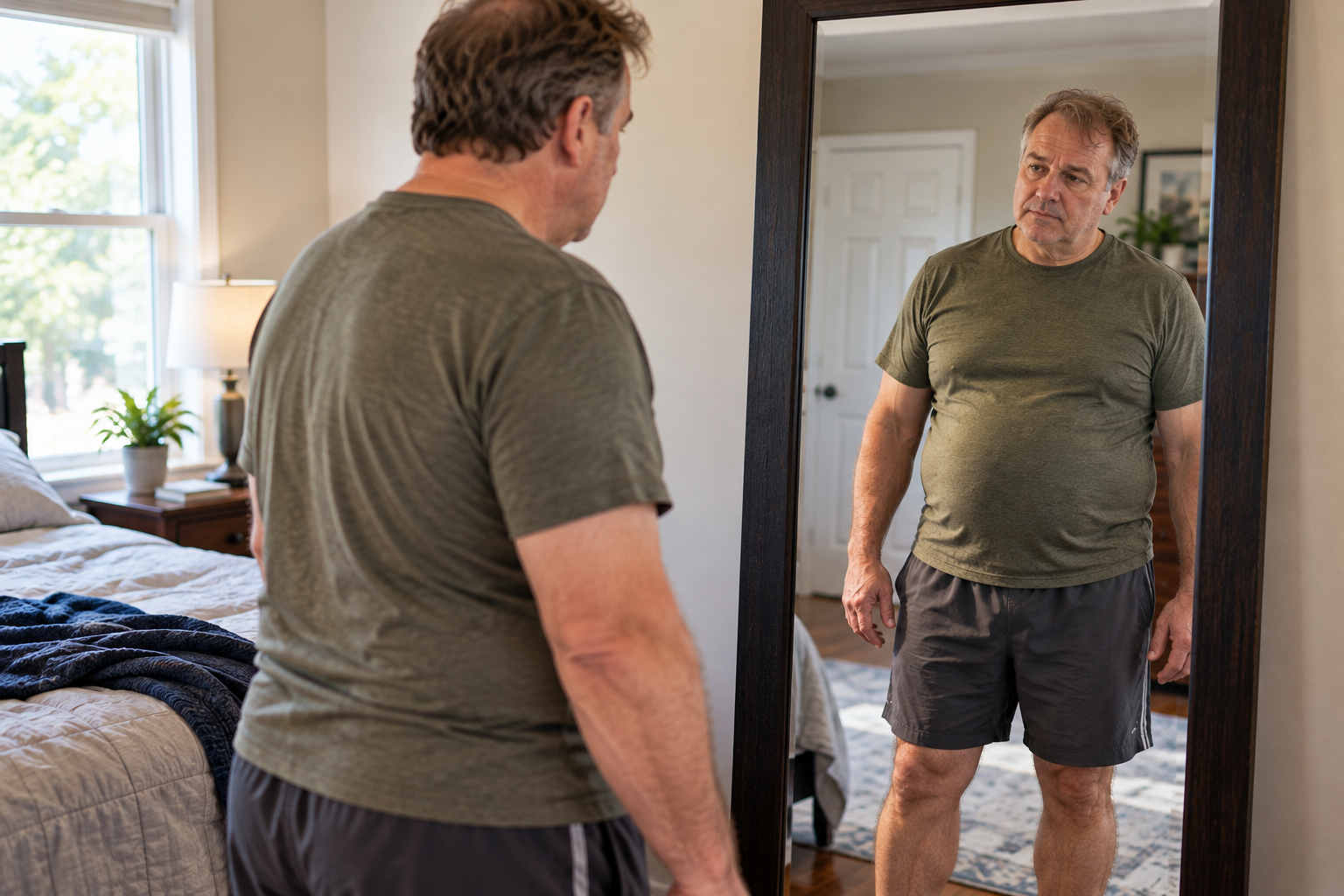
1. Weight Loss and Body Transformation Are Not the Same Thing
Imagine two men who each lose 15 pounds. One achieves it mainly by eating less and doing long cardio sessions. The other also eats appropriately but lifts weights several days a week. They may reach the same number on the scale, yet their results can look and feel different.
The difference is body composition: the amount of fat, muscle, and other tissue that makes up your body. When you lose weight, you want most of that loss to come from fat—not from the muscle that supports your strength, posture, and independence.
A smaller waist matters. So do stronger legs, shoulders that hold themselves upright, and the ability to carry groceries or climb stairs without struggling. The goal is not simply to become a lighter version of the same exhausted man.
2. Why Muscle Becomes More Important After 50
As men age, they tend to lose muscle mass and strength, especially when they are inactive. This gradual decline can make it harder to maintain physical function and can contribute to changes in body composition. The good news is that resistance exercise remains useful well beyond age 50.
Muscle is active tissue, and maintaining more of it helps support daily energy needs. But it is important not to exaggerate the effect: building a little muscle will not magically burn hundreds of extra calories each day. The larger advantage is preserving strength and lean tissue while you work toward a healthier weight.
Strength training also challenges bones and improves your ability to perform ordinary movements. That can be more meaningful over the next twenty years than any number displayed by a treadmill.
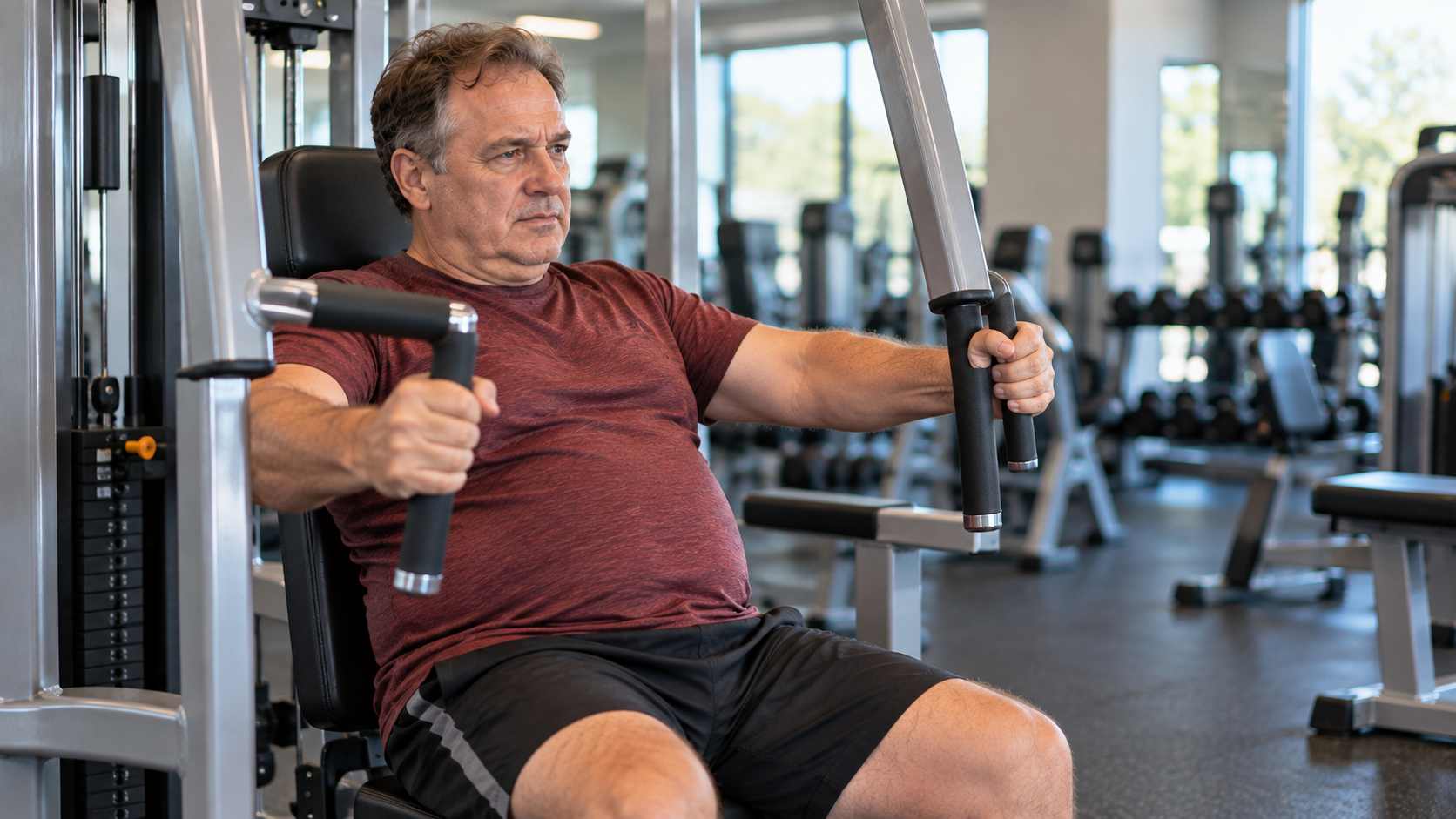
3. Cardio Versus Weights for Fat Loss: Which Is Better?
Cardio and weights do different jobs. Brisk walking, cycling, swimming, and similar activities improve cardiovascular fitness and help you expend energy. Resistance training challenges muscles and helps preserve or build strength. Both can support fat loss when paired with an appropriate eating plan.
If you enjoy walking, keep walking. If you have been told that you must run to lose belly fat, you can ignore that myth. You cannot choose where your body loses fat by selecting a particular exercise. Belly fat generally decreases as overall body fat decreases.
For many men over 50, the most sustainable combination is two or three full-body strength sessions each week plus regular moderate cardio. You do not need to choose a winner; you need to stop leaving strength out of the plan.
4. You Do Not Have to Be Fit Before You Start Lifting
The first workout can feel intimidating. You see rows of machines, experienced lifters, and equipment whose names you do not know. Remember that your starting point is not a verdict on your future. A beginner can make meaningful progress with simple exercises and patient repetition.
Begin with weights that allow you to move through a comfortable range of motion without straining or holding your breath. If you have significant medical concerns, unexplained symptoms, or have been inactive for years, discuss a suitable starting plan with your clinician.
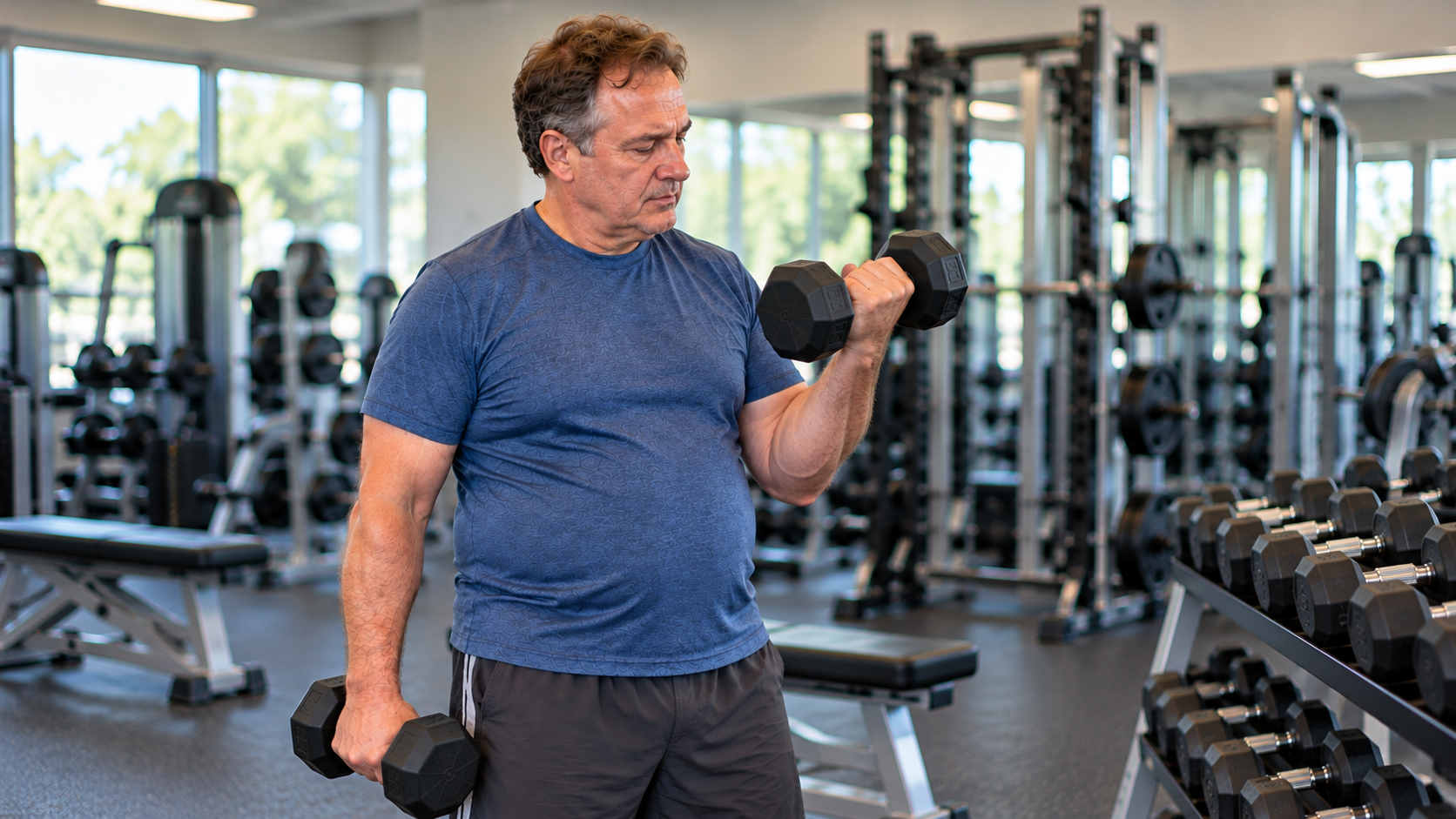
5. A Realistic Three-Day Beginner Weightlifting Routine
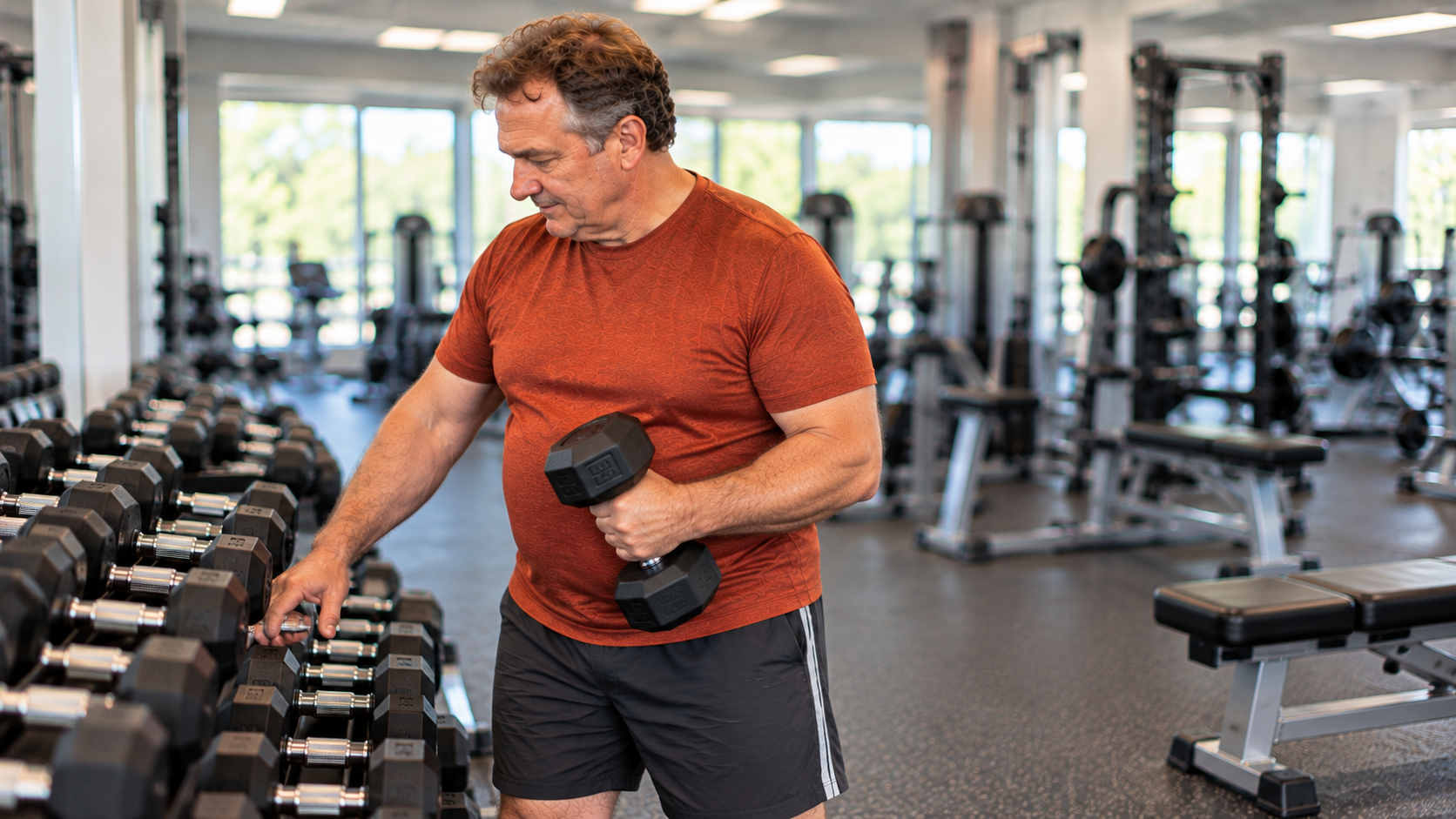
You do not need six days in the gym. Three nonconsecutive days—such as Monday, Wednesday, and Friday—give you room to train and recover. Start each session with five to ten minutes of easy movement and a few light practice repetitions.
Your first full-body routine
| Exercise | Starting target |
|---|---|
| Chair or bench squats | 2 sets of 8–12 |
| Machine chest press or wall push-ups | 2 sets of 8–12 |
| Seated cable row or resistance-band row | 2 sets of 8–12 |
| Light dumbbell hip hinge | 2 sets of 8–10 |
| Dumbbell carry | 2 short walks |
| Optional gentle core exercise | 1–2 controlled sets |
Rest about 60–120 seconds between sets as needed. Focus on form. If a movement causes sharp pain, stop and find a suitable alternative.
On the days between lifting sessions, take a walk, ride a bicycle, or do another activity you enjoy. The schedule should feel repeatable, not punishing.
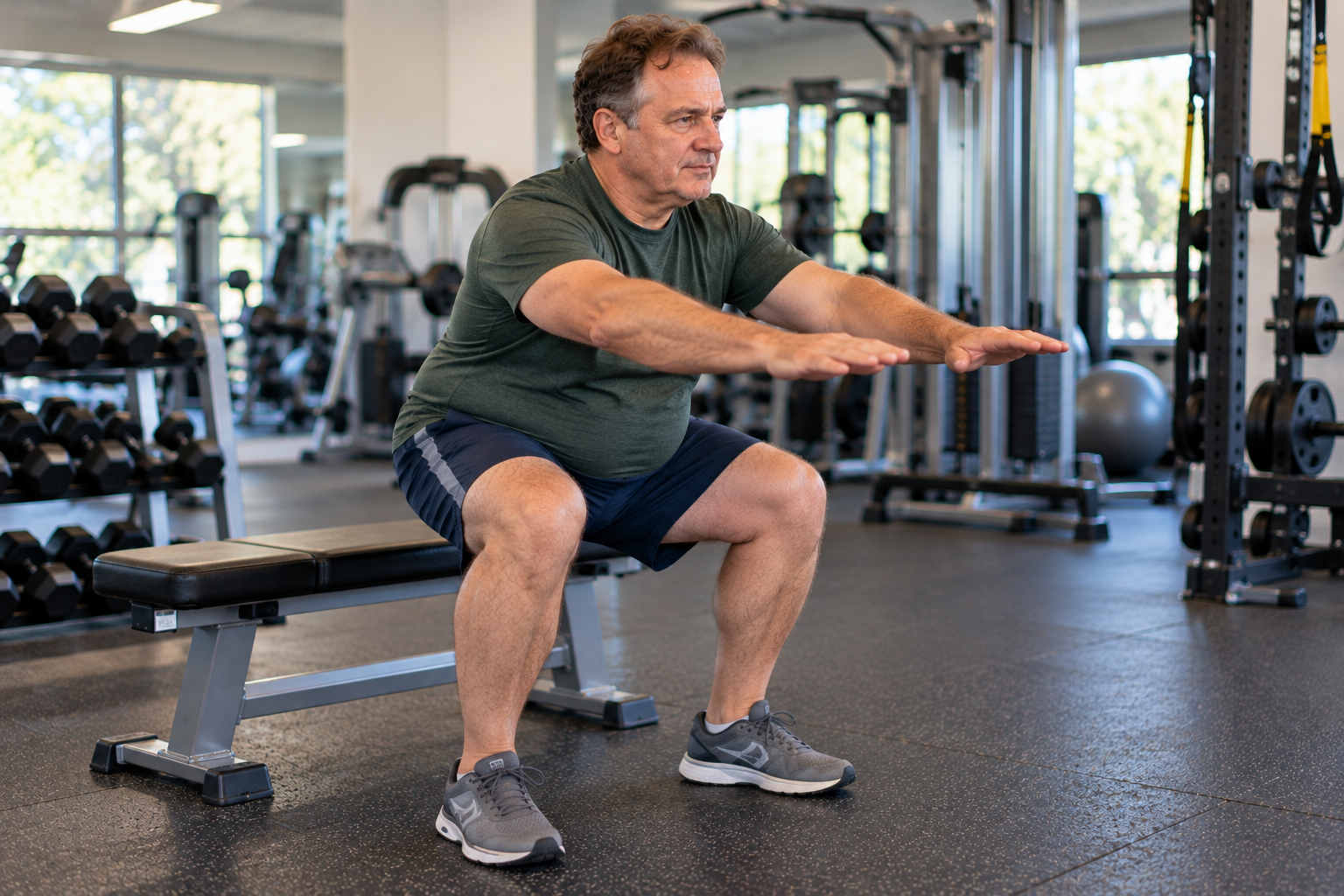
6. How to Know When to Increase the Weight
Progressive overload simply means making an exercise a little more challenging as your ability improves. You might complete one additional repetition, use slightly more weight, or move with better control. You do not need to set a personal record every session.
For example, if you can complete two sets of twelve repetitions with good form and could comfortably do several more, you may be ready for a small increase. If your technique breaks down, the weight is too demanding for now. Record the exercise, weight, and repetitions so you can recognize improvement over time.
Your joints and connective tissues may adapt more slowly than your enthusiasm. Increase gradually and allow recovery time. Being consistent for a year beats being heroic for two weeks.
7. Cardio Still Has an Important Place
Strength training should not become an excuse to ignore your heart and lungs. Moderate aerobic activity supports cardiovascular health, stamina, mood, and general well-being. Walking is especially useful because it is accessible, inexpensive, and easy to scale up.
A practical goal is to work toward at least 150 minutes of moderate aerobic activity each week, adjusted for your ability and medical guidance, while also including muscle-strengthening work. If that sounds like too much at first, start with ten or fifteen minutes and build from there.
You can lift three days a week and walk on most other days. There is no need to make every session exhausting. The right routine is the one you can keep doing when work gets busy or your mood changes.

8. What You Eat Determines Much of Your Weight Loss
Lifting weights can help shape the result, but nutrition has a major influence on whether body fat decreases. If you regularly eat more energy than you use, even a solid gym routine may not produce the changes you want. A modest, sustainable calorie deficit is generally more manageable than an extreme diet.
Build meals around protein-rich foods, vegetables, fruit, whole grains, and portions that fit your needs. Protein helps support muscle maintenance during weight loss, especially when combined with resistance training. Exact protein requirements vary with body size, health, and activity; a registered dietitian can help if you need an individualized target.
You do not have to eliminate bread, skip every restaurant meal, or live on protein shakes. Make the ordinary meals you eat most often a little better. Prepare enough food to avoid relying on takeout when you are tired. Drink water regularly and limit alcohol if it interferes with sleep or eating habits.

9. Recovery Is Part of the Transformation
Your body responds to training between workouts. Sleep, food, rest days, and manageable training volume all matter. If divorce-related stress is disrupting your sleep, that deserves attention alongside your exercise program.
Aim for a regular bedtime and wake time. Avoid treating soreness as proof of success. Mild muscle soreness can happen when you begin, but persistent pain, unusual fatigue, or declining performance may mean you need to adjust your training.
A sustainable plan gives you enough energy to be present for your children, perform well at work, and enjoy your life. Exercise should support those priorities rather than consume them.
10. Your First 90 Days: What Can Realistically Change?
A ninety-day plan is long enough to establish habits and notice progress, but short enough to stay focused. Results differ from man to man. Your starting fitness, nutrition, sleep, medications, and health all affect the pace of change.
A practical 90-day roadmap
Days 1–30: Learn the movements. Establish three manageable lifting days, walk regularly, and build meals you can repeat. Measure your starting waist and note how everyday activities feel.
Days 31–60: Build consistency. Add small amounts of resistance when appropriate. Notice whether stairs feel easier, clothes fit differently, and your energy improves.
Days 61–90: Consolidate your progress. Keep your routine steady, reassess your goals, and decide what habits you can maintain over the next six months.
A hypothetical man who begins around 235 pounds might look leaner and feel stronger by day 90, but there is no universal promise of losing 20 pounds or gaining a particular amount of muscle. Your own trend matters more than an invented deadline.

11. Measure More Than the Number on the Scale
The scale is one tool, not the final judge. Weigh yourself under similar conditions if you find it helpful, and look at the trend over several weeks rather than reacting to a single day. Normal shifts in water and digestion can temporarily hide fat loss.
Measure your waist occasionally. Notice whether your clothes fit better, whether you can lift more with good technique, and whether walking uphill feels easier. Take progress photos only if they motivate you; you do not need to share them with anyone.
One of the best indicators is ordinary capability. Can you carry the laundry upstairs more comfortably? Get up from a chair without pushing with your hands? Finish a long day without feeling completely drained? Those changes count.
12. The Mistakes That Derail Men Over 50
- Doing too much too soon: An aggressive first week can create soreness or injury that stops your momentum.
- Skipping strength work: Cardio alone may improve endurance without giving your muscles the same training stimulus.
- Chasing rapid weight loss: Extreme restriction can be hard to maintain and may make preserving muscle more difficult.
- Comparing yourself with younger men: Your useful benchmark is your own ability last month.
- Ignoring recovery: Sleep and rest are not signs of weakness; they are part of training.
- Quitting when progress slows: Plateaus are a reason to review habits, not evidence that change is impossible.
If your schedule collapses for a week, return to the next planned workout. You do not need to compensate with an extreme session. Getting back to the routine is the skill that matters.
13. Your Body Transformation After 50 Is Just Beginning
The deeper benefit of lifting weights after divorce is not that you will suddenly look twenty-five again. It is that you begin treating your body as something worth maintaining. You regain the ability to influence how you feel and what you can do.
Picture yourself carrying supplies into the backyard, hiking with friends, traveling without worrying about your stamina, or simply looking in the mirror and recognizing the work you have put in. Those are real-world rewards of becoming stronger.
Start with a small routine. Learn the movements. Keep walking. Eat in a way you can maintain. Sleep when you can. Measure progress honestly, and allow the process to take time.
You are not trying to win a competition against your younger self. You are building a stronger version of the man you are today.