Fitness Without The False Start
The Problem Is Usually Not Laziness
Starting an exercise routine is easy when the reason feels urgent. A doctor's warning, a difficult look in the mirror, an old photograph, or the emotional fallout from divorce can create enough momentum to make almost any plan seem possible. You buy shoes, download an app, promise yourself five workouts a week, and picture a completely different version of your life.
Then the emergency feeling fades. Work gets busy. Sleep suffers. One workout is missed because of a family obligation, another because you are tired, and soon the plan begins to feel like evidence that you failed again.
That does not mean you lack discipline. It usually means the routine was designed for your most motivated week instead of your real life.
Creating exercise habits that actually last requires a different objective. You are not trying to prove how hard you can work for fourteen days. You are building a structure that still functions six months from now when the excitement is gone.

Stop Depending On A Feeling That Changes Every Day
Motivation is useful for beginning. It is too unstable to manage the entire routine. Your energy will change with sleep, weather, stress, work, family demands, and mood. If every workout requires an internal debate, eventually the tired version of you will win.
A lasting exercise habit reduces the number of decisions involved. You choose the days, place, starting time, minimum workout, and backup plan before you are tired. The routine becomes more like brushing your teeth than negotiating with yourself.
Instead of asking, “Do I feel like exercising today?” ask, “What version of today's workout can I complete?” That small change prevents a difficult day from becoming a complete disappearance.
Start Smaller Than Your Pride Wants To Start
Many men return to exercise with memories of what they could do years ago. They remember the weights they lifted, the miles they ran, or the body they once had. The first workout becomes an attempt to close the distance between then and now.
That creates soreness, frustration, and an immediate reminder that time has passed. A better beginning is deliberately modest.

Walk for ten minutes. Complete one round of bodyweight movements. Use lighter dumbbells than you think you need. Leave the gym while you still feel capable of doing more. You are teaching your mind that exercise does not automatically mean punishment, exhaustion, or losing the rest of the evening to soreness.
The first month is not primarily about physical transformation. It is about establishing proof: you are becoming a man who moves his body on schedule.
Design The Environment Before You Test Your Willpower
Your environment quietly decides which actions require effort. If the gym is forty minutes away, your shoes are buried in a closet, and your workout plan has to be invented every time, even a simple session becomes a project.
Make the useful action visible and convenient. Keep walking shoes beside the door. Store resistance bands where you can see them. Choose a gym near work or on your normal route home. Keep a water bottle filled. Save a short workout on your phone so you never have to design one while tired.
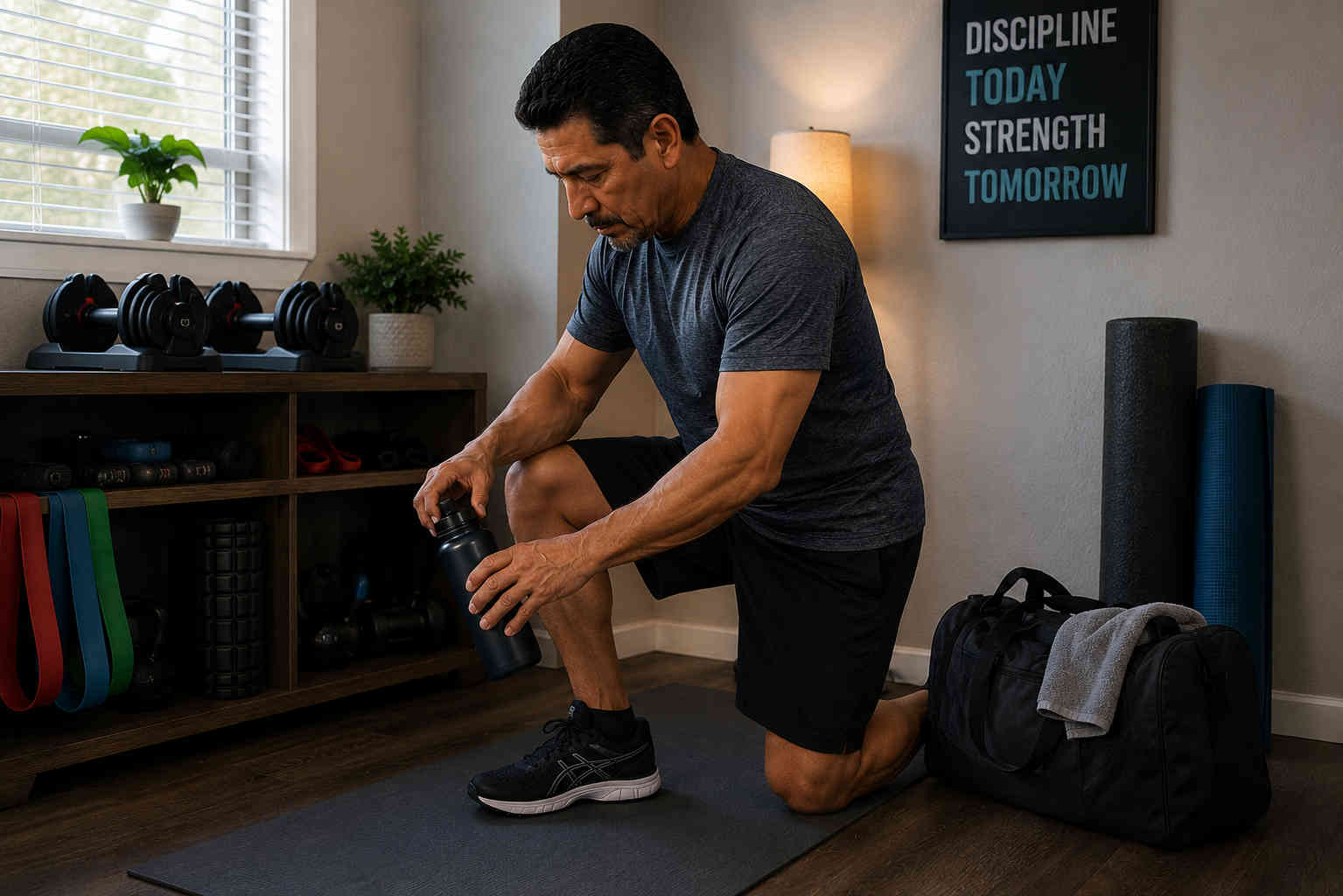
A home workout area does not need expensive equipment. A mat, adjustable dumbbells, resistance bands, and enough floor space can eliminate the “I do not have time to drive” excuse. The point is not to build a perfect home gym. The point is to make some form of exercise available even when the preferred plan falls apart.
Use A Minimum Workout To Protect The Habit
A rigid plan says a workout only counts if it lasts forty-five minutes and includes every scheduled exercise. A durable plan includes a minimum version for difficult days.
Your Full Workout
The normal session you complete when time, energy, and circumstances cooperate.
Your Reduced Workout
A twenty-minute version that includes the most important movements or a brisk walk.
Your Minimum Workout
Five to ten minutes of movement that keeps the appointment with yourself and protects the identity of being consistent.
The minimum workout is not an excuse to avoid effort. It is a safeguard against the all-or-nothing thinking that destroys routines. A five-minute session during a chaotic day is more valuable than promising to restart next Monday.
Make Progress Visible Without Becoming Obsessed
Exercise habits weaken when the work feels invisible. You may not see major physical changes for several weeks, especially if you are beginning carefully. A simple record gives your brain evidence that something is happening.
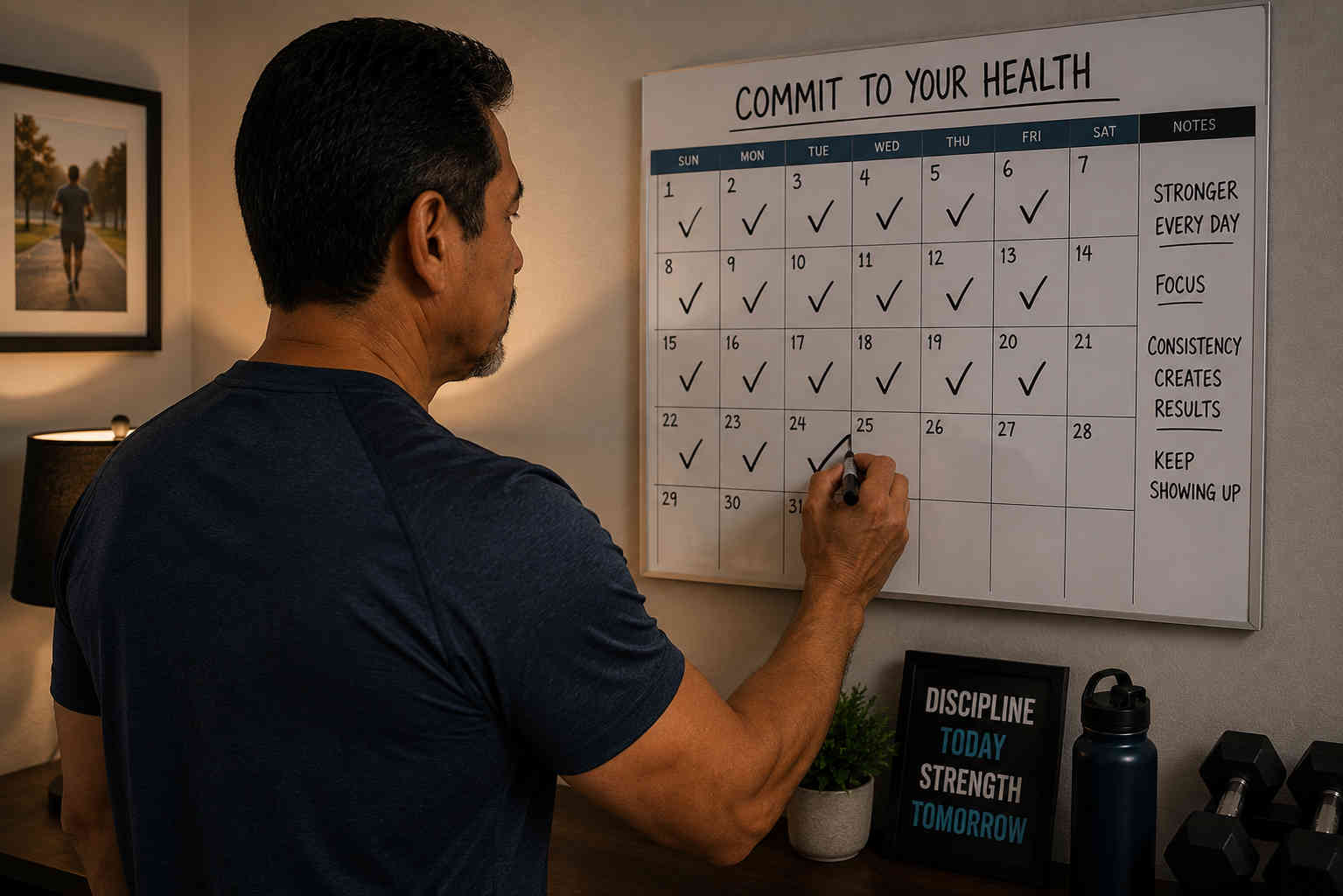
Mark completed workouts on a calendar. Record walking minutes, steps, sets, or weights. Measure your waist once a month instead of every day. Notice improvements such as climbing stairs without becoming winded, sleeping more deeply, or recovering faster.
Do not build a tracking system so complicated that maintaining the spreadsheet becomes harder than maintaining the habit. Choose two or three measures that help you see consistency and gradual improvement.
Build Around The Schedule You Actually Have
A workout plan should fit your life before it asks your life to change. If mornings are rushed, stop pretending you will become a 5:00 a.m. gym person because someone online says that is what disciplined men do. If evenings are regularly interrupted, use lunch, the commute home, or shorter sessions spread through the week.

Look at the last month, not your ideal week. When were you consistently free? When did you have the most energy? Which obligations are predictable? Build around those facts.
For a busy man, three dependable thirty-minute workouts may produce better long-term results than a five-day plan that collapses every second week.
Focus On Showing Up Before You Focus On Advancing
Progress matters, but progression should not arrive before consistency. If you are constantly changing routines, testing maximum effort, or chasing soreness, you never give the habit time to become normal.

For the first several weeks, repeat the same basic movements. Learn how they feel. Use weights that allow clean repetitions. Finish with enough energy to return. When the routine feels established, gradually increase weight, distance, repetitions, or time.
The goal is not to win today's workout. The goal is to make next month's workouts more likely.
Choose Exercise You Do Not Secretly Hate
People often choose exercise based on what seems most efficient rather than what they can tolerate repeatedly. Running may burn calories, but it is a poor long-term plan for someone who dreads every step. A crowded gym may have excellent equipment, but it will not help if the environment makes you avoid going.

Strength training, hiking, swimming, cycling, pickleball, rowing, martial arts, dancing, and long walks can all support health. Your routine can combine structured training with movement you genuinely look forward to.
The best exercise is not merely the one that works fastest. It is the one you can still imagine doing when the novelty disappears.
Never Let One Missed Workout Become A New Identity
Missing one workout is an event. Turning it into evidence that you always quit is a story.
Illness, travel, overtime, family emergencies, and poor sleep will interrupt the plan. The difference between a temporary interruption and another abandoned routine is how quickly you return.
Use a simple rule: never miss twice when the choice is within your control. If Monday disappears, do a reduced session Tuesday. If travel eliminates the gym, walk at the airport or complete ten minutes in the hotel room. Do not wait for a clean week, a new month, or a dramatic restart.
Recovery Is Part Of Consistency
Men who are eager to rebuild often treat rest as weakness. They push through joint pain, ignore poor sleep, and assume every session must be harder than the last. That approach may feel disciplined for a short period, but it creates the injuries and exhaustion that end routines.

Include easier days. Walk when your body needs lower intensity. Stretch tight areas. Sleep as consistently as possible. Learn the difference between normal training discomfort and pain that changes how you move.
Recovery is not time stolen from progress. It is what allows progress to continue.
Let Exercise Rebuild More Than Your Body
For men rebuilding after divorce or another major life disruption, exercise can provide something deeper than weight loss. It creates a reliable appointment in a life that may feel unstable. It gives you a place to direct frustration, rebuild trust in yourself, and collect visible evidence that change is still possible.
You begin standing differently. You sleep better. Your energy improves. You make stronger decisions because you are no longer beginning every day feeling physically defeated.
Those changes often spread. A man who keeps a workout appointment may begin preparing better meals, organizing his finances, improving his sleep, or becoming more willing to try new experiences. Exercise becomes the first habit that proves he can still direct his life.
Think In Years Instead Of Transformation Challenges
Thirty-day challenges can create momentum, but they often encourage a temporary mindset. You endure the plan, collect the result, and then return to normal. A lasting exercise habit requires you to create a new normal.
Imagine what three moderate workouts each week could produce over five years. That is hundreds of sessions, repeated practice, stronger muscles, better balance, improved stamina, and a body that remains more capable as you age.
No single workout creates that future. No missed workout destroys it. The result comes from returning often enough that exercise becomes part of the structure of your life.
Final Thoughts: Become The Man Who Returns
Creating exercise habits that actually last is not about finding endless motivation or the perfect program. It is about building a routine that can survive the ordinary problems that used to stop you.
Start smaller. Remove friction. Use a minimum workout. Track the behavior. Choose movement you enjoy. Recover deliberately. Return quickly after interruptions.
Eventually, the most important change is not visible in the mirror. You stop thinking of yourself as someone who is trying to exercise. You become someone who trains, walks, moves, and takes care of his body because that is simply part of how he lives.

Your Consistency Rule
Do Not Build A Routine For Your Best Day
Build one that still works when you are busy, tired, unmotivated, or interrupted. The habit lasts when returning becomes easier than quitting.