The Quiet Way Men Really Change
Stop Trying To Rebuild Your Entire Life In One Weekend
Most men do not fail because they lack motivation. They fail because they try to change too much at once.
After divorce, a man can become painfully aware of every part of his life that needs attention. His health may have slipped. His finances may feel exposed. His home may be disorganized. His confidence may be lower than it has been in years. He may want to become a more present father, build a stronger social life, improve his career, start dating again, sleep better, eat better, and finally become the disciplined man he always intended to be.
That desire is understandable. It can also become another trap.
When you attempt to repair ten areas at the same time, every day becomes a test of willpower. You create a demanding schedule, miss one part of it, and then treat the missed action as proof that nothing has changed. The plan becomes so heavy that abandoning it feels like relief.
Lasting habit change usually begins in a less dramatic way. You choose one behavior. You make it small enough to repeat. You remove the decisions surrounding it. Then you keep going until the behavior no longer feels like a special project.
That is the real secret behind building better habits: your new life is not constructed in one heroic burst. It is built one dependable action at a time.
Why Most Self-Improvement Plans Collapse
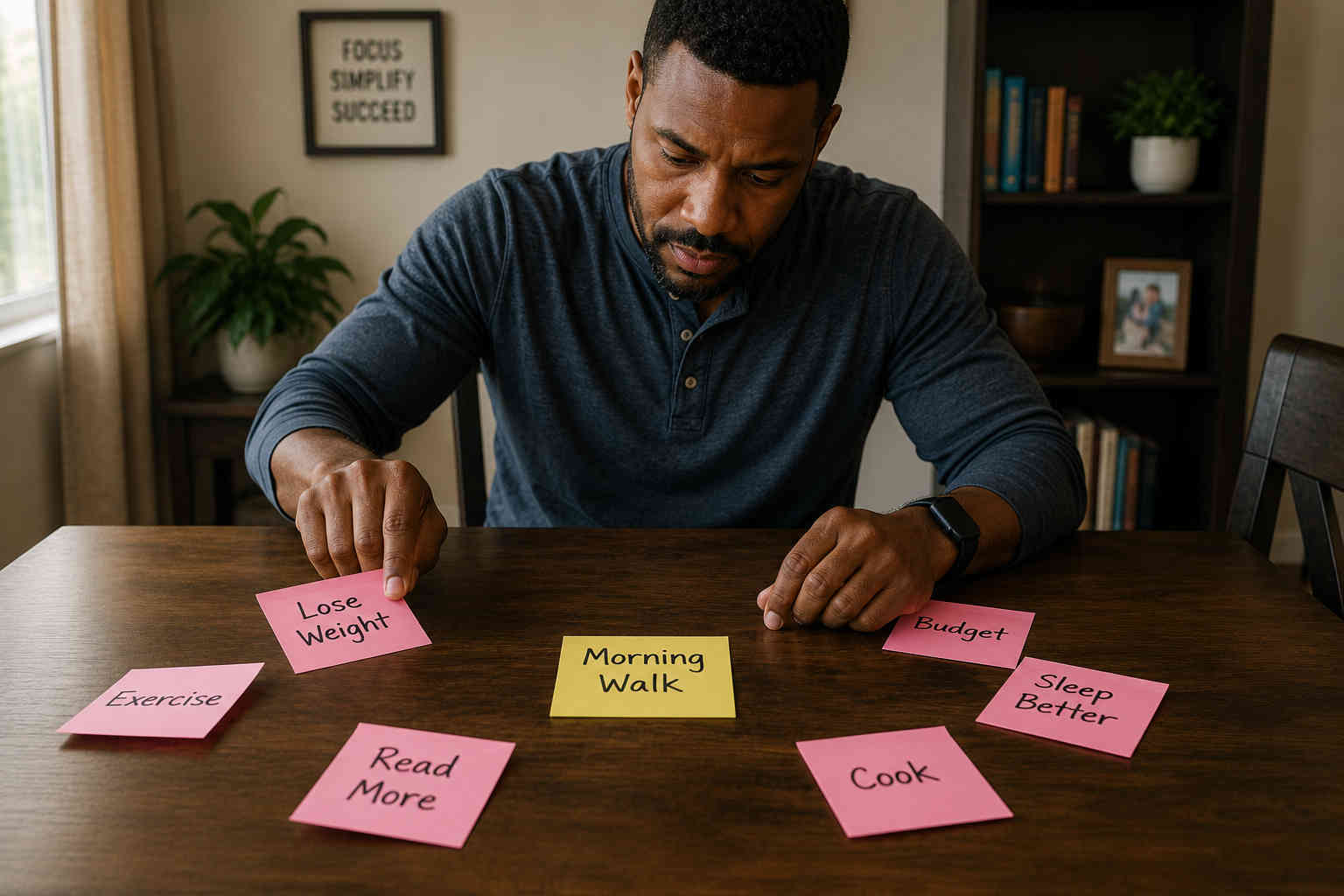
Think about the typical restart plan. A man decides that Monday will be different. He will wake up at five, exercise, eat perfectly, read every evening, stop wasting money, reduce screen time, organize the garage, improve his career, and go to bed by ten.
For several days, the plan feels powerful because it is new. Then work runs late. A child needs help. Sleep is poor. One workout is missed. Takeout replaces the planned dinner. The entire structure begins to wobble because every piece depends on everything else going right.
The problem is not laziness. The problem is cognitive overload.
Every new habit requires attention. You must remember when to do it, decide how to do it, overcome resistance, prepare the environment, and judge whether you succeeded. When you start several habits at once, you multiply those demands.
You also lose the ability to learn from the experiment. If your plan falls apart, you do not know whether the problem was the early wake-up time, the exercise schedule, the diet, the workload, or the unrealistic expectation that every day would cooperate.
Choosing one new habit gives you useful information. You can notice where the friction appears, change the timing, reduce the size, and improve the routine without redesigning your entire life.
Start So Small That Resistance Has Nothing To Argue With
Men often make a new habit difficult because difficulty feels serious. A twenty-minute walk seems too ordinary, so they commit to an hour at the gym. Reading two pages seems unimpressive, so they promise to finish a book every week. Saving twenty dollars feels insignificant, so they create an aggressive budget they cannot sustain.
The first version of a habit does not need to produce an impressive result. Its first job is to become repeatable.
A small habit might be:
- walking for ten minutes after breakfast,
- putting five dollars into savings every payday,
- reading two pages before turning on the television,
- drinking one glass of water after making coffee,
- writing one sentence in a journal before bed,
- doing five push-ups after brushing your teeth, or
- clearing one surface before leaving a room.
These actions may look too small to matter. Their value is not only in what they accomplish today. Their value is that they are teaching you to become a man who follows through.

Let The Habit Become Normal Before You Make It Bigger
The temptation after a good first week is to accelerate. You walked ten minutes, so now you decide to walk forty-five. You prepared lunch twice, so now you design an entire month of meals. You saved a little money, so you slash every enjoyable expense at once.
That move often destroys the stability you were beginning to create.
A better question is not, “How quickly can I increase this?” It is, “Has this become part of my normal life?”
A habit is becoming normal when you no longer negotiate with yourself for twenty minutes before doing it. You know when it happens. The tools are ready. Missing it feels unusual. Completing it does not require applause.
Once the behavior is stable, increase it gradually. Ten minutes can become fifteen. Two pages can become five. One prepared meal can become three. A small automatic transfer can increase when your budget becomes stronger.
Growth should rest on consistency, not replace it.
Attach The New Habit To Something That Already Happens
A new habit is easier to remember when it is connected to an existing routine. This is often called habit stacking, but the idea is simple: use one dependable action as the trigger for the next one.
After I make coffee, I will review my three priorities. After I brush my teeth, I will stretch for five minutes. After I finish dinner, I will walk around the block. After I receive my paycheck, I will transfer money into savings. After I turn off the television, I will prepare tomorrow's clothes.
The existing routine becomes the reminder. You do not need another alarm, app, or inspirational quote. The day itself tells you what comes next.

Remove Friction Before You Depend On Discipline
Good habits become easier when the environment is prepared in advance.
If you want to exercise in the morning, lay out your clothes and shoes the night before. If you want to eat healthier, prepare tomorrow's lunch before you become tired and hungry. If you want to read, place the book on the chair where you usually scroll. If you want better sleep, charge the phone outside the bedroom.
These adjustments seem minor, but they remove decision points. Every decision is a place where the habit can be delayed, negotiated, or abandoned.
Do not make the good action prove how disciplined you are. Make it obvious, prepared, and convenient.

Measure The Streak Without Worshiping Perfection
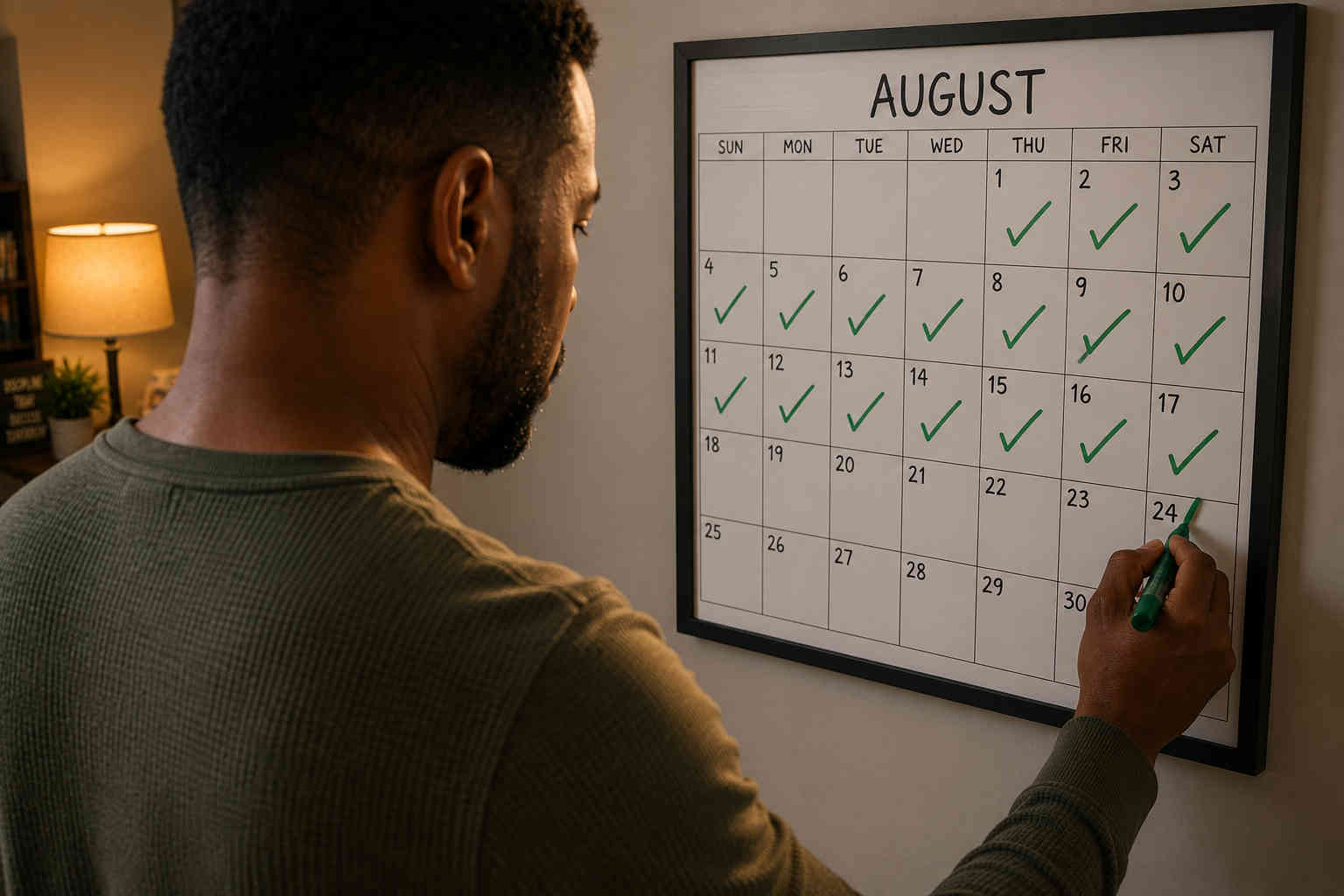
Visible tracking can make a small habit feel real. Place a checkmark on a calendar, mark the day in a notebook, or use a simple habit tracker. Over time, the growing line of completed days becomes evidence that you are changing.
However, the streak is a tool, not a moral score.
You will eventually miss a day. Travel, illness, work, family responsibilities, and ordinary human inconsistency will interrupt the pattern. The danger is not the missed day. The danger is allowing one interruption to become a new identity.
Do not say, “I ruined the streak.” Say, “Tomorrow is the next repetition.”
A useful rule is to avoid missing twice when it is reasonably within your control. One missed walk is life. Two or three missed walks can begin a different habit—the habit of postponing your return.
Focus On Systems Instead Of Emotional Promises
A goal tells you what you want. A system tells you what happens next.
“I want to lose twenty pounds” is a goal. “I prepare lunch on Sunday and Wednesday” is a system. “I want to save money” is a goal. “I transfer money automatically every payday” is a system. “I want to read more” is a goal. “I read for fifteen minutes before television” is a system.
Goals are useful for direction, but they are too distant to guide an ordinary Tuesday evening. Systems create a default response.
This is especially important after divorce, when emotions can change quickly. One day you feel determined. The next day you feel lonely, angry, tired, or distracted. A system protects the habit from becoming a daily referendum on your mood.

Use Small Wins To Rebuild Trust In Yourself
One of the quiet losses after divorce is self-trust. You may question your judgment, your discipline, or your ability to follow through. You may have made promises to yourself before and watched them disappear.
Confidence does not return because you repeat encouraging words. It returns when your behavior provides evidence.
Each completed habit is a small vote for a stronger identity. The walk says, “I take care of my body.” The budget review says, “I face reality instead of avoiding it.” The phone call says, “I maintain relationships.” The prepared meal says, “I plan for the man I want to become.”
These actions are not dramatic enough to impress strangers. That is part of their power. They are private evidence that you can rely on yourself again.

Expect One Good Habit To Improve Other Areas
Habits rarely remain isolated.
A morning walk may improve sleep. Better sleep may reduce cravings and improve patience. More energy may make cooking easier. Cooking may reduce spending. Reduced spending may strengthen financial confidence. Greater confidence may help you become more social and willing to take on new challenges.
This ripple effect is why the first habit should not be chosen only by size. Choose something that creates leverage.
Useful First Habits With A Wide Ripple Effect
A consistent bedtime can improve mood, appetite, energy, judgment, and exercise recovery.
A daily walk can create movement, mental space, better sleep, and confidence.
A weekly money review can reduce avoidance, unnecessary spending, and financial uncertainty.
Meal preparation can improve nutrition, save money, and remove stressful evening decisions.
A ten-minute evening reset can reduce household chaos and make mornings easier.

Do Not Confuse Boredom With Failure
Every habit becomes less exciting once it is familiar. That is not evidence that it stopped working. It is evidence that it is becoming normal.
The beginning of change gets attention because it feels new. The middle is repetitive. You complete the same walk, prepare the same lunch, review the same account, or open the same book. There is no dramatic breakthrough to announce.
This is where many men abandon the habit and search for a new plan. They mistake novelty for progress.
The boring repetition is the progress.
When the habit feels ordinary, you are no longer spending as much mental energy on it. That means you are getting closer to the point where you can responsibly add the next habit.
Know When It Is Time To Add Another Habit
There is no perfect number of days. Some habits stabilize quickly, while others require months. Instead of following an arbitrary schedule, look for practical signs:
- You rarely forget the habit.
- You know exactly when and where it happens.
- The required tools are usually prepared.
- You can complete it on an average day without excessive effort.
- A missed day feels like an exception rather than the beginning of quitting.
- You have maintained it through at least one difficult or busy week.
Then add one more habit that supports the life you are already building. Do not create a new collection of resolutions. Keep the same method: choose one, make it small, attach it to a routine, prepare the environment, and repeat.
Final Thoughts: Your New Life Will Look Ordinary While You Are Building It
Lasting change rarely feels dramatic from the inside.
It looks like walking when nobody is watching. Preparing lunch after a long day. Marking another square on a calendar. Closing the shopping app. Opening the book. Filling the water bottle. Going to bed when you said you would.
Months later, those ordinary actions begin to appear in the rest of your life. You have more energy. Your home feels calmer. Your finances are clearer. You trust yourself more. You handle difficult days without immediately abandoning your standards.
Other people may call it a transformation. You will know that it was a collection of small decisions that finally had enough time to accumulate.
Do not ask yourself to become a completely different man tomorrow. Choose one action that the stronger version of you would repeat. Make it easy enough to begin and meaningful enough to matter.
Then keep the promise.
When that promise becomes normal, choose the next one.
That is how a man rebuilds his life without burning himself out. One new habit at a time.

Your One-Habit Rule
Make One Promise Small Enough To Keep
Choose one behavior that improves your life, connect it to a routine you already have, prepare the environment, and repeat it until following through feels more normal than quitting.