Divorce Anger And Betrayal Recovery
Divorce changes more than your relationship status. It changes how you understand your past, how safe the future feels, and sometimes how you see yourself. Sadness may be expected. Anger is often the emotion that refuses to leave.
Some men wake up angry every morning. Others replay conversations while driving, lie awake reconstructing the timeline of a betrayal, or feel their body tighten when a text from their former spouse appears. An unpaid expense, a photograph, a parenting disagreement, or hearing that she has moved on can make the entire divorce feel newly alive.
If your marriage ended because of infidelity, deception, abandonment, financial betrayal, manipulation, or repeated disrespect, your anger is not irrational. It formed because something important was violated: trust, family stability, your plans, your dignity, or your belief that the person beside you was acting in good faith.
The difficult truth is that an emotion can be justified and still become destructive. Anger may protect you during the first stage of separation. Later, it can keep the person who hurt you at the center of your life.
Why Anger Feels Stronger Than Grief
Anger often feels more manageable than grief. Grief exposes the parts of the divorce that make you feel powerless. Anger gives those feelings a target.
Instead of saying, “I miss the family I thought I had,” your mind says, “She destroyed everything.” Instead of admitting, “I feel rejected,” it says, “I will never forgive her.” Instead of facing fear about money, loneliness, parenting, or starting over, anger creates a temporary sense of strength.
That does not make anger fake. It means anger may be carrying other emotions inside it. Beneath the rage may be humiliation, loneliness, disappointment, regret, fear, shame, or grief for a future that no longer exists.
When Anger Stops Protecting You
In the early stages of divorce, anger can help you recognize mistreatment, protect your finances, speak clearly with an attorney, and establish boundaries. It can provide energy when you feel emotionally flattened.
But anger has outlived its useful role when it begins shaping your identity. You may notice that every conversation returns to the divorce, every woman is evaluated through the behavior of your ex-wife, or every setback becomes more evidence that life is unfair.
You are no longer simply a man who experienced betrayal. You are becoming a man organized around betrayal.
Letting Go Is Not the Same as Excusing
Many divorced men resist emotional healing because they believe it requires one of two dishonest choices: stay angry forever or pretend the behavior did not matter. There is a third position.
- What happened was wrong.
- It caused real damage.
- You will not return to the same treatment.
- You do not have to carry the emotional weight forever.
Healing does not revise the facts. It changes how much power those facts have over your present life.
Separate Justice From Healing
One of the most common traps after betrayal is waiting for justice before allowing yourself to recover. You may believe peace will come when your ex-wife admits what she did, when your children understand your side, when mutual friends see the truth, or when consequences finally reach her.
Any of those things may happen. None of them is guaranteed.
Your recovery becomes unstable when it depends on another person developing insight, remorse, or honesty. Justice may involve legal agreements, financial accountability, custody arrangements, or firm boundaries. Healing is the separate work of deciding that your nervous system, attention, and future will no longer remain on hold.
Stop Replaying the Trial in Your Mind
After divorce, the mind often becomes a courtroom that never adjourns. You act as prosecutor, witness, and jury. You revisit messages, inconsistencies, missed warning signs, and conversations in which you wish you had responded differently.
The replay feels useful because it creates the impression that one more review might finally explain everything. Usually it creates pain without producing new information.
When the mental trial begins, ask: “Am I solving a current problem, or am I presenting old evidence again?”
If there is a practical action—documenting an expense, setting a boundary, speaking with your attorney—take it. If there is no action, recognize the replay as a stress loop rather than a task.
Identify What the Anger Is Protecting
Try completing this sentence honestly:
Your answer may be lonely, embarrassed, afraid, rejected, foolish, replaced, financially insecure, or heartbroken. This is not weakness. It is precision.
You cannot heal an emotion accurately when you keep calling every painful feeling anger. Once you identify the deeper wound, you can respond to what is actually happening. Loneliness may require connection. Shame may require self-compassion. Fear may require a plan. Grief may require time and honest expression.
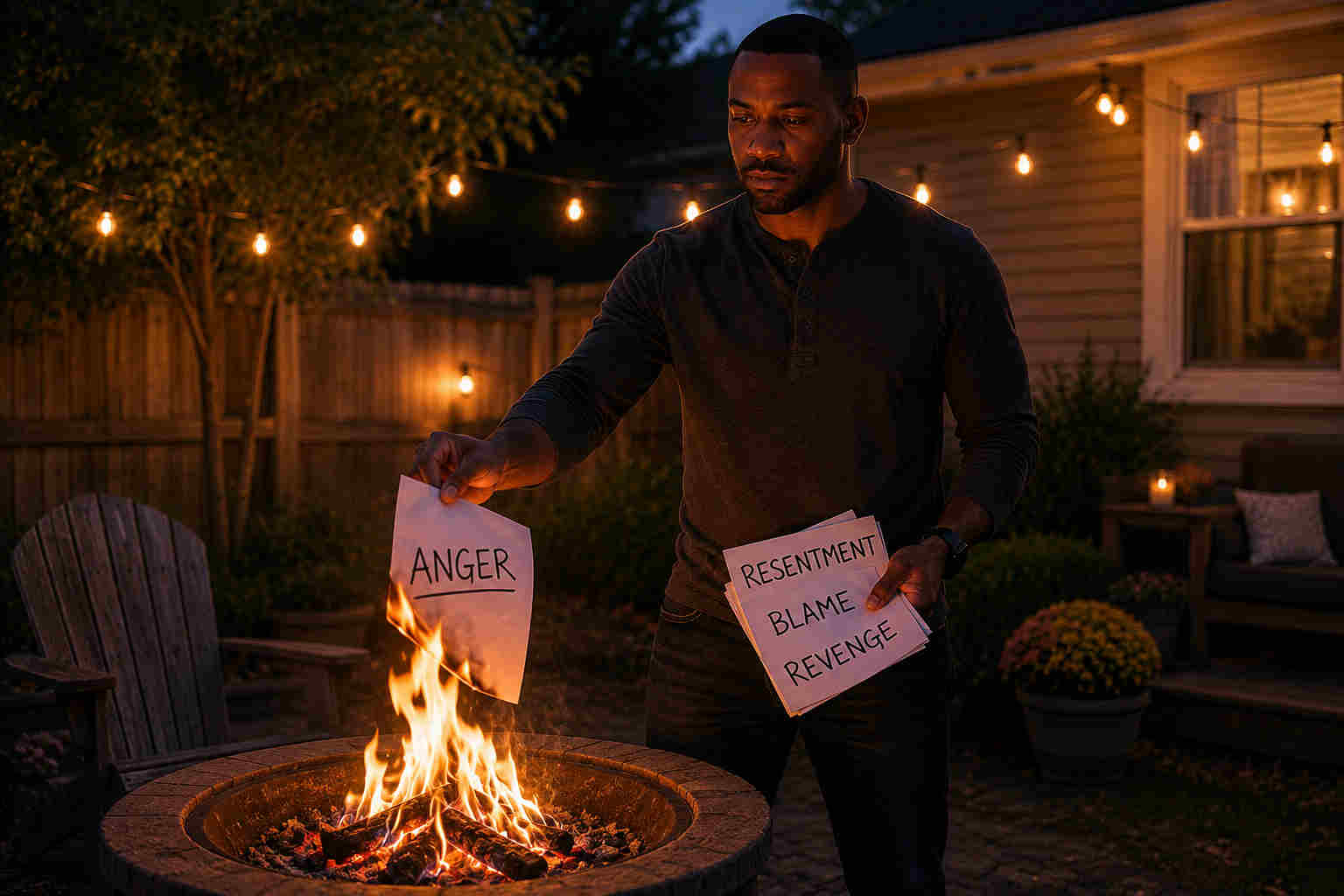
Write the Letter You Will Never Send
Unspoken words can keep anger active. A private, unsent letter gives those words somewhere to go without reopening conflict.

Write what happened from your point of view. Name what it cost you. Say what you wish you had said. Describe the boundaries you now understand. Then finish with what you are choosing to reclaim: your attention, health, time, confidence, or future.
Do not mail it. Do not photograph it. Do not use it as a draft for a late-night message. Put it away, shred it, or destroy it safely. The exercise works because the goal is expression, not reaction.
Stop Feeding the Anger With New Information
Some habits look like information gathering but function as emotional self-injury. Checking your ex-wife's social media, rereading old messages, asking mutual friends for updates, examining photographs, or searching for proof that her new life is failing can make anger feel current every day.
You do not need to erase your history. You do need to stop visiting the emotional crime scene whenever you feel lonely, bored, or uncertain.
Mute accounts. Remove shortcuts. Store old photographs outside your everyday view. Ask friends not to report on her life. Keep necessary communication focused on children, finances, property, or legal responsibilities.
Move the Anger Through Your Body
Anger is physical. It can tighten your jaw, raise your heart rate, disrupt sleep, and leave your muscles prepared for a confrontation that never happens. Reasoning alone may not release that activation.

Walk, lift weights, cycle, swim, work in the yard, or return to a recreational sport. The goal is not to create a dramatic transformation so your former spouse regrets leaving. That keeps her at the center of the project.
Train because your body deserves to feel stable again. Choose consistency over intensity. A thirty-minute walk repeated five times a week will usually help more than one punishing workout followed by ten inactive days.
Use the Ninety-Second Rule Before You Respond
When a message from your ex triggers anger, do not answer from the first surge. Put the phone down. Breathe slowly. Walk to another room. Give your body time to come out of the immediate threat response.
Then ask three questions:
- What practical issue needs an answer?
- What part of my reaction belongs to the past?
- What response will I respect tomorrow?
A useful reply is often shorter than the one anger wants to send. If children are involved, write as though a judge, counselor, or your children might someday read the exchange. Calm communication is not surrender. It is control.
Replace Revenge With Measurable Progress
Revenge is emotionally attractive because it promises balance: she hurt you, so something should hurt her. But even an imagined victory does not return the marriage, restore lost years, or rebuild trust.
Progress produces what revenge cannot. It gives you a better body, a more stable bank account, a stronger relationship with your children, useful skills, healthier friendships, and a future that is not organized around her reaction.

Measure progress privately. Sleep better. Pay down a balance. Complete a course. Repair a neglected part of your home. Show up for your child. Spend an evening without checking on your ex. These victories do not require an audience.
Build Boundaries Without Becoming Bitter
Betrayal should change some of your standards. It should not convince you that trust is impossible.
Healthy boundaries say:
- I will not ignore repeated dishonesty.
- I will not remain in a relationship where respect is conditional.
- I will ask direct questions instead of explaining away inconsistencies.
- I will leave when a clear pattern violates my values.
Bitterness says every woman is dishonest, intimacy is foolish, and love always ends in humiliation. Boundaries protect your future. Bitterness prevents you from having one.
Do Not Make Your Children Carry Your Anger
If you share children, your anger needs an adult destination. Your children should not become messengers, investigators, confidants, or witnesses for the prosecution.
You do not have to pretend the divorce is painless. You do need to avoid using your children to confirm your side of the story. Speak respectfully in front of them. Keep exchanges focused. Let them love both parents without treating their affection as disloyalty.
Years from now, they may not remember every legal or marital detail. They will remember whether their father remained steady, present, and safe.
Create a Future That Requires Your Attention
Anger weakens when your life contains goals that compete successfully for your focus. This is not distraction. It is reconstruction.

Choose goals in several areas rather than making one part of life carry all your hope. Improve your finances. Plan a trip. Rebuild your health. Strengthen friendships. Become more present with your children. Learn something that changes your confidence.
Ask a better question than “How do I stop thinking about what she did?” Ask, “What am I building that deserves more attention?”
How To Know You Are Actually Letting Go
Healing rarely arrives as a dramatic moment. It appears in changes that are easy to overlook:
- You think about the betrayal less frequently.
- A memory affects an hour instead of an entire week.
- You stop rehearsing arguments that will never happen.
- You no longer need every person to understand your side.
- You can communicate with your ex without losing the rest of the day.
- Your plans feel more interesting than your evidence.
- You feel cautious about future relationships without feeling hopeless.
Anger may still return on an anniversary, during a parenting conflict, or when a new detail reminds you of the betrayal. Recovery does not mean never feeling anger again. It means the emotion visits without taking over the house.
What If What Happened Still Feels Unforgivable?
You may never describe the behavior as understandable or acceptable. You may never reconcile emotionally with the person who hurt you. Forgiveness is a personal decision, not a requirement someone else can impose on you.
But peace does not have to wait for forgiveness. You can choose emotional distance, firm boundaries, and a life no longer governed by the injury. You can stop carrying the heat without changing your judgment about the fire.
When Professional Help Makes Sense
Consider speaking with a licensed therapist or counselor when anger is affecting sleep, work, parenting, physical health, dating, or your ability to function. Professional support can also be especially useful after infidelity, prolonged manipulation, financial abuse, or a high-conflict divorce.
Seek immediate professional or emergency help if you feel at risk of harming yourself or someone else. Asking for help is not excusing what happened. It is refusing to let the damage spread.
Final Thoughts: Walk Into a Life That Is No Longer Built Around the Injury
What happened may have been unfair. It may have changed your finances, your home, your relationship with your children, and the way you understand years of your life. You do not need to minimize any of that to heal.
You only need to decide that the betrayal will not receive unlimited access to your future.

Letting go of anger is not a gift to your ex-wife. It is not an apology, reconciliation, or declaration that the damage did not matter. It is the decision to return your energy to the man who still has a life to build.
One day, the marriage and divorce will remain part of your history without remaining the center of your identity. You will remember what happened, but you will no longer need the memory to keep proving why you deserve to move forward.
Frequently Asked Questions
Is it normal to still feel angry years after divorce?
Yes. Anger can last longer than expected, especially after betrayal, infidelity, financial deception, or a high-conflict divorce. If it continues disrupting your health, work, parenting, or relationships, active support may help more than waiting for time alone to resolve it.
Does letting go of anger mean forgiving my ex-wife?
No. Releasing chronic anger and offering forgiveness are separate choices. You can maintain your judgment, boundaries, and standards without allowing the emotional reaction to govern your daily life.
How long does emotional healing after divorce take?
There is no universal timeline. The length of the marriage, the nature of the betrayal, parenting responsibilities, finances, legal conflict, and available support all affect recovery. Look for gradual improvements in sleep, concentration, emotional control, and interest in the future.
Should I tell my ex that I forgive her?
You are not required to announce forgiveness or emotional closure. Sometimes the healthiest change happens privately through reduced contact, clear boundaries, and a decision to stop seeking a response from the other person.
Anger Can Tell You What Was Wrong. It Cannot Build What Comes Next.
Keep the lesson, protect the boundary, and return your attention to the life that still belongs to you.
Back To Emotional Healing After Divorce