Build A Routine That Fits Your New Life
The Better Workout Is The One You Will Keep Doing
Divorce changes more than your relationship status. It can change where you live, how much money you have available, when you see your children, what time you get home from work, what you eat for dinner, and even what you do with a Saturday morning.
That matters when you're trying to get back in shape.
A workout routine that made perfect sense when you were married may no longer fit your life. Maybe you moved into an apartment and no longer have room for exercise equipment. Maybe your budget is tighter. Maybe you now have your children on certain nights and don't want to spend part of that limited time driving to a gym.
Or the opposite may be true. Maybe the house feels too quiet after the divorce. You spend enough time there already, and the last thing you need is another reason to stay home. Getting out of the house, being around other people, and having a place where your only job is to exercise might be exactly what you need.
That's why the home workouts vs. gym after divorce debate is different for a man rebuilding his life. There isn't one correct answer. The better choice is the environment that makes it easier for you to exercise consistently during the life you're actually living now.
Don't Choose Based On Your Old Life
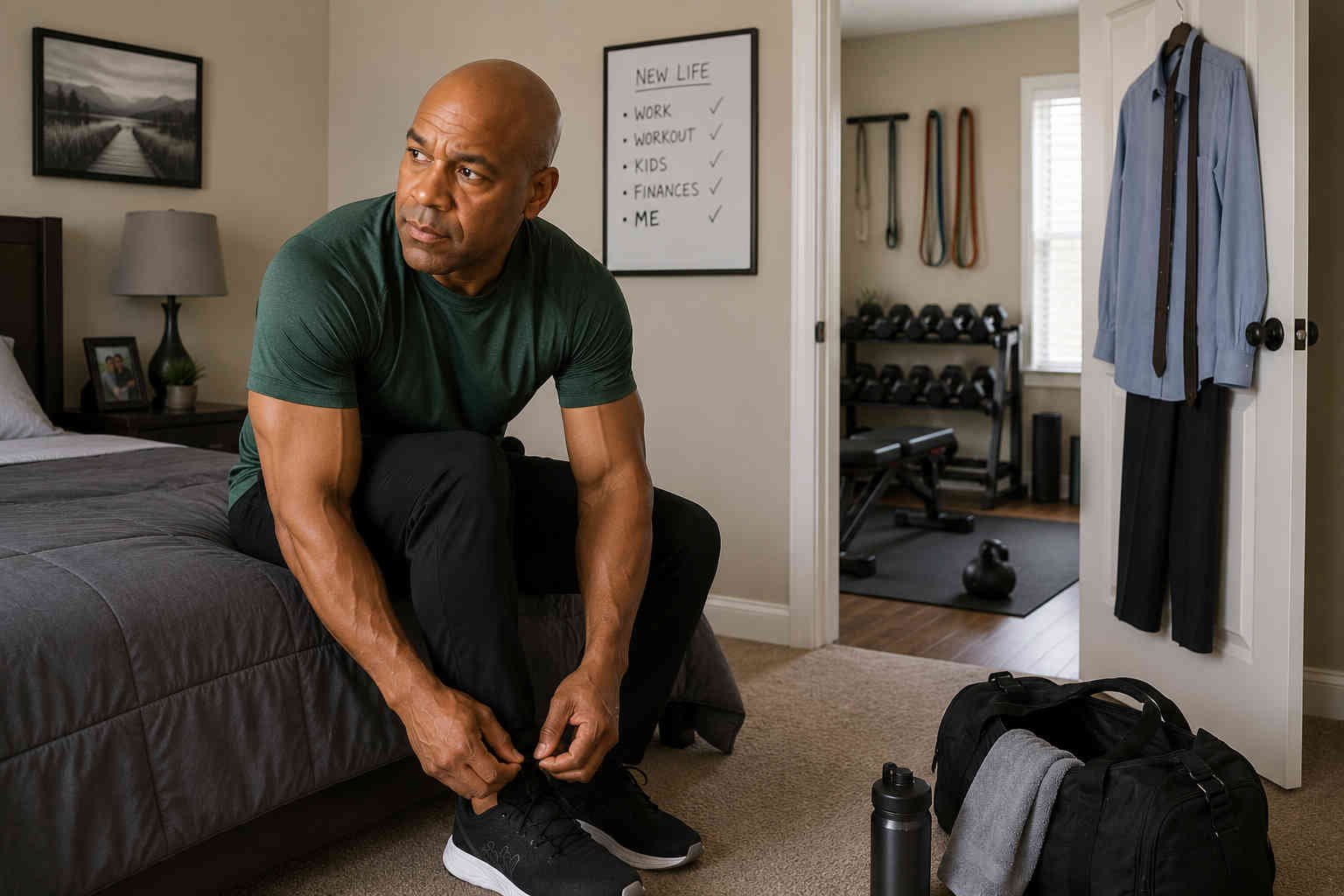
One of the easiest mistakes to make after divorce is designing your fitness routine around the schedule you used to have. Your old routine might have been simple: work until five, drive home, eat dinner with the family, then go to the gym at seven.
But perhaps you now pick up your children after work two nights a week. On another evening you're catching up on laundry, groceries, bills, and everything else that used to be divided between two adults. Suddenly that seven o'clock gym session isn't nearly as simple.
Before choosing between home workouts and a gym membership, look at your current week rather than your former one. Ask when you could realistically exercise three or four times a week, how much driving would be involved, what happens on the days you have your children, whether you're likely to procrastinate at home, whether leaving the house would improve your mood, and whether another monthly payment belongs in your budget.
Those questions are more useful than asking which option is theoretically better. A gym you rarely visit isn't superior to a simple home workout you actually complete.
The Strongest Argument For Home Workouts After Divorce: Fewer Steps Between You And Exercise
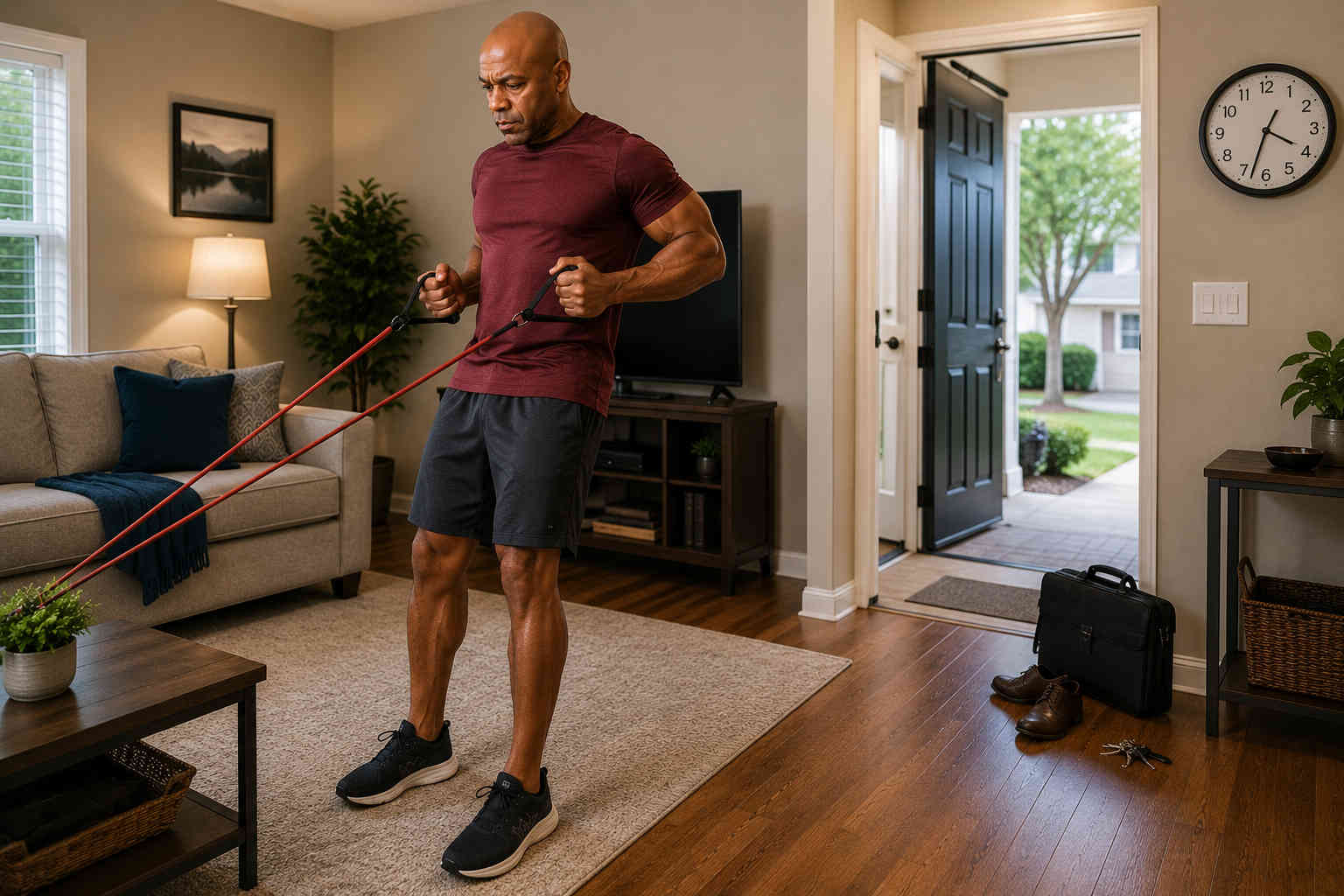
Imagine it's 6:15 on a Wednesday evening. You've worked all day. You're hungry. The weather is bad. You're sitting on the couch.
Going to the gym requires you to change clothes, find your shoes, grab your keys, drive there, exercise, drive home, shower, and finally get on with your evening. A home workout requires you to stand up.
That difference sounds small when you're motivated. It becomes enormous when you're tired. One of the greatest advantages of home workouts after divorce is eliminating exercise friction—all the little steps that give you opportunities to change your mind.
You can walk through the door at 5:45 and start exercising at 5:55. Even twenty or thirty minutes becomes practical. Rebuilding your fitness doesn't require every workout to be an epic event. A short session you complete is more useful than a perfect workout you keep postponing.
Home Workouts Can Protect A Tight Post-Divorce Budget
Divorce can turn ordinary monthly expenses into something you suddenly notice. You may now be paying for housing on one income. You might be replacing furniture, paying legal expenses, rebuilding savings, handling child-related costs, or simply discovering how expensive it is to run a household alone.
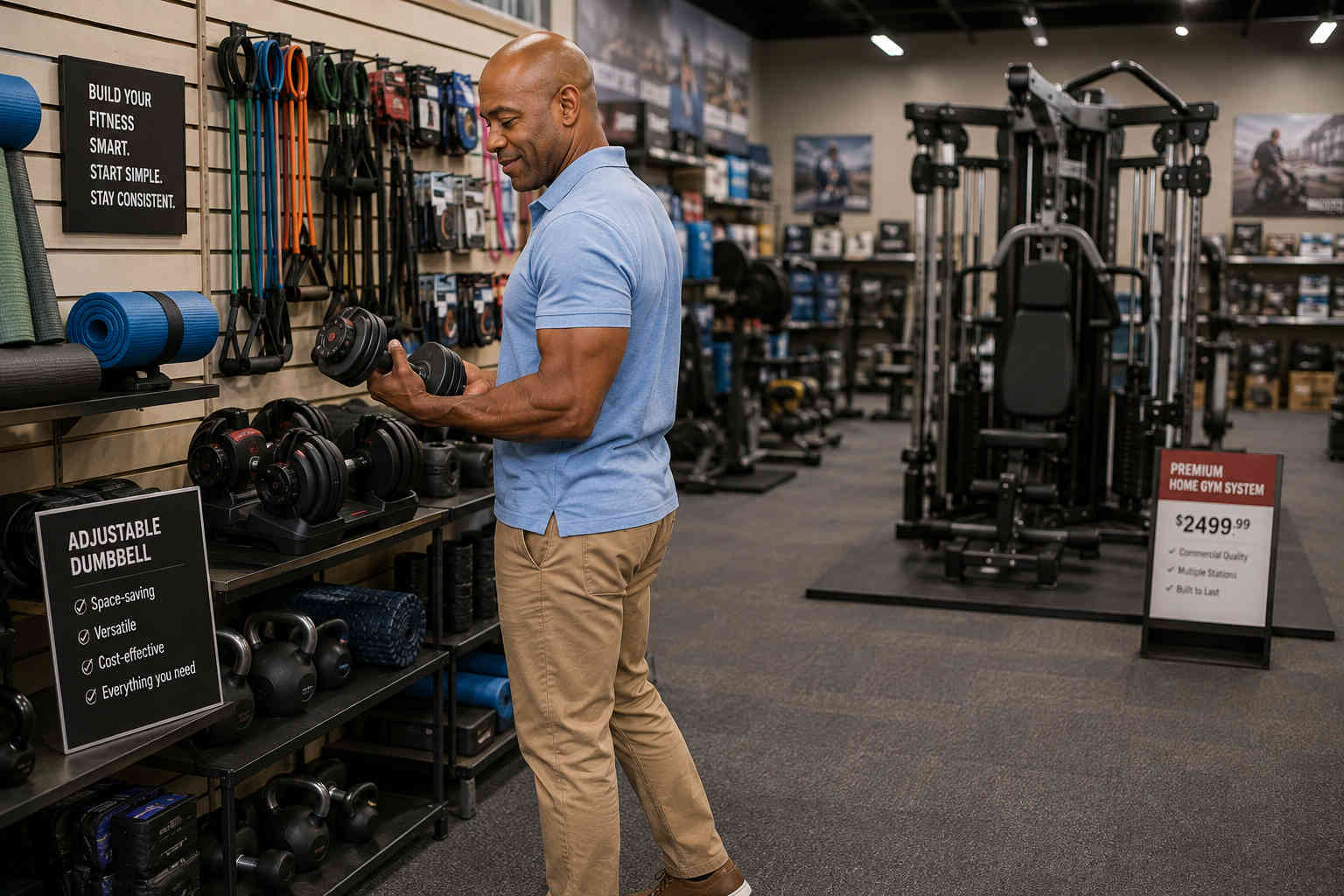
A gym membership might not ruin your budget, but it still needs to earn its place in it. Home exercise can be remarkably inexpensive.
You don't need a garage packed with commercial equipment. A useful beginner setup might eventually include adjustable dumbbells, resistance bands, a bench, and an exercise mat. You can also begin with bodyweight movements and add equipment only after you've demonstrated that you're going to use it.
Push-ups, squats, split squats, lunges, planks, step-ups, band rows, dumbbell presses, curls, overhead presses, and Romanian deadlifts can create a substantial training program without a room full of machines.
There's also a psychological advantage to starting small. Buying thousands of dollars worth of equipment can become another dramatic "new life" purchase. Buying one or two useful pieces of equipment and establishing a routine first forces you to build the habit before building the gym.

But Home Has A Hidden Problem: Nobody Knows If You Quit
Convenience is home training's greatest strength. It can also be its greatest weakness.
At home, there's always something else to do. The laundry needs folding. Your phone is buzzing. The television is right there. You decide to answer one email before exercising. Then you start making dinner. Then it's 8:30. Tomorrow sounds better.
A gym creates a boundary that your house doesn't. Once you've driven there, changed clothes, and walked through the door, you're probably going to exercise.
That's why men who repeatedly plan to work out at home but never actually start shouldn't keep telling themselves they simply need more discipline. They may need a different environment. If your dumbbells have spent six months serving as expensive bedroom decorations, the evidence is already sitting on the floor.
The Gym Can Give You Somewhere To Go
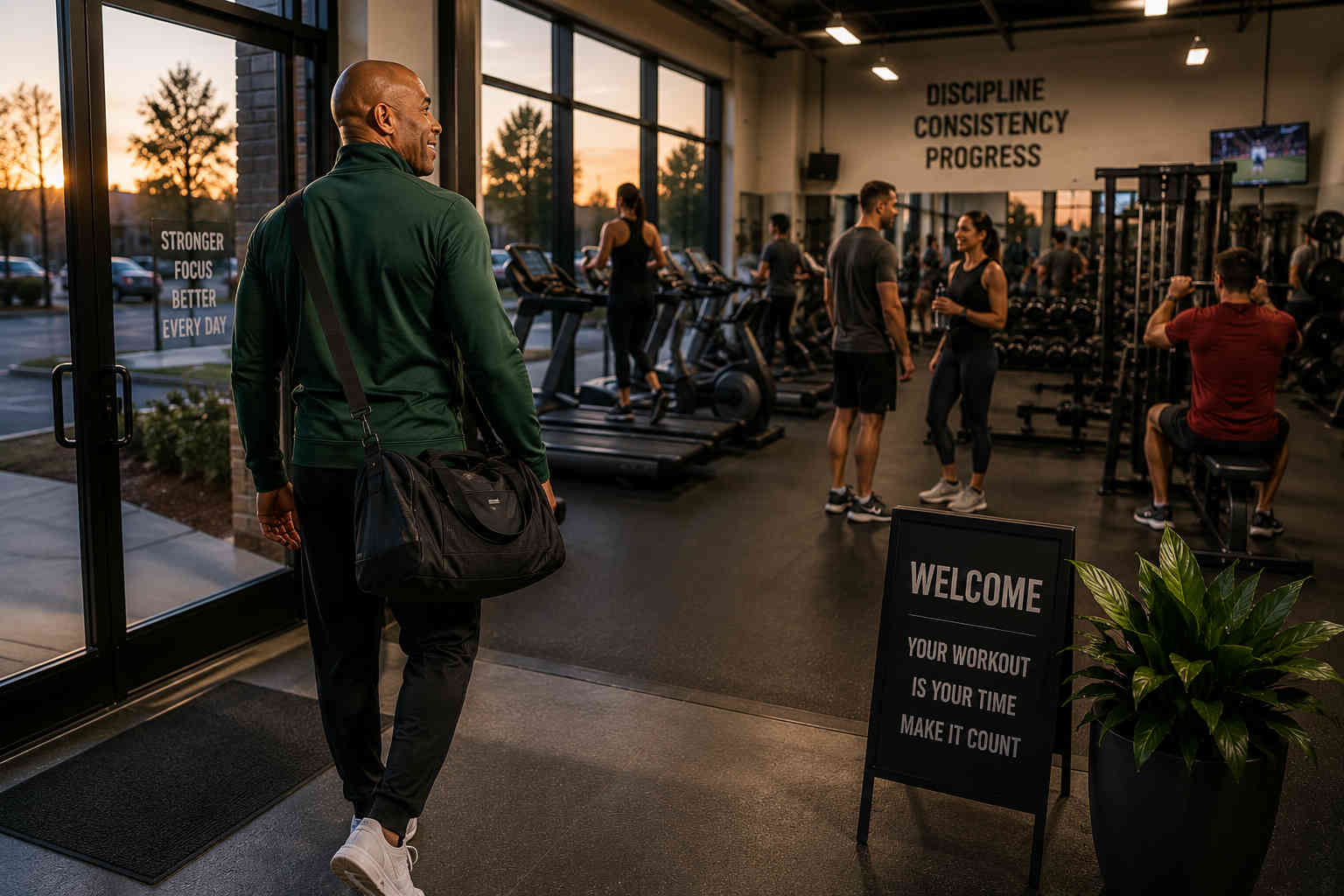
This benefit is rarely mentioned in comparisons of the home gym vs. gym membership, but it can be especially important after divorce. A gym is a destination.
That matters if you've suddenly gone from living in a busy household to spending long stretches of time alone. You don't have to become the most social person in the building. You don't even have to talk to anyone beyond saying hello at the front desk. You're still leaving the house.
You're around movement, noise, activity, and other people who are doing something productive. Tuesday evening stops being work, home, television, phone, bed. It becomes work, gym, shower, dinner, home.
That may not sound revolutionary, but rebuilding your life often happens through changes exactly that size. A gym can become one of the anchors of your new weekly routine.
The Gym Wins Easily On Equipment
There is no point pretending otherwise. A decent commercial gym gives you options that are difficult or expensive to reproduce at home: dumbbells ranging from light to very heavy, barbells and weight plates, squat racks, cable stations, leg presses, chest and shoulder machines, pulldown and rowing machines, treadmills, bicycles, ellipticals, rowers, and stair climbers.
This becomes increasingly valuable as you get stronger. A beginner can make substantial progress with a pair of dumbbells and bodyweight exercises. Eventually, however, progressive resistance becomes easier when you can simply move to the next dumbbell or add another plate.
The gym also lets you experiment. You may discover that your knees prefer a particular leg machine to lunges. You might find that you love rowing but hate treadmills. You may enjoy cables more than dumbbells. That variety can help you create a fitness routine you genuinely enjoy rather than one you merely tolerate.
If You're Starting Overweight Or Out Of Shape, Home May Feel Easier
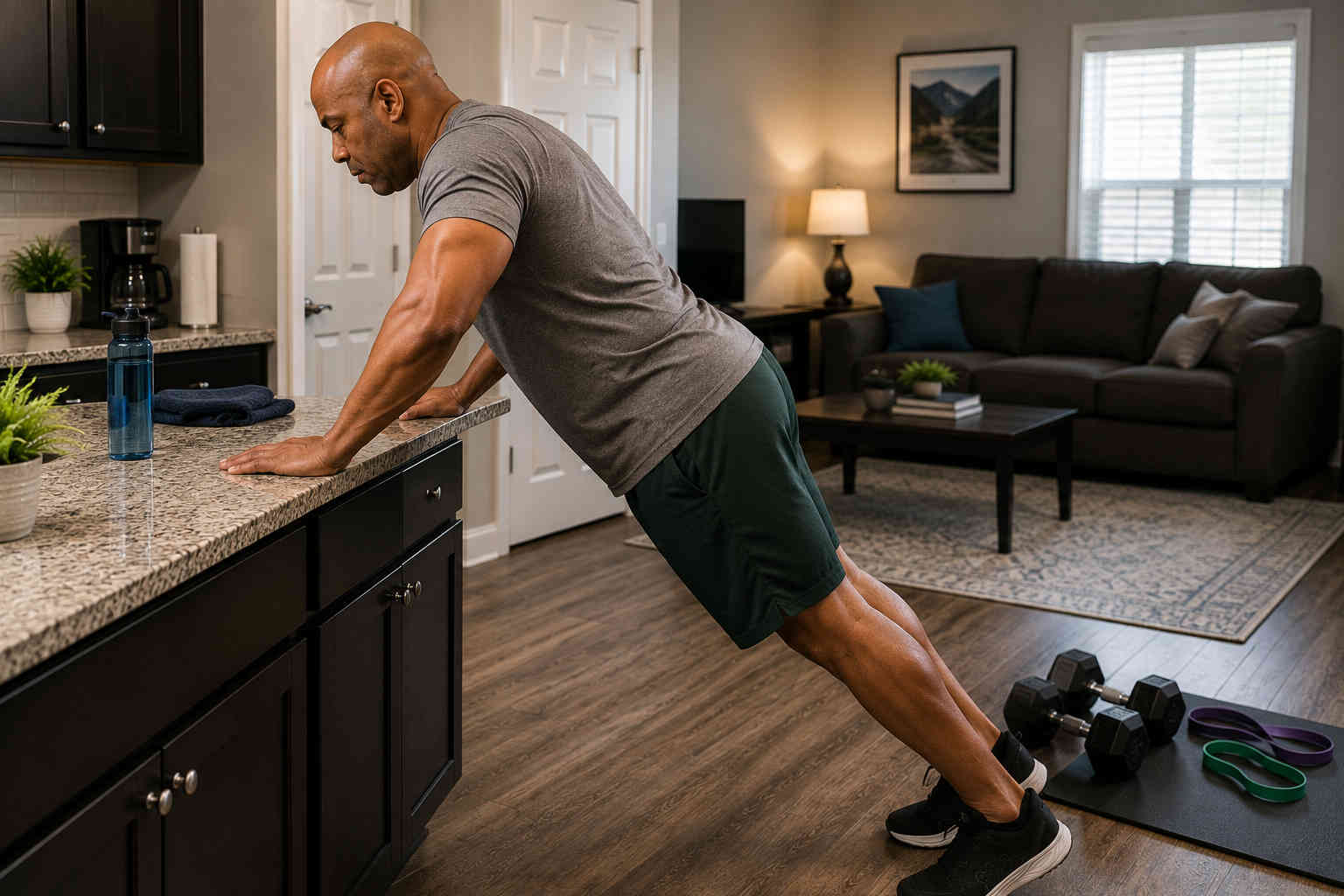
Some men delay going to the gym because they believe they need to get in shape before they show up. Logically, that doesn't make much sense. Emotionally, it's understandable.
If you've gained a significant amount of weight, haven't exercised in years, and don't know how half the equipment works, walking into a crowded gym can make you feel like everyone knows you don't belong there. They probably aren't paying much attention to you at all, but knowing that doesn't necessarily eliminate the discomfort.
Home workouts can provide a private starting point. You can spend your first month rebuilding basic conditioning without worrying about what you look like doing squats or whether you're using a machine incorrectly. You can learn movement patterns, improve your stamina, and establish the identity of being someone who exercises again.
Then, if you decide you want more equipment, joining a gym won't feel like the beginning. It will feel like the next step.

The Gym May Be Better If You Need To Rebuild Confidence
There's another side to the argument. Sometimes waiting until you feel confident is exactly what keeps you stuck.
Going to the gym while you're out of shape can become part of rebuilding your confidence. You walk in despite feeling uncomfortable. You complete the workout. You come back two days later.
After a few weeks, you know where everything is. The employees recognize you. You stop wondering whether you're doing something wrong every five minutes. Eventually, you're simply a guy who goes to the gym.
That small transformation matters. After divorce, confidence doesn't always return because you think differently about yourself. Sometimes it returns because you repeatedly do things that prove you're capable of moving forward.
Consider Your Parenting Schedule Before Buying A Membership
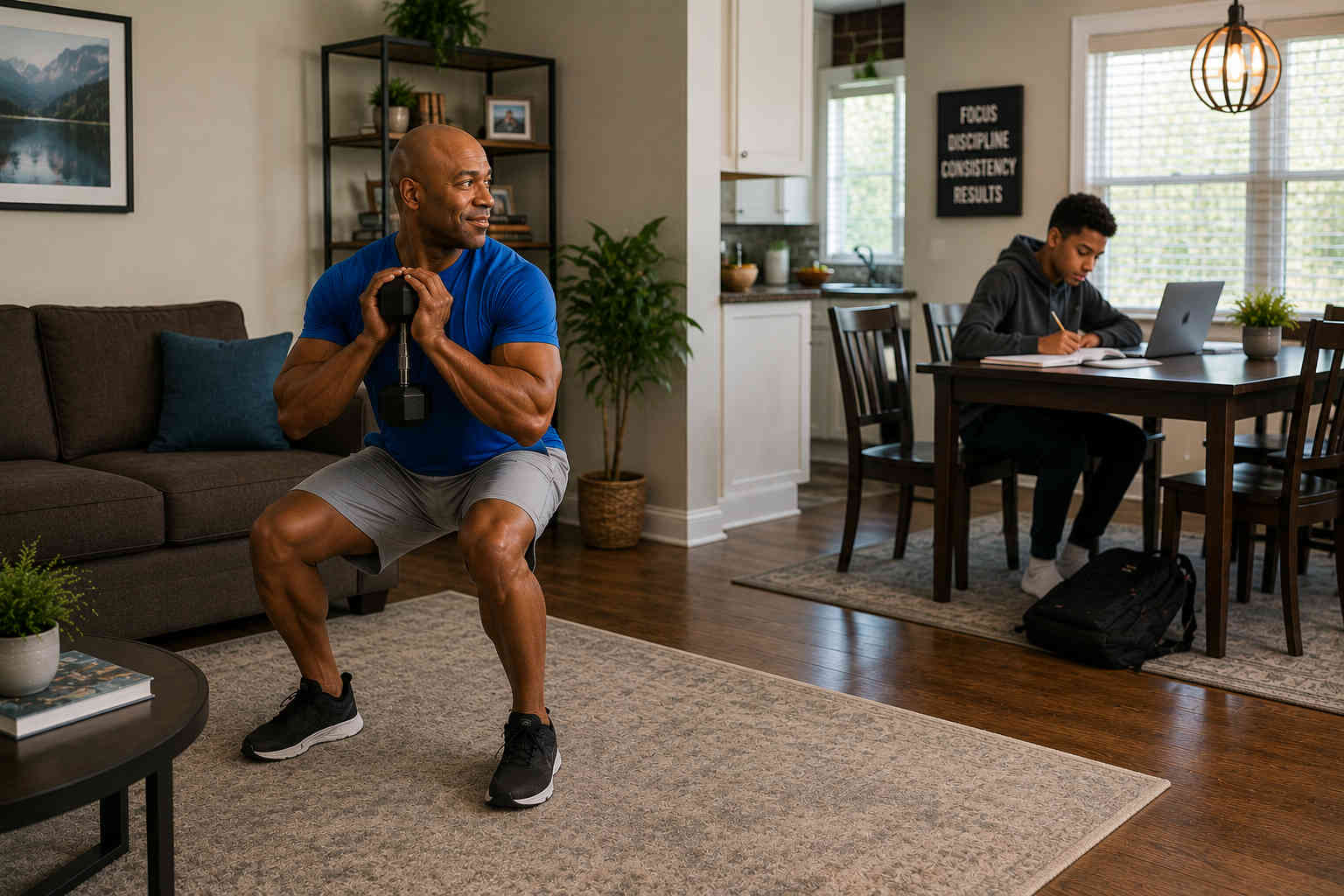
Divorced fathers may have a schedule that changes dramatically throughout the week. Suppose you have your children every Wednesday evening and every other weekend. A rigid gym-only routine can create an unnecessary choice: workout or spend time with the kids.
You shouldn't have to make that choice very often. Home training gives you another option.
If your children are doing homework or relaxing for a while, you might complete a twenty-five-minute workout without leaving the house. Older children may even want to exercise with you. This is where the debate stops needing a winner.
You could use the gym Monday, Tuesday, and Thursday during one week, then substitute a home session when parenting responsibilities change the following week. Fitness should fit around the important parts of your life rather than constantly competing with them.
The Best Option May Be A Hybrid Routine
For many divorced men, the smartest answer to home workouts vs. the gym is both—not because you need more exercise, but because you need more flexibility.
A Simple Hybrid Week
Monday — Gym: Full-body strength workout.
Wednesday — Home: Twenty-five-minute dumbbell and bodyweight workout.
Friday — Gym: Full-body strength workout.
Saturday or Sunday — Outdoors: Walk, hike, bike ride, or another activity you enjoy.
Now a late meeting doesn't destroy your week. A child getting sick doesn't destroy your week. Bad weather doesn't destroy your week. You haven't made fitness dependent on getting to one specific building at one specific time.
That's particularly useful when your post-divorce life is still settling into a predictable rhythm.
Don't Confuse A Harder Workout With A Better Workout
A common mistake when getting fit after divorce is trying to compensate for lost time. You haven't exercised seriously in four years, so you decide you're going to train six days a week.
That lasts eleven days. Then you're sore, exhausted, and finished.
The goal isn't to prove how hard you can exercise. The goal is to create a routine that still exists six months from now. Start where you are. Two strength workouts and several walks each week can be a far more productive beginning than an ambitious six-day program you abandon before the month ends.
Try The 10-Minute Test Before Deciding
If you're uncertain whether home workouts or the gym would suit you better, conduct a simple experiment. Don't decide based on what you imagine you'll do. Collect evidence.
For two weeks, schedule three home workouts each week. Your only requirement is to begin and exercise for at least ten minutes. Afterward, ask whether you started when you said you would, whether you got distracted, whether you cut workouts short unnecessarily, whether you enjoyed the privacy, and whether eliminating the commute made consistency easier.
If you scheduled six workouts and completed five or six, home training probably fits you pretty well. If you completed two because you continually found reasons to do something else, that's useful information too.
Then try a gym. Don't think of a membership as a lifetime commitment. You're testing an environment. The important question isn't where you prefer the idea of exercising. It's where you repeatedly exercise.
Match The Workout Location To The Problem You're Trying To Solve
A better way to make the decision is to identify the obstacle that defeats you most often.
If Your Biggest Problem Is Time
Choose home workouts. Removing the commute can turn a workout from something you cannot fit into your evening into something you can finish before dinner.
If Your Biggest Problem Is Money
Choose home workouts. You can build an effective strength and cardio routine with very little equipment.
If Your Biggest Problem Is Self-Consciousness
Start at home. Use privacy to build a foundation while you regain conditioning.
If Your Biggest Problem Is Procrastination
Choose the gym. Getting out of the house creates a clear transition between ordinary life and training.
If Your Biggest Problem Is Limited Equipment
Choose the gym. A commercial facility makes progressive strength training much easier.
If Your Biggest Problem Is Isolation
Choose the gym. Being around people—even without much conversation—can add structure and activity to evenings that have become too quiet.
If Your Biggest Problem Is An Unpredictable Schedule
Use both. A hybrid approach prevents ordinary disruptions from turning into missed weeks.
Your Workout Environment Should Make Bad Days Easier
Almost any fitness plan works when you're highly motivated. The real test comes on the Wednesday when you slept badly, work was aggravating, you're thinking about something your ex said, and you don't feel remotely interested in exercising.
What happens then?
If your home setup lets you say, "I'll do twenty minutes and then eat dinner," home has done its job. If being home makes you sink into the couch, while driving to the gym changes your state of mind, the gym has done its job.
Design your routine for those days. Motivation is unreliable. Environment can be engineered.
Don't Turn Fitness Into Another Post-Divorce Competition
There can be a temptation after divorce to approach fitness as revenge. You want to lose weight, add muscle, look younger, post better pictures, or make your ex regret losing you.
That motivation can get you started. It isn't a particularly strong foundation for what comes next. Eventually, your former spouse shouldn't have anything to do with whether you exercise Tuesday morning.
You're training because you want more energy. You're training because you want to stay strong as you get older. You're training because you want your clothes to fit better. You're training because you sleep better when you're active. You're training because taking care of your body is now part of the life you're building.
So, Are Home Workouts Or The Gym Better After Divorce?
Home workouts are better if convenience, privacy, lower costs, and schedule flexibility are what keep you exercising. The gym is better if equipment, structure, leaving the house, and having a dedicated training environment are what keep you exercising.
And a hybrid routine may be better than either one if your parenting schedule, work obligations, or changing post-divorce life make consistency difficult.
Don't make the decision based on which option sounds more serious. Make it based on which one has fewer failure points.
If getting to the gym requires a twenty-minute drive each way and you're already skipping workouts because you're exhausted after work, bringing your training home isn't taking the easy way out. It's removing an obstacle.
If you've owned dumbbells for a year and rarely touch them because you can't motivate yourself in your living room, paying for a gym isn't wasting money. It's purchasing an environment that may help you follow through.
So don't spend months searching for the perfect workout setup. Pick one. Train consistently. Pay attention to what makes you skip workouts. Adjust.
Your first workout routine after divorce doesn't have to be the routine you follow forever. It's simply the system that gets you moving again. And right now, that's the one that matters.

The Consistency Rule
Choose The Environment With Fewer Failure Points
The best place to train is the place that makes it easier to begin on ordinary days, continue on difficult days, and return after your schedule gets disrupted.