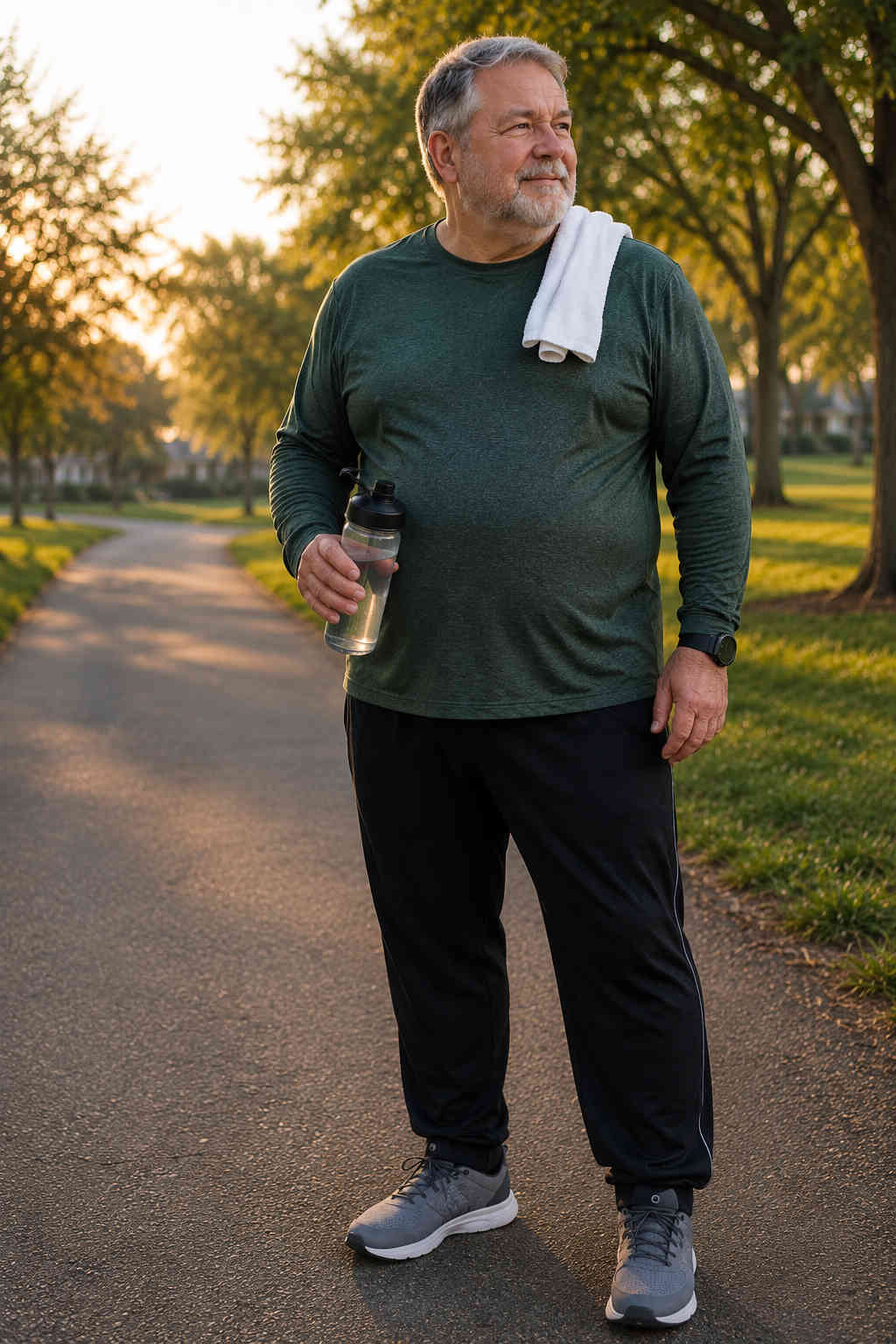
Your Fitness Restart
Build A Body That Can Exercise Again
Starting to exercise when you are overweight can feel like being told to climb a mountain when you are still trying to find your hiking boots.
Maybe you haven't exercised regularly in ten years. Maybe it's been twenty. Your knees complain when you climb stairs. You get winded carrying groceries into the house. Your old jeans have been pushed farther and farther toward the back of the closet.
Then divorce happens.
Suddenly, you look at your life differently. You start thinking about your health, your appearance, your energy and what the next ten or twenty years are going to look like.
You decide it's time to get back in shape.
The problem is that most fitness advice seems to be written for someone who is already exercising. “Run three miles.” “Do 50 burpees.” “Train six days a week.” That may work for someone who has spent years in a gym. It can be terrible advice for an overweight man starting exercise after years of inactivity.
Your first goal isn't to prove how tough you are. It's to build a body that can exercise again. That requires a different approach.
Forget The Workout You Could Do At 25
One of the biggest mistakes men make when returning to exercise is comparing themselves to a younger version of themselves.
You remember bench-pressing a certain weight. You remember playing basketball for two hours. You remember running without thinking about your knees, back or ankles.
Your brain remembers that guy remarkably well. Your body may not.
Trying to immediately recreate your old workouts is one of the easiest ways to turn a fitness comeback into a two-week experiment. Instead, treat yourself as a genuine beginner.
That's not an insult. It's a starting point.
If you've been inactive for years, your muscles aren't the only things that need time to adjust. Your cardiovascular fitness, joints, connective tissues, balance and tolerance for repeated movement all have to catch up.
That means your first successful workout might look ridiculously easy compared with something you did twenty years ago. Good. You want to finish thinking, “I could have done a little more.” Not, “I never want to do that again.”
Your First Fitness Goal Shouldn't Be Weight Loss
You probably want to lose weight. There's nothing wrong with that. But don't make the bathroom scale the only scoreboard during your first month.
Your first objective should be increasing your physical capacity.
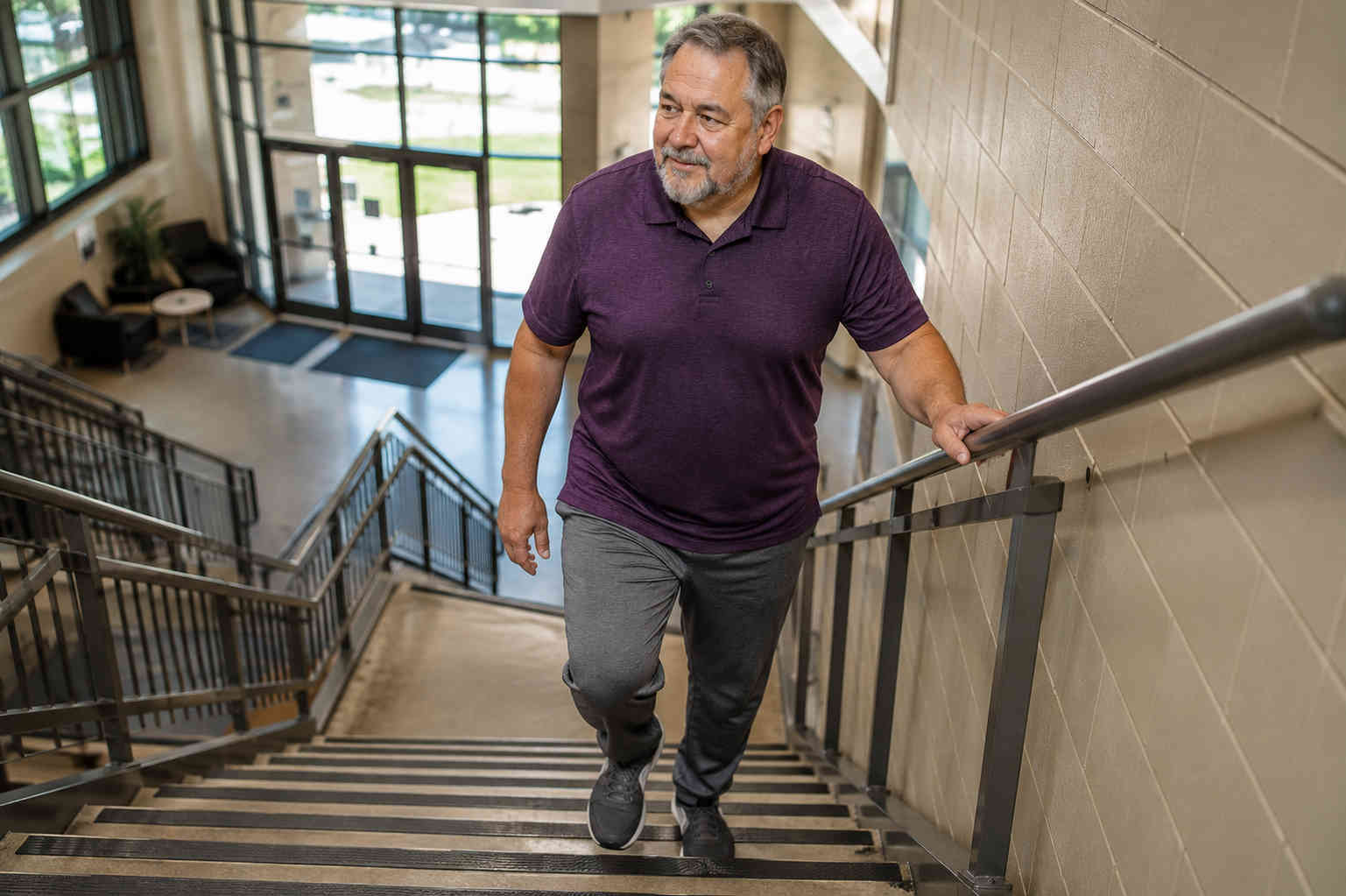
Can you walk ten minutes without stopping? Can you get out of a chair more easily? Can you climb a flight of stairs without feeling completely exhausted? Can you exercise three times this week without spending the next four days painfully sore?
Those victories matter because they create the foundation that eventually allows you to burn more calories and train harder.
Regular physical activity also provides benefits that extend beyond weight loss, including improvements in sleep, cardiovascular health, muscle and bone strength, everyday physical function and mental well-being.
That's especially important after divorce. You're not simply trying to make a number on a scale smaller. You're rebuilding a body that lets you participate in your new life.
Start With Your “Honest Ten Minutes”
Here's a better starting point than downloading an advanced workout program.
Find out what you can comfortably do for ten minutes. Call it your Honest Ten Minutes.
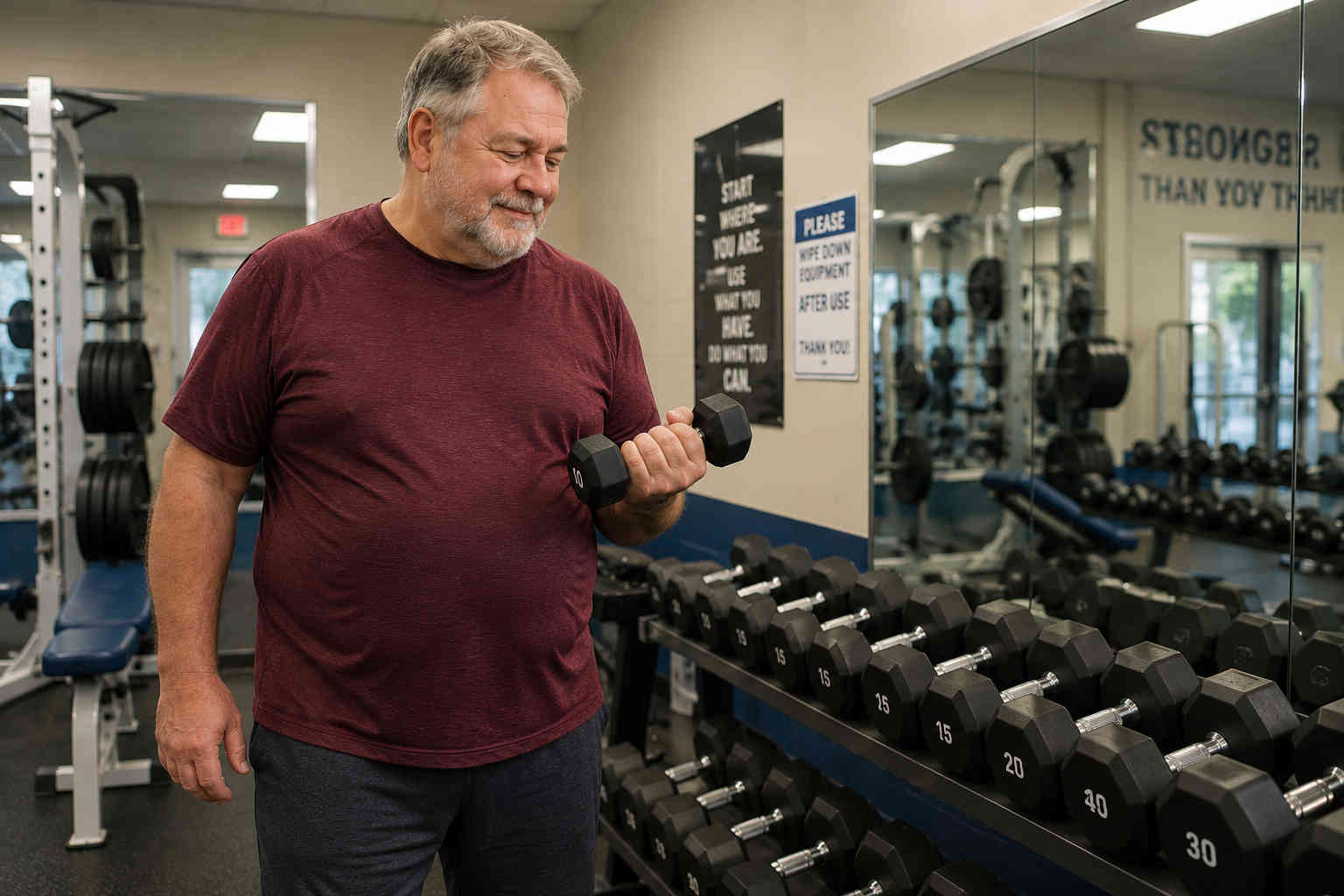
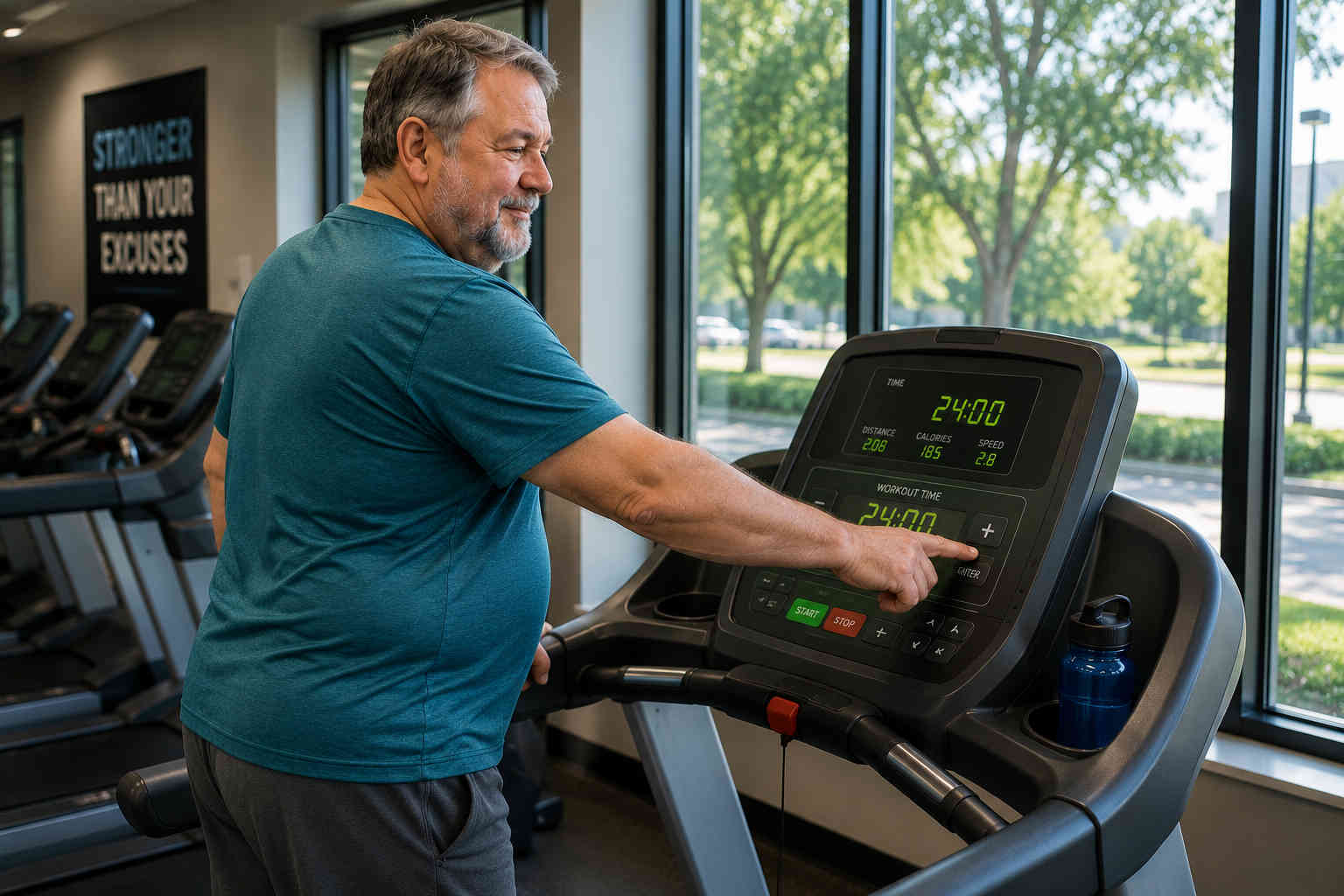
Walk outside for ten minutes. Walk through a shopping mall. Use a stationary bicycle. Walk in a swimming pool. Do a few simple exercises at home.
The activity itself matters less than answering one question: What can I realistically repeat tomorrow or the day after?
If ten minutes is too much, start with five. There is no rule saying your first workout needs to last 30 or 60 minutes. Some physical activity is better than none, and activity can be accumulated in smaller chunks.
Eventually, a useful general target for adults is at least 150 minutes of moderate-intensity aerobic activity per week along with muscle-strengthening activity on at least two days. But that's the destination. It doesn't have to be Week One.
Use The Conversation Test Instead Of Chasing Heart-Rate Numbers
When you're starting exercise while overweight, intensity can be confusing. A pace that barely raises your friend's heart rate may leave you breathing heavily. That's normal.
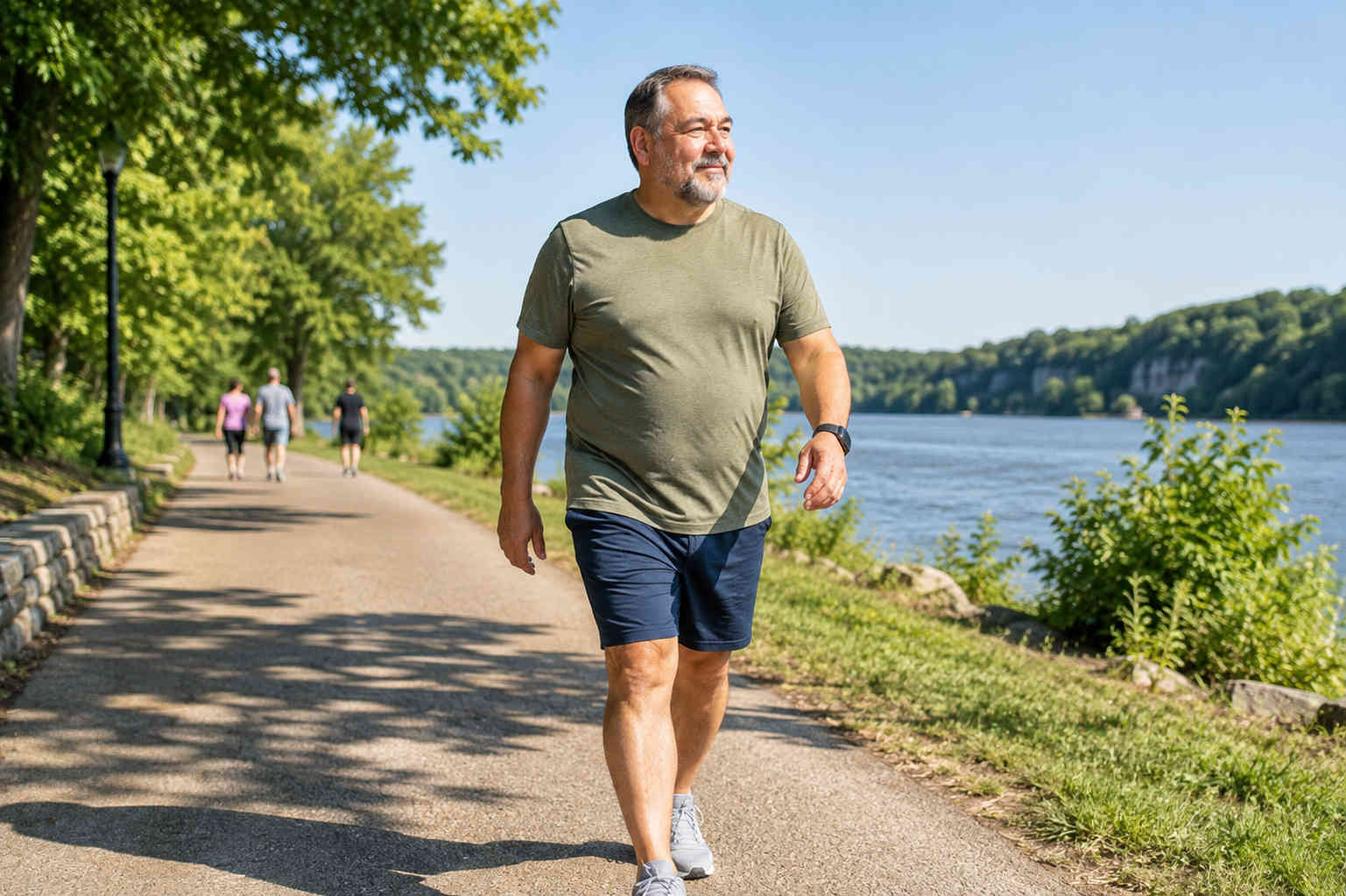
Fitness intensity is relative to the individual. A practical way to judge moderate effort is whether your breathing and heart rate are noticeably elevated while you can still carry on a conversation.
That's useful because you don't need a smartwatch to measure it.
Try the conversation test. During your walk or cardio session, you should generally be able to speak a sentence. If you're gasping for air after several words, back off.
Your early cardio workouts aren't auditions for a sports commercial. They are practice.
Walking Is Training When You're Starting From Scratch
Men sometimes dismiss walking because it doesn't look like a “real workout.” That's a mistake.
If you've been sedentary and you're carrying significant extra weight, walking requires your body to repeatedly move that weight. It counts.
More importantly, walking has a remarkably low barrier to entry. You don't need a membership. You don't need to learn complicated exercises. You don't have to worry about looking inexperienced.
Start where you are. Suppose you can comfortably walk eight minutes. Your first week might simply be:
A Very Small First Week
Monday: 8 minutes
Wednesday: 8 minutes
Friday: 8 minutes
Sunday: 10 minutes
That's only 34 minutes. It doesn't sound impressive. But compare it with the zero minutes you were doing before.
After a couple of weeks, eight minutes might become twelve. Twelve becomes fifteen. Eventually you're walking twenty or thirty minutes without thinking much about it.
The trap is turning an eight-minute starting point into a 45-minute death march because you're embarrassed by the number eight. There is nothing embarrassing about beginning.
If Walking Hurts, Don't Assume Exercise Isn't For You
For some overweight beginners, walking isn't comfortable enough to be the primary exercise.
Extra body weight can increase the stress you feel through your feet, ankles, knees and hips. Old injuries may complicate things further.
Don't interpret that as evidence that you “can't exercise.” Change the exercise.
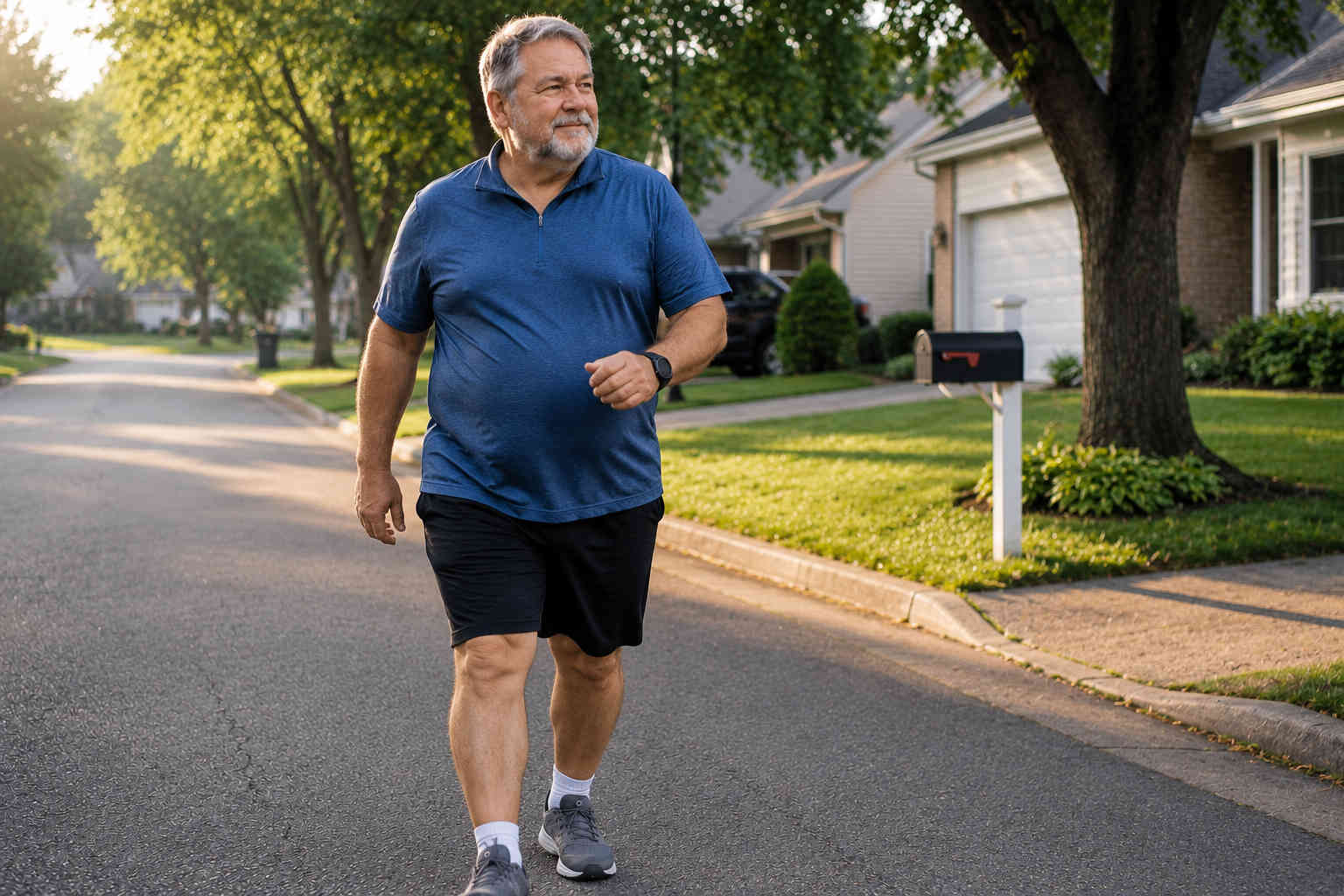
Depending on your abilities and access, alternatives can include a recumbent stationary bike, swimming, water walking, water aerobics or other lower-impact activities.
The goal is to find movement your body tolerates well enough to repeat. Pain isn't an initiation fee you have to pay to get fit.
Strength Training May Be More Important Than You Think
Many overweight men assume they should lose weight first and start lifting weights later. You don't necessarily need to separate the two.
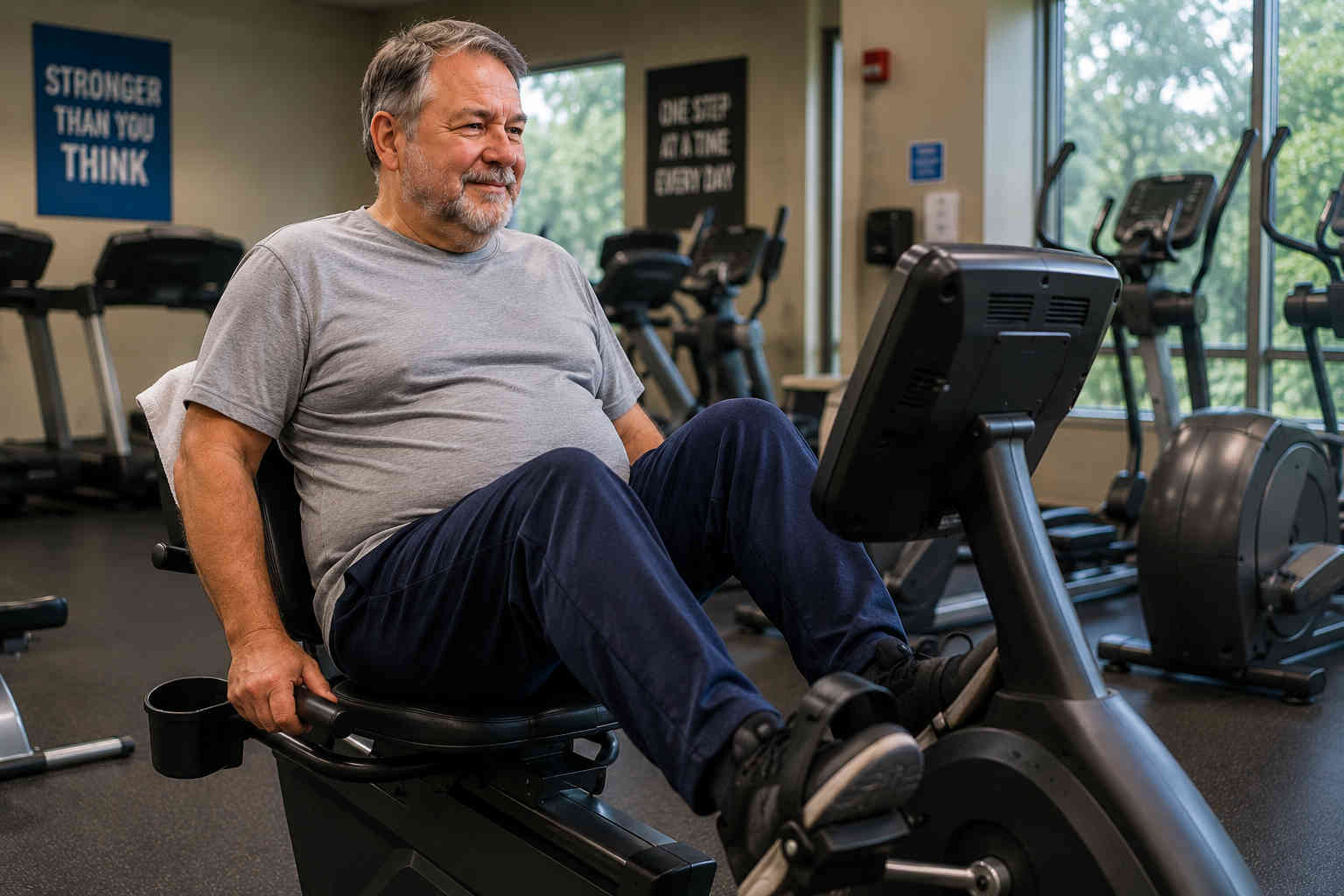
Strength training can be part of your comeback from the beginning—as long as you start appropriately. You don't need to begin with heavy barbells.
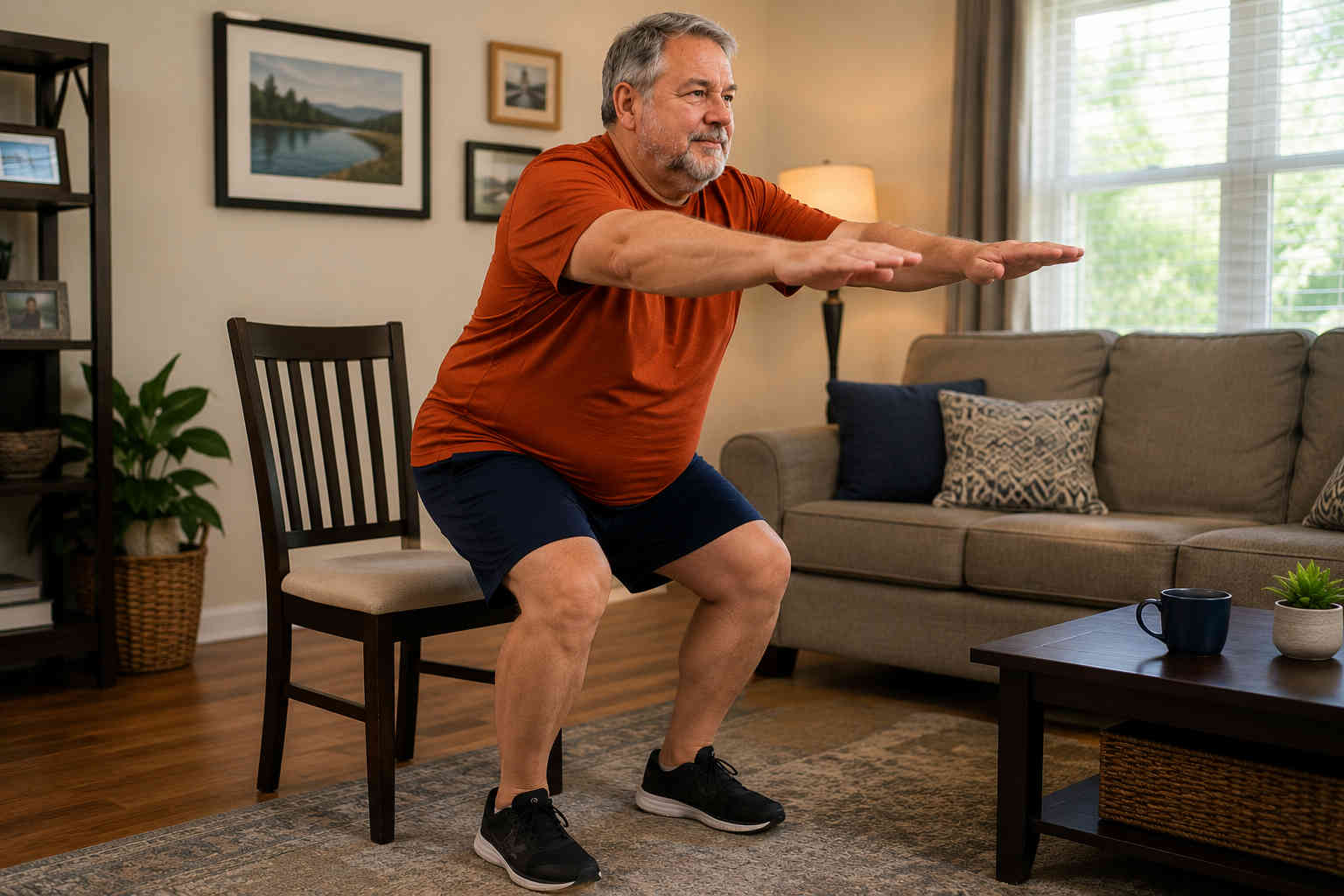
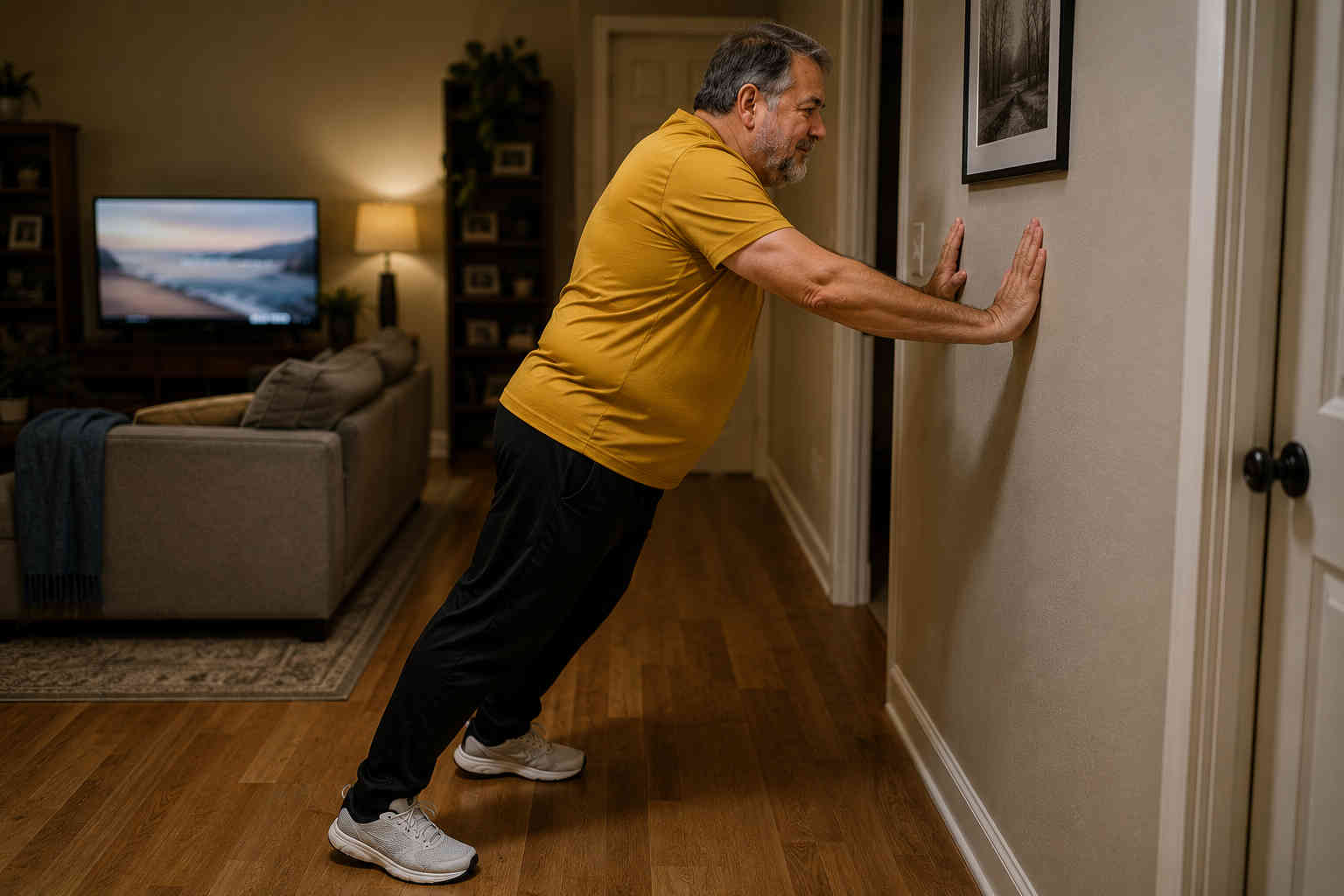
A simple beginner strength session could include chair sit-to-stands, wall push-ups, supported step-ups, resistance-band rows, and light dumbbell presses or curls.
The goal isn't to destroy the muscle. It's to teach your body the movements.
A good long-term target is muscle-strengthening activity on at least two days per week, covering the major muscle groups. For a man starting from scratch, two short full-body sessions can be plenty.
The “One More” Rule For Progress
Fitness programs often become complicated because people want a formula for everything. You don't need one yet.
Try the One More Rule.
Once your current routine feels comfortable, add one small thing. Walk one more minute. Do one more repetition. Add one more short walking session during the week. Use a slightly heavier dumbbell. Do one additional set.
Don't increase everything simultaneously.
This matters because your cardiovascular system may improve faster than some of the tissues being asked to absorb the workload. You may feel capable of dramatically increasing your exercise before your body is ready for the jump.
Slow progress can feel boring. Injury is considerably more boring.
Don't Use Soreness As Proof That A Workout Worked
There's a strange belief in fitness culture that a workout wasn't successful unless you can barely move the following morning. Forget that.
When you're overweight and starting exercise from scratch, severe soreness creates a practical problem. It prevents consistency.
If Monday's workout makes it painful to sit down until Thursday, you haven't created a sustainable Monday workout.
Some mild muscle soreness after unfamiliar exercise can happen. But don't deliberately chase it.
Judge your program by a better question: Am I becoming capable of doing slightly more than I could a few weeks ago?
That's the scoreboard.
Build A Minimum Workout For Bad Days
After divorce, life doesn't always cooperate with fitness plans. You may have a stressful day at work. You may have your children. You may sleep badly. You may simply wake up with no motivation whatsoever.
That's why you need a minimum workout.
This is the smallest version of exercise you're willing to do when you don't want to exercise.
A Minimum Workout Could Be This Simple
Five minutes of walking.
Ten chair sit-to-stands.
Ten wall push-ups.
Five more minutes of walking.
Done.
Your minimum workout isn't designed to create an amazing physical transformation that day. Its purpose is to protect the habit.
Because the dangerous thought isn't, “I'll take it easier today.” It's, “I'll start again next Monday.” Monday becomes next month remarkably quickly.
Stop Treating The Gym Like A Public Performance
If you're overweight, the gym can be intimidating. You may imagine everyone noticing your stomach, watching you struggle with a machine or judging the tiny dumbbells you're using.
Most people aren't paying nearly as much attention to you as you think. They're checking their phones, counting their repetitions, looking at themselves in mirrors and worrying about their own lives.
Still uncomfortable? Don't start at the gym.
Walk at home or outside. Buy an inexpensive resistance band. Use a community recreation center. Exercise during quieter hours.
Your body doesn't know whether a squat happened at an expensive health club or beside your kitchen table. Consistency beats location.
Your First 30 Days Should Feel Almost Too Easy
Consider structuring your first month as a rebuilding phase.
Week 1: Establish The Floor
Do three or four short movement sessions. Your only mission is to discover what your body tolerates comfortably. Maybe that's five minutes. Maybe it's fifteen. Don't judge the number. Record it.
Week 2: Repeat Before You Expand
Repeat approximately the same amount. This is where many men make a mistake. One successful week makes them feel like they're “back,” so they double everything. Don't. Give your body time to adapt.
Week 3: Add A Little
Increase one variable. If you've been walking ten minutes, try twelve. If you've been doing one set of strength exercises, perhaps add a couple of repetitions before adding another entire workout.
Week 4: Build A Routine You Can Recognize
By now, your week should start having structure. For example: Monday — short walk. Tuesday — beginner strength workout. Wednesday — rest or easy movement. Thursday — walk. Friday — beginner strength workout. Saturday — longer easy walk. Sunday — rest.
You're no longer “trying to start exercising.” You exercise. That's a significant psychological shift.
Track Capacity, Not Just Pounds
The scale can be frustrating because body weight doesn't move in a perfectly straight line.
So create another record. Call it your capacity scorecard.
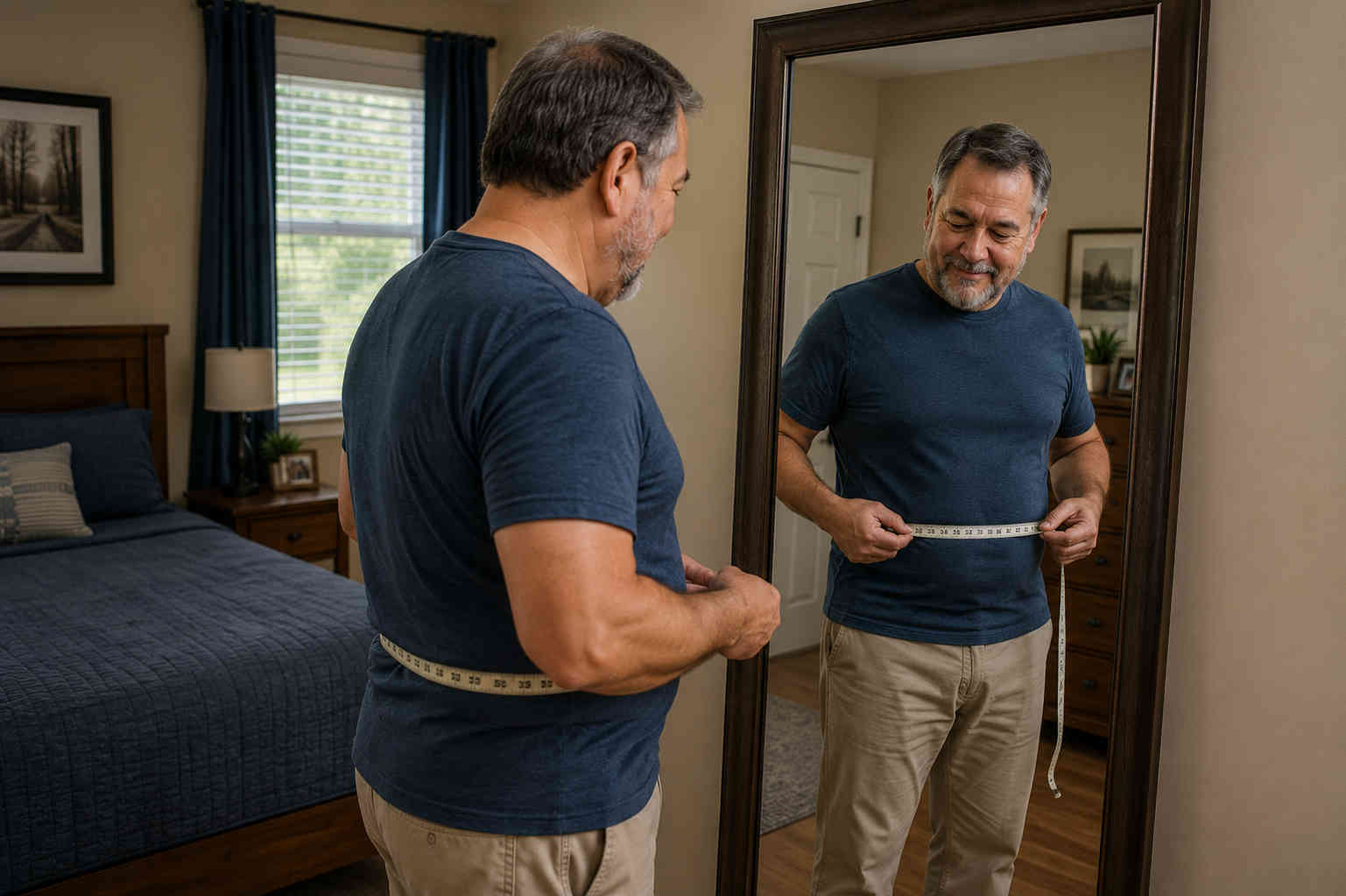
Track things like your longest comfortable walk, number of chair sit-to-stands, how many consecutive weeks you've exercised, how long you can use a stationary bike, waist measurement, how easily you climb stairs, how your clothes fit, and your resting energy level.
Three months from now, imagine looking back and seeing:
First walk: 7 minutes.
Current walk: 32 minutes.
First chair sit-to-stands: 6.
Current: 20.
First month: 9 workouts.
Third month: 18 workouts.
Even if you still have plenty of weight to lose, that's undeniable evidence that your body is changing.
Exercise Doesn't Give You Unlimited Calories
There's another trap worth avoiding. You finish a 20-minute walk and think you've earned a giant restaurant meal.
Exercise is extremely valuable, but physical activity and nutrition play different roles in weight management. Most weight loss ultimately depends on creating an appropriate calorie deficit, while regular physical activity is especially valuable for fitness, health and maintaining lost weight.
So don't force your workouts to carry the entire burden.
Exercise to become fitter, stronger and more capable. Improve your eating habits so your body weight can gradually follow. Together, they make the job much easier.
Know When To Talk To Your Doctor First
Most people can benefit from becoming more active, but your personal health history matters.
If you've been inactive and are overweight, it is sensible to talk with your doctor before beginning vigorous-intensity exercise. People with chronic conditions such as heart disease, arthritis or diabetes should also discuss appropriate types and amounts of activity with a healthcare professional.
And don't try to exercise through alarming symptoms. Chest pain, fainting, severe shortness of breath or other unusual or severe symptoms deserve medical attention rather than a motivational speech.
There's a major difference between challenging yourself and ignoring your body.
Divorce Can Be The Line In The Sand
There may have been a time when you didn't think much about your physical condition. You had a marriage, work, bills, children and responsibilities consuming your attention. Years passed. Twenty pounds appeared. Then another fifteen.
You kept telling yourself you'd deal with it eventually.
Divorce has a way of making “eventually” feel less convincing.
You're confronted with a new question: What kind of man do I want to be for the next part of my life?
Getting in shape after divorce doesn't require turning yourself into a bodybuilder. Maybe you want enough energy to travel. Maybe you want to play with your children without getting winded. Maybe you'd like to date again and feel more confident in your body. Maybe you're thinking about getting older and realizing that strength, mobility and independence suddenly matter much more than they did at 30.
Those are legitimate reasons to change. But none of them require you to transform yourself this week.
Start Embarrassingly Small
If you remember only one thing from this article, remember this: Start embarrassingly small and become embarrassingly consistent.
A ten-minute walk isn't impressive on Instagram. Neither are eight chair squats. Nobody is going to make a motivational video about a man who exercised for twelve minutes and then went home.
But those twelve minutes can become twenty. Twenty can become forty. A short walk can become a mile. A mile can become three. Wall push-ups can eventually become regular push-ups. Light resistance training can become real strength training.
Six months later, the workout that once intimidated you may become your warm-up.
That's how you exercise when you're overweight and starting from scratch. You don't begin by pretending you're already fit.
You begin with the body you have today. Then you give that body a challenge it can handle, allow it to adapt, and ask a little more from it.
Again. And again. And again.
You aren't trying to win a workout. You're trying to become the man who keeps showing up.
Your Starting Rule
Make The First Workout Easy Enough To Repeat
Choose a level of movement you can realistically handle now, finish with something left in the tank, and repeat it often enough that exercise stops feeling like an emergency project and starts becoming part of your week.