
School Still Belongs In Your Week
Your Parenting Schedule Should Not Become Your Information Schedule
When you only have your children on weekends, it can feel like an entire part of their lives happens without you.
Monday morning arrives, and they return to a world of teachers, homework assignments, quizzes, projects, practices, friendships, problems, and accomplishments. By the time you see them again, five school days may have passed.
That creates a challenge many divorced fathers do not anticipate: How do you stay involved in your child's school when you're a weekend dad?
The answer is not to interrogate your child every Friday night or try to manage school from a distance. And it is not to compete with your child's mother over who knows more about what is happening.
The goal is simpler: build your own connection to your child's education.
A weekend dad who understands what his child is learning, knows the important dates, communicates appropriately with teachers, and shows genuine interest in school can remain an important part of his child's educational life—even if he rarely handles the Monday morning drop-off.
The key is learning how to participate when your parenting schedule is not built around the school week.
Don't Let Your Parenting Schedule Become Your Information Schedule
One of the biggest mistakes a weekend dad can make is assuming, “If something important happens at school, somebody will tell me.”
Maybe they will. Maybe they will not.
A permission slip might come home Monday and be returned Wednesday. A teacher may email about a test Thursday. Your child might decide Friday's disappointing math grade is not worth mentioning.
None of this necessarily means anyone is intentionally excluding you. The school week simply moves quickly.
That is why your involvement should not depend entirely on information traveling from the school to your former spouse, from your former spouse to your child, and eventually from your child to you.
Create a direct line. Ask the school how parents receive report cards, progress reports, attendance information, assignment and grade updates, teacher announcements, school newsletters, calendars, sports schedules, and emergency notifications.
If the school uses a parent portal or learning management system, establish your own account when available. Do not become the dad who knows everything about Saturday's plans but discovers three weeks later that his child has been struggling in science.

Introduce Yourself To The Teacher Before There's A Problem
Some fathers contact teachers only after receiving a bad grade, discipline notice, or concerning report card. That is starting the relationship at the worst possible moment.
Early in the school year, send your child's teacher a short introduction. You do not need to explain your divorce or provide your family's history.
A Simple Introduction Works
“I'm Jake's dad. He stays with me primarily on weekends, but I want to stay involved with his education throughout the week. Please include me on school or classroom communications when possible. If there's something I should know or reinforce when he's with me, you're welcome to contact me.”
That message accomplishes something important. You are no longer an unknown parent appearing suddenly when something goes wrong. You are part of the educational team.
That partnership can exist even when you are not standing in the school hallway every afternoon.
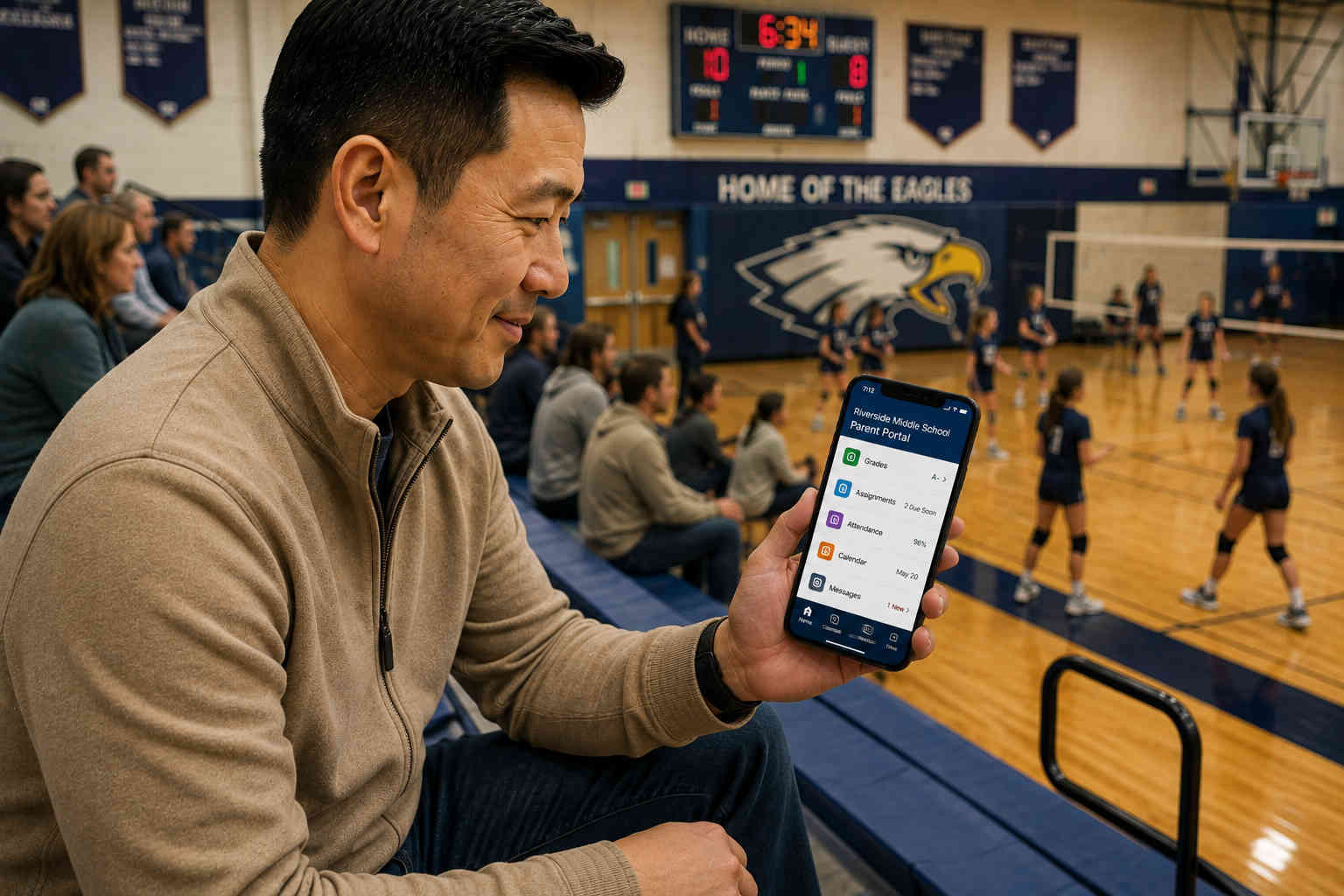
Learn The School's Digital Ecosystem
Modern schools leave a digital trail. Use it.
Depending on your child's school, there may be separate systems for grades, assignments, classroom announcements, lunch accounts, attendance, sports, school calendars, and teacher communication.
Spend an evening learning them. Bookmark the pages on your computer. Install the appropriate apps on your phone. Turn on useful notifications without enabling so many alerts that you eventually ignore everything.
Then create one simple habit: check school information once during the week.
Not ten times a day. You do not need to watch every grade appear in real time.
Wednesday evening is often enough to notice that your son has a history test Friday or your daughter has three missing assignments. This turns school involvement into a routine rather than a reaction.

Stop Asking, “How Was School?”
Friday arrives. Your child gets in the car. You ask, “How was school?”
“Fine.”
That is the end of your educational update.
The problem is not necessarily that your child does not want to talk. The question is too broad.
Try asking questions connected to something you already know.
- “You had that science presentation Thursday. How did it go?”
- “I saw you're starting fractions. Are they making sense yet?”
- “Did Coach say who's playing Saturday?”
- “You mentioned that book you were reading last weekend. Did your class finish it?”
Now your child notices something different: Dad remembers.
That is far more meaningful than conducting a weekly grade inspection. You do not have to become your child's second teacher. Become the father who pays attention.

Create A Friday Night School Download
Do not turn the first hour of every weekend into an academic interrogation. Your child probably wants to decompress. Give him some space.
Later that evening—or Saturday morning—develop a casual ritual where you catch up on the week.
Maybe it happens while eating burgers. Maybe it is during a drive. Maybe you are shooting baskets in the driveway.
Ask three questions:
- What went well this week?
- What was difficult?
- What's coming up next week?
Those questions reveal far more than “What grades did you get?”
You may learn that your daughter earned an A but is worried about sitting alone at lunch. Your son may have gotten a C on a quiz but be excited because he finally understands the material.
School involvement is not merely monitoring academic performance. You are trying to understand the world your child spends roughly five days a week navigating without you physically there.
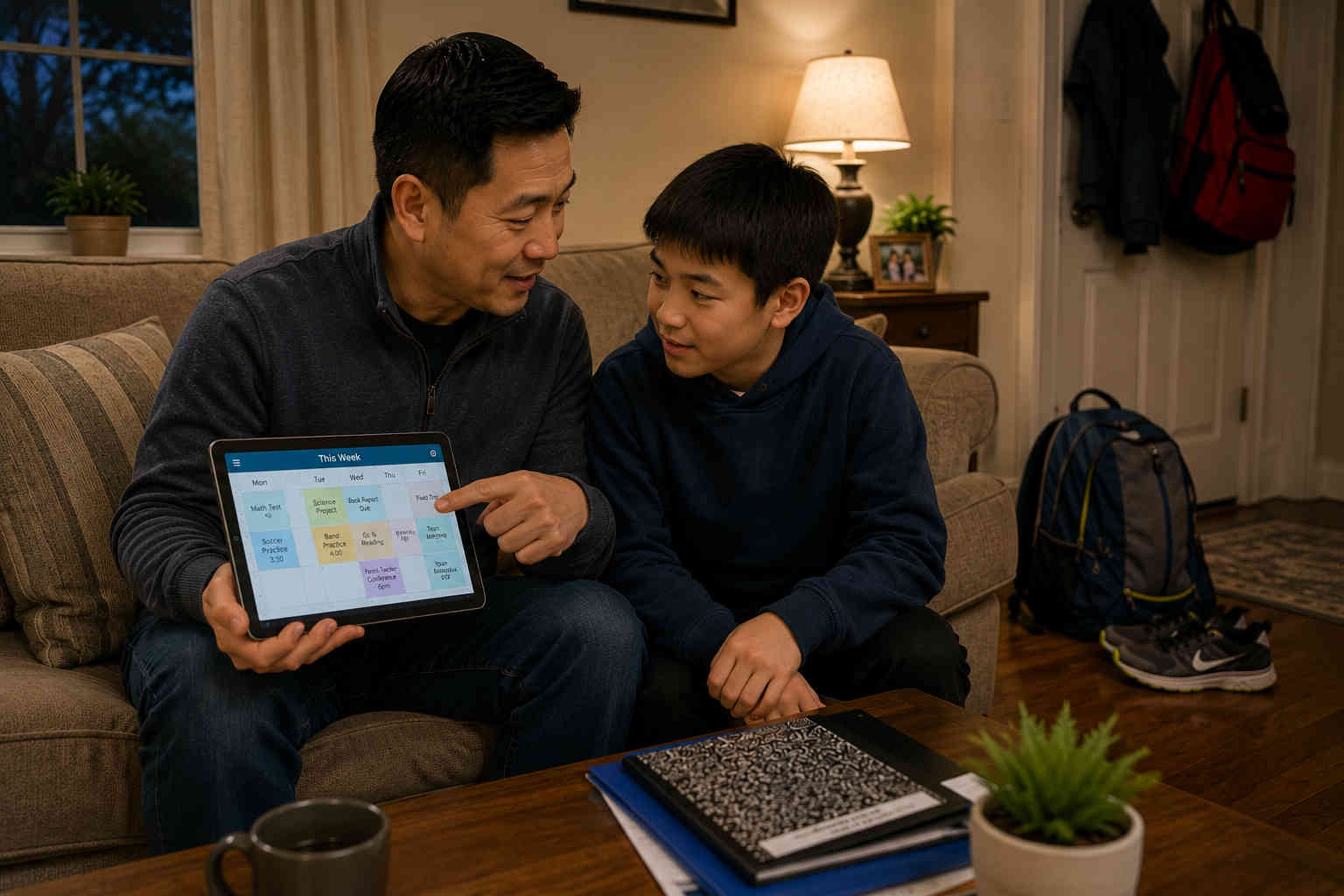
Use Sunday Night As A Bridge Into Monday
For a weekend dad, Sunday evening can feel like the end of your parenting time. Treat it differently.
Make Sunday the bridge between your home and your child's coming school week.
Before your child leaves, ask, “What do you have going on this week?” Look at the calendar together.
There is a vocabulary quiz Tuesday. Basketball practice Wednesday. A science project due Friday.
Now you have several natural reasons to stay connected during the week.
Tuesday afternoon: “How'd the vocab quiz go?”
Thursday: “Science project almost finished?”
You are not manufacturing excuses to text your child. You are participating in his actual life. That distinction matters.
Don't Turn The Parent Portal Into Surveillance
Access to grades creates a temptation previous generations of fathers did not have. You can potentially see every assignment, every score, and every missing homework entry.
Use that power carefully.
Suppose your daughter gets a 67 on a quiz at 11:15 Tuesday morning. At 11:22, her phone buzzes: WHY DID YOU GET A 67???
You may think you are demonstrating involvement. She may experience it as surveillance.
A parent portal should give you context, not become a control panel for your child's life.
Look for patterns. One bad quiz is an event. Six missing assignments are a pattern. A sudden decline across several subjects is a pattern. Repeated absences are a pattern.
Use information to start conversations rather than prosecutions. “I noticed chemistry has gotten tougher lately. What's happening?” That invites your child to explain.

Attend Parent-Teacher Conferences Even If They Aren't On Your Weekend
Your parenting schedule determines when your child sleeps at your house. It does not have to determine when you are their father.
Parent-teacher conferences, open houses, performances, games, award ceremonies, school plays, and important meetings will not conveniently land on your scheduled weekends.
Attend when reasonably possible.
Ask questions such as:
- “What is he doing particularly well?”
- “Where is she struggling?”
- “Does he participate in class?”
- “Has anything changed socially?”
- “What could I reinforce when she's with me?”
That last question is especially useful for a weekend father. You are telling the teacher: Give me a job. I'm part of this.
Become The Dad Who Knows The Teacher's Name
Your child should occasionally hear you say, “Mrs. Carter said you're making real progress in writing.” Not: “What's your teacher's name again?”
Learn the names of the adults who matter in your child's school life: teachers, coaches, band directors, counselors, principals, tutors, and other professionals involved with your child when applicable.
You do not need personal relationships with all of them. But knowing who is who helps you understand your child's world.
It also communicates something quietly powerful to your child: The parts of your life that happen away from me still matter to me.
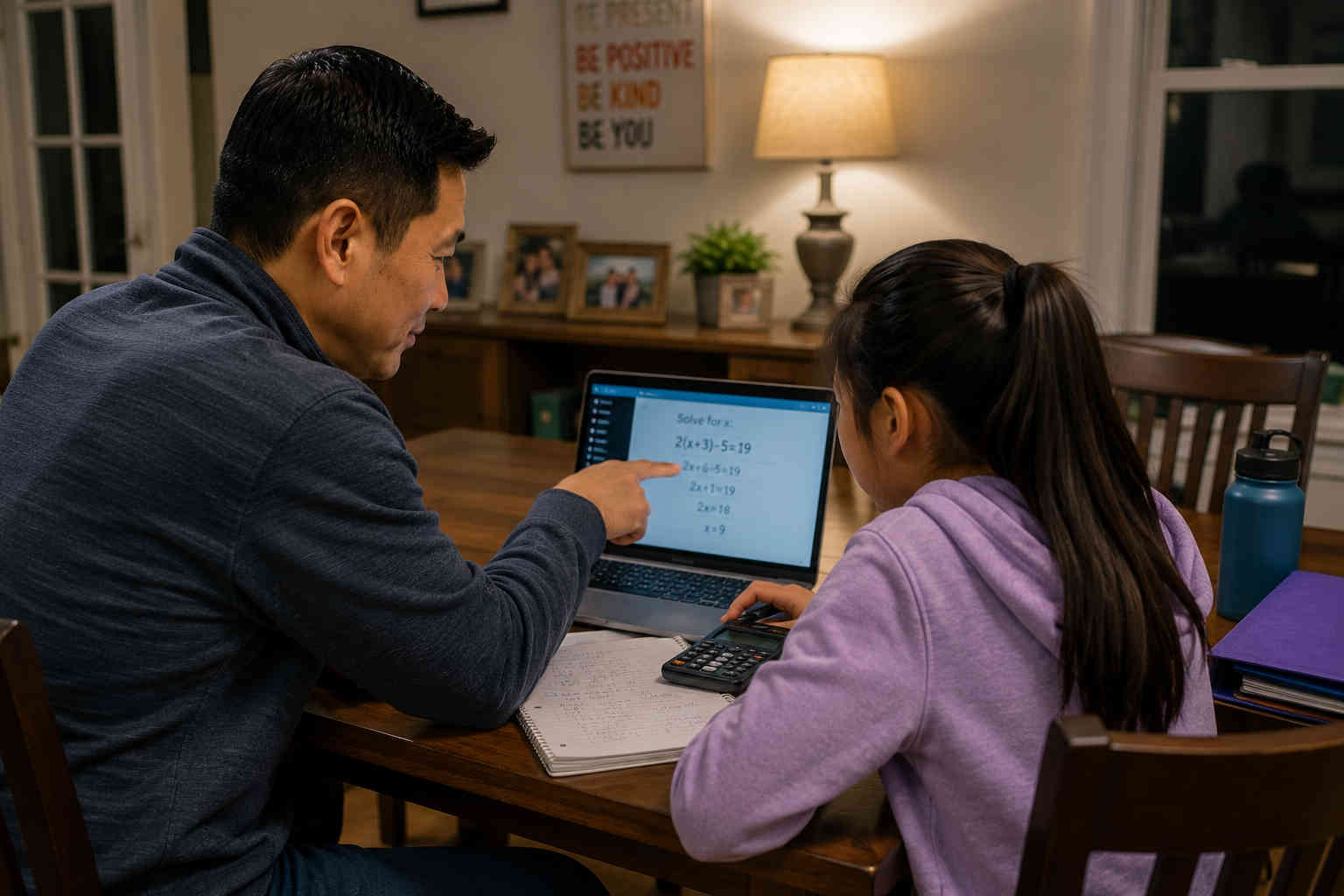
Give Homework A Place At Your House
Some weekend fathers hesitate to require schoolwork because they do not want limited parenting time consumed by homework.
That is understandable. But making your house the “no responsibility house” creates another problem.
If Monday's test requires studying, study. If the project is due Tuesday, work on it. If twenty minutes of reading is assigned, make twenty minutes for reading.
You do not need to turn Sunday into detention.
Create a comfortable place where schoolwork can happen without becoming the center of the weekend. Keep basic supplies available: pens, pencils, paper, printer access, chargers, calculator, folders, and whatever your child regularly needs.
The message is subtle: School belongs at Dad's house too.
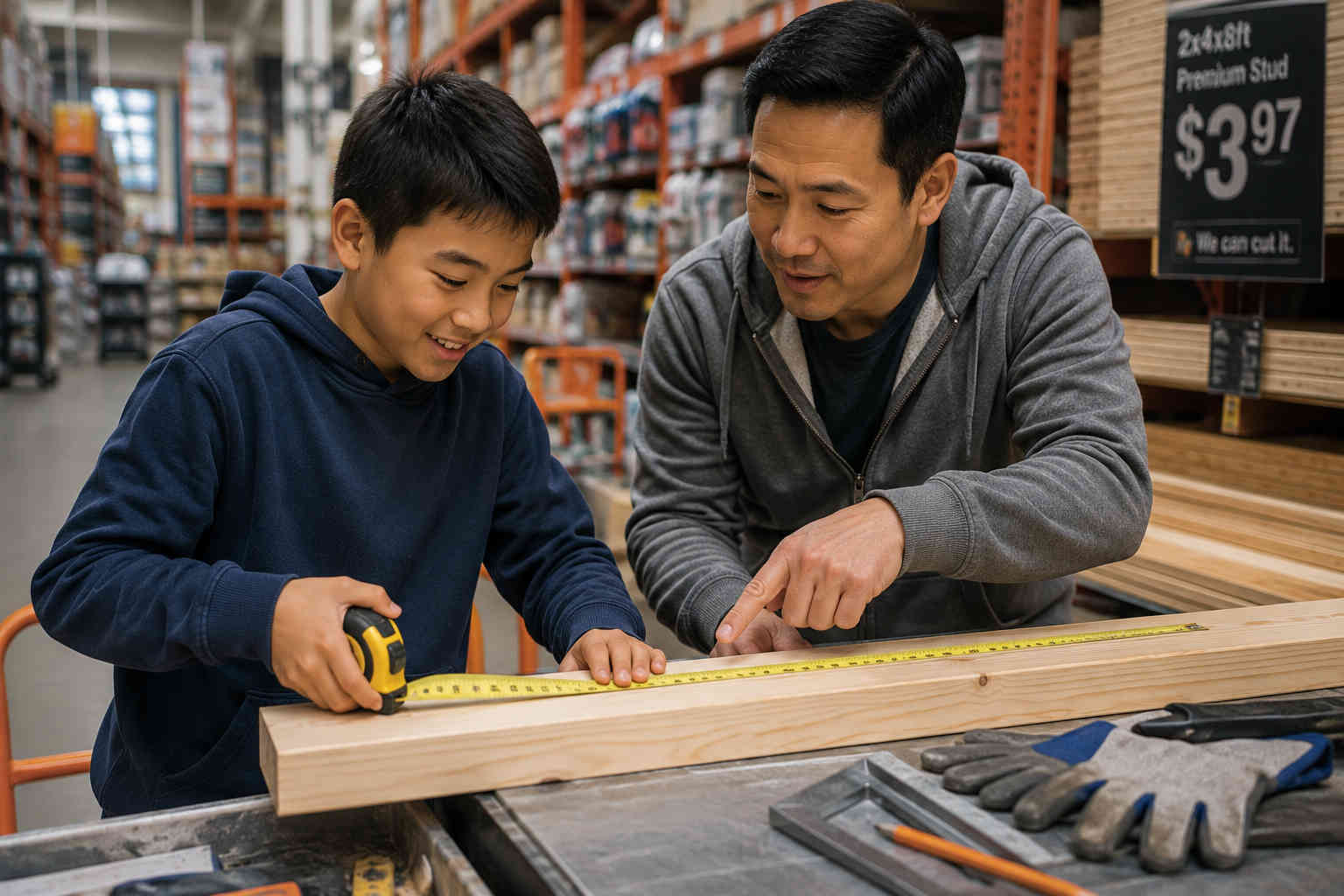
Use Your Weekend For The Education School Can't Provide
This is where weekend dads have an overlooked advantage.
Education does not only happen at a desk.
If your child is studying the Civil War, visit a battlefield or museum when practical. Learning percentages? Let your child calculate a restaurant tip. Studying budgeting? Show an older child how you compare grocery prices. Learning biology? Take a hike and identify plants.
Reading a novel? Watch the film adaptation afterward and argue about which version was better. Working on measurements? Build something together.
This is not about designing elaborate “educational weekends.” It is about connecting school concepts to real life.
A father does not have to duplicate the classroom. He can show his child why the classroom matters.
Never Make Your Child The School Information Courier
This rule can prevent enormous frustration: Your child should not be responsible for managing educational communication between divorced parents.
Do not routinely say, “Tell your mom I need the report card,” or “Ask your mom when the conference is.” Whenever possible, adults should communicate directly or use the school's communication systems.
Children already move between two homes. They do not need another job as administrative assistant.
Don't Compete With Your Ex Over School Involvement
Maybe your former spouse handles Monday-through-Friday logistics. She knows the teachers better. She sees the homework every night. She knows which lunch your daughter refuses to eat and which kid your son is arguing with.
That does not make your role unimportant.
Do not turn involvement into competition. Avoid comments like, “Why didn't your mother tell me?” “Nobody ever tells me anything.” “I guess I'm always the last person to know.”
Even when your frustration is justified, those statements put your child in the middle.
Build systems that make you less dependent on secondhand information. Your objective is not to prove you are equally informed every minute. It is to remain meaningfully involved.
Know When To Step In—And When Not To
An involved father does not automatically rescue his child.
Your son forgets an assignment. Your daughter receives a grade she thinks is unfair. A teacher enforces a consequence your child dislikes.
Your first instinct may be to contact the school immediately. Wait long enough to understand the situation.
Ask:
- “What happened?”
- “What did the teacher say?”
- “What do you think you should do?”
- “What are you going to do differently?”
Sometimes your role is to intervene. Sometimes it is to help your child learn how to handle the problem.
Older children especially need fathers who move gradually from manager to adviser. Instead of solving every problem, help them develop the confidence to approach a teacher, ask about an assignment, request clarification, or accept responsibility for a mistake.
That is involvement too.
Watch For Changes That Grades Don't Show
One advantage of being the weekend parent is that you may occasionally notice changes that people immersed in the daily routine overlook.
Your normally talkative son becomes quiet. Your daughter suddenly does not want to attend school Monday. A child who loved soccer wants to quit. Sunday evening stomachaches become common. A previously confident student repeatedly calls himself stupid.
Do not automatically dismiss those things because the report card looks fine.
Ask gentle, specific questions:
- “Who are you hanging out with lately?”
- “How are things with your friends?”
- “Who's your favorite teacher this year?”
- “Anybody giving you a hard time?”
- “What's the worst part of your school day right now?”
Academic involvement includes understanding how your child is experiencing school—not merely how they are performing in it.
Build A School Routine That Works For A Weekend Dad
You do not need constant access to remain involved. You need consistency.
A Sustainable Weekly Rhythm
Wednesday: Check the school portal and upcoming calendar.
Friday: Casually catch up on what happened during the week.
Saturday: Handle any homework or projects that genuinely need attention, then enjoy your weekend.
Sunday: Review what is coming up during the next school week.
During the week: Send one or two relevant messages when there is actually something worth asking about.
That is manageable. More importantly, it is sustainable.
You are not trying to recreate five weekdays inside a two-day weekend. You are creating continuity.

Your Child Should Never Have To Wonder Whether Dad Cares About School
Years from now, your child probably will not remember how often you logged into the parent portal.
He will not remember every conference you attended. She will not remember every homework assignment you helped with.
But children notice patterns.
Dad knew I had a test.
Dad came to my concert.
Dad remembered the name of my teacher.
Dad asked about the project.
Dad helped me figure out what went wrong instead of immediately yelling about the grade.
Dad showed up.
That is the real goal of staying involved in your child's school as a weekend father.
Divorce may have changed your address. A custody schedule may have changed which mornings you see your children. Neither one has to reduce fatherhood to Friday night through Sunday afternoon.
Your child's education is one of the longest-running stories of his or her childhood. It lasts thousands of days and contains victories, failures, friendships, embarrassing moments, difficult teachers, favorite subjects, forgotten assignments, big games, hard tests, graduations, and decisions about what comes next.
You do not have to be physically present for every chapter.
But you should know the story.
And your child should know you are reading along.
The Weekend Dad Rule
Be Present In The School Week Even When You Are Not Physically There
Know the calendar. Know the teacher. Ask better questions. Help when help is needed. Show up when it matters. Consistent attention creates a connection that a custody schedule cannot erase.