Weekend Fatherhood
The Pressure To Make Every Weekend Special
When you only have your children for certain weekends, it can feel like every hour has to count. Friday evening arrives, and suddenly the clock seems to be running faster. You may have only two days before you're packing backpacks, finding missing shoes, and driving your children back to their other home.
That limited time can create pressure. You want your kids to enjoy being with you. You want them to look forward to coming to Dad's house. And if the divorce has been difficult, you may feel an even stronger need to make your weekends memorable.
That's where money can quietly enter the picture. Dinner at a restaurant. A trip to the movies. New clothes. An amusement park. Video games. Shopping. Tickets to a sporting event. Another restaurant the next day. Before long, being a weekend dad can start feeling like you're running a two-day entertainment company.
But your children don't need you to compete for their affection. Being a great weekend dad isn't about how much money you spend. It's about building a relationship strong enough that your children know their time with you matters—even when absolutely nothing exciting is happening.

Your Children Want Your Attention More Than Your Wallet
One of the easiest mistakes a divorced father can make is confusing providing experiences with providing attention. They're not the same thing.
You can spend hundreds of dollars taking your children somewhere and barely connect with them. Or you can spend almost nothing and have one of the best conversations you've had in months.
Imagine your son sitting beside you while you're working on something in the garage. You're explaining what you're doing. He's asking questions. Eventually the conversation moves from what you're fixing to something that happened at school. Twenty minutes later, you're talking about a friend he's having trouble with.
That conversation may have started because you simply gave him room to hang around with you. There was no ticket. No reservation. No expensive activity. But he had access to his father. That's valuable.

Don't Try To Compete With The Other Parent
Money can also become a problem when divorced parents begin competing. Sometimes the competition is obvious. Other times it's completely unspoken.
Your former spouse takes the children somewhere exciting, and suddenly you feel like you need to come up with something equally impressive. Maybe their mother buys them something expensive. You feel pressure to buy something too. Or perhaps you're worried the children have more fun at their other home.
That fear can lead you into a competition nobody actually wins. Your children shouldn't have to compare parents based on restaurants, vacations, electronics, clothes, or entertainment.
You also don't need to prove that Dad's house is better. Your job is to make Dad's house theirs. A child who feels comfortable walking into your kitchen, opening the refrigerator, dropping a backpack by the door, and telling you about the week is experiencing something more important than entertainment. He's experiencing home.
Let Your Children Participate In Your Life
A common mistake weekend dads make is structuring the entire weekend around the children. That sounds generous, but children also benefit from participating in normal life with you.
Suppose you need groceries. Take them with you. You're making dinner? Give everybody a job. You're washing the car? Hand them a sponge or the hose. You're fixing something around the house? Let them watch or participate when it's safe.

These ordinary activities move your relationship away from Dad entertains me and toward Dad and I do things together. That's much closer to everyday fatherhood.
Your children aren't visitors you have to impress. They're your children. Let them experience your real life.
Teach Them Things
One of the greatest advantages you have as a father is experience. You've spent decades learning things your children haven't learned yet. Share some of it.
Teach them how to cook something. Show them how to change a tire. Explain how credit cards work. Teach them how to use basic tools. Show them how to make a budget. Explain what to look for when buying something expensive. Talk about mistakes you've made and what you wish someone had taught you when you were their age.
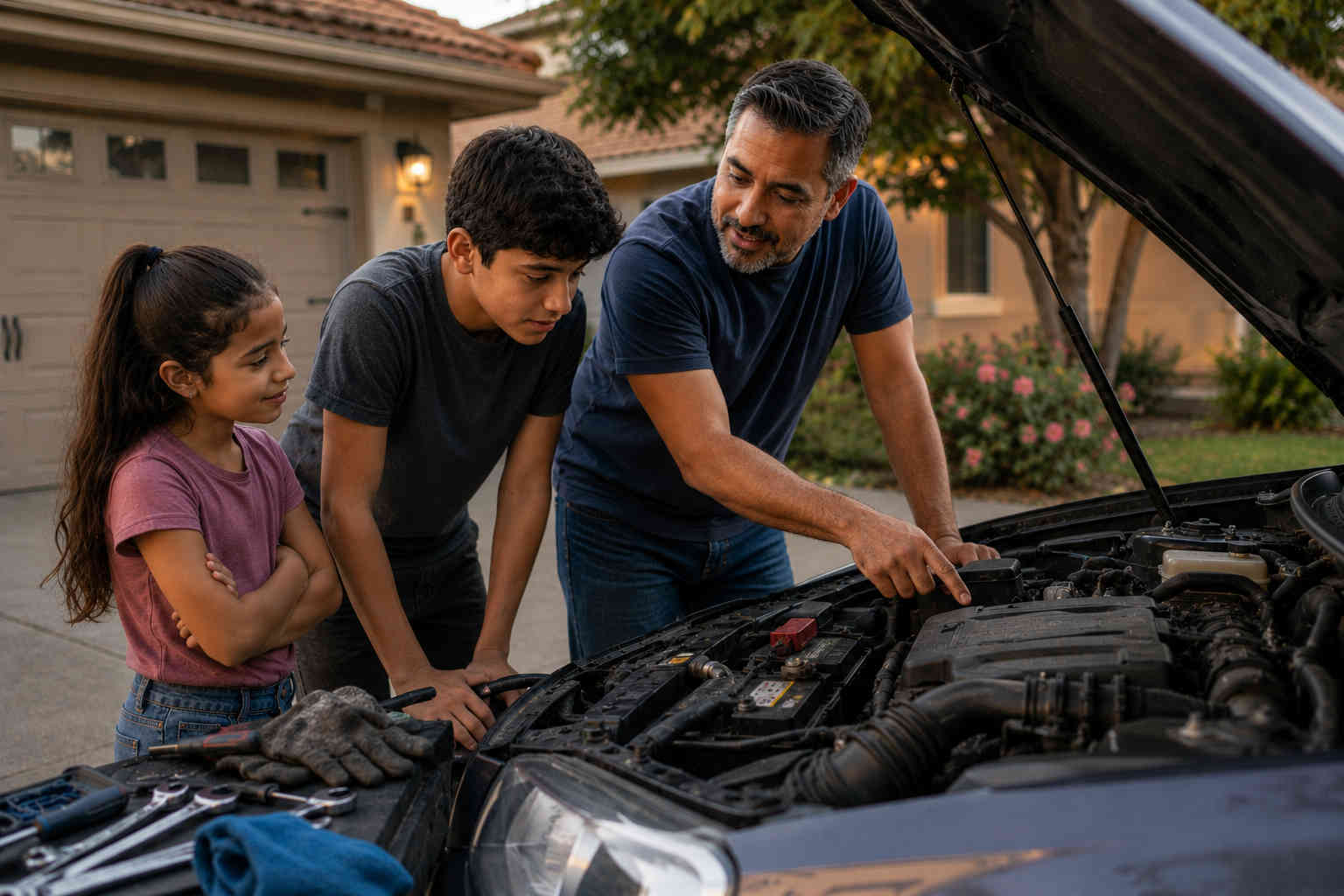
These lessons don't require a large parenting budget. They require involvement. And they gradually change your relationship as your children grow. You stop being merely the father who takes them places. You become one of the people who teaches them how to navigate life.
Give Each Child Individual Attention
If you have multiple children, one of the most valuable things you can give them costs nothing: time alone with Dad.
You don't need an elaborate father-son or father-daughter outing. Even twenty or thirty minutes can matter. Take one child with you to the grocery store. Ask another to help prepare dinner. Sit outside with your daughter while everyone else is inside. Take your son for a short drive.

Individual conversations are different from family conversations. Children sometimes tell you things privately that they would never mention in front of siblings.
Don't interrogate them. Give conversation room to develop. Sometimes the most important discussions happen when you're doing something else.
Create Traditions That Cost Almost Nothing
One of the best ways to make limited parenting time meaningful is to create small traditions. Traditions give children something predictable to anticipate. They don't have to be elaborate.
Maybe every other Saturday you visit neighborhood yard sales and each person gets five dollars to find the strangest object. Maybe Sunday morning means a walk and a stop for inexpensive coffee or hot chocolate. Maybe Friday night means a card game. Maybe you shoot baskets before lunch or let each child choose dinner once per month.

The activity itself isn't necessarily important. Consistency is. Years later, your children may not remember everything you bought them, but they may remember, "Whenever we stayed with Dad, we did that together."
Ask Questions That Go Beyond "How Was School?"
When parenting time is limited, conversation becomes especially important. Unfortunately, many conversations between parents and children go nowhere because the questions are too broad.
Try Questions That Give Them Somewhere To Go
"Who made you laugh this week?"
"What's the hardest class you've got right now?"
"Anybody driving you crazy lately?"
"What's something you're getting really good at?"
"Is there anything at school you wish was different?"

Don't fire questions like an interviewer. Use them naturally. And when your child starts talking, resist the urge to immediately fix everything. Sometimes children want advice. Sometimes they simply want Dad to listen.
Stop Measuring Success By How Excited They Look
This can be difficult for weekend fathers. Expensive entertainment produces obvious reactions. Take your children to an amusement park and they'll probably be excited. Give them a new gaming system and you'll definitely see excitement.
Make sandwiches and sit outside together? Probably not the same reaction. That doesn't mean the expensive experience was more valuable.
Excitement and connection are different things. Children need excitement sometimes. They also need stability, conversation, guidance, affection, discipline, routine, humor, and a father who notices what's happening in their lives.

Those things don't always produce dramatic reactions. Your teenager probably isn't going to say, "Dad, thank you for creating a stable emotional environment where I feel comfortable discussing problems." He may simply start talking to you. That's the evidence.
Don't Use Money To Ease Your Guilt
Divorced fathers sometimes carry guilt. Maybe you weren't the one who wanted the divorce. Maybe you were. Maybe you regret things that happened during the marriage. Maybe you feel guilty because you aren't there every morning.
Whatever the reason, guilt can affect how you parent. You may find yourself saying yes when you should say no. You may buy things because refusing feels uncomfortable. You may avoid discipline because you don't want the limited time you have together ruined by conflict.
But children still need a father. And fathers sometimes say no. If your child asks for something expensive and it isn't appropriate or affordable, you don't have to compensate for the divorce by buying it. Your relationship shouldn't depend on purchases.
Your Financial Stability Matters To Your Children Too
Divorce can be financially brutal. One household becomes two. There may be child support, legal expenses, housing costs, insurance, debt, and other obligations.
Trying to create extravagant weekends on top of those expenses can quietly damage your financial recovery. That's not good for you, and ultimately it isn't good for your children either.
Your children benefit from having a financially stable father. They benefit when Dad isn't constantly stressed about money. They benefit when your home is secure and your bills are paid. They benefit when you can save for emergencies and think about their future rather than trying to impress them this Saturday.
Spending responsibly isn't depriving your children. It's modeling adulthood.
Sometimes You Should Spend Money
None of this means you should become obsessed with avoiding expenses. Take the trip. Go to the concert. Buy tickets to the game. Visit the amusement park. Have the nice dinner. Celebrate birthdays. Create adventures.
Those experiences can be fantastic. The goal isn't cheap fatherhood. The goal is intentional fatherhood.
Spend money because an experience is worthwhile—not because you're afraid your children won't enjoy being with you otherwise. There's a big difference.
What Your Children Will Eventually Understand
Your children won't remain children forever. The eight-year-old running through your house becomes a teenager. The teenager eventually becomes an adult. And adulthood changes how people understand their parents.
Someday your children may recognize things they couldn't see when they were young. They may understand that money was tight. They may understand how difficult divorce was. They may realize you were rebuilding your own life while trying to remain involved in theirs.
What will matter then isn't whether every weekend was spectacular. They'll remember whether you showed up. Whether you listened. Whether you kept your promises. Whether you knew what was happening in their lives. Whether your house felt like their house. Whether they knew their father genuinely wanted to be with them.
Final Thoughts
Being a weekend dad can make time feel scarce. Money can create experiences, but it can't create closeness by itself.
You don't need to turn every weekend into a vacation. You don't need to compete with your children's other parent. And you don't need to purchase enough entertainment to prove that you're a good father.
Your children need something much simpler and much more demanding. They need you. They need your attention when they're talking. They need your patience when they're difficult. They need your guidance when they're confused. They need boundaries when they're testing you. They need laughter, ordinary routines, traditions, and conversations that happen while you're driving, cooking, fixing something, walking through the neighborhood, or sitting together late at night.

The Weekend Dad Rule
Do Not Try To Buy A Relationship You Can Build
The goal is not for your children to leave saying, "Dad bought us a bunch of stuff." It is for them to leave knowing: Dad knows me. Dad listens to me. Dad wants me here. And Dad's house is my home too.