Build A Role, Not A Weekend
You Cannot Compress Fatherhood
There is a mistake divorced fathers sometimes make when they do not have as much parenting time as they want.
They try to compensate.
If they only have the kids four days this month, those four days have to be incredible. They plan restaurants, movies, trips, activities, shopping, sporting events, and entertainment. They stay up later. Rules become negotiable. Money gets spent more freely than it normally would.
The father is trying to fit thirty days of fatherhood into four.
But there is a problem with that strategy.
You cannot compress fatherhood.
Trying to do so can actually prevent you from developing the kind of relationship you want. If your children primarily experience you through weekend entertainment, you may become someone they enjoy visiting without becoming someone they depend upon.
There is an important difference.
An involved father is not simply a man who spends time with his children. He is a man who has a role in their lives. And if your parenting time is limited after divorce, establishing that role may be one of the most important things you can do.
Don't Become The Weekend Version Of Yourself
Imagine your children arrive Friday afternoon. Dad suddenly becomes Fun Dad. Pizza tonight. Movie afterward. Saturday is packed with activities. Nobody has to do much around the house. Bedtime gets pushed back. Sunday brings another outing before the children return home.
It can be enjoyable. But ask yourself: Is this actually how I want my children to know me?
You do not want your children to know only the weekend version of you. You want them to know the real man.
Let them see you cook dinner. Let them see you fix something. Let them see you make a mistake. Let them watch you solve a problem. Let them help you wash the car. Let them see you exercise. Let them watch you make a budget before buying something. Explain why something is too expensive. Let them see how an adult man actually lives.
Your parenting time does not have to resemble a vacation from their normal lives. It should become another part of their normal lives.

Choose Your Fatherhood Territory
One of the most useful strategies for fathers with limited parenting time is simple: own something.
Not legally. Relationally.
Identify areas of your children's lives where you are going to become particularly useful. Maybe you are the father who handles math. Maybe you are the guy who teaches practical skills. Maybe you understand computers, cars, money, cooking, sports, or how to think through difficult decisions.
Do not manufacture expertise you do not have. Start with the person you already are, then bring those strengths into fatherhood.
If your daughter is struggling with her first checking account, perhaps Dad is the person she calls. If your son is buying his first used car, perhaps Dad is the one crawling underneath it with a flashlight. If your teenager is confused about a job application, Dad knows how to help him think through it.
Over time, your children begin thinking: That's something Dad can help me with.
That is involvement. And it can survive any custody schedule.
Start A Project That Takes Months
Most divorced-parent activities have a beginning and an end. You go bowling. You eat dinner. You watch a movie. You visit somewhere. Then the activity is over.
Try something completely different. Start a project with your child that cannot be completed in one weekend.
Restore an old bicycle. Build a gaming computer. Plant a vegetable garden. Learn photography together. Train for a 5K. Build shelves. Learn to cook five great meals. Restore old furniture. Create a family history. Build a model railroad. Learn basic auto maintenance. Make a short film.
The activity itself is not particularly important. The duration is.
A long project creates a storyline connecting one visit to the next. Instead of every weekend starting from zero, you have something waiting.
What A Long Project Creates
Continuity: The relationship has a thread that runs between visits.
Anticipation: Your child returns knowing there is something the two of you are continuing.
Shared competence: You are not merely consuming entertainment together; you are learning and building.
Shared history: The finished object eventually becomes evidence of time invested across many separate weekends.
Give Them Access To Your Adult World
Children often know surprisingly little about what their fathers actually do, especially after divorce. They may know that Dad “goes to work,” but not what that means.
Let them see parts of your adult world when appropriate. Explain how you make decisions. Show them how you compare prices before buying something. Let them see why you decide not to finance a purchase. Show them how you organize tools, make an appointment, prepare for work, plan a trip, or cook dinner for guests.
These moments do not look like parenting lessons. That is why they work.
Your children are watching a grown man navigate ordinary life. One day they will have to do the same thing.

Ask For Their Expertise
Fatherhood should not always flow in one direction. Let your children teach you things.
This becomes particularly important as they get older. Ask your daughter to show you how something works. Let your son explain the game he plays. Ask what music they listen to. Have them show you the software they use. Let them explain something happening at school that you do not understand.
If your teenager knows more than you about something, say so: “You're better at this than I am. Show me.”
That sentence changes the child from recipient to contributor. Children enjoy feeling competent around their parents. And when you take their interests seriously, you are entering their world rather than always requiring them to enter yours.

Occasionally Let Your Child Design The Day
Fathers with limited parenting time often become cruise directors. You make the itinerary. Instead, occasionally say: “Saturday is yours. We have a $50 budget. Plan the day.”
Now your child has decisions to make. Breakfast? Activity? Transportation? Lunch? Budget? Timing?
If they spend $38 before noon, they will have to adjust. You have turned an ordinary Saturday into a lesson in planning, money, decision-making, and compromise without announcing that you are teaching anything.
It also gives you information. You discover what your child actually values when Dad is not deciding for them.
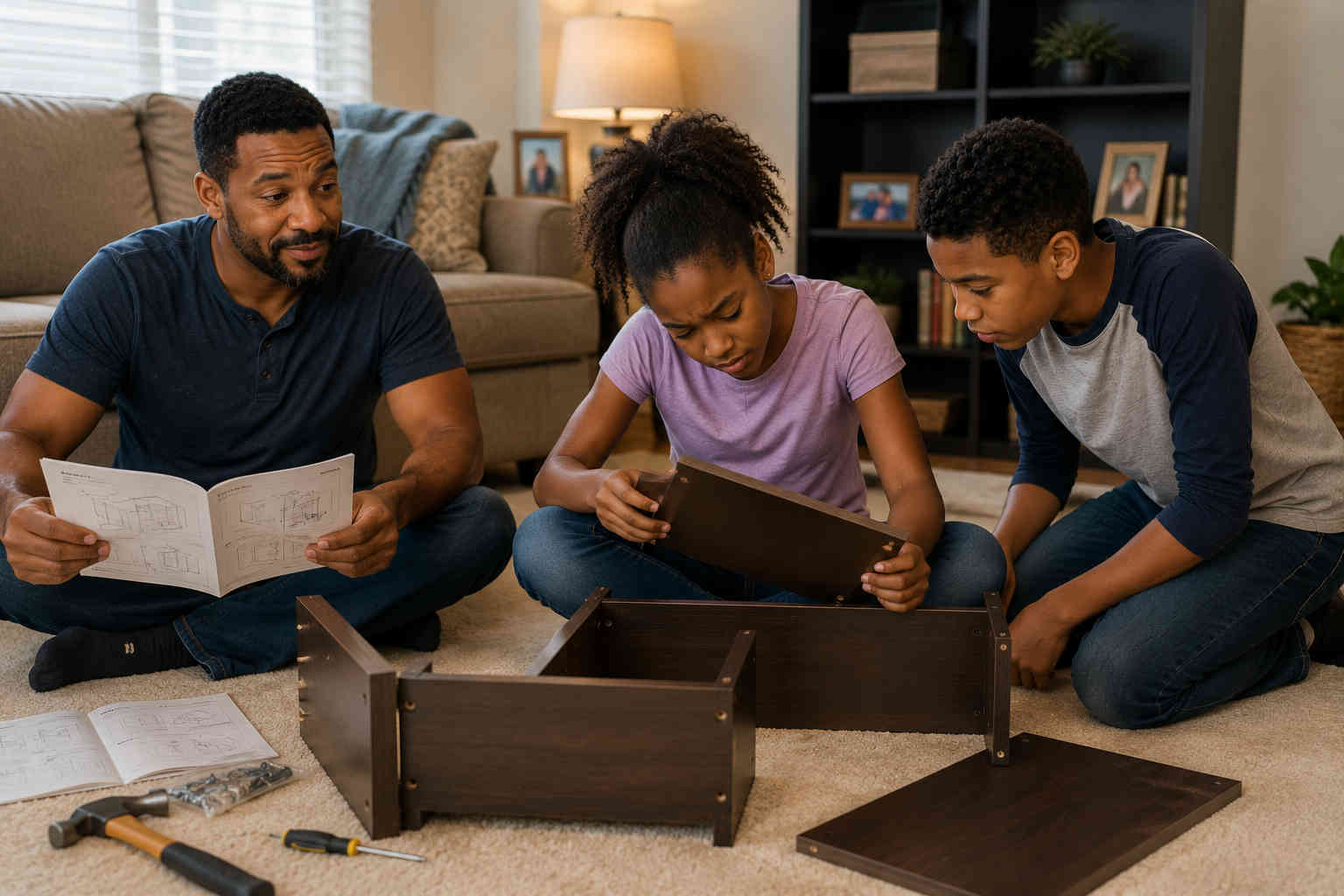
Don't Rescue Them From Every Bad Decision
Limited-time fathers can become overly protective because they do not want precious parenting hours ruined by frustration. But frustration is sometimes where fatherhood becomes useful.
If your child is assembling something incorrectly, do not immediately take over. If the pancake looks terrible, let them flip it. If they chose the wrong tool, ask what happened. If their $50 Saturday budget disappeared too quickly, do not automatically add another $50.
You do not always need to prevent failure. Sometimes you need to stand beside it.
A useful father is not the man who removes every obstacle. He is the man who teaches his child what to do after hitting one.

Use The Car As Your Second Living Room
If your parenting time is limited, do not underestimate driving.
Some of the best conversations between fathers and children happen in cars. Nobody has to stare directly at anybody else. Silence is not awkward. Conversation can stop and restart naturally. And there is a destination, so the child does not feel like Dad scheduled a “serious talk.”
Do not fill every drive with phone calls or constant entertainment. Leave some empty space.
A teenager who says almost nothing at dinner may unexpectedly say halfway through a twenty-minute drive: “Dad, can I ask you something?”
That is the moment you are looking for. The trip to practice may ultimately matter more than practice.
Become Their Consultant, Not Their Supervisor
A father with limited parenting time faces an unusual problem. You may still feel responsible for your child's behavior while lacking day-to-day control over it.
That can tempt you to spend your limited time enforcing, correcting, questioning, and monitoring: How are your grades? Why didn't you answer my text? Why are you staying up so late? Why aren't you practicing?
Some supervision is necessary. But as your children get older, another role becomes increasingly valuable: consultant.
A supervisor tells someone what to do. A consultant helps someone think.
Suppose your teenager hates his job. Instead of immediately saying, “You're not quitting. You need to learn responsibility,” ask: “What do you hate about it?” Then: “What would happen if you quit tomorrow?” “What would you do instead?” “What would a better job look like?” “What do you think your boss would say if you asked for different hours?”
You are still parenting, but you are teaching your child to reason. That is a role your children may continue seeking from you when they are 25, 35, or 45.
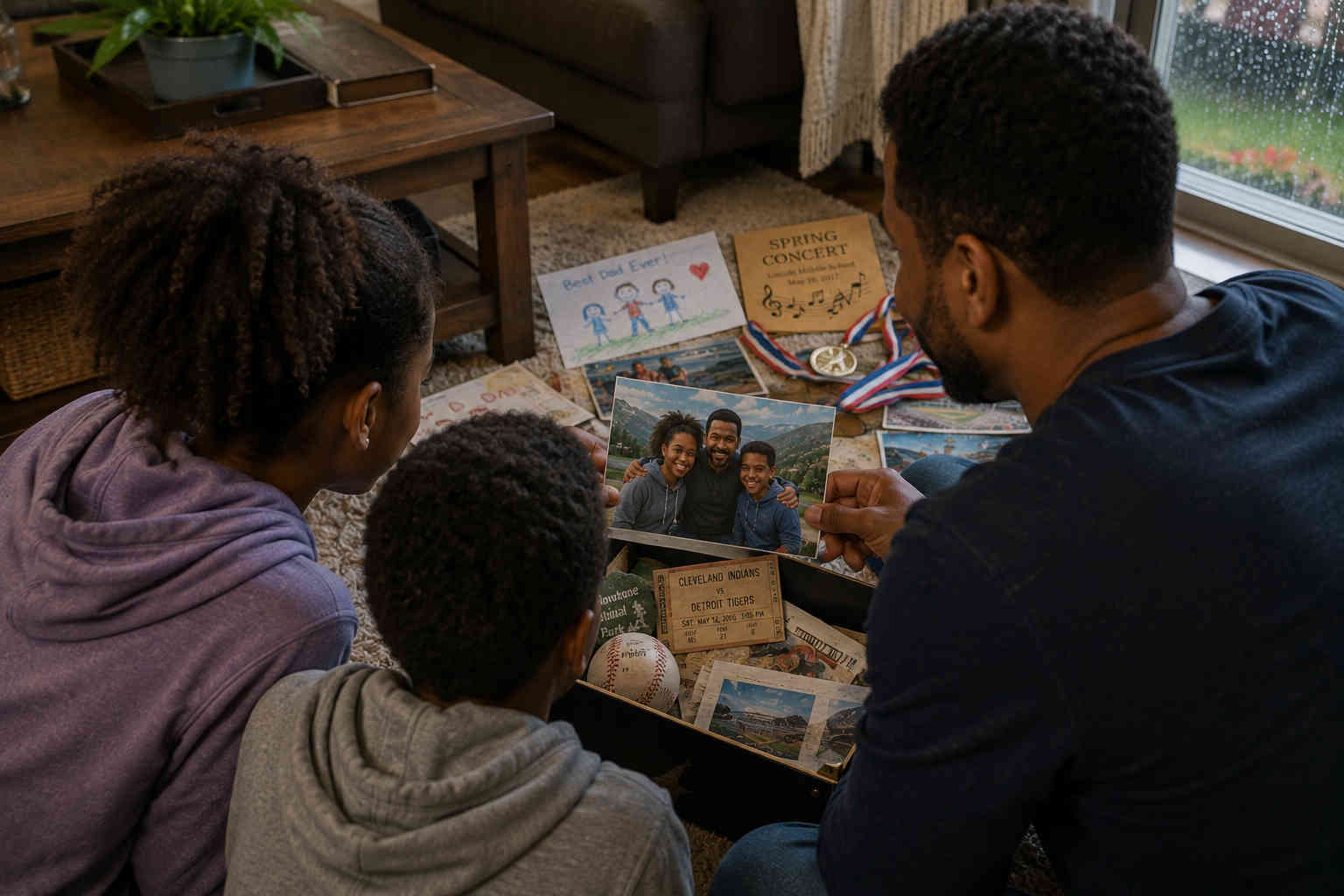
Build A Father-Child Archive
Document the relationship you are building—not for social media, but for your family.
Create a private folder or keepsake box containing photographs, funny videos, school programs, ticket stubs, drawings, trip pictures, projects you completed, recipes you cooked together, and occasional notes about memorable moments.
Once or twice a year, go through it together.
“Look how little you were here.”
“Remember when we completely ruined that first pizza?”
“This was the weekend we finally got that thing working.”
You are creating evidence of a shared history.
This can be particularly meaningful after divorce because children sometimes experience their lives as divided into “Mom's world” and “Dad's world.” The archive says something different: We have a story.

Create A Skill Ladder
Instead of only asking, “What should we do this weekend?” ask: What should my child know how to do by adulthood?
Then create a mental skill ladder. The ages do not have to be exact, but the idea is to make independence a long-term fatherhood project.
- Around 10: prepare a simple breakfast and clean up afterward.
- Around 11: basic laundry and taking care of personal belongings.
- Around 12: simple cooking and kitchen safety.
- Around 13: understand how a bank account and saving work.
- Around 14: build a basic budget and compare prices.
- Around 15: complete a job application and prepare for an interview.
- Around 16: learn driving responsibility and basic car maintenance.
- Around 17: understand credit, insurance, taxes, and major education or career decisions.
- Around 18: navigate adult systems without Dad automatically doing everything for them.
This gives your fatherhood direction. You are not merely trying to maintain a relationship. You are preparing another human being for independence.

Create A “Dad Question” Culture
You want your children to develop a habit that can continue long after custody schedules disappear: Ask Dad.
When your child encounters something unfamiliar, do not always immediately give the answer. Work through it together.
How does a mortgage work? Why did the car make that noise? What should you look for when buying a laptop? How much would it cost to travel to Japan? How does compound interest work? Why does the bicycle chain keep slipping?
You do not have to know everything. In fact, saying, “I don't know. Let's figure it out,” may teach something more valuable.
Dad is not necessarily the man with every answer. He is the man who helps you find one.
Keep A Running List Instead Of Constantly Texting
Staying connected does not mean constantly contacting your children. Especially with teenagers, too much communication can begin to feel like surveillance.
Try another strategy. Keep a private running list on your phone.
Ask about the driving test. Show your daughter the photography video. Remember the chemistry presentation. Ask about the coach's decision. Mention the summer job opening. Then, when you are together, you have real things to discuss.
This solves one of the biggest problems with limited parenting time: forgetting the thread of your child's life.
You are not trying to manufacture conversation Friday night. You have been collecting pieces of their world all week.
Give Your Children Something To Be Responsible For At Your House
Do not make your home a hotel. Give your children ownership—not just chores, ownership.
Maybe your son controls the grill when you cook outside. Maybe your daughter chooses one dinner each visit. Maybe one child maintains the aquarium. Maybe another keeps track of the garden. Maybe your teenager is responsible for music on a road trip. Maybe one part of a long-term project belongs entirely to them.
The message is: Things happen differently here because you're here.
That creates belonging. A child who visits Dad should not feel like a guest being entertained. He or she should feel like a member of the household whose presence matters.
Develop A Signature Conversation
Create one question you ask occasionally over the years. Not every visit. Not mechanically. But often enough that it becomes yours.
For example: “What's something you understand now that you didn't understand six months ago?”
That question works at almost any age. At nine, the answer might be multiplication. At thirteen, friendship. At seventeen, dating. At twenty-two, money. At thirty, marriage.
You can answer it too. Now Dad is not interrogating. Two people are comparing what life is teaching them.
Imagine having that conversation with your child for twenty years. That is a relationship.
Think Beyond The Custody Calendar
A custody schedule feels enormously important when you are living inside one. Friday at six. Sunday at five. Alternate holidays. Three weeks in summer.
Those boxes on the calendar can start to define fatherhood. But the calendar is temporary.
Eventually your children will drive themselves. Then they will graduate. Then they may move away. The court order that once determined exactly when you saw them will become irrelevant.
What remains?
Your relationship.
That is why a father with limited parenting time should not spend the next decade trying only to “maximize visitation.” He should spend it building a relationship capable of surviving after visitation no longer exists.
Become useful. Become interesting. Teach things. Learn things from them. Build projects. Create history. Give them responsibilities. Let them see your real life. Help them solve problems without solving every problem for them.
Become someone whose opinion they value rather than someone who simply exercises authority during scheduled weekends.

The Larger Role
The Goal Isn't More Hours. It's A Larger Role.
If you have limited parenting time, wanting more time with your children is understandable. But do not make the mistake of believing your relationship must remain limited until your schedule changes.
Ask yourself: What does my child come to me for? If you do not have a good answer today, start building one. Become the person who helps them think, teaches something useful, takes their interests seriously, stays calm when they make mistakes, and keeps building something with them over time.
Someday your child will be too old for a parenting schedule. They will not be too old for a father. Build that relationship now.