
Getting Your Mind Back
Why She Can Be Gone And Still Take Up So Much Space
You can remove her name from the mailbox, divide the furniture, sign the papers, and sleep in a house where none of her clothes remain—and still have an entire day hijacked by one thought about her.
Maybe it happens while you are making coffee. You remember exactly how she took hers. A song comes on and you remember a road trip. You pass a restaurant and suddenly you are replaying an argument from three years ago. At night, your mind starts editing the marriage like a film: what you should have noticed, what you should have said, what she meant, whether she regrets leaving, and what might have happened if one decision had been different.
If you can’t stop thinking about her after divorce, telling yourself to “just move on” usually makes the problem more frustrating. You are trying to use force against a system your brain spent years building.
The goal is not to somehow delete your ex-wife from memory. It is to reduce the authority those memories have over your attention. That happens when you understand what keeps activating them—and begin creating enough new life that the old relationship is no longer your brain’s most familiar subject.

Your Brain Built Thousands Of Shortcuts To Her
A long relationship creates associations that are almost invisible while you are living inside it. Certain groceries mean her. Friday night means the restaurant you used to visit. A television show means sitting beside her. A particular exit off the interstate means her parents’ house. Even the time of day can become a cue.
Divorce ends the relationship much faster than it erases those associations. That is why a completely ordinary trip to the grocery store can suddenly produce a vivid memory. You were not consciously trying to think about your ex. Your environment supplied a cue and your brain followed a familiar path.
This distinction matters. A thought appearing is not the same thing as choosing to keep thinking it. The first flash may be automatic. What happens during the next ten minutes is where you gradually regain control.
The 1:15 A.M. Courtroom In Your Head
Nighttime can be especially difficult because the day stops competing for your attention. There are no coworkers, errands, traffic lights, or chores demanding an answer. The mind finally has an empty room, and unresolved questions walk in.

You may believe that if you replay the marriage one more time, you will finally understand it. That creates a strange bargain: your mind promises relief after one more review, but the review produces another question. “Why did she say that?” becomes “How long had she felt that way?” which becomes “What else did I miss?”
Set a rule for questions that cannot produce new evidence tonight. If the answer requires access to her thoughts, a different past, or information you do not have, it is not a problem you can solve at 1:15 in the morning. Write the question down if necessary. Then return to the present task: sleep.
A Better Question
Instead of asking, “How do I make myself never think about her?” ask, “What do I do when the thought arrives?” That gives you a behavior you can practice instead of an impossible standard.
Sometimes You Miss The Life More Than The Woman
One of the most useful distinctions after divorce is separating the person from the structure that surrounded her. When you say, “I miss her,” what exactly do you miss?
You may miss hearing another person moving around the kitchen. You may miss having somebody to text when something ridiculous happens at work. You may miss the identity of being a husband, the family traditions, the shared friends, the certainty of where you would be on Thanksgiving, or simply having someone sitting across from you at dinner.

Those losses are real, but they are not interchangeable with wanting the marriage back. If you confuse them, every lonely evening becomes evidence that she was your only route to connection.
Be specific. “I miss eating dinner with someone” is a different problem from “I need my ex-wife back.” Specific losses can be rebuilt in new forms. A vague belief that she was your entire life leaves you with nowhere to go.
Stop Feeding The Investigation
If you can’t stop thinking about your ex, examine the behaviors that keep reopening the file. Checking her social media is one of the most obvious. So is looking at old photographs, rereading messages, asking mutual friends what she is doing, or searching for clues about whether she is dating.
The problem is not only what you discover. It is what the search teaches your brain: She is still important enough to investigate.

Make access less convenient. Unfollow or mute accounts that repeatedly put her in front of you. Remove old message threads from easy reach. Stop using mutual friends as unofficial reporters. You are not pretending she never existed. You are refusing to turn recovery into surveillance.
The first few times can feel uncomfortable because the urge itself has become a habit. Let the urge peak without obeying it. You are teaching your mind that curiosity does not require action.
Saturday Night Needs A Replacement, Not An Empty Chair
Men often remove the obvious reminders of a relationship but leave the schedule untouched. Then Saturday arrives at 6:30 p.m.—the exact time they used to go out together—and the empty block becomes a weekly memorial.
Do not merely “stay busy.” Give vulnerable time periods a new identity. If Saturday night was date night, make it something specific: a recreational league, dinner with a friend, a movie at a theater across town, a class, a project in the garage, or a regular workout followed by a meal somewhere new.

The point is not distraction forever. You are creating competing associations. Eventually Saturday night stops automatically meaning “what we used to do” because you have given your brain newer evidence about what Saturday means now.
Remove The Museum From Your House
After a divorce, a home can become a museum without looking like one. The furniture is arranged exactly as it was. Her side of the closet stays oddly empty. The bedroom still reflects choices you made together. Objects you never particularly liked remain in place because changing them feels like admitting something final.
You do not need to throw away your history. But your home should not require you to walk through the marriage every time you move from one room to another.

Move the bed. Replace the bedding. Put the chair somewhere else. Take down an object that exists only because she chose it. Create a reading corner, work area, music space, or anything else that reflects who lives there now.
Physical changes can interrupt automatic memory cues. More importantly, they turn your house from a preserved setting into an active part of your next chapter.
Give Your Brain Something Else Worth Discussing
There is a limit to how much progress you can make by concentrating on not thinking about someone. The command itself keeps the subject in the room. At some point, recovery requires new material.
Choose something that demands enough attention that you cannot perform it entirely on autopilot. Learn woodworking. Take a language class. Train for a difficult hike. Learn to cook five meals you have never made. Join a group where nobody knows you primarily as someone’s ex-husband.
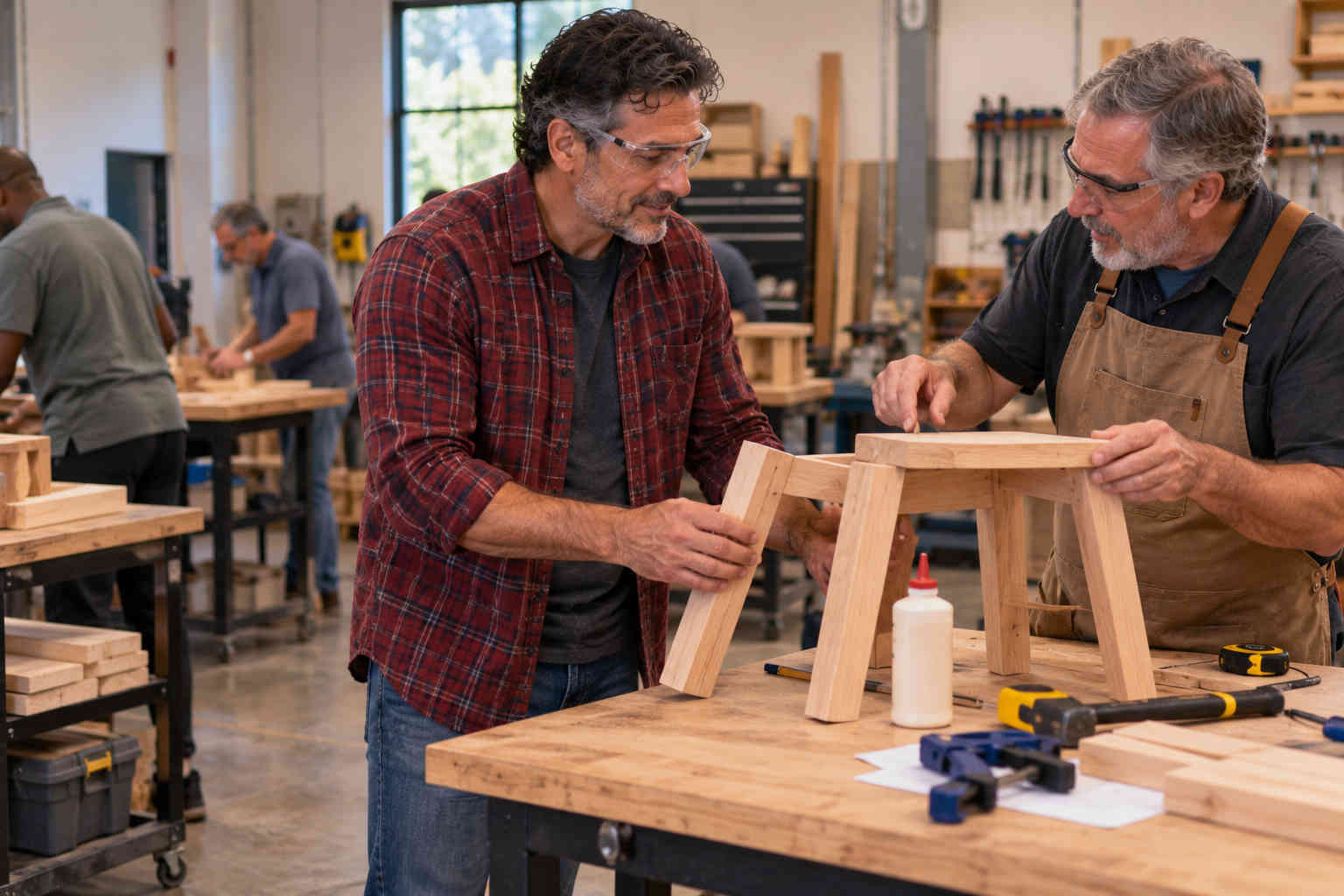
Novelty matters because it creates memories that do not contain her. If every restaurant, vacation, hobby, and social circle in your life was built during the marriage, the past has an enormous advantage. Start accumulating experiences with no marital version to compare them against.
Create New Firsts Instead Of Counting Firsts Without Her
The first birthday after divorce. The first Christmas. The first vacation. The first time you attend a wedding alone. Early recovery is full of milestones defined by absence.
Eventually, deliberately create firsts that are not framed around her at all. Your first solo weekend at a cabin. Your first woodworking project. Your first 5K. Your first trip to a city you always wanted to see. Your first dinner with a new group of friends.

This is one of the quieter ways to learn how to stop thinking about her. Your mind needs alternatives. New experiences create a larger mental world, so the marriage gradually occupies a smaller percentage of it.
Measure Recovery By Recovery Time
A common mistake is measuring progress by whether you thought about her today. That standard can make a normal memory feel like failure.
Use a better measurement: how long did the thought own you?
Three months ago, seeing a familiar photograph may have ruined the evening. Today it may bother you for twenty minutes. Later, a memory may appear, sting briefly, and pass while you continue making breakfast. The memory still occurred, but its power changed.
That is progress. Emotional healing is often not the disappearance of a thought; it is a shorter distance between being triggered and returning to your own life.
When You Can’t Stop Thinking About Her, Stop Asking The Wrong Question
“Why am I still thinking about my ex?” can become another form of rumination. It treats every memory as evidence that something is wrong and demands an explanation for each one.
Try asking questions that point forward instead: What part of my day still belongs to the old routine? What am I curious about now? Which room still feels like a museum? Who do I need more contact with? What have I postponed because I assumed I would do it with a partner? What would make next Saturday meaningfully different from last Saturday?
Those questions do not require you to deny grief. They simply stop making your ex-wife the central character in every solution.

Moving On Usually Happens Before You Notice It
There may not be a morning when you wake up and dramatically announce that you are over her. More likely, something smaller happens.
You drink half your coffee before realizing she was not your first thought. You hear the song and keep driving. You buy the groceries without remembering what she preferred. Saturday becomes basketball night. The bedroom looks like yours. You finish a project and instinctively call a friend instead of wishing you could tell her.
Then, perhaps weeks later, you notice the change.
You still remember the marriage. You may still have moments of sadness, anger, affection, or regret. But she is no longer the organizing principle of your inner life.
That is the real target when you can’t stop thinking about her: not amnesia, not indifference, and not pretending the relationship meant nothing. You are building enough present life that the past no longer gets unlimited access to your attention.
Your Next Move
Do Not Fight Every Thought. Stop Building Your Day Around It.
Notice the trigger, refuse the investigation, shorten the replay, change the routines that keep pointing backward, and deliberately create experiences that have nothing to do with her. The goal is not to erase your history. It is to make your present life larger than it.