
Confidence With Character
Confidence and Entitlement Aren't the Same Thing
Most fathers want their children to grow up confident. You want your son to walk into a room without shrinking. You want your daughter to speak up when something matters. You want them to try difficult things, recover from mistakes, and know that their worth does not disappear when someone rejects them.
But there is a line between confidence and entitlement, and it can be surprisingly easy to cross when you are trying hard to protect your children after divorce.
Confidence says, “I can handle what happens.” Entitlement says, “Things should happen the way I want.”
A confident child can hear no, lose a game, make a mistake, wait their turn, work for something, apologize, and watch another person succeed without believing the world has treated them unfairly. An entitled child begins to believe that discomfort itself is evidence that somebody else has failed them.
The goal is not to make childhood harder than it needs to be. It is to give your child enough responsibility, frustration, choice, consequences, and genuine accomplishment to discover that they are capable.
Divorce Can Make Dads Want to Overcompensate
After divorce, guilt can quietly change your parenting. You may see your children less than you once did. You may know they are moving between two homes. You may hate that they have had to deal with changes they never asked for. So when they are with you, you want the time to feel good.
That can turn into extra gifts, fewer rules, constant entertainment, rescuing them from consequences, or avoiding any decision that might make them unhappy with you. None of those choices automatically makes a child entitled. The problem comes when your child learns that your guilt gives them leverage.
Your job is not to make every moment at Dad's house pleasant. Your job is to make your home loving, dependable, and strong enough for your children to grow in.
Praise Effort and Character, Not Everything
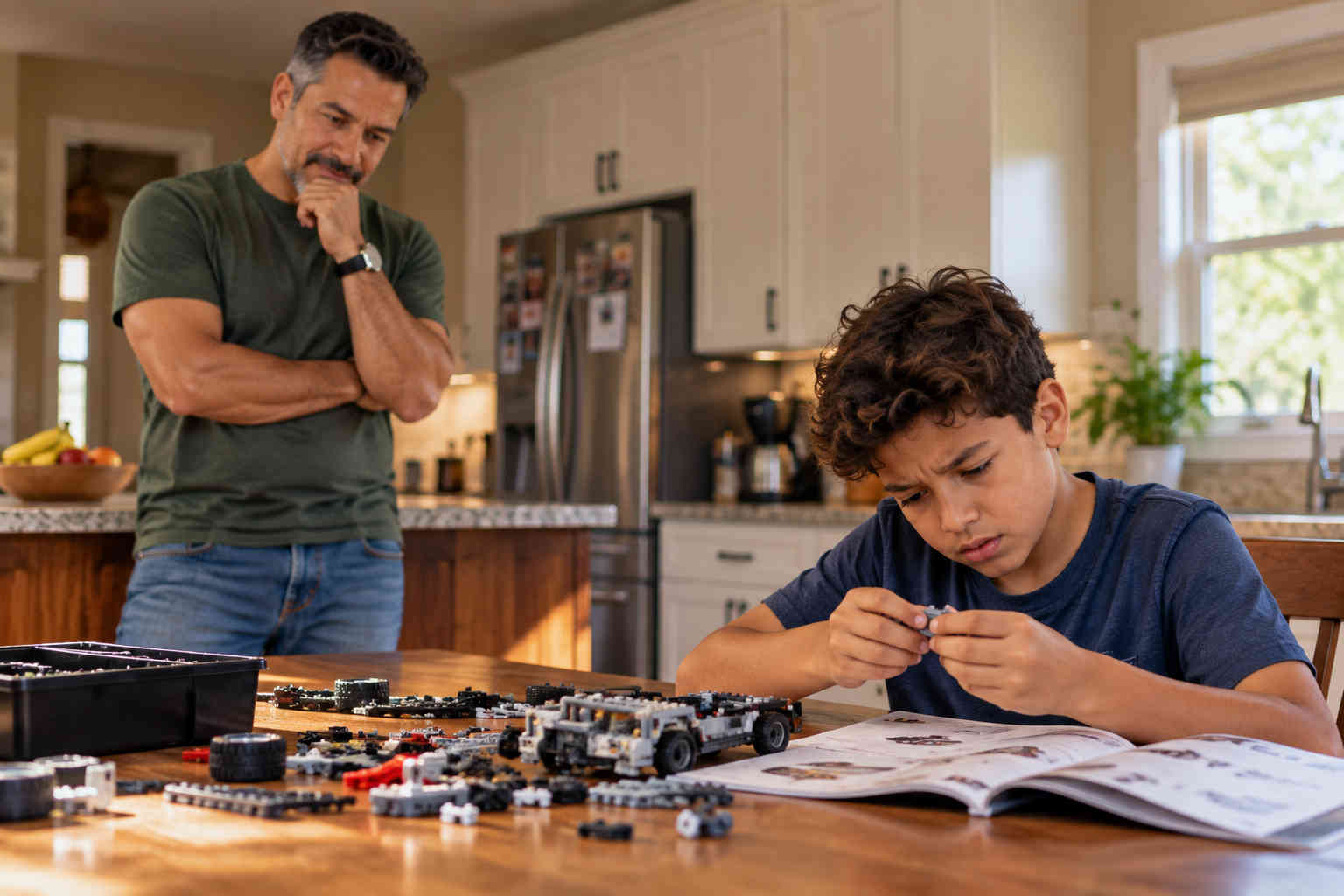
Children need encouragement, but constant praise can become meaningless. If everything they do is “amazing,” they never learn the difference between showing up, making a serious effort, improving a skill, and actually doing excellent work.
Make your praise specific. Instead of automatically saying, “You're the best,” say, “You kept working after you got frustrated,” or “I noticed you went back and fixed the part you rushed.” Praise honesty when telling the truth costs them something. Praise sportsmanship when they lose. Praise patience when they wait. Praise courage when they try something that scares them.
That kind of praise connects confidence to behavior they can repeat. They do not have to depend on applause to feel capable.
Stop Rescuing Your Child From Every Uncomfortable Situation
When your child is struggling, your instinct may be to remove the struggle. Sometimes you should. Children need protection from situations that are unsafe or beyond what they can reasonably handle.
But many ordinary frustrations are not emergencies. A difficult homework assignment, a disagreement with a friend, a coach's criticism, forgetting an item at home, or having to redo sloppy work can become useful practice.
Before stepping in, ask yourself: Does my child need protection, guidance, or simply time to work this out? Guidance keeps you involved without taking ownership of the problem away from them.
Let Your Child Hear “No”
A child who never hears no does not become more confident. He becomes less prepared for a world that will eventually say no without apologizing.
You do not have to be harsh or arbitrary. A calm no is enough. “No, we're not buying that today.” “No, you can't stay up another hour.” “No, I'm not changing the rule because you're upset.” Your child is allowed to be disappointed, and you are allowed to remain steady while they feel it.

Give Your Child Real Responsibilities at Your House
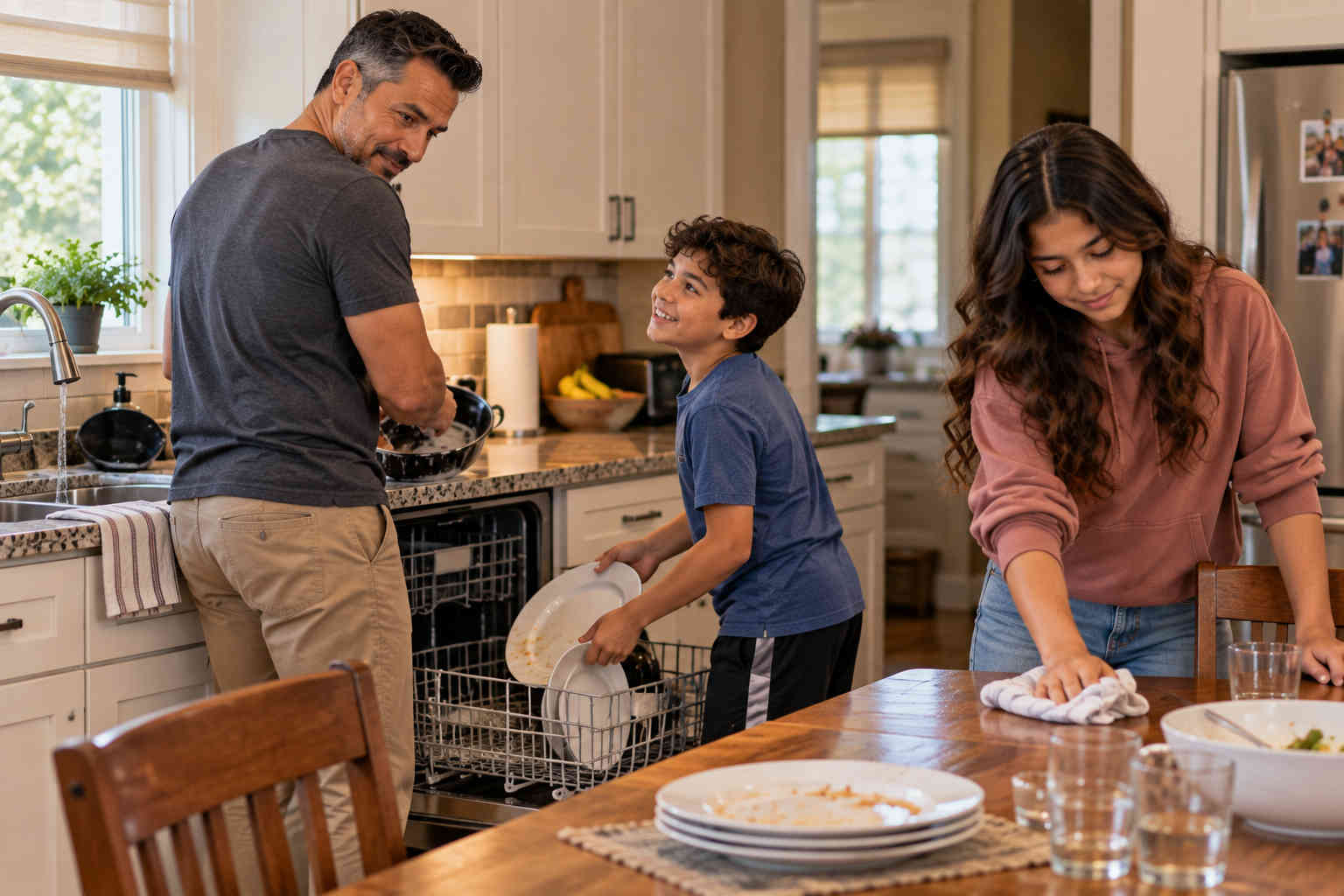
Responsibility sends a powerful message: You are not just someone who is cared for here. You are someone who contributes here.
Give children jobs that actually matter. They can unload the dishwasher, clean part of the kitchen, feed a pet, take out trash, fold laundry, help prepare a meal, or keep track of equipment they need for school or sports. Adjust the responsibility to their age, but resist the temptation to redo everything behind them because your standard is faster.
Children gain confidence when other people genuinely depend on them. That feeling is different from being told they are special. It gives them evidence that they are useful.
Allow Natural Consequences When They're Safe
If your child spends all of their allowance early, the natural consequence is not having money later. If they refuse to bring a jacket after being reminded and the weather is merely uncomfortable rather than dangerous, being chilly for a while may teach more than another lecture.
Natural consequences connect decisions to reality. They also keep Dad from becoming the constant punisher. You are not inventing pain. You are refusing to erase every safe result of a choice.
Of course, you step in when health, safety, or a consequence far beyond the child's maturity is involved. The point is not “tough love” for its own sake. The point is allowing experience to teach lessons that words cannot.

Don't Compete With the Other Parent
Divorce can create a dangerous temptation to become the more exciting house, the more generous parent, or the parent who says yes when the other says no. Children notice competition quickly.
If affection becomes tied to what you buy, permit, or provide, you teach your child to measure relationships by benefits. That is the opposite of what you want.
Your child does not need you to win a popularity contest. They need a father whose love is not dependent on being chosen as the favorite. Keep your standards because they matter, not because they match or oppose what happens in the other home.
Let Them Solve Age-Appropriate Problems
As children get older, start moving from spokesman to coach. If your child has a problem with a teacher, coach, friend, or activity, do not automatically make the call for them.
Help them think through what they want to say. Ask what outcome they are hoping for. Practice the conversation if necessary. Then, when the situation is appropriate, let them speak.
Every time your child handles a difficult conversation successfully, even imperfectly, they collect evidence that they can function without Dad clearing the path first.

Teach Them That Confidence Doesn't Mean Always Being Right
Entitlement often protects the ego. If a child believes being wrong is humiliating, they may blame other people, change the story, argue endlessly, or refuse to apologize.
Show them another version of confidence: “I was wrong.” “I misunderstood.” “I shouldn't have said that.” “You were right about that.” Those sentences do not make a person weak. They show that a mistake is something you can survive and correct.
Your example matters more than a lecture. When you overreact or misjudge something, admit it without adding a long defense of why you were almost justified.

Teach Your Child to Consider Other People's Needs
Confidence says, “My needs matter.” Entitlement says, “My needs matter more.” Children need repeated practice noticing that other people have limits, feelings, plans, and priorities too.
Ask them to consider the effect of their behavior. If they are late, who had to wait? If they leave a mess, who has to clean it? If they interrupt, what happens to the person who was speaking? If they want something expensive, what else might that money be needed for?
This is not about teaching children to ignore themselves. It is about teaching them that self-respect and consideration can exist together.
Teach Gratitude Without Turning It Into a Lecture
Gratitude is easier to learn through habits than speeches. Have children thank people directly. Let them see you thank servers, teachers, coaches, relatives, neighbors, and people who help you. Mention effort, not just objects: “Your grandmother spent a lot of time making that for you.”
Do not force children to pretend they love every gift or experience. Gratitude does not require fake enthusiasm. It means recognizing that somebody else gave time, effort, attention, or resources.
Don't Remove Every Struggle
One of the greatest sources of confidence is remembering something that used to be hard and realizing it is now manageable. Children need those before-and-after experiences.
Let them practice until they improve. Let them be beginners. Let them sit with the frustration of not being instantly good at something. If you constantly reduce the difficulty, change the standard, or finish the task for them, they lose the opportunity to discover persistence.
Support does not mean removing the hill. Sometimes it means standing nearby while they climb it.
Don't Lower Every Expectation Because of the Divorce
Your children may need compassion, flexibility, and extra support after divorce. They may have days when emotions are heavy or transitions between homes are difficult. Take that seriously.
But be careful about turning the divorce into a permanent exemption from ordinary expectations. Children still need school responsibilities, respectful behavior, household contributions, reasonable routines, and limits.
When expectations disappear indefinitely, the unintended message can become: What happened to you means you cannot handle normal life. A better message is: What happened was hard, and I believe you are capable of growing through it.
Let Your Child Be Better Than You at Something
Some fathers feel most comfortable when they are always the expert. But your child needs opportunities to know something you do not know, teach you something, or develop a skill beyond yours.
Ask questions and let them explain. Do not turn every lesson into a competition or immediately demonstrate that you still know more. Their competence does not reduce your authority.

Show Confidence Through Your Own Behavior
Your children are watching how you handle rejection, inconvenience, criticism, mistakes, and other people's success. If you complain that every setback is somebody else's fault, they learn that. If you keep your word, recover from disappointment, apologize, and try again, they learn that too.
You do not have to perform strength or pretend nothing bothers you. Healthy confidence is not emotional invulnerability. It is the belief that difficult feelings and difficult situations can be handled without losing your character.
Watch for the Difference Between Confidence and Entitlement
Do not judge your child by one bad afternoon. All children can be selfish, dramatic, impatient, or ungrateful sometimes. Look for patterns.
- Can they hear no without treating it as betrayal?
- Can they lose without blaming everyone?
- Can they apologize without being forced into a courtroom defense?
- Can they be happy for someone else's success?
- Can they do ordinary responsibilities without expecting a reward every time?
- Can they recover from disappointment?
- Can they speak up for themselves while still respecting other people?
Those abilities are stronger signs of confidence than being loud, outgoing, popular, or fearless.

The Goal Is “I Can Handle This”
When your child eventually leaves your home, the most useful belief you can give them is not “Dad will fix it.” It is not “I deserve to win.” It is not even “I am special.”
It is: “I can handle this.”
I can handle being told no. I can handle being disappointed. I can handle making a mistake. I can handle working for something. I can handle another person being better than me. I can handle responsibility. I can handle apologizing. I can handle solving a problem before asking someone else to solve it for me.
That kind of confidence is difficult to turn into entitlement because it is built on capability rather than privilege.

The Father's Role
Give Them Roots, Then Give Them Room
Love them completely. Keep the boundaries steady. Give them meaningful responsibility. Let safe consequences teach. Coach them through problems without automatically taking over. Your child does not need a life without frustration to become confident. They need repeated evidence that they can meet life as it is and remain capable, responsible, and considerate.