After divorce, confidence can feel like something you lost along with the relationship. You may question your judgment, your value, your ability to make decisions, or even your sense of identity. But rebuilding confidence does not require a complete reinvention overnight. It begins with small daily habits that quietly restore self-trust.
Every time you complete a simple task, keep a promise to yourself, improve your surroundings, or handle one responsibility you have been avoiding, you create evidence that you are capable. Those pieces of evidence accumulate. Eventually, confidence stops being something you are trying to feel and becomes something you have earned through consistent action.
Why Small Habits Matter After Divorce
Divorce can disrupt nearly every familiar structure in your life—your home, schedule, finances, parenting routine, friendships, and future plans. When so much feels uncertain, attempting a massive transformation can create more pressure than progress.
Small habits work because they are manageable. They reduce the distance between intention and action. A made bed, a twenty-minute walk, a paid bill, or a completed phone call may seem minor, but each one sends the same message: I can take care of what is in front of me.
The goal is not perfection. The goal is to become increasingly dependable to yourself.
1Make Your Bed Every Morning

Making your bed may sound too simple to matter, but that is precisely why it works. It gives you a fast, visible win before the day becomes complicated. You start the morning by improving your environment instead of reacting to it.
A made bed also changes the way the room feels. It replaces disorder with intention and gives you a cleaner place to return to at night. The habit takes only a few minutes, yet it reinforces discipline, self-respect, and follow-through.
Do not turn it into a test of perfection. Straighten the sheets, arrange the pillows, and move on. The purpose is not to create a hotel room. The purpose is to begin the day by finishing something.
2Keep One Promise To Yourself Every Day
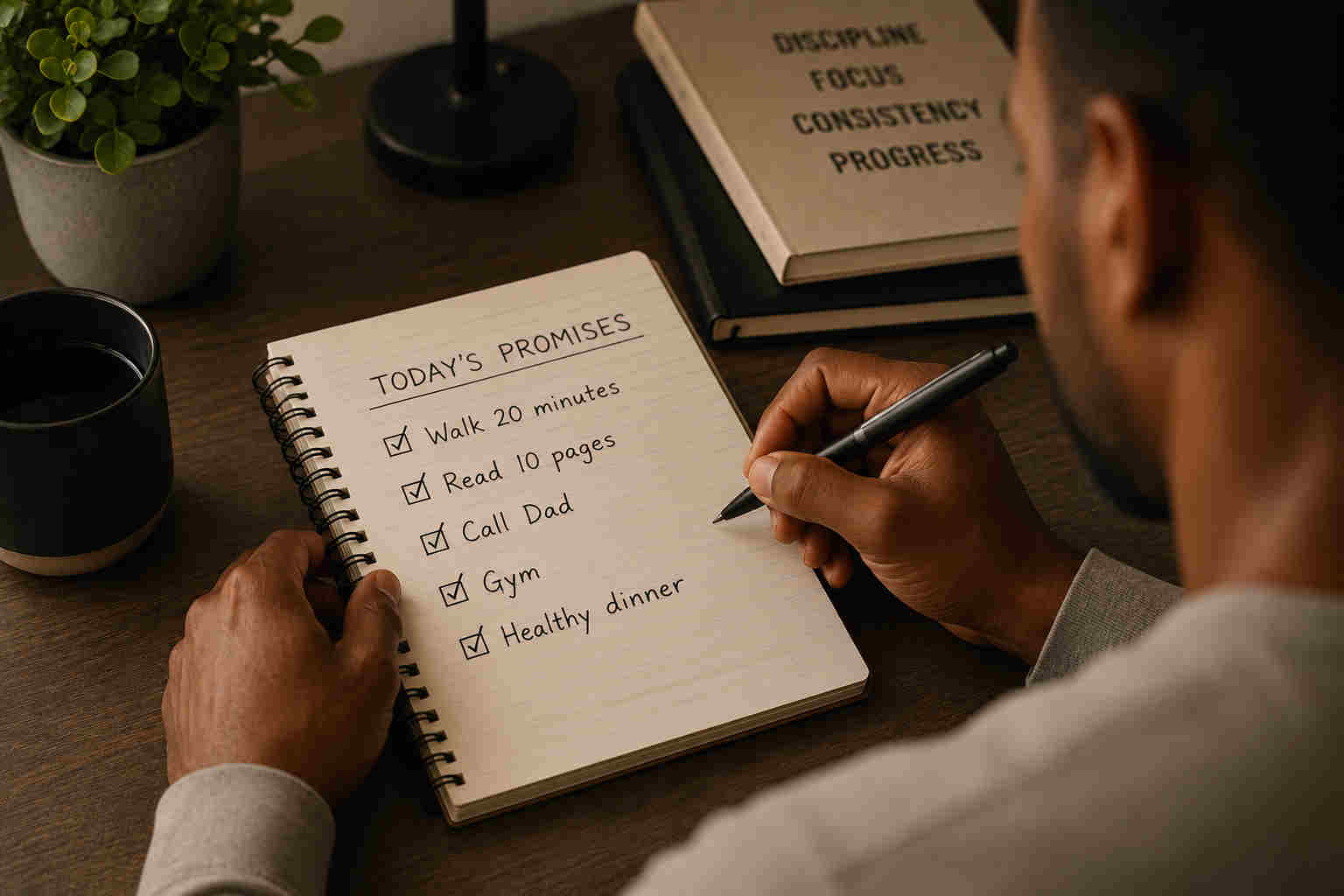
Confidence is closely connected to self-trust. When you repeatedly tell yourself that you will do something and then do not follow through, you begin to doubt your own word. The way back is not to make bigger promises. It is to make smaller promises that you can actually keep.
Choose one clear commitment each day:
- Walk for twenty minutes.
- Read ten pages.
- Call your father, son, daughter, or a trusted friend.
- Prepare a healthy dinner.
- Complete one workout.
Keep the promise even when it feels ordinary. The value is not only in the task itself. The deeper benefit is proving that your word to yourself still means something.
3Write Down Three Priorities
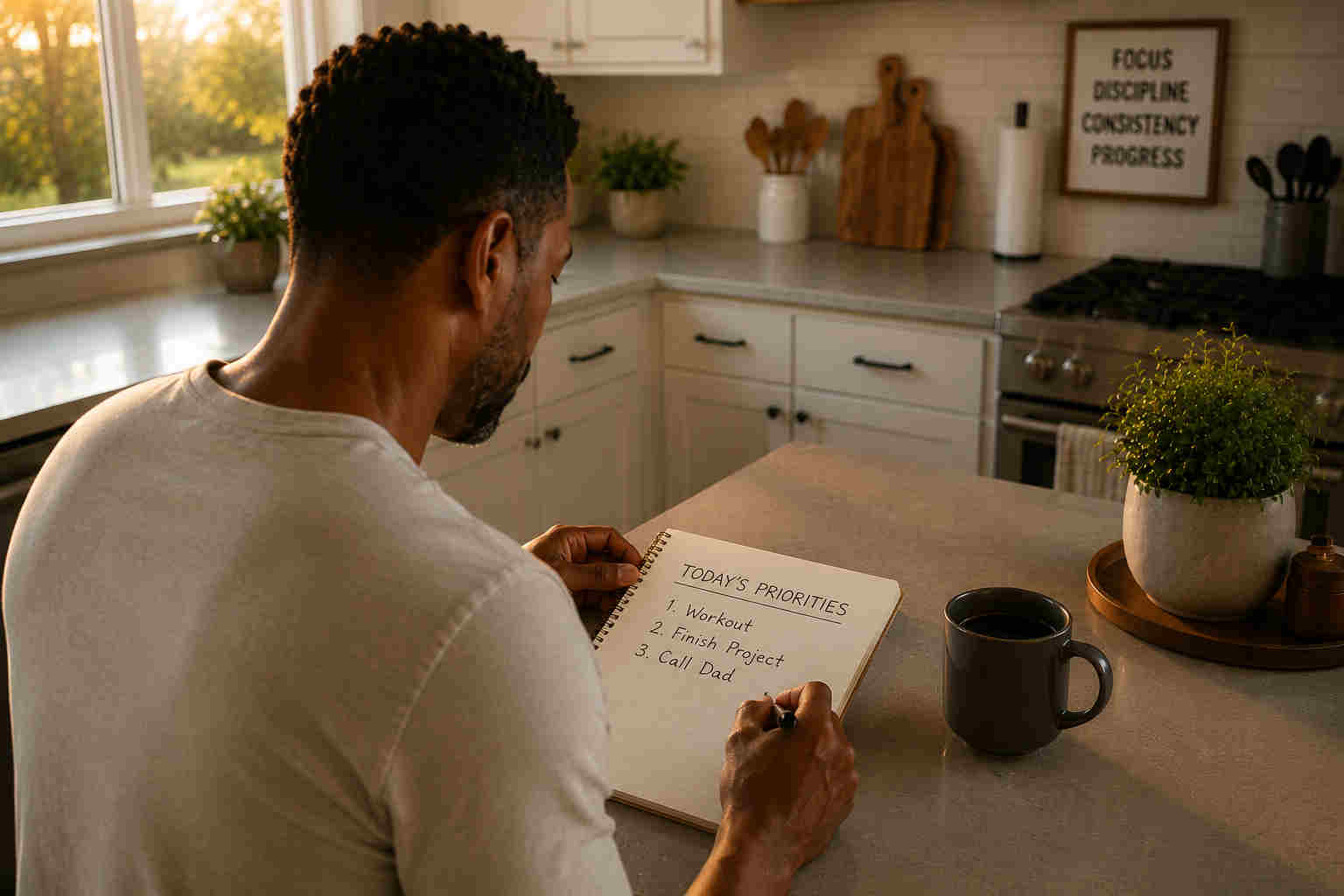
A long, crowded to-do list often produces guilt rather than progress. Instead, identify the three things that would make the day feel useful and complete. They can involve work, health, family, finances, or your home.
Your list might say: finish the project, complete a workout, and call Dad. When those three priorities are clear, you are less likely to spend the day drifting between distractions. You can still handle other responsibilities, but you know what deserves your best attention.
At the end of the day, completed priorities provide concrete evidence of progress. That evidence matters more than a temporary burst of motivation.
4Improve One Small Thing Around Your Home

Your home has a powerful effect on your mood. After divorce, it may feel temporary, empty, neglected, or full of reminders of the past. You do not need to redesign everything at once. Improve one small thing.
Hang a picture. Repair a loose handle. Organize one shelf. Replace worn bedding. Clear a countertop. Add a plant. These actions help transform your space from somewhere you ended up into somewhere you intentionally live.
Each improvement says that your environment—and your future—are worth caring for. Over time, the room begins to reflect stability rather than disruption.
5Move Your Body Every Day

Exercise helps rebuild more than physical strength. It restores energy, improves mood, reduces stress, and reminds you that your body is capable of adapting. But exercise does not have to mean an intense gym routine.
A brisk neighborhood walk, a bike ride, bodyweight exercises, stretching, yard work, or a short strength session all count. The best form of movement is one you can repeat consistently.
Focus on the habit of showing up rather than the appearance of immediate results. The confidence comes from knowing that you took care of yourself today—and that you are becoming the kind of man who does it regularly.
6Learn Something New Every Day

Recovery is not only about reducing pain. It is also about expanding your life. Learning something new gives your mind a constructive challenge and creates a sense of forward motion.
You might study personal finance, photography, cooking, home repair, technology, history, fitness, or a skill that could improve your career. Read a chapter, watch a useful lesson, practice for twenty minutes, or take notes on one idea.
New knowledge reminds you that your story is still developing. You are not limited to the identity you had during the marriage or the version of yourself that existed at the time of the divorce.
7Reduce One Source Of Chaos

Chaos drains confidence because it constantly reminds you of unfinished business. Choose one source of disorder and make it slightly better. Sort the mail. File financial documents. Schedule an appointment. Cancel an unused subscription. Clean out the car. Answer one difficult email.
You do not have to solve every problem in one afternoon. The habit is to stop allowing avoidable disorder to grow unchecked. When you handle one source of chaos each day, life gradually becomes easier to manage.
Control is not the ability to prevent every problem. It is the ability to respond deliberately to the next one.
8Record Three Wins

At the end of the day, write down three wins. They do not have to be impressive. A win might be completing your walk, paying a bill, having a good conversation with your child, cooking instead of ordering food, or staying calm during a difficult moment.
This practice is not forced positivity. It is an honest record of what went right. Divorce can train your attention to search for rejection, loss, and failure. Recording wins helps correct that imbalance by making progress visible.
On difficult days, your wins may be smaller. Write them down anyway. Consistency matters more than drama.
Confidence Isn't Loud

Real confidence does not require constant attention. It is not bragging, dominating conversations, chasing approval, or trying to prove that the divorce did not affect you. Quiet confidence appears in the way you treat people, handle responsibility, keep your word, and remain steady when no one is applauding.
It can look like helping a neighbor, being fully present with your children, admitting when you are wrong, setting a respectful boundary, or doing the right thing when it would be easier not to.
Appearance may influence a first impression, but character determines whether confidence is genuine. The daily habits in this article matter because they strengthen the man behind the image.
Final Thoughts — Built One Day At A Time

You do not need to wake up tomorrow feeling fearless, fully healed, or certain about the future. You only need to take the next constructive step.
Make the bed. Keep one promise. Write three priorities. Move your body. Learn something. Reduce one source of chaos. Record your wins. Then get up and do it again.
Some days will be productive. Others will be messy. Missing a habit does not erase your progress. Return to it the next day without turning one imperfect moment into a judgment about your character.
Confidence after divorce is not restored by pretending the past did not hurt. It is restored by creating a present in which you can trust yourself again. One small action becomes a pattern. The pattern becomes a way of living. And, over time, that way of living becomes the foundation of a stronger life.