A Sustainable Way To Lose Weight
A Calorie Deficit Should Not Feel Like A Daily Food Emergency
Losing weight comes down to one unavoidable principle: over time, you need to consume fewer calories than your body uses.
That is the simple part.
The difficult part is creating that calorie deficit without spending every afternoon thinking about food, raiding the kitchen after dinner, or going to bed wondering how anyone lives on grilled chicken and lettuce.
If you are trying to lose weight after divorce, this can be an especially frustrating problem. Your schedule may have changed. You may be cooking for one for the first time in years. Restaurant meals, takeout, convenience foods, alcohol, late-night eating, and irregular meal times can quietly become normal.
Then one day you decide to get serious.
You slash your calories. Breakfast becomes tiny. Lunch is a salad that barely qualifies as a meal. By 7:30 p.m., you are starving. Three days later, the diet is over.
The problem was not necessarily a lack of discipline. The problem was that you created a calorie deficit almost entirely by removing food instead of redesigning what you eat.
There is a much better approach. You can create a calorie deficit while still eating substantial meals. The key is learning how to spend your daily calories on foods that give you more fullness for those calories.
What Is A Calorie Deficit?
A calorie deficit simply means your body is using more energy than you are consuming through food and drinks.
Imagine that your body requires roughly 2,500 calories per day to maintain your current weight. If you average 2,100 calories per day, you have created an approximate 400-calorie daily deficit.
Your body has to make up that energy difference somewhere. Over time, stored body tissue—including body fat—can supply part of that energy, and your weight can decrease.
But there is an important distinction: a calorie deficit tells you how much energy you are eating. It does not tell you what that food will feel like in your stomach.
Two 2,000-calorie diets can produce dramatically different experiences. One man might spend the day eating small portions of calorie-dense foods and constantly feel restricted. Another might eat several large, satisfying meals built around lean protein, vegetables, potatoes, fruit, beans, and other filling foods.
The calorie totals could be similar. The hunger levels may not be.
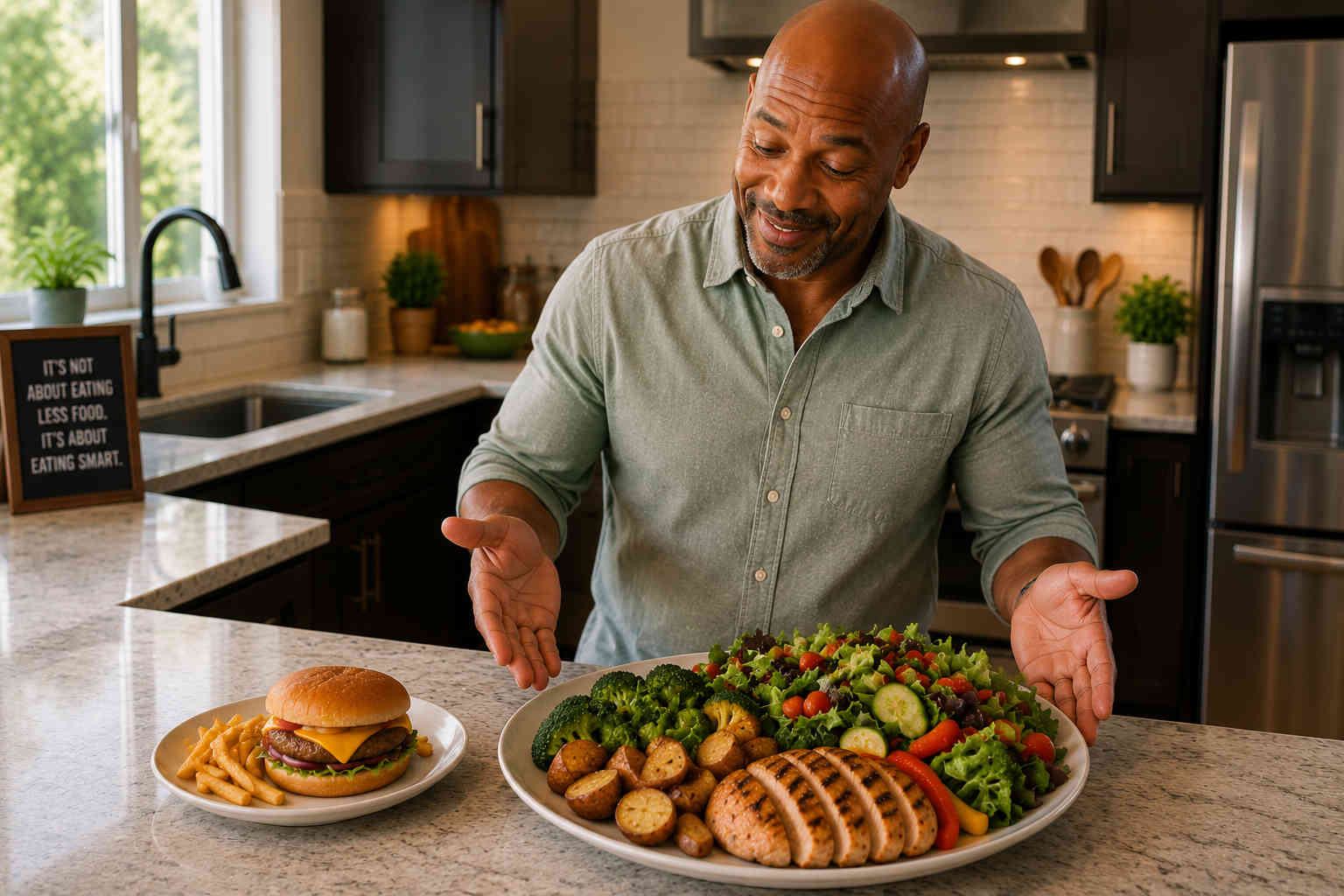
Stop Trying To Make Your Diet As Small As Possible
A common weight-loss mistake is looking at your plate and thinking, How little can I get away with eating?
Try reversing the question: How much food can I put on this plate while keeping the calories reasonable?
That small mental shift can completely change your diet.
Suppose you normally eat a cheeseburger, large fries, and regular soda. You could reduce calories by simply ordering smaller versions of everything. That works mathematically, but you may finish your meal wanting more.
Another strategy would be to restructure the meal entirely. You might have a large grilled-chicken sandwich, roasted potatoes, a substantial side salad with a measured amount of dressing, and a zero-calorie drink.
You have not eliminated dinner. You have redistributed its calories. This is one of the most useful skills you can develop when learning how to eat fewer calories and feel full.
Use The “Big Plate” Strategy
Men who are accustomed to eating large meals often struggle with diets built around visibly tiny portions. So do not automatically make your meals tiny. Make them less calorie-dense.
Think about constructing dinner in three physical zones. One large section contains vegetables or another high-volume food. Another contains your protein. The remaining section contains potatoes, rice, beans, pasta, or another carbohydrate that fits your calorie target.
Now you have a plate that looks like dinner. That matters. You are trying to build an eating pattern you can live with—not prove how miserable you can make yourself for six weeks.

Put A Protein Anchor In Every Main Meal
If your breakfast consists of coffee and toast, lunch is crackers and a snack bar, and dinner is pasta with very little protein, do not be surprised if controlling your appetite becomes difficult.
Make protein the anchor of your major meals. Practical choices include chicken, turkey, fish, eggs, Greek yogurt, cottage cheese, lean beef, beans and lentils, lower-fat dairy, and protein-rich leftovers from dinner.
Notice what is missing from that list: you do not have to live on protein shakes. Real food works.
Instead of asking, “What am I having for lunch?” start with: “What is my protein?” Then build the rest of the meal around it.
Do Not Waste Your Entire Morning On A 200-Calorie Breakfast
One of the strangest dieting habits is trying to “save calories” by barely eating during the first half of the day.
For some people, delaying breakfast works perfectly well. For others, it creates a predictable sequence: coffee early, hunger by midmorning, serious hunger by lunch, vending-machine negotiations in the afternoon, and a refrigerator raid after dinner.
If that describes you, stop trying to win the morning calorie contest.
Build a breakfast that actually carries you somewhere. Eggs combined with fruit and Greek yogurt may use more calories than a piece of toast, but the more important question is what happens during the following four hours.
A slightly larger breakfast that prevents several hundred calories of impulsive snacking can be a good trade. Your goal is not to eat the fewest calories at each meal. Your goal is to control your total daily intake without feeling hungry all day.

Learn The Difference Between Filling Calories And Invisible Calories
Some calories announce themselves. A baked potato occupies real space on your plate. A bowl of strawberries looks substantial. A large serving of vegetables takes time to eat.
Other calories practically disappear. Cooking oil is a perfect example. So are creamy sauces, mayonnaise, heavy salad dressing, sugary drinks, alcohol, butter, cheese used as a topping, and large amounts of coffee creamer.
None of these foods must be forbidden. The problem is that they can consume a surprising percentage of your calorie budget without contributing much to the physical size of your meal.
Imagine spending 250 calories on something you barely notice. Now imagine spending those same calories on an additional portion of lean protein, potatoes, fruit, yogurt, soup, or another food that actually helps turn a snack-sized meal into dinner.
When hunger is your biggest dieting problem, your calorie budget needs to prioritize foods you can actually eat, not calories you barely notice swallowing.
Use Vegetables As A Meal Expander, Not A Punishment
“Eat more vegetables” is standard weight-loss advice, which is exactly why many people ignore it. Make the advice practical.
Do not sit down with a depressing bowl of plain broccoli and pretend you are thrilled about it. Use vegetables to make foods you already enjoy physically larger.
Add peppers, mushrooms, and onions to scrambled eggs. Add a large quantity of vegetables to chili. Bulk up pasta sauce with mushrooms, tomatoes, zucchini, peppers, or spinach. Turn a modest amount of chicken into a huge stir-fry.
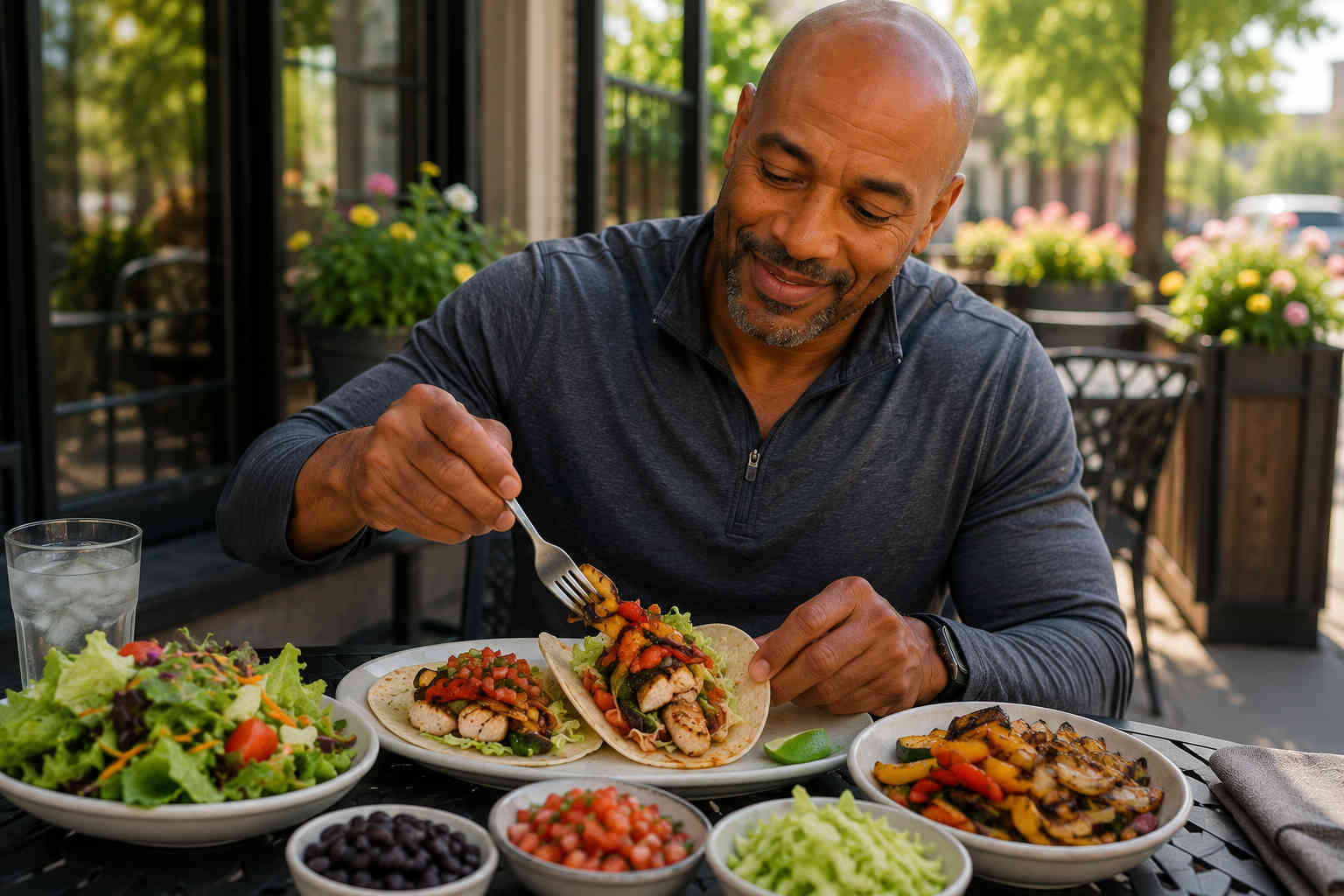
Add vegetables to tacos rather than simply eating fewer tacos. Add a large salad beside pizza instead of expecting two slices of pizza to magically satisfy an appetite accustomed to four.
You are not replacing your meal with vegetables. You are using vegetables to expand the meal without expanding the calories at the same rate.
Potatoes And Carbohydrates Do Not Automatically Ruin A Calorie Deficit
Many men begin dieting by declaring war on carbohydrates. Bread goes. Rice goes. Potatoes definitely go. Three weeks later they are standing in front of the refrigerator at 10 p.m.
You do not have to eliminate carbohydrates to create a calorie deficit. Instead, pay attention to how they are prepared and what accompanies them.
A potato is not the same meal as french fries. Oatmeal is not the same as a giant bakery muffin. Rice served alongside lean protein and vegetables is not the same as a restaurant entrée swimming in oil.
Carbohydrates can fit comfortably into a fat-loss diet. For many men, including a sensible portion of potatoes, rice, oats, beans, fruit, or whole grains makes the diet considerably easier to sustain.
The best calorie deficit is not the one with the longest list of forbidden foods. It is the one you can repeat.
Fiber Helps—But Do Not Turn It Into A Numbers Competition
Fiber-rich foods can play an important role in a filling calorie deficit. Beans, lentils, berries, apples, vegetables, oats, whole grains, and similar foods often provide useful food volume along with fiber.
A more useful strategy than chasing a fiber score is to get fiber from foods that improve the entire meal. Add beans to chili. Have fruit with breakfast. Include vegetables at dinner. Choose oatmeal rather than a tiny sugary breakfast. Have berries with Greek yogurt.
You are constructing meals that are harder to inhale in four minutes and easier to feel satisfied after eating.
Keep An Emergency Meal Available
One of the best ways to maintain a calorie deficit has nothing to do with nutrition science. It is having food available when life goes wrong.
You are supposed to cook dinner at 6:30. Instead, work runs late. You arrive home at 8:00 exhausted and hungry enough to eat the steering wheel.
Now you are deciding between cooking raw chicken for 35 minutes and ordering a 1,500-calorie restaurant meal that can be at your door before you change clothes. That is not an ideal moment for decision-making.
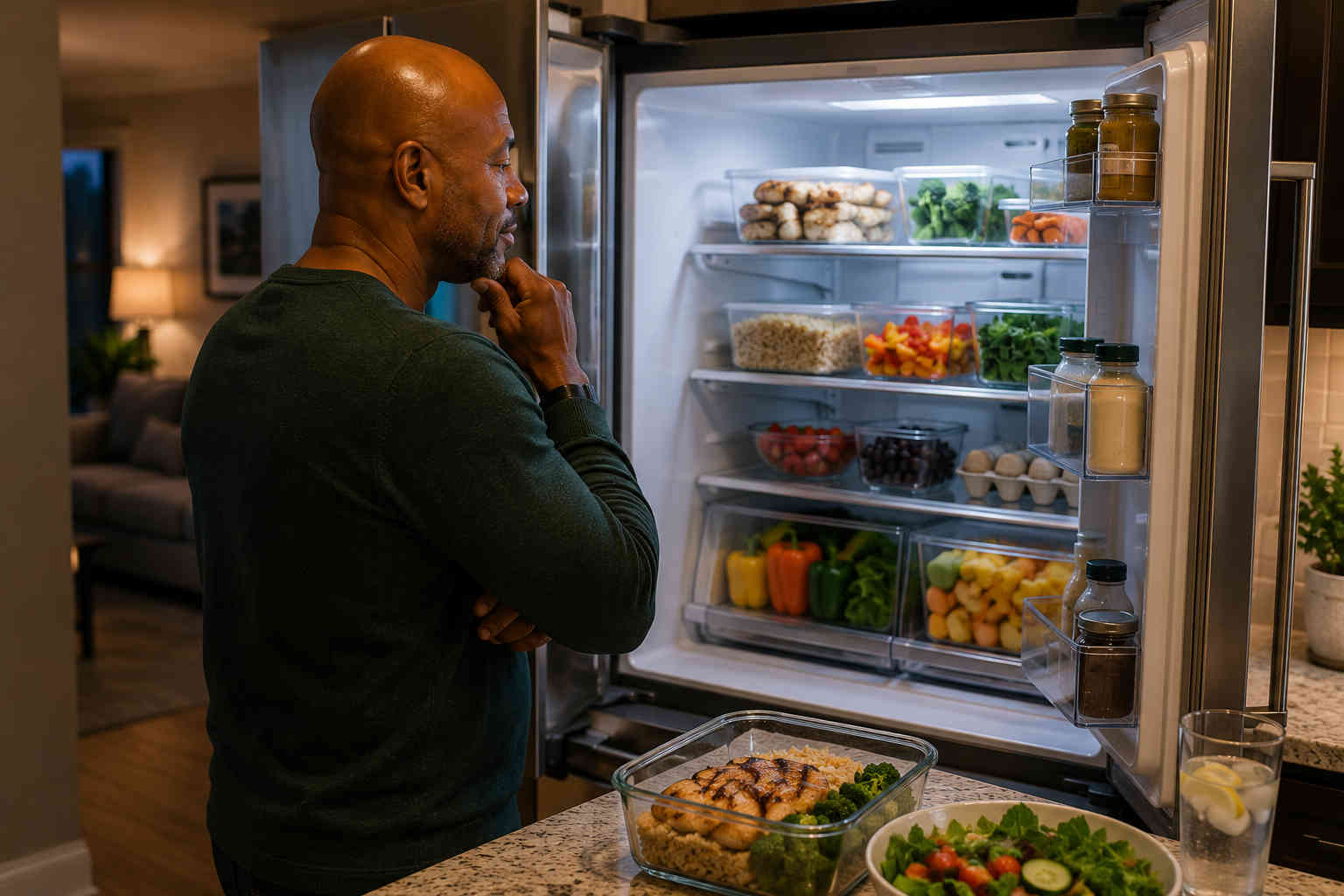
Create an emergency meal. It should be something you genuinely like, can prepare in about ten minutes, and can keep available most of the time.
Maybe it is frozen grilled chicken, microwave rice, and frozen vegetables. Maybe it is eggs, potatoes, and fruit. Maybe it is a bowl made with precooked chicken, beans, salsa, vegetables, and rice.
The exact meal does not matter. What matters is eliminating the moment when extreme hunger and zero preparation collide.
Create A “Hunger Budget,” Not Just A Calorie Budget
Here is a technique most calorie calculators will not give you. For one week, do not just record what you eat. Record when you are hungriest.
Use a simple 1-to-10 scale before each meal. You may discover something surprising.
Perhaps you are rarely hungry in the morning but ravenous after 7 p.m. If so, why are you forcing yourself to eat 600 calories before noon and leaving only a tiny dinner?
Maybe your difficult period is 3–5 p.m. In that case, deliberately reserving calories for a substantial afternoon snack could prevent overeating at dinner.
Think of your calories as resources. You do not have to distribute them equally throughout the day. Put more of them where your appetite tends to attack.
This is one of the biggest differences between following somebody else’s meal plan and creating a calorie deficit that actually fits your life.
Do Not Let The Weekend Erase The Week
You can create a modest calorie deficit Monday through Friday and unknowingly wipe it out during two restaurant-heavy days.
This does not mean your weekends need to become miserable. It means you need a weekend strategy.

If you are going out for dinner Saturday, eat normally during the day instead of starving yourself in anticipation. Get some protein earlier. Eat fruit or vegetables. Drink water.
Then enjoy dinner without arriving at the restaurant feeling like you have not eaten since Thursday.
The “I will save all my calories for tonight” strategy sounds logical. For someone prone to overeating when extremely hungry, it can backfire spectacularly.
Be Careful With Alcohol Calories
After divorce, drinking can easily become attached to relaxation, socializing, dating, watching sports, or simply filling an empty evening.
From a fat-loss perspective, alcohol creates two separate problems. First, the drinks themselves contain calories. Second, alcohol can make the food decisions that follow less deliberate.
The bigger problem may not be the two beers. It may be the wings, chips, pizza, or late-night takeout that suddenly seems like an excellent idea afterward.
You do not necessarily need to eliminate alcohol completely. But if weight loss has stalled, track it honestly. “Drinks” belong inside your calorie intake just as surely as breakfast does.

Do Not Make Your Deficit So Aggressive That Hunger Becomes Your Full-Time Job
If you are constantly thinking about food, your calorie deficit may simply be too large.
This is where patience matters. You may want to lose 30, 40, or 50 pounds. That does not mean you need to attack all of it this month.
An aggressive restriction that you tolerate for ten days is often less useful than a moderate approach you can maintain for months.
Your diet should require some attention. It should not require a daily battle.
If your meals are already built around protein, high-volume foods, reasonable fiber, and sensible portions and you are still intensely hungry all day, consider increasing your intake somewhat and accepting slower progress.
Sustainable weight loss is not slow because you are failing. Sometimes it is slow because you have finally stopped doing things you cannot maintain.
A Simple Calorie-Deficit Meal Formula
You do not need twelve meal-prep containers arranged across your refrigerator every Sunday night.
Use a repeatable formula: protein + high-volume food + satisfying carbohydrate + controlled extras.
For example: grilled chicken + roasted vegetables + potato + measured sauce. Lean ground beef + vegetables + rice + salsa. Eggs + vegetables + oatmeal + fruit. Fish + large salad + roasted potatoes + dressing. Greek yogurt + berries + oats + a controlled portion of nuts.
None of these combinations are revolutionary. That is the point.
A good fat-loss diet should eventually become boring in the best possible way: easy to understand, easy to shop for, easy to prepare, and easy to repeat.
Your Calorie Deficit Should Feel Like A New Normal
There is a version of weight loss where every day feels temporary. You are “on a diet.” You are waiting for the day you can eat normally again. You are counting down until the cheat meal. You are imagining the foods you will eat once you reach your goal weight.
That is dangerous because the old version of “normal” may be exactly what produced the weight you wanted to lose.
Instead, use your calorie deficit to construct your next normal.
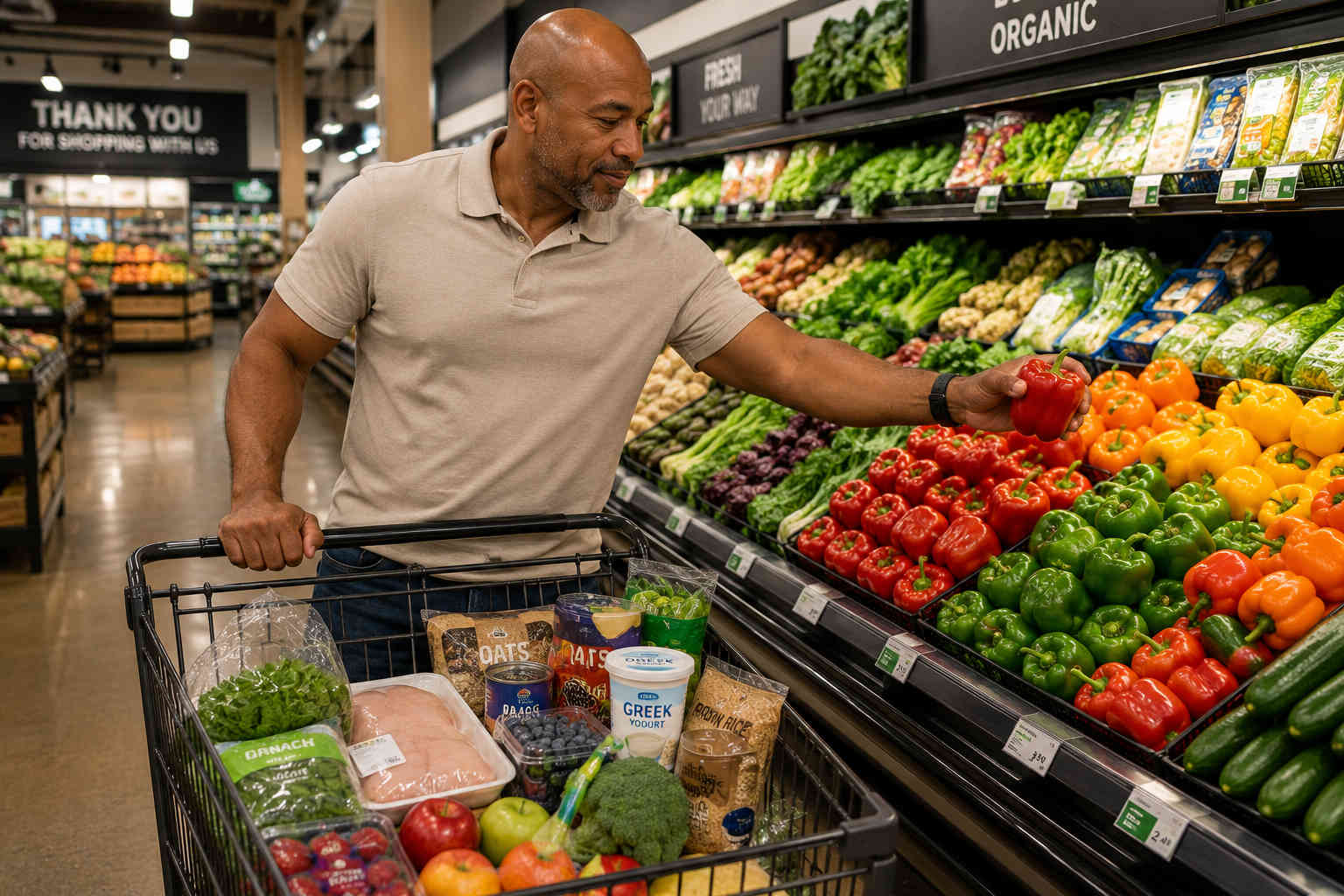
Find five breakfasts you like. Find five lunches you can make without thinking. Develop five or ten reliable dinners. Figure out which restaurant meals fit reasonably well. Learn which snacks actually stop your hunger. Identify the foods that are not worth their calories to you. Keep the foods you genuinely love and make room for them deliberately.
That is a body-transformation skill that remains useful long after the scale reaches your target.
You Should Not Have To Be Hungry All Day To Lose Weight
Some hunger during weight loss is normal. Constant hunger is not a requirement.
The solution is not finding a magical food that switches off your appetite. It is building a diet where several small advantages work together.
Eat enough protein. Use fruits, vegetables, soups, potatoes, beans, and other filling foods to increase meal volume. Be careful with calorie-dense extras that barely affect fullness. Place more of your calories during the hours when you are naturally hungriest. Keep an emergency meal available. Do not create a deficit so extreme that maintaining it becomes the central challenge of your day.
Most importantly, stop treating hunger as proof that your diet is working.
Your goal is not to see how little food you can survive on. Your goal is to learn how to create a calorie deficit without feeling hungry all day while developing an eating pattern that helps you lose the weight—and gives you a realistic chance of keeping it off.
After divorce, rebuilding your body is not about punishing yourself for how you ate during a difficult chapter of your life. It is about learning how to eat for the man you are becoming next.

The Sustainable Deficit Rule
Make The Diet Easier To Repeat, Not Harder To Endure
Build meals around protein, food volume, useful carbohydrates, controlled extras, and the times you are genuinely hungry. A calorie deficit works best when it feels like a routine you can keep—not a punishment you are waiting to escape.