Belonging Matters More Than Stuff
Stop Thinking Of Your Children As Guests
After a divorce, one of the hardest adjustments for a father is realizing that his children may no longer think of his house as home.
They may call it “Dad’s house.” They may arrive carrying backpacks, chargers, clothes, schoolwork, and everything else they expect to take back with them. Even if they love spending time with you, they can sometimes behave more like weekend visitors than children returning to a place that belongs to them.
That can hurt.
Your first instinct might be to solve the problem by buying things. A bigger television. A new game system. Expensive bedroom furniture. More toys. Maybe even a larger house.
But children usually do not develop a sense of home because of what a father buys. They develop it through something much simpler: belonging.
Your children need to know that there is a permanent place for them in your life, and your house should quietly communicate that message every time they walk through the door.
You do not need a perfect house to accomplish that. You do not need a large house, either. Even if you are living in a small apartment after divorce, you can create a place where your children feel comfortable, secure, and genuinely at home.
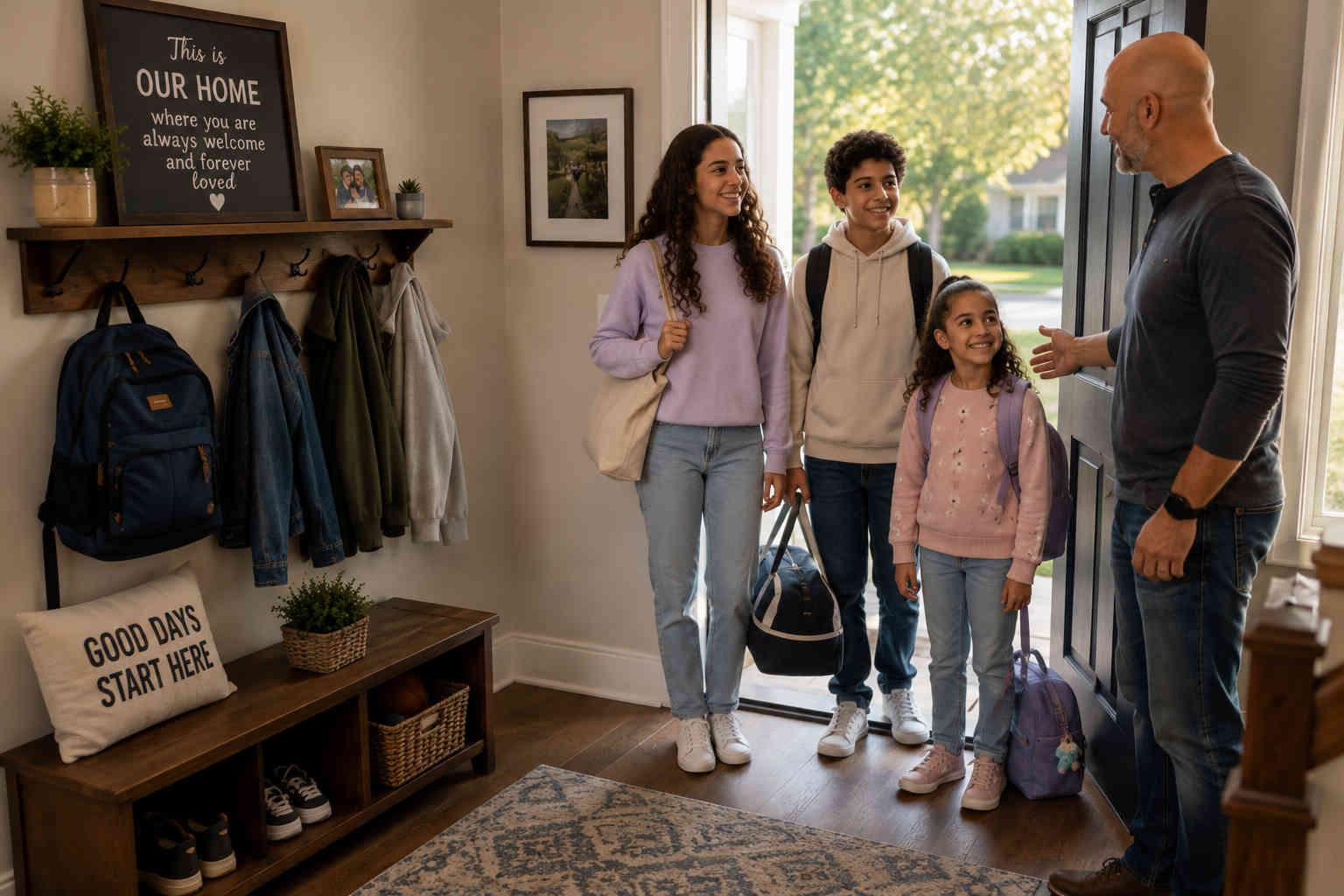
One of the easiest mistakes divorced fathers make is unintentionally treating their children like visitors. You clean everything before they arrive. You prepare activities. You ask what they want to eat. You entertain them throughout the weekend. Then Sunday evening comes, they leave, and everything returns to your normal routine.
There is nothing wrong with wanting your children to enjoy their time with you. The problem comes when every visit feels like a carefully planned event.
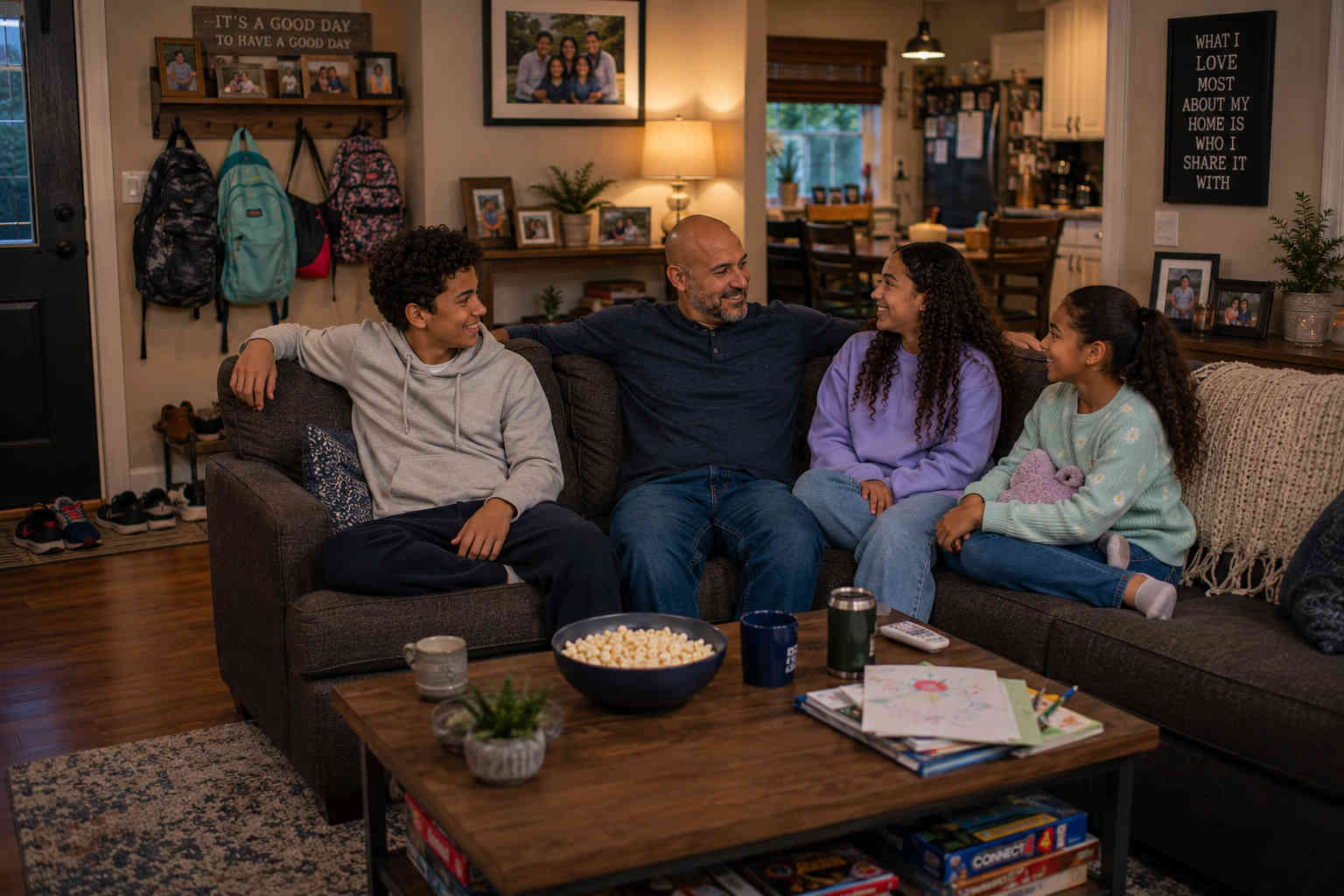
Home is not an event. At home, children are allowed to be bored. They open the refrigerator without asking. They leave shoes near the door. They disappear into their bedroom for an hour. They complain about homework. They help carry groceries inside. Sometimes everybody sits in the same room without talking.
Those ordinary moments matter. If you are constantly trying to make every parenting weekend memorable, you may accidentally create something closer to a vacation than a home. Give your children permission to simply live with you.
Give Them Space That Permanently Belongs To Them
Your children need physical evidence that they belong in your house even when they are not there.
Ideally, that means having their own bedroom. But that is not possible for every divorced father. You may have moved into a smaller apartment. Several children may need to share a bedroom. You may even live somewhere without enough bedrooms to give your children a dedicated room.
That is okay. The important thing is that they have something permanent.
Give each child a dresser drawer, shelf, closet section, nightstand, storage container, or other space that belongs exclusively to them. Do not reclaim it when they leave.
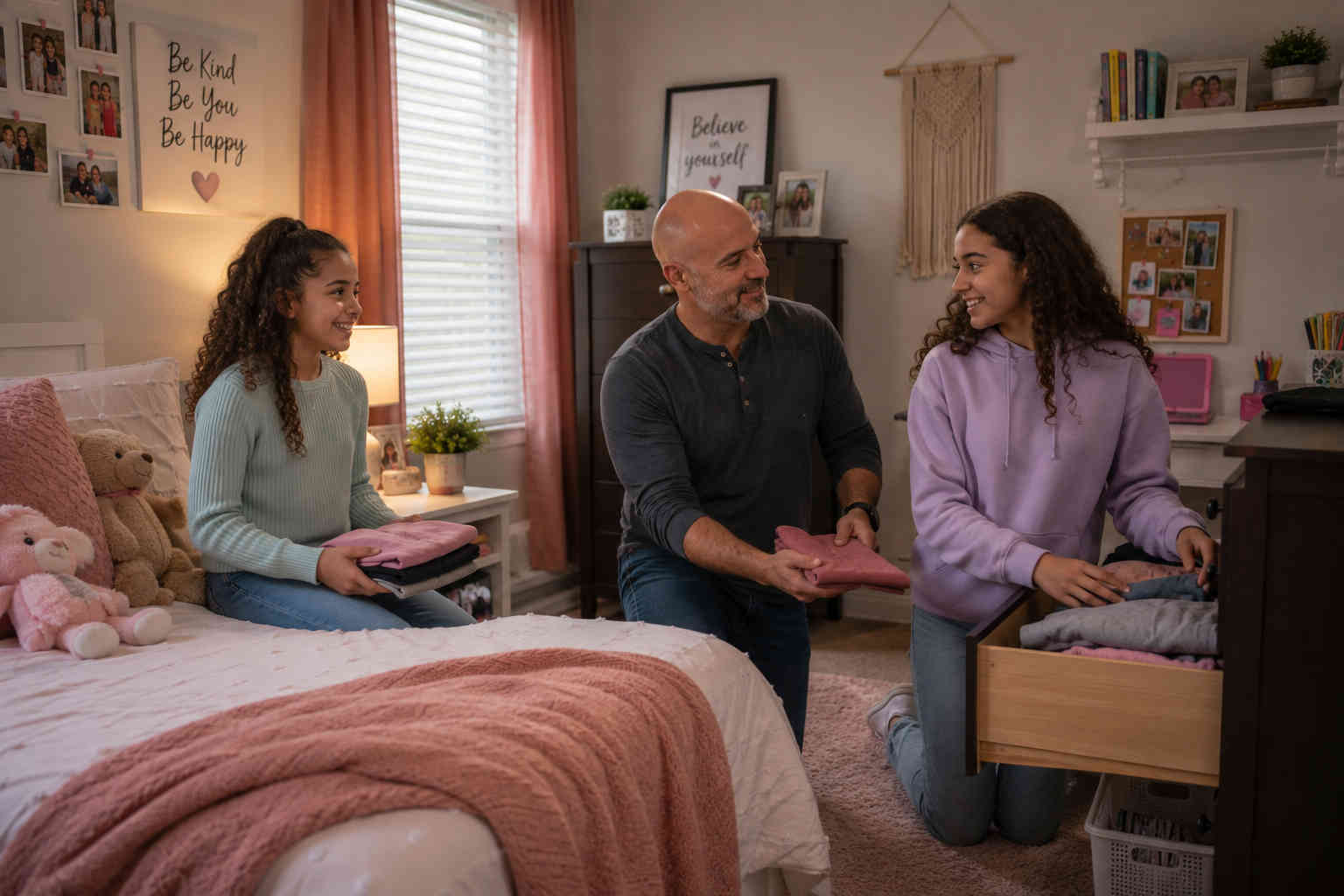
A child should not arrive every Friday and feel as though you are preparing temporary accommodations. Their toothbrush should already be there. Their pajamas should be there. Their favorite cereal might be in the pantry. Their shampoo can stay in the bathroom. Their books can remain on a shelf.
Those small things communicate something important: You live here too.
Let Their Bedroom Look Like Their Bedroom
If your children have their own room at your house, resist the temptation to design it entirely yourself.
You may prefer neutral walls and matching furniture. Your daughter may want photographs covering the wall. Another child may want sports posters or shelves filled with collectibles that do not match anything else in the room.
Within reasonable limits, let them make those choices.
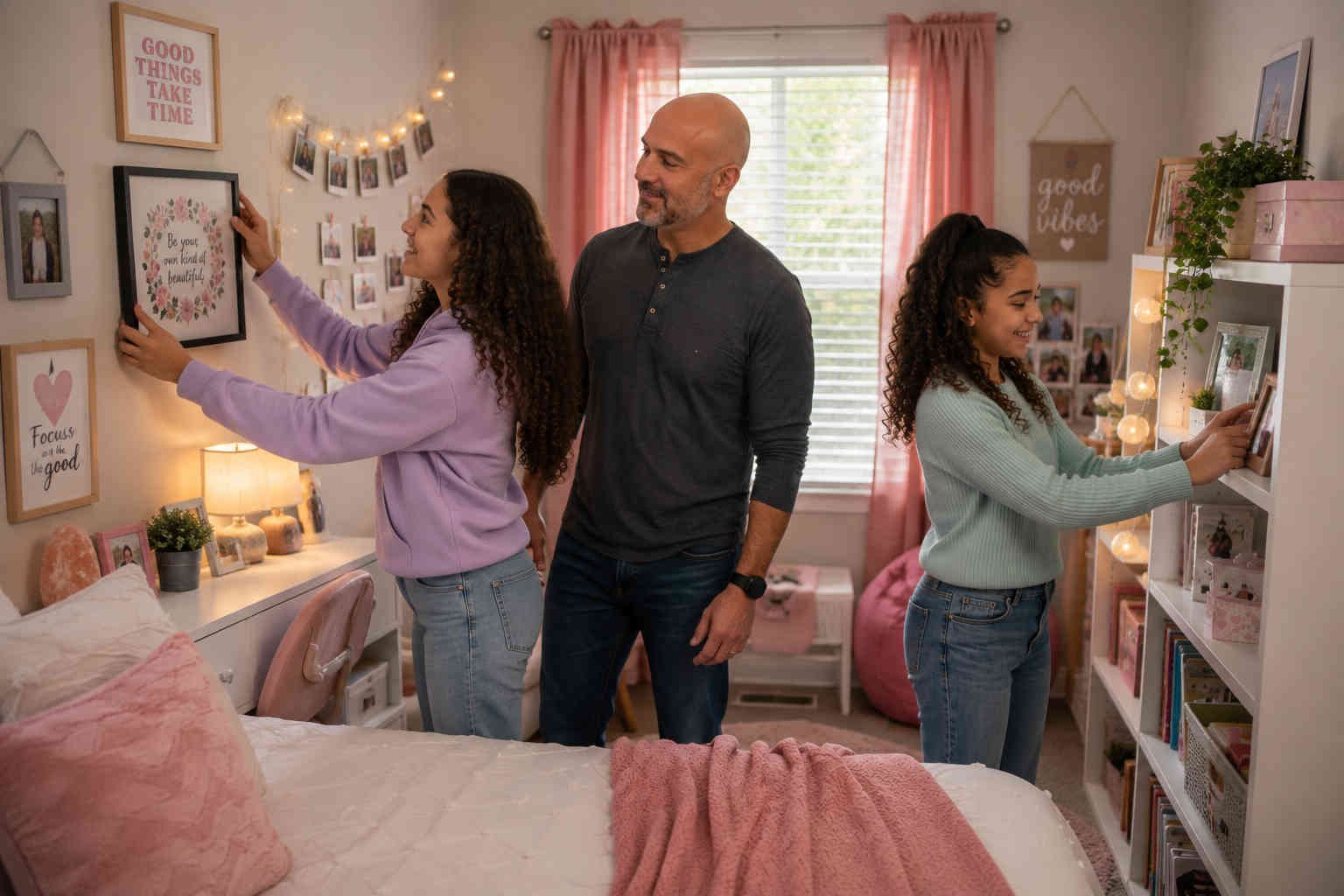
Ask what they want. Maybe they want a different comforter. Maybe they want shelves for collectibles. Maybe they want a reading lamp beside the bed or a corkboard for pictures.
You do not have to spend thousands of dollars remodeling the room. Small decisions create ownership. Even choosing where the bed goes can matter.
When children participate in creating their space, the room stops feeling like the bedroom Dad prepared for them. It becomes their room at Dad’s house. That is an important difference.
Keep Everyday Things At Your House
Nothing reinforces the feeling of being a visitor quite like living out of a suitcase.
Obviously, children will sometimes need to bring things between homes. School supplies, sports equipment, favorite clothing, and other belongings may travel with them. But whenever practical, keep basic necessities at your house.
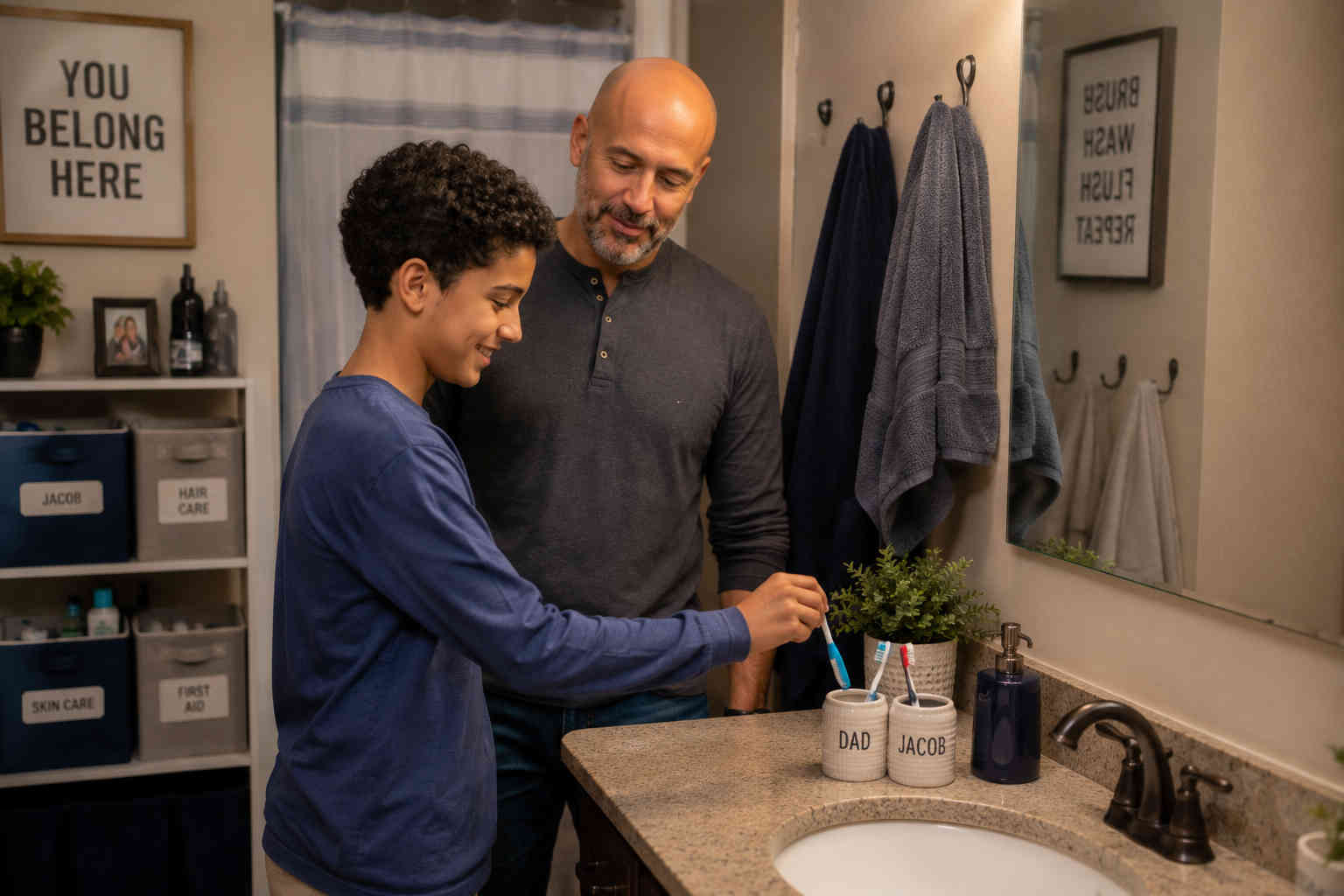
- Toothbrushes and toiletries
- Pajamas
- Socks and underwear
- Everyday clothes
- Shoes
- Phone chargers
- School supplies
- Hair products
- Favorite snacks
- Books
You do not have to duplicate everything they own. You are simply trying to eliminate the feeling that they are checking into your house for the weekend.
Put Evidence Of Your Children Throughout The House
Walk around your house and look at it from your child’s perspective. If someone entered without knowing anything about you, would they realize children lived there? Or does your home look like a bachelor’s house where children occasionally visit?
You do not need to transform every room into a shrine to your kids. But there should be visible evidence that they are part of the household.
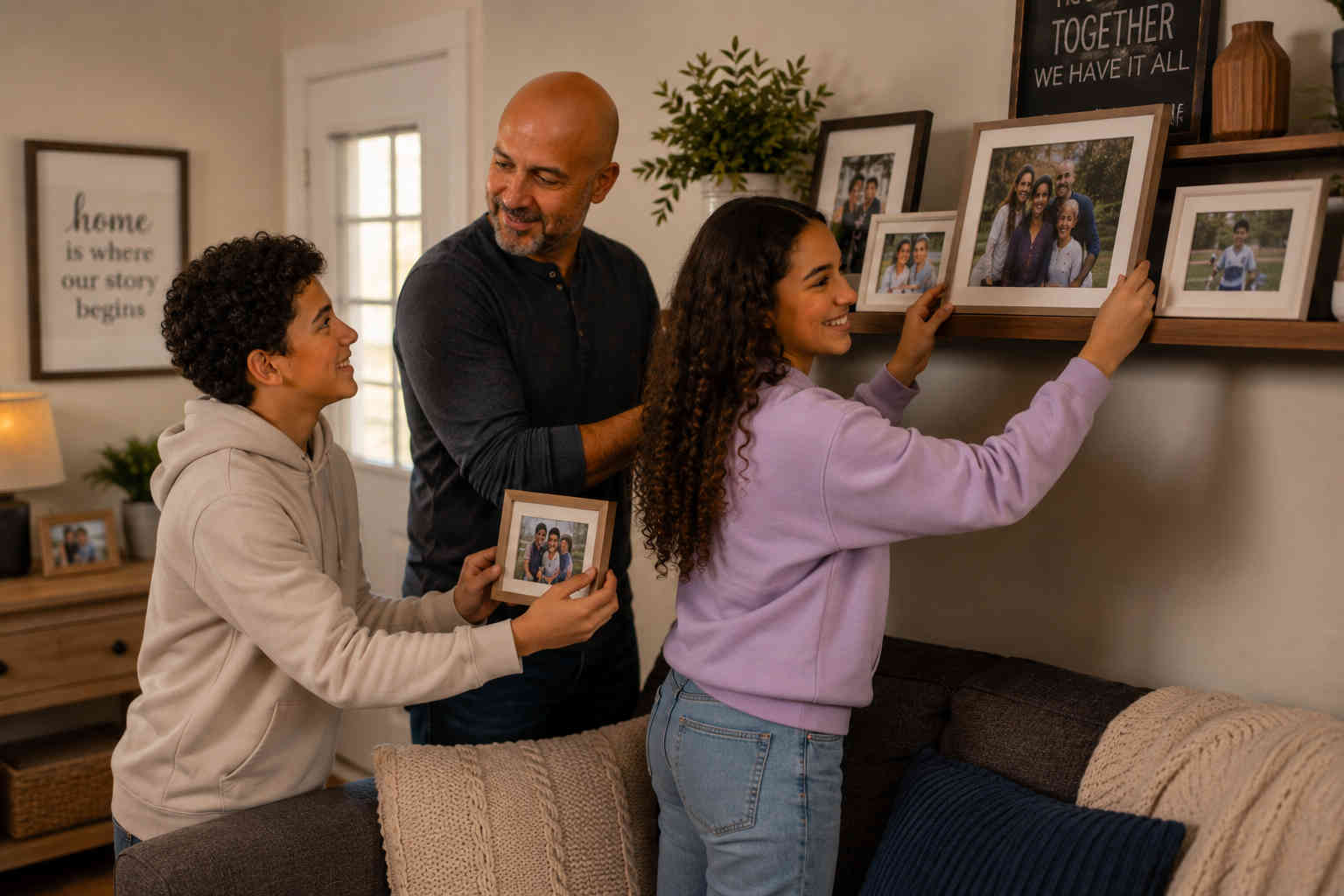
Put family photographs on the walls. Display one of your daughter’s drawings. Keep your son’s soccer picture on a shelf. Put a school photograph on the refrigerator. Maybe there is a family picture from a camping trip in the hallway.
These are not merely decorations. Children notice them. A photograph displayed in your home quietly tells your child, You are part of my life here.
Create Routines They Can Count On
A sense of home is not created entirely by physical surroundings. It is also created by predictability.
Children should gradually know what life at your house feels like. Maybe Friday night means homemade pizza. Saturday morning might mean pancakes. Perhaps Sunday afternoon means everyone gets their things ready for the upcoming school week.
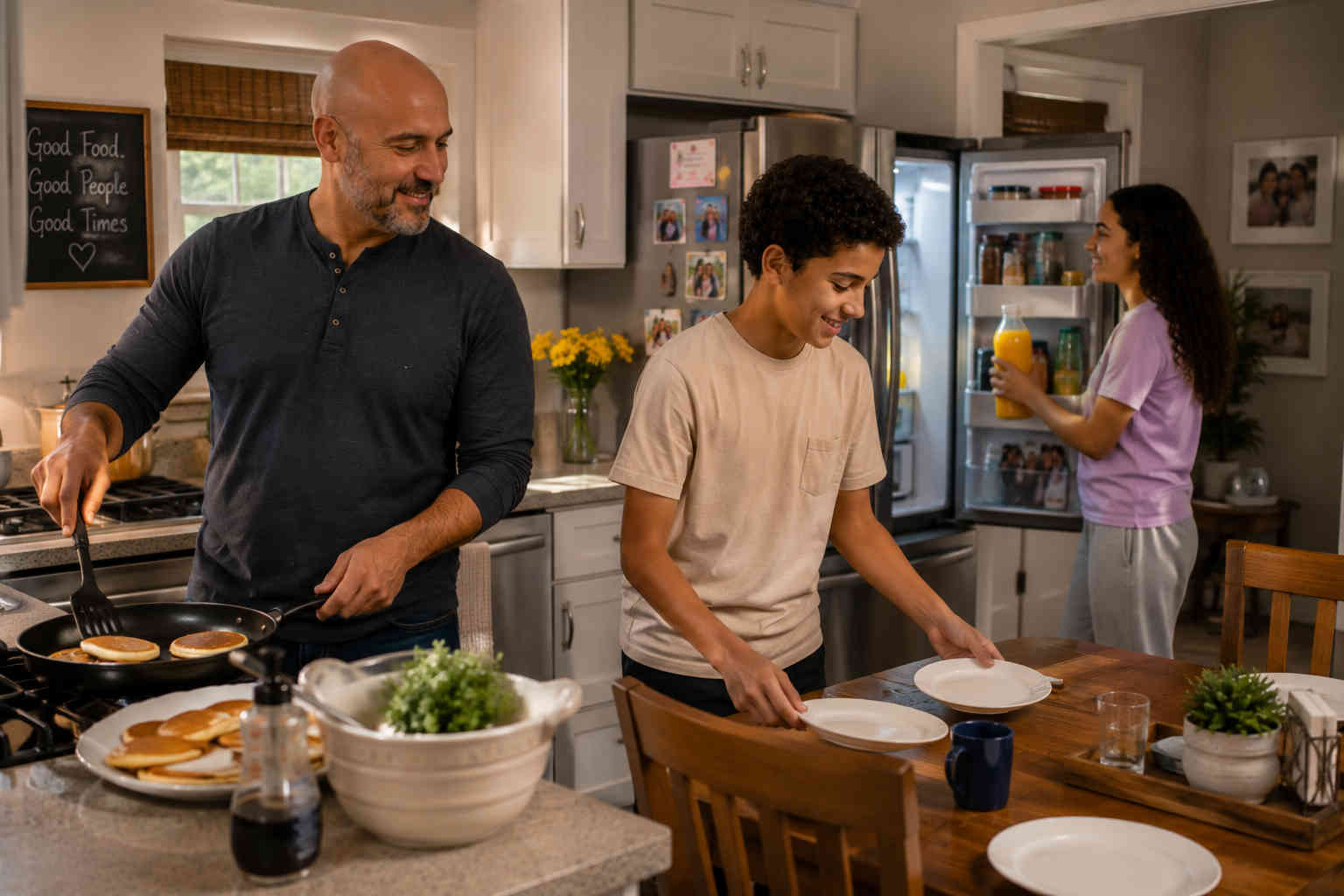
The routines do not have to be elaborate. In fact, ordinary traditions are often better. Your children may eventually forget an expensive amusement park trip. They may never forget that Saturday mornings at Dad’s house meant pancakes, music in the kitchen, and everyone sitting around the table talking.
Routines create familiarity. Familiarity creates comfort. And comfort creates home.
Let Them Help With The House
If you want children to feel like they live somewhere, allow them to participate in taking care of it. That includes chores.
This can seem counterintuitive, especially if you have limited parenting time. You might think, “I only have them for two days. I do not want them cleaning.” But chores are not punishment. They are participation.

Ask your child to help unload groceries. Have your son take out the trash. Ask your daughter to help prepare dinner. Let younger children help feed a pet, water plants, or put their clothes away.
When everyone contributes, the house becomes a shared environment instead of Dad’s property. There is another benefit: your children experience real life with you. Sometimes you are cooking dinner. Sometimes you are folding laundry. Sometimes the garage needs cleaning. Those mundane experiences are exactly the kinds of experiences families have at home.
Do Not Compete With Their Other Home
After divorce, fathers can fall into a dangerous trap: comparing their house to their children’s mother’s house.
Maybe she has a larger home. Maybe the children have bigger bedrooms there. Maybe there is a swimming pool. Or perhaps the opposite is true and you are tempted to emphasize how much nicer your house is.
Do not.
Your children should not feel that they are participating in a competition between parents. If your child says, “Mom has a bigger TV,” you do not need to buy a bigger television. If they say, “My bedroom at Mom’s is bigger,” you do not need to defend yourself.
Your goal is not to build the better house. Your goal is to build your children’s other home.
Make Room For Their Friends
As children get older, friendships become increasingly important. If your children never feel comfortable inviting friends to your house, your home may remain disconnected from an important part of their lives.
When practical, make your house a place where friends are welcome.
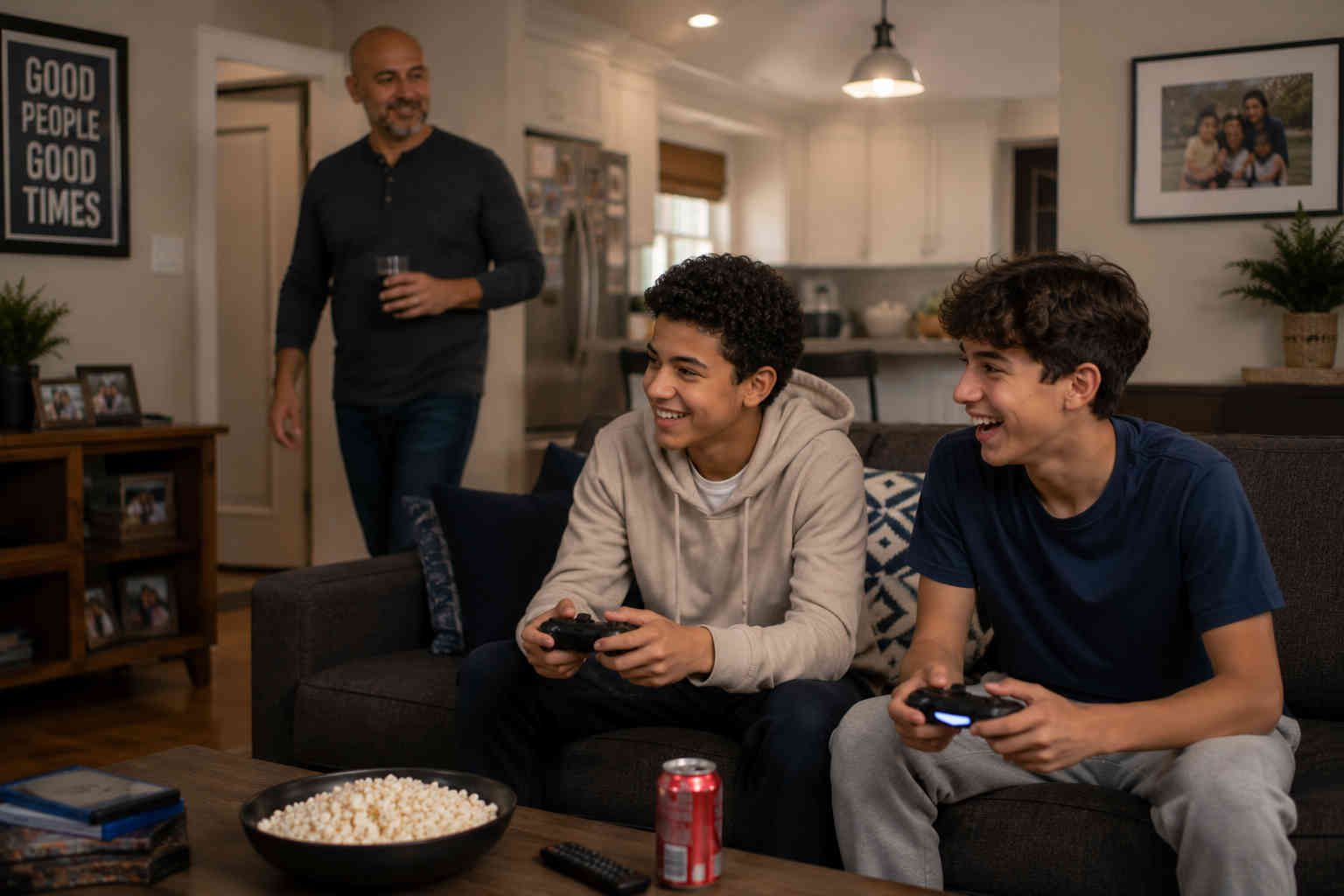
Your son might want a friend to come over and play video games. Your daughter might want a friend to spend the afternoon with her. Let that happen.
You do not need to become the neighborhood entertainment center. You simply want your children to understand that their social lives do not have to stop when they arrive at Dad’s house.
This becomes particularly important with teenagers. A teenager who believes every weekend with Dad means being separated from friends may begin resisting parenting time. A teenager who can integrate Dad’s house into normal life has less reason to see it as an interruption.
Stock Food They Actually Eat
Food is one of those small details that makes a surprising difference. Pay attention to what your children actually eat and keep some of their regular foods in your kitchen, not only special treats you buy when they are coming over.
Maybe your daughter eats yogurt every morning. Maybe your son likes a particular cereal. Maybe one child loves apples and another always wants peanut butter sandwiches.
You do not have to fill the pantry with junk food to become the “fun parent.” You are creating familiarity. There is something comforting about a child opening Dad’s refrigerator and automatically knowing where the orange juice is.
Give Them Some Control Over The Environment
Children have very little control over divorce. They did not choose two houses. They did not create the custody schedule. They did not decide which parent would live where.
Giving them some reasonable control over your home can therefore be surprisingly meaningful. Ask for their opinions.
“Where should we put this picture?” “What do you think we should plant outside?” “Should we put the couch here or against the other wall?” “What should we make for dinner Saturday?”
Not every decision should belong to the children. You are still the parent. But involving them in small household decisions reinforces the idea that this is a shared family space.
Let Quiet Moments Happen
One of the strongest signs that children feel at home is that they stop expecting you to entertain them.
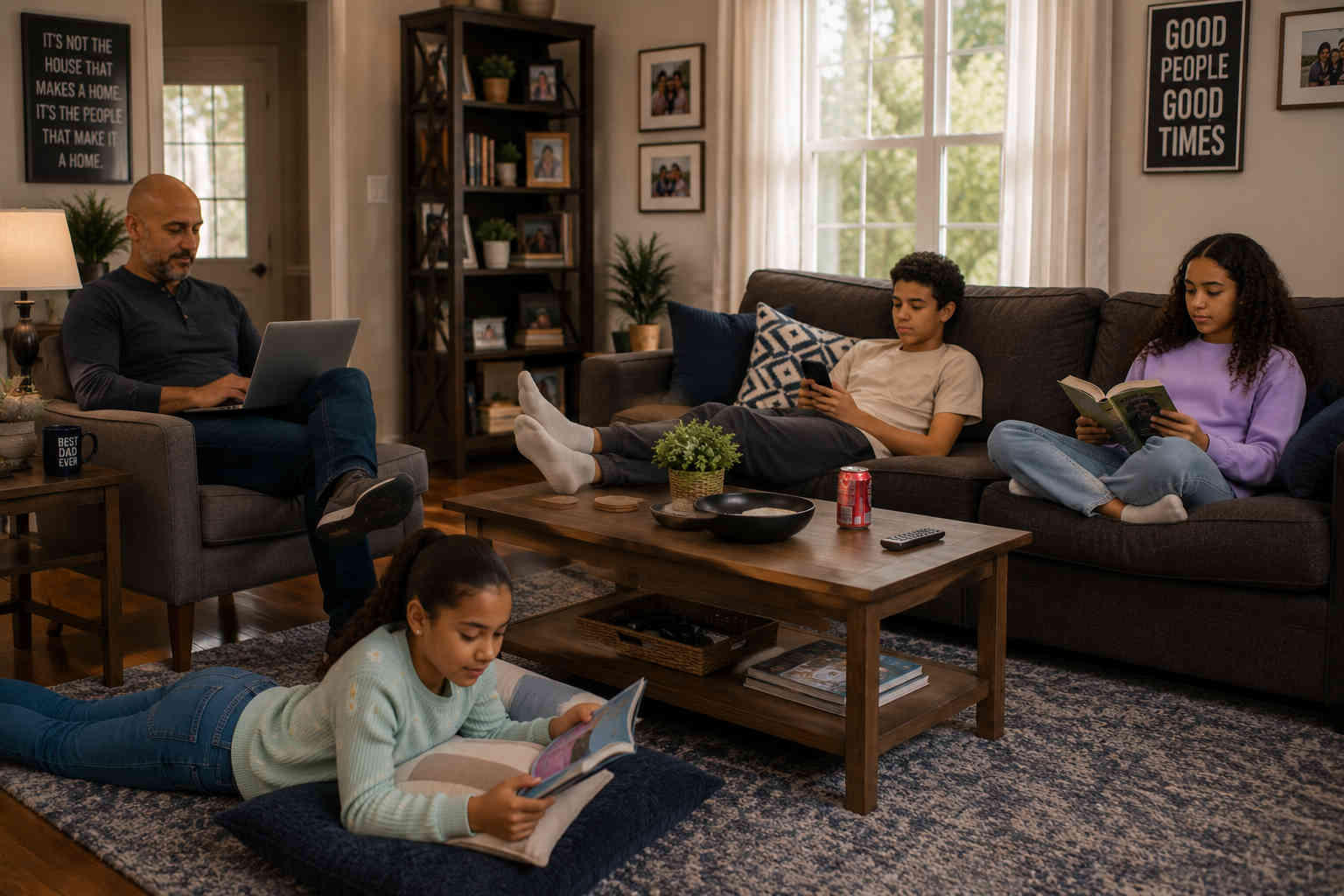
Your son is lying on the couch watching something on his phone. Your daughter is upstairs reading. Your younger child is on the floor with a book. You are paying bills or working on a laptop.
Nobody is doing anything particularly memorable. That is okay.
Do not immediately think you are wasting your limited parenting time. You are experiencing something valuable: normal family life.
Children need exciting memories with their fathers, but they also need ordinary memories. They need to remember Dad making coffee in the morning. Dad mowing the lawn. Dad cooking dinner. Dad sitting nearby while they did homework.
Home is built largely from ordinary moments repeated hundreds of times.
Make Your Presence The Most Comfortable Part Of The House
You can create beautiful bedrooms, stock favorite foods, hang family photographs, and establish traditions. But none of it matters if your children do not feel emotionally comfortable around you.
The atmosphere you create matters more than the furniture.
Can your children tell you they made a mistake without immediately fearing your reaction? Can they disagree with you respectfully? Can they talk about what is happening at their other home without worrying that you will become angry? Can they mention their mother without feeling like they are betraying you?
Can they tell you they are sad? Can they admit that sometimes they miss their other parent while they are staying with you?
Your house becomes home when your children feel emotionally safe inside it. That does not mean having no discipline or boundaries. Children benefit from reasonable rules. But there should be a fundamental sense that Dad’s love is not conditional.
Do Not Measure Success By How Excited They Are To Arrive
Children are not always going to burst through your front door shouting, “I love Dad’s house!” Especially teenagers.
Sometimes they will arrive tired. Sometimes they will be annoyed. Sometimes they will immediately disappear into their bedroom. Sometimes they will complain that they left something at their other house.
Do not interpret every mood as a judgment of you.
Think about how children behave in a home where they feel completely secure. They do not perform gratitude. They simply exist.
In an odd way, your child walking into your kitchen, opening the refrigerator without saying hello, grabbing a drink, and collapsing onto the couch might be evidence that you have succeeded.
He is not visiting. He is home.
Home Is Something You Build Over Time
After divorce, you may desperately want your children to immediately feel comfortable in your new house. Give it time.
A sense of home develops gradually. It happens after dozens of breakfasts at the same kitchen table. It happens when your daughter knows exactly which bathroom drawer contains the toothpaste. It happens when your son’s jacket has been hanging in the hallway closet for six months.
It happens when photographs accumulate on the refrigerator. It happens through birthday mornings, rainy Saturdays, homework arguments, movie nights, burnt dinners, conversations in the kitchen, and quiet Sunday afternoons.
Eventually, the house begins accumulating memories. And memories give places meaning.
Final Thoughts
Your children do not need you to recreate the home that existed before your divorce. That chapter of your family’s life has changed.
What they need is reassurance that although the family structure changed, their place in your life did not.
You communicate that through hundreds of small things: a toothbrush that stays in the bathroom, a drawer nobody else uses, their picture hanging in the hallway, their favorite cereal in the pantry, a familiar Saturday breakfast, a bedroom they helped decorate, and a father who listens when they talk.
None of those things are particularly expensive. But together they communicate one of the most important messages a divorced father can give his children: You are not visiting me. You belong here.
The Rule To Remember
Do Not Build A Better House. Build Their Other Home.
Your children do not need expensive entertainment or a perfect second household. They need permanence, participation, emotional safety, and ordinary routines that quietly tell them they belong.