
A Smarter Grocery Decision
Fresh Is Not Automatically The Healthiest Choice
Walk through the produce section of almost any grocery store and it is easy to assume you are looking at the healthiest vegetables in the building. Everything is brightly colored, neatly stacked, and labeled “fresh.” A few aisles away, frozen broccoli and peas are sitting in plastic bags behind a freezer door.
Fresh must be better, right?
Not necessarily.
For men trying to improve their diet, lose weight, rebuild healthier routines, or simply stop relying on takeout, the frozen vs. fresh vegetables debate can become an unnecessary obstacle. You may spend extra money on fresh vegetables because they seem healthier, only to throw half of them away a week later.
Meanwhile, an inexpensive bag of frozen vegetables might have made it onto your dinner plate three times.
That distinction matters.
The healthiest vegetable is not automatically the one that looked best when you bought it. It is the one that delivers useful nutrition and actually gets eaten.
So, are frozen vegetables as healthy as fresh vegetables? In many situations, the nutritional difference is surprisingly small. Sometimes frozen vegetables may even retain certain nutrients better than fresh vegetables that have spent several days traveling, sitting in a supermarket, and waiting in your refrigerator.
The better question, therefore, isn't simply, “Which is healthier?”
Which vegetables should you buy fresh, which ones make sense frozen, and which choice makes it easier for you to eat vegetables consistently?
Why “Fresh” Doesn't Always Mean Freshly Picked
When most people hear the word fresh, they picture vegetables coming out of the ground and reaching the dinner table shortly afterward.
Unless you grow your own vegetables or buy locally harvested produce, that is often not what happens.
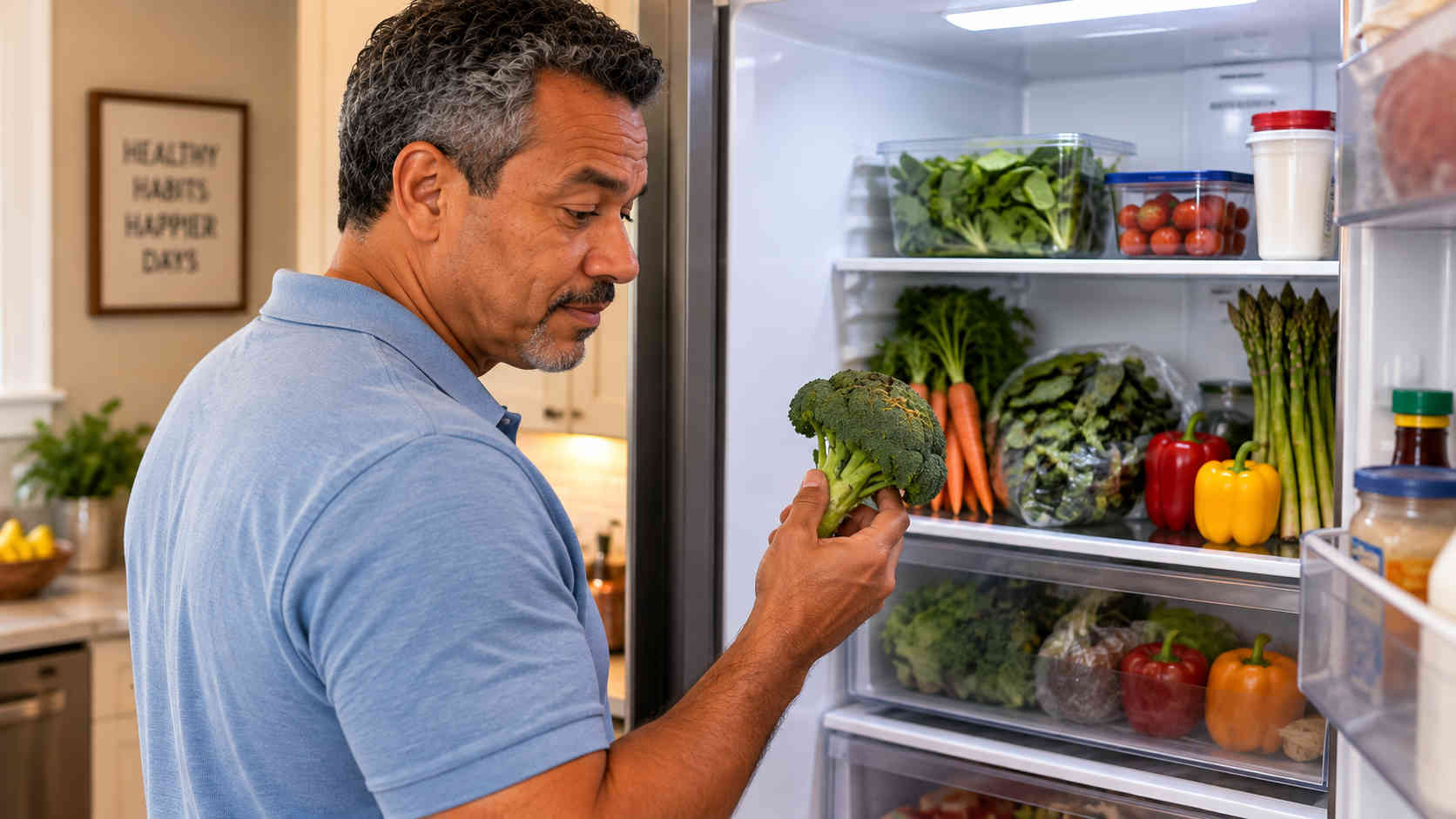
Vegetables sold in supermarkets may travel considerable distances before reaching the produce department. They can spend time being transported, stored, displayed, purchased, refrigerated at home, and finally cooked.
During that time, the vegetable is still changing.
Some vitamins are sensitive to storage conditions, oxygen, light, and temperature. Vitamin C is one example. Fresh produce can gradually lose some of these nutrients after harvesting.
This doesn't suddenly make supermarket vegetables unhealthy. Far from it. Fresh vegetables remain excellent sources of fiber, vitamins, minerals, and plant compounds.
But it does challenge the idea that a vegetable automatically has superior nutritional value simply because it has never been frozen.
A head of broccoli harvested recently and eaten tonight may have an advantage over frozen broccoli in certain nutrients. That same broccoli sitting in your refrigerator for six days before you finally cook it is a different comparison.
Research comparing fresh, refrigerated, and frozen produce has found that vitamin content in frozen fruits and vegetables can be comparable to fresh and, in some cases, higher than produce stored in the refrigerator for several days.
That is the part of the frozen-versus-fresh debate that often gets overlooked.
What Happens To Vegetables Before They're Frozen?
Frozen vegetables don't normally begin as old vegetables that couldn't be sold fresh.
Commercially frozen vegetables are generally harvested and processed relatively quickly. Before freezing, many vegetables are briefly heated through a process called blanching.
Blanching helps slow enzyme activity that would otherwise affect color, flavor, and texture during storage. After blanching, the vegetables are rapidly cooled and frozen.
There is a nutritional tradeoff.
Heat can reduce some heat-sensitive and water-soluble nutrients, particularly vitamin C and certain B vitamins. That means freezing isn't a magical process that preserves every nutrient at exactly the level found at harvest.
But once vegetables are frozen, many nutrients remain relatively stable during storage.
This creates an interesting comparison.
Fresh vegetables may start with higher levels of certain nutrients but gradually lose some during transportation and refrigeration. Frozen vegetables may lose some nutrients during processing but then preserve much of what remains.
Studies comparing vegetables such as broccoli, corn, green beans, peas, spinach, and carrots have generally found that frozen produce remains nutritionally comparable to fresh produce across many nutrients.
In other words, your freezer is not where vegetable nutrition goes to die.
Frozen vs. Fresh Vegetables: Which Has More Nutrients?
There isn't one winner because vegetables contain many different nutrients, and those nutrients respond differently to processing, storage, and cooking.
Vitamin C may decline under conditions that barely affect minerals. Fiber is generally quite stable. Carotenoids behave differently from B vitamins. Different vegetables also respond differently to blanching and freezing.
That's why claims such as “fresh vegetables have more nutrients” or “frozen vegetables are actually healthier” oversimplify the issue.
For most men, the practical nutritional differences between plain frozen vegetables and reasonably fresh vegetables are unlikely to matter nearly as much as how many vegetables you actually eat.
Consider two dinners.
Dinner A contains grilled chicken, rice, and no vegetables because the fresh spinach you bought eight days ago turned slimy.
Dinner B contains grilled chicken, rice, and two handfuls of frozen broccoli microwaved with garlic and black pepper.
There is little value in arguing that fresh spinach could have provided slightly more of a particular nutrient. You didn't eat it.
Consistency beats theoretical nutritional perfection.

The Hidden Health Advantage Of Frozen Vegetables: Less Waste
Food waste rarely appears on nutrition labels, but it can have a major effect on how well you eat.
This is especially relevant if you're cooking for one.
Buying fresh produce for a family of four is relatively easy because vegetables disappear quickly. A man shopping only for himself has a different problem.
You buy spinach, a head of broccoli, a bunch of asparagus, several peppers, carrots, mushrooms, and perhaps salad greens.
It looks like a healthy shopping cart.
Then real life happens.
You work late Tuesday. Wednesday you eat leftovers. Thursday someone suggests dinner out. Friday you don't feel like cooking.
By Saturday, several vegetables are approaching the point where you either eat them immediately or throw them away.
Frozen vegetables remove much of that pressure.
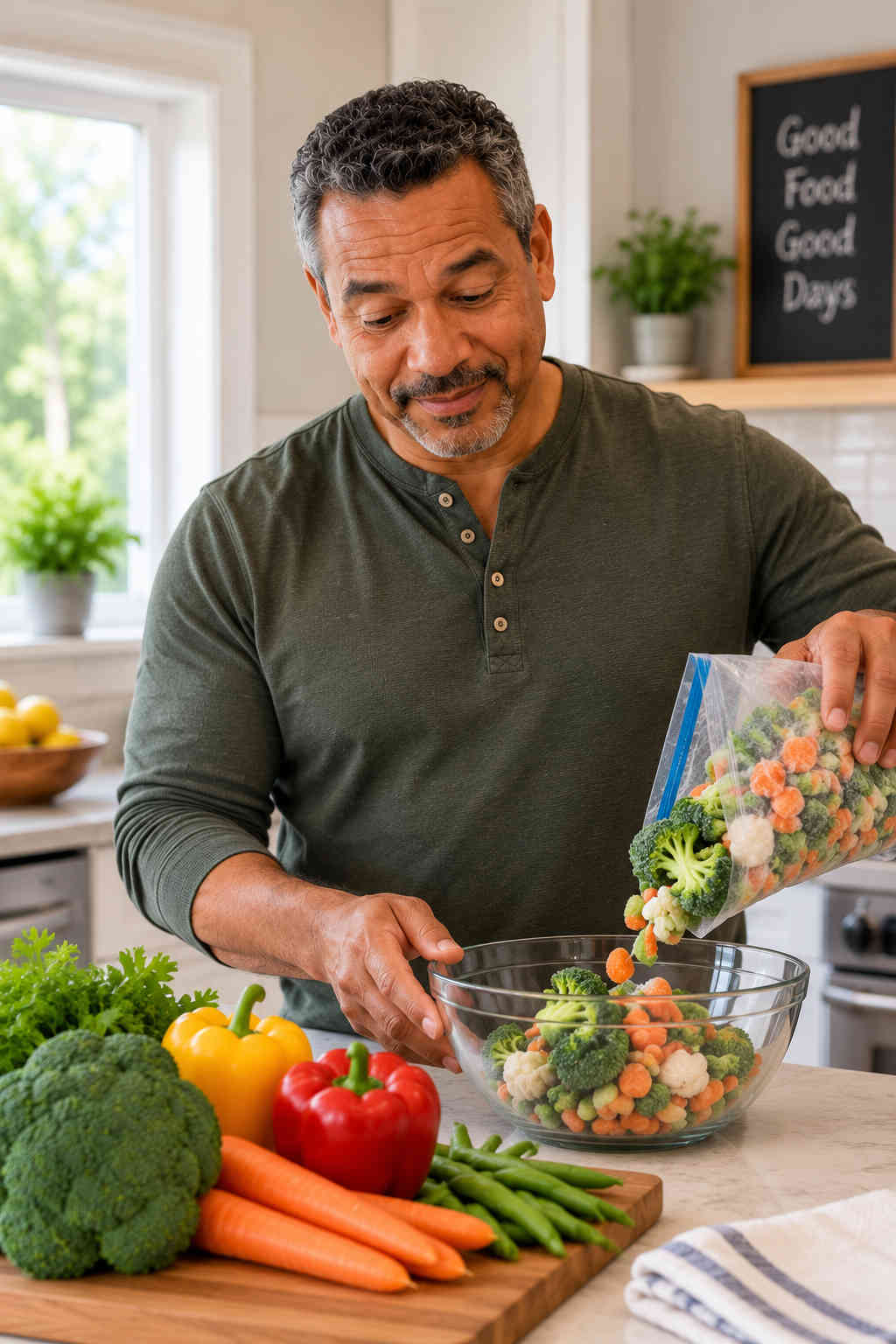
You can pour out exactly what you need and put the rest back in the freezer. That makes frozen vegetables particularly useful for men who live alone, travel frequently, work unpredictable hours, or are still learning how to plan meals.
The nutritional advantage isn't merely what is inside the bag.
It's the fact that the bag is still usable when you need it.

Frozen Vegetables Can Make Weight Loss Easier
If you're trying to lose weight after divorce or simply get leaner as you get older, vegetables can make meals considerably more filling without adding many calories.
But convenience matters.
When you're hungry at 7:30 p.m., you probably aren't interested in a 40-minute vegetable preparation ritual.
A bag of frozen vegetables can eliminate several steps. There may be no washing, peeling, trimming, or chopping.
Put frozen broccoli in a microwave-safe bowl. Add a small amount of water if necessary. Cook it. Season it. Dinner has a vegetable.
You can do the same with green beans, cauliflower, mixed vegetables, spinach, or peas.
That convenience can help change the proportions of your meals.
Instead of a large serving of pasta with a tiny side of vegetables, you can easily use a smaller portion of pasta and add a large serving of broccoli.
Instead of eating two large servings of rice with chicken, use one serving of rice and add green beans or a vegetable blend.
You're not “dieting” so much as changing what occupies space on your plate.
For sustainable weight control, that can be far more useful than obsessing over whether your broccoli was previously frozen.
But Not Every Bag In The Frozen Vegetable Aisle Is Equal
There is an important catch.
Frozen vegetables and frozen vegetable dishes are not necessarily the same thing.
A bag containing only broccoli is straightforward.
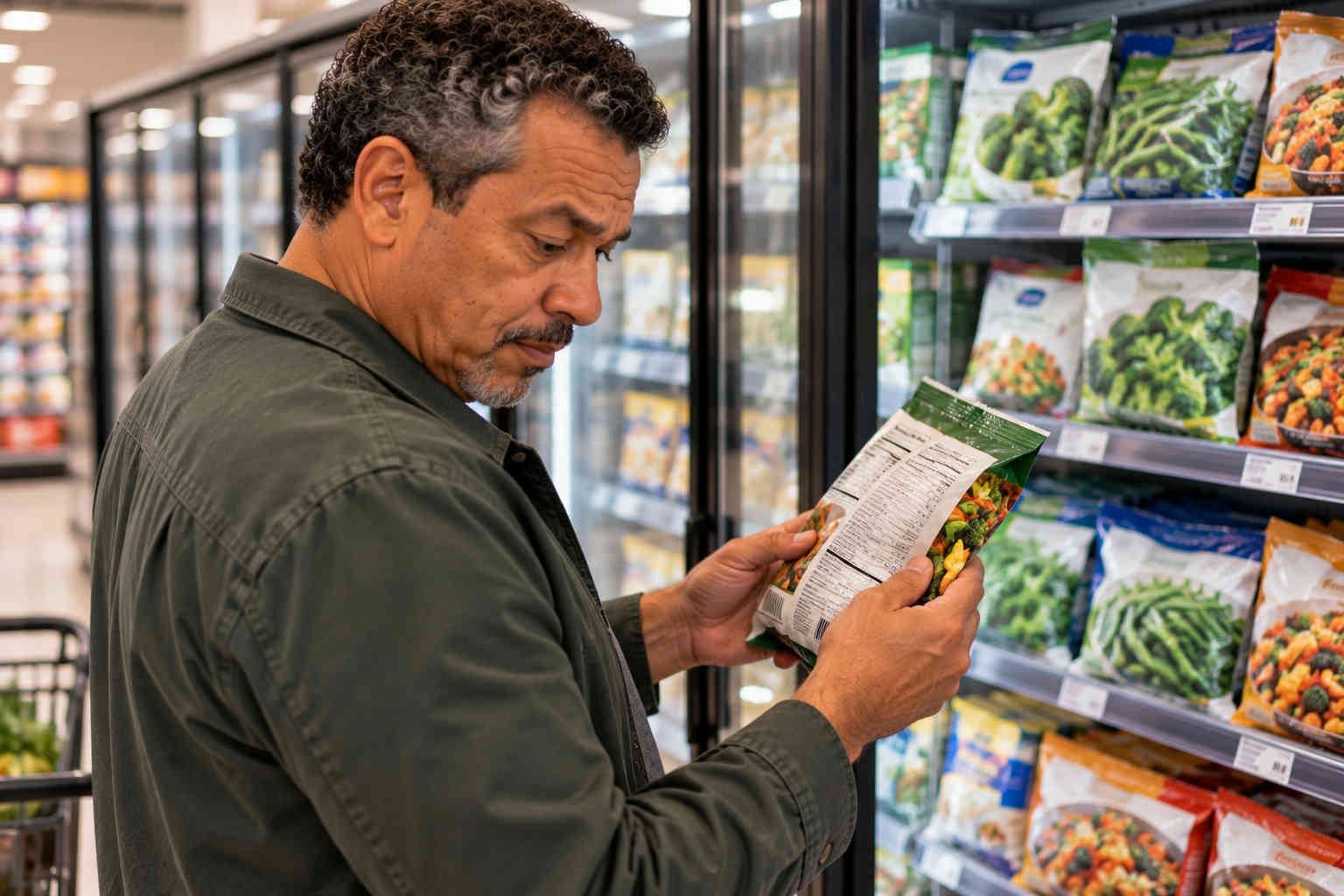
A package of broccoli in cheese sauce, butter sauce, or seasoned cream sauce can be an entirely different food nutritionally.
Sauces can substantially increase sodium, calories, saturated fat, or other ingredients you weren't planning to add.
That doesn't mean you can never eat them. It means you shouldn't assume that everything located behind the frozen vegetable freezer door is nutritionally equivalent.
For an everyday staple, look for plain vegetables or products with very short ingredient lists.
Then control the flavor yourself.
Try garlic powder, smoked paprika, crushed red pepper, lemon juice, black pepper, herbs, a small amount of olive oil, Parmesan, or another seasoning that fits the meal.
This gives you far more control over calories and sodium while making frozen vegetables taste less like something you're eating because you're “supposed to.”
When Fresh Vegetables Are Clearly The Better Choice
Nutritionally, frozen vegetables can compete surprisingly well with fresh ones.
Culinarily, however, there are times when fresh wins easily.
You probably don't want thawed frozen lettuce on a sandwich.
Fresh vegetables are generally better when texture is central to the meal.
Fresh Usually Wins When Crunch Matters
Salads: Lettuce, cucumbers, radishes, peppers, and similar vegetables depend on crispness.
Raw snacks: Fresh carrots, celery, peppers, and snap peas work much better when you want something crunchy.
Sandwiches and wraps: Fresh lettuce, tomato, onion, cucumber, and peppers provide texture that frozen vegetables cannot duplicate.
Roasting certain vegetables: Although many frozen vegetables roast reasonably well, fresh Brussels sprouts, asparagus, cauliflower, and broccoli can be easier to brown and crisp because they contain less surface moisture.
Peak-season produce: A ripe summer tomato or locally harvested sweet corn offers a flavor experience that frozen produce isn't trying to replace.
Fresh should therefore remain part of your diet.
The goal isn't to replace your produce drawer with a freezer.
It's to stop treating frozen vegetables as nutritionally inferior by default.

Vegetables That Are Worth Keeping Frozen
If you cook for yourself, several vegetables make especially useful freezer staples.
Broccoli may be the most versatile. Add it to chicken, beef, pasta, rice bowls, eggs, casseroles, or simply serve it as a side.
Green beans require almost no preparation and pair well with meat, poultry, and fish.
Spinach is extremely convenient frozen because a large volume of fresh spinach cooks down dramatically. Frozen spinach works well in eggs, soups, pasta sauces, and casseroles.
Peas can be added directly to rice, pasta, soups, and skillet meals.
Cauliflower works as a simple side and can bulk up mixed dishes.
Mixed vegetables may not be glamorous, but they are extremely practical for fried rice, soups, stews, and quick dinners.
Keeping three or four of these in the freezer gives you an emergency vegetable supply that doesn't expire next Thursday.

Vegetables You May Prefer Buying Fresh
Some vegetables earn their place in the refrigerator because their fresh texture is difficult to duplicate.
Good candidates include lettuce, cucumbers, tomatoes, celery, bell peppers, onions, cabbage, carrots, and vegetables you regularly eat raw.
The key phrase is regularly eat.
Don't buy seven different fresh vegetables because the shopping cart looks healthier.
Buy what you have a realistic plan to use.
If you know you'll make salads Monday through Wednesday, buy salad vegetables.
If you're buying broccoli because you vaguely think you should eat broccoli sometime this week, frozen may be the smarter choice.
This is where nutrition becomes less about individual vitamins and more about designing a kitchen that matches your actual behavior.

Does Cooking Method Matter More Than Fresh Versus Frozen?
Sometimes, yes.
You could buy excellent fresh vegetables and then boil them excessively until they are soft, colorless, and sitting in a pot of water containing some of their water-soluble nutrients.
Cooking methods involving shorter cooking times and less water can help preserve certain nutrients.
Steaming and microwaving are convenient options. Roasting and sautéing can also make vegetables much more appealing, which matters if improved flavor means you eat them regularly.
Don't become so concerned with maximizing nutrient retention that you make vegetables unpleasant to eat.
If roasting broccoli with a little olive oil, garlic, and Parmesan makes you genuinely look forward to eating broccoli, that's useful.
The difference between eating vegetables and not eating them is much more important than chasing the theoretically perfect cooking method.
The “Backup Vegetable” Strategy For Men Cooking For One
One of the easiest ways to improve your diet is to stop expecting every healthy meal to go according to plan.
Create a backup system instead.
Keep two categories of vegetables in your kitchen.
Your first-line vegetables are the fresh ones you plan to eat over the next several days.
Your backup vegetables live in the freezer.
Suppose you buy spinach, peppers, onions, and asparagus on Sunday.
Eat the asparagus and spinach early because they're more perishable. Use the peppers and onions later.
If Thursday arrives and the refrigerator is nearly empty, don't automatically order fries with dinner.
That's when the frozen broccoli comes out.
This simple system solves one of the biggest weaknesses of cooking for one: fresh food doesn't always disappear at the same rate your schedule changes.
Your freezer becomes nutritional insurance.
Are Frozen Vegetables Cheaper Than Fresh?
It depends on the vegetable, season, store, and local prices, but don't compare prices based only on the number printed on the shelf tag.
Compare edible cost.
A fresh vegetable may include stems, leaves, peels, or other portions you discard. Frozen vegetables are usually cleaned and prepared, so much of what you purchase ends up in the meal.
Then factor in spoilage.
If you pay $3 for fresh vegetables and throw away one-third of them, the amount you actually ate cost more than the shelf price suggests.
A frozen bag you completely consume may be a better value even if its initial price isn't dramatically lower.
This can make frozen vegetables particularly useful if you're trying to eat healthier without allowing your grocery budget to creep upward.
Don't Let “Fresh vs. Frozen” Distract You From The Bigger Problem
There is a tendency in nutrition to debate small differences while ignoring enormous ones.
Frozen broccoli versus fresh broccoli is a small difference.
Broccoli versus no vegetable is a large difference.
Fresh spinach versus frozen spinach is a small difference.
Spinach versus another side of French fries is a large difference.
If your diet currently contains very few vegetables, upgrading from zero vegetables to convenient frozen vegetables is a meaningful improvement.
You can refine the details later.
The same principle applies if you're rebuilding your diet after years of eating restaurant meals, convenience food, or oversized portions.
You don't need a refrigerator that looks like the produce department.
You need a repeatable system.
A Better Way To Shop For Vegetables
Instead of deciding whether you're a “fresh vegetable person” or a “frozen vegetable person,” divide vegetables according to how you'll actually use them.
Buy fresh vegetables for meals where texture matters and when you know you'll eat them within several days.
Buy frozen vegetables for cooked meals, backup dinners, busy nights, and foods you use inconsistently.
For example, a practical weekly grocery haul for one man might include fresh salad greens, tomatoes, peppers, onions, carrots, frozen broccoli, frozen green beans, and frozen spinach.
That's enough variety to make salads, omelets, chicken dinners, rice bowls, pasta dishes, sandwiches, and quick side dishes without purchasing an unrealistic mountain of produce.
You aren't trying to win a nutrition contest at the supermarket.
You're trying to make next Wednesday's dinner healthier.
So, Are Frozen Vegetables As Healthy As Fresh?
In many cases, yes—frozen vegetables can be nutritionally comparable to fresh vegetables, and differences vary depending on the vegetable, nutrient, storage time, processing, and cooking method.
Fresh vegetables have obvious advantages when eaten soon after harvest and when crisp texture matters.
Frozen vegetables have different advantages: long storage life, convenience, reduced preparation, less waste, year-round availability, and strong nutrient retention.
For men cooking for themselves, those practical advantages can become health advantages.
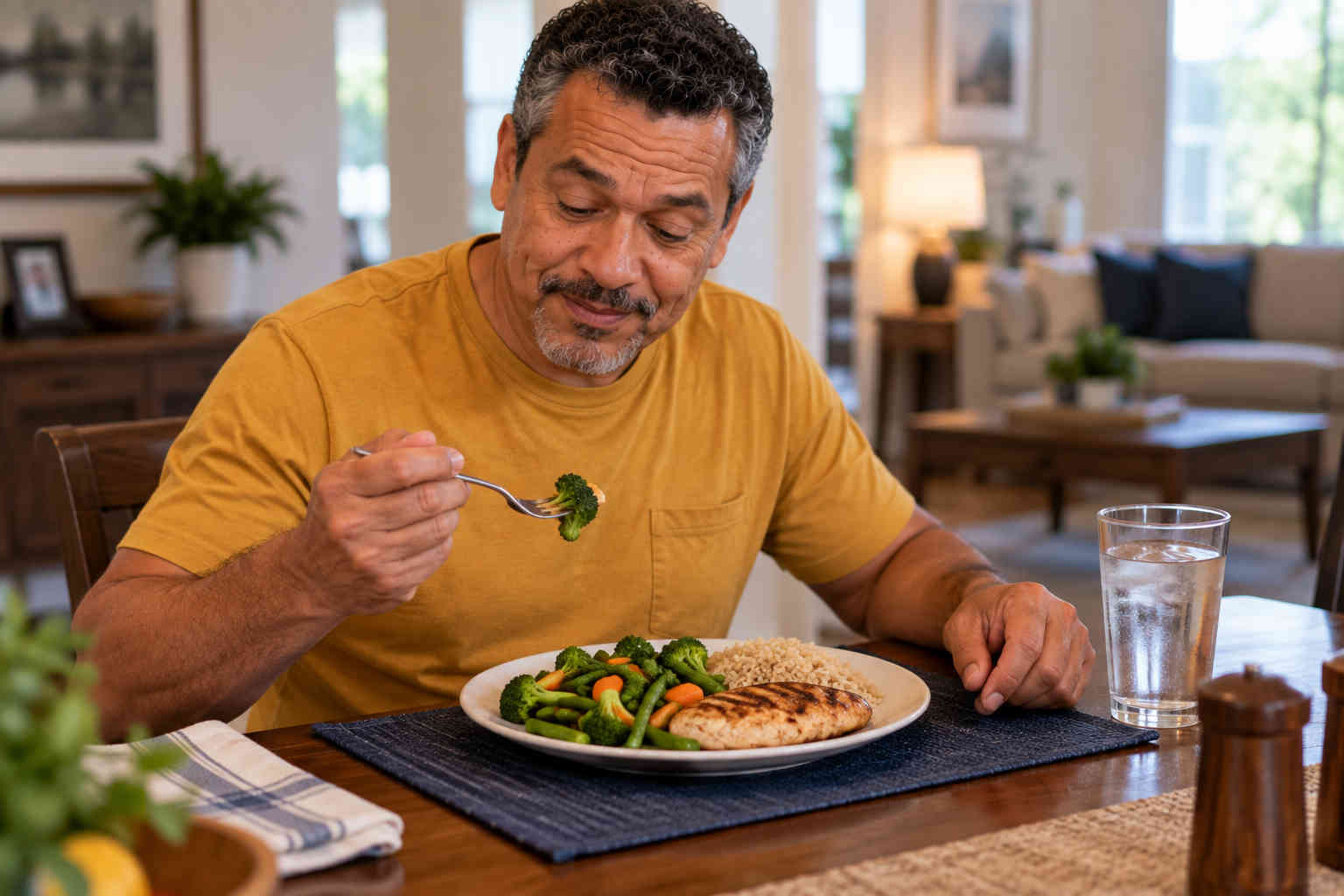
If frozen vegetables make it possible for you to put broccoli beside your chicken on a night when you otherwise wouldn't have eaten a vegetable, they did their job.
If buying fresh asparagus motivates you to cook a great dinner tonight, buy fresh asparagus.
There is no reason to choose sides.
The Bottom Line
The frozen vs. fresh vegetables debate matters much less than many people think.
Fresh vegetables aren't automatically nutritionally superior simply because they're sitting in the produce department, and frozen vegetables aren't unhealthy merely because they've been processed and stored in a freezer.
Use both strategically.
Keep fresh vegetables around for salads, raw foods, roasting, and meals where texture matters. Keep several plain frozen vegetables available for quick dinners and nights when your refrigerator is empty.
Most importantly, build your grocery habits around vegetables you will actually eat.
Because six bags of perfectly fresh vegetables slowly dying in the bottom drawer of your refrigerator aren't improving your health.
The frozen broccoli you cooked with dinner is.

The Practical Rule
Buy Fresh For Texture. Keep Frozen For Reliability.
Use fresh vegetables when crunch, raw flavor, or peak-season quality matters. Keep plain frozen vegetables on hand so a schedule change never has to mean a vegetable-free dinner.