
Healthy Eating For One
Your Grocery List Should Fit The Life You Actually Live
When you were married, grocery shopping may have been something you barely thought about. Maybe your wife handled most of it. Maybe you divided the job. Or maybe you shopped together and bought food around the needs of the household. After divorce, the system changes. You are suddenly buying for one person, and that sounds easier than it is.
Family-size packages can be too large. Fresh vegetables look like a good idea on Sunday but can be turning into refrigerator science experiments by Thursday. You buy ingredients for ambitious dinners, work runs late, and you order takeout anyway. Then half the groceries you paid for end up in the trash.
The solution is not to become a perfect meal planner. It is to create a weekly grocery list for healthy eating that makes a reasonably good meal easier than a bad one. A useful list reduces the number of decisions you have to make when you are hungry, tired, busy, or simply not interested in cooking.
Stop Starting Your Grocery List With Food
Most people begin by asking, “What food should I buy?” Start with a better question: How many meals am I actually going to eat at home this week?
Suppose you have dinner with your kids Wednesday, meet a friend Friday night, and expect to be out most of Saturday. You do not need seven dinners waiting in the refrigerator. You may need four. That simple calculation changes the amount of fresh food, protein, vegetables, and convenience food you should buy.
Do not plan for your fantasy week. Plan for your real one. If you normally grab breakfast on the way to work twice a week, account for that. If you know one night is always hectic, build around it instead of pretending you will suddenly have an extra hour to cook.

Build Your List Around Meals, Not Seven Different Recipes
One of the easiest ways to make grocery shopping complicated is to plan seven unrelated dinners that require seven different sets of ingredients. Monday is salmon. Tuesday is fajitas. Wednesday is chili. Thursday is stir-fry. By the end of the list you have created a small restaurant operation in your kitchen.
A simpler grocery list for one person is built around meal components that can move from one meal to another: protein, vegetables or fruit, a smart carbohydrate, and flavor. Chicken can become a rice bowl, wrap, salad, or dinner plate. Eggs can work at breakfast or dinner. Potatoes can pair with fish, chicken, beef, or eggs. Frozen vegetables can go into a bowl, omelet, soup, or skillet.
Try The 3-3-2-2 Grocery Method
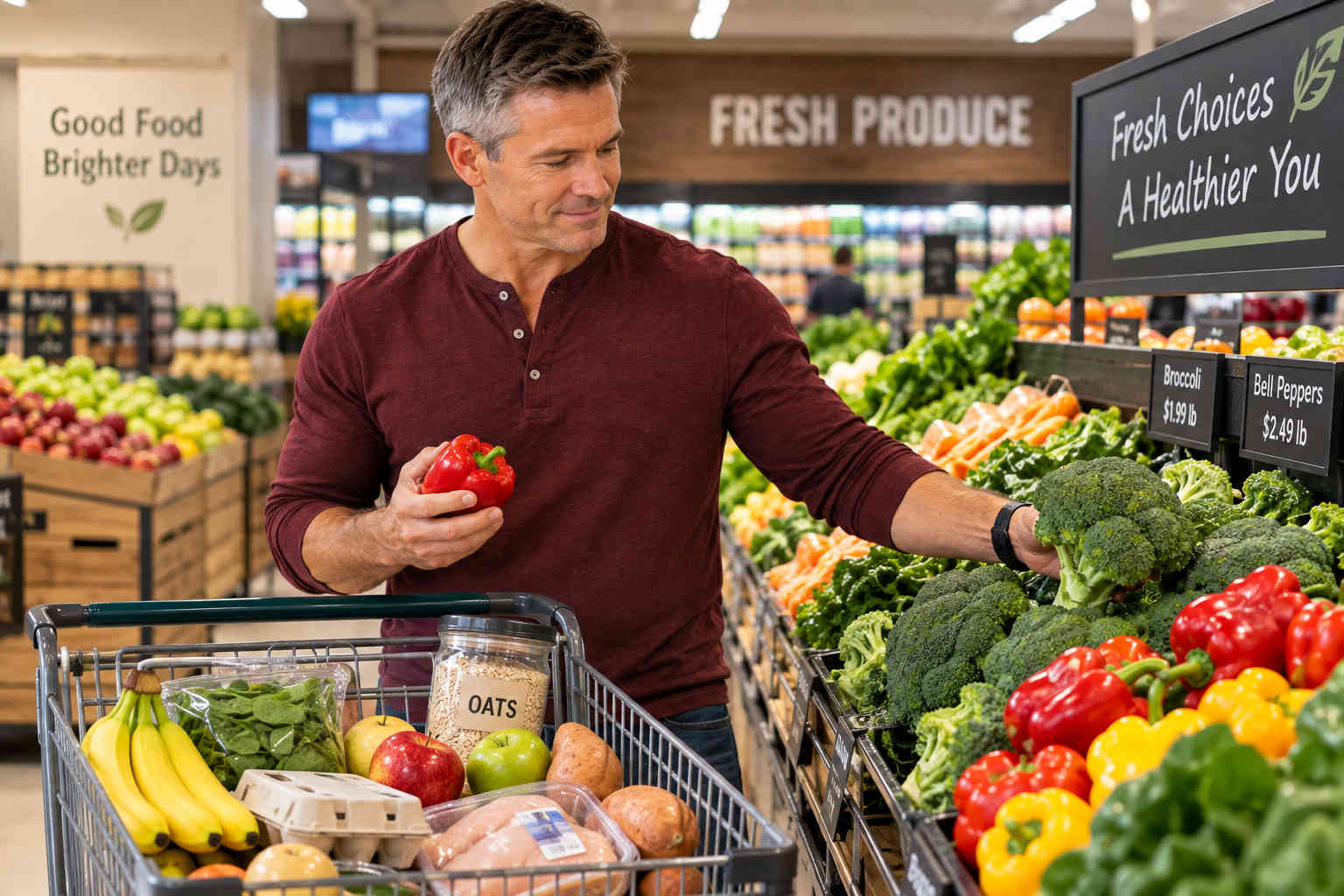
Choose 3 main proteins, 3 vegetables, 2 fruits, and 2 main carbohydrate sources for the week. Then add breakfast foods, a few snacks, flavor ingredients, and any staples you are low on.
For example: chicken, eggs, Greek yogurt; broccoli, spinach, bell peppers; apples, blueberries; potatoes and oatmeal. The point is not that these exact foods are mandatory. The structure gives you enough variety without buying so many different items that food gets forgotten.
Give Every Perishable Food A Job Before You Buy It
Here is a rule that can save money quickly: if you do not have a reasonable idea when you will eat a perishable food, do not put it in the cart. Buying spinach because spinach is healthy does not mean you will eat it. What is it for? Maybe it goes into eggs Monday, a chicken wrap Tuesday, and a salad Thursday. Now it has a job.
The same principle applies to berries, avocados, salad greens, fresh fish, herbs, and other short-lived foods. You do not need a rigid menu, but you should be able to answer, “Where does this fit into my week?” That turns healthy grocery shopping for one from collecting healthy-looking foods into buying food with a purpose.
Quantity matters too. A large family pack may have a lower price per pound, but it is not a bargain if you throw half of it away. Buy the amount you are likely to use, or portion and freeze the extra immediately.

Create One Emergency Dinner Every Week
Your weekly list should assume that at least one day will go wrong. You get home late. The chicken is still frozen. You are tired. You do not want to chop anything. This is where many healthy eating plans fall apart—not because of a lack of discipline, but because takeout is easier than the food you bought.
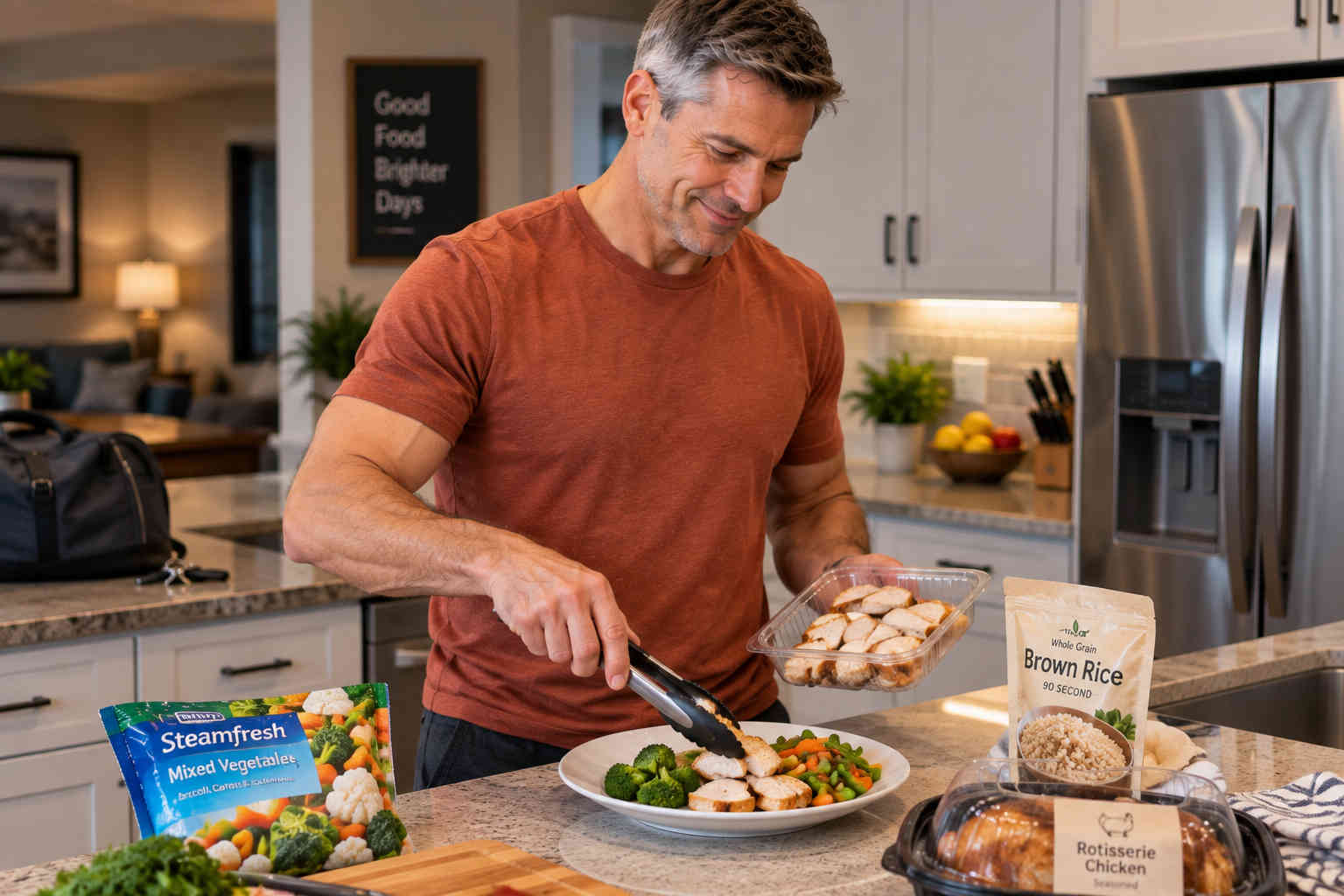
Put one deliberately easy dinner on your list. It should take about ten minutes and require almost no thought. Rotisserie chicken with a steam-in-bag vegetable and microwaveable brown rice works. So do eggs with whole-grain toast and fruit, tuna in a whole-grain wrap with greens, or precooked chicken with a baked potato and frozen vegetables.
Your emergency dinner is not a failure to cook. It is the meal that prevents a difficult Tuesday from turning into a large pizza, wings, and another promise to “start over tomorrow.”
Shop Your Kitchen Before You Shop The Store
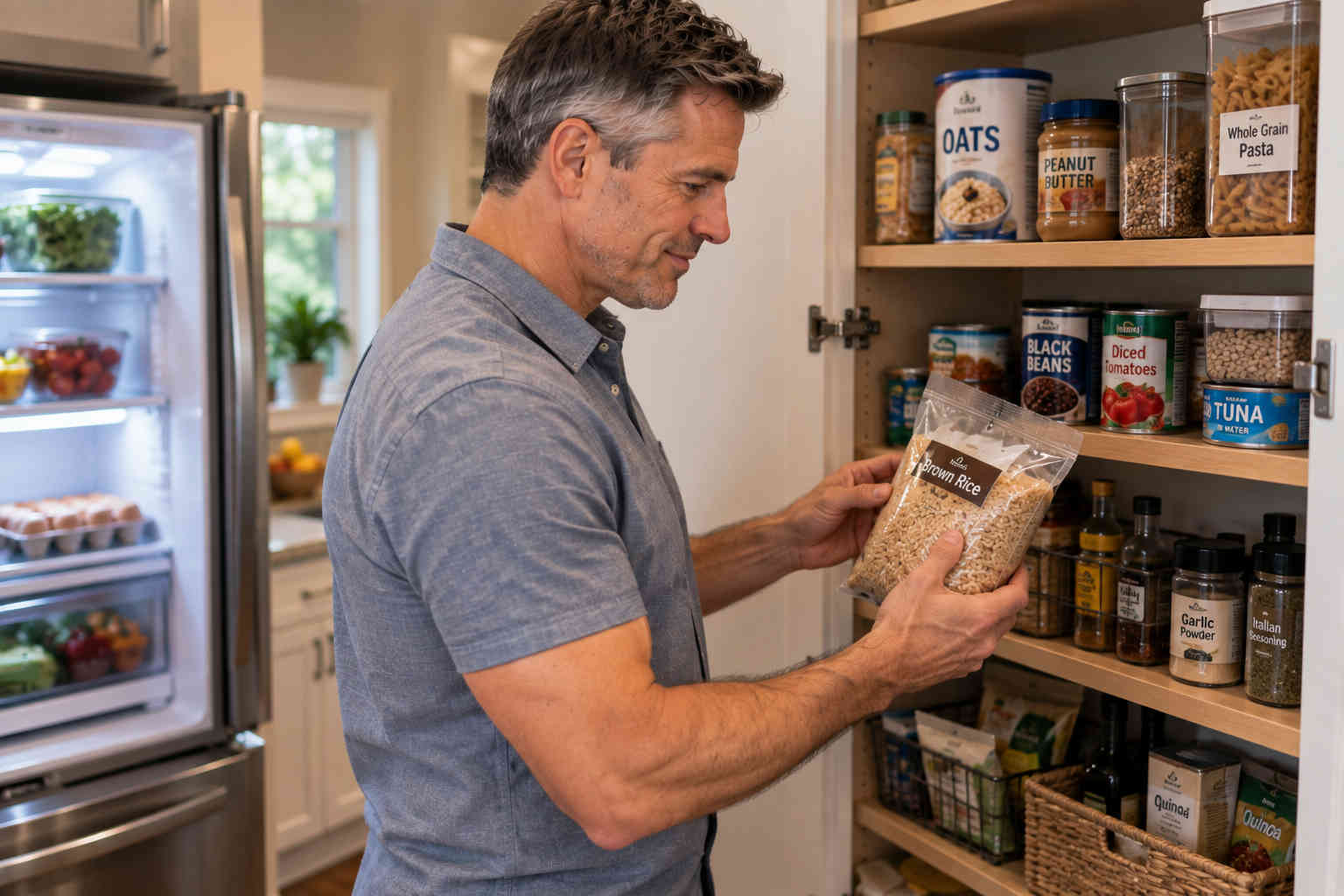
Before you make the final list, spend three minutes looking through the refrigerator, freezer, and pantry. Maybe you already have half a bag of frozen broccoli, three eggs, rice, tuna, or a chicken breast in the freezer. Those are not random leftovers. They are the beginning of next week's meals.
Try building one or two meals around food you already own. If you have chicken, rice, and frozen vegetables, perhaps all you need is salsa and an avocado to create an easy bowl. This small habit reduces waste, lowers your grocery bill, and prevents the strange problem of owning four bottles of mustard while still feeling like you have nothing for dinner.
Use Fresh Food Strategically Instead Of Automatically
There is nothing morally superior about fresh broccoli. Frozen broccoli is still broccoli. One reason single men waste groceries is that they buy too much fresh produce because that is what they imagine healthy grocery shopping is supposed to look like.
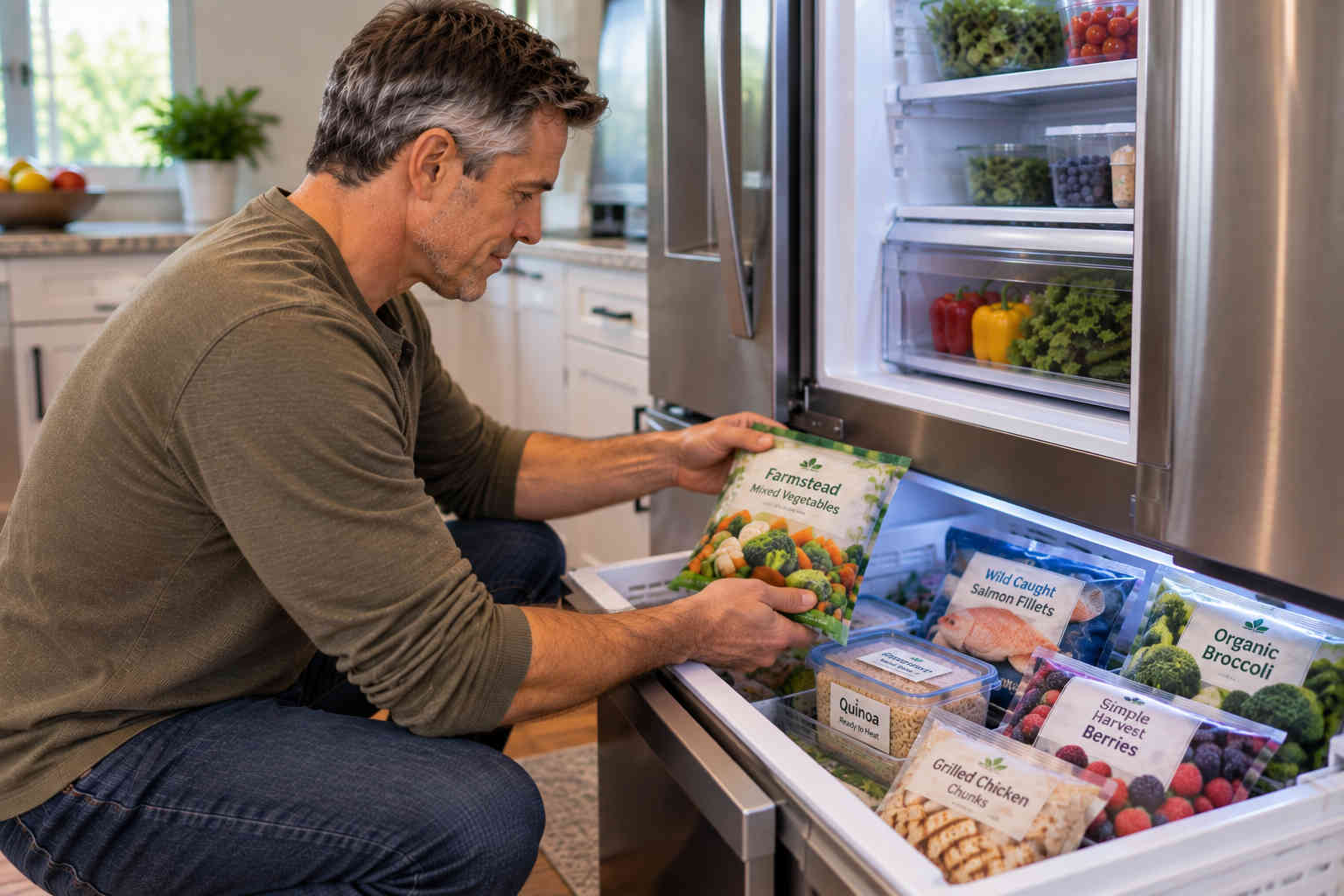
A better system combines fresh, frozen, and shelf-stable foods. Use fresh fish, delicate greens, and berries earlier in the week. Keep longer-lasting apples, potatoes, peppers, and eggs for the middle. Save frozen vegetables, frozen fruit, canned beans, tuna, and other dependable staples for later.
This creates a built-in expiration schedule. Thursday no longer arrives with an entire refrigerator full of ingredients that all need to be eaten immediately. It is one of the simplest ways to reduce food waste when cooking for one.
Buy Two Levels Of Convenience
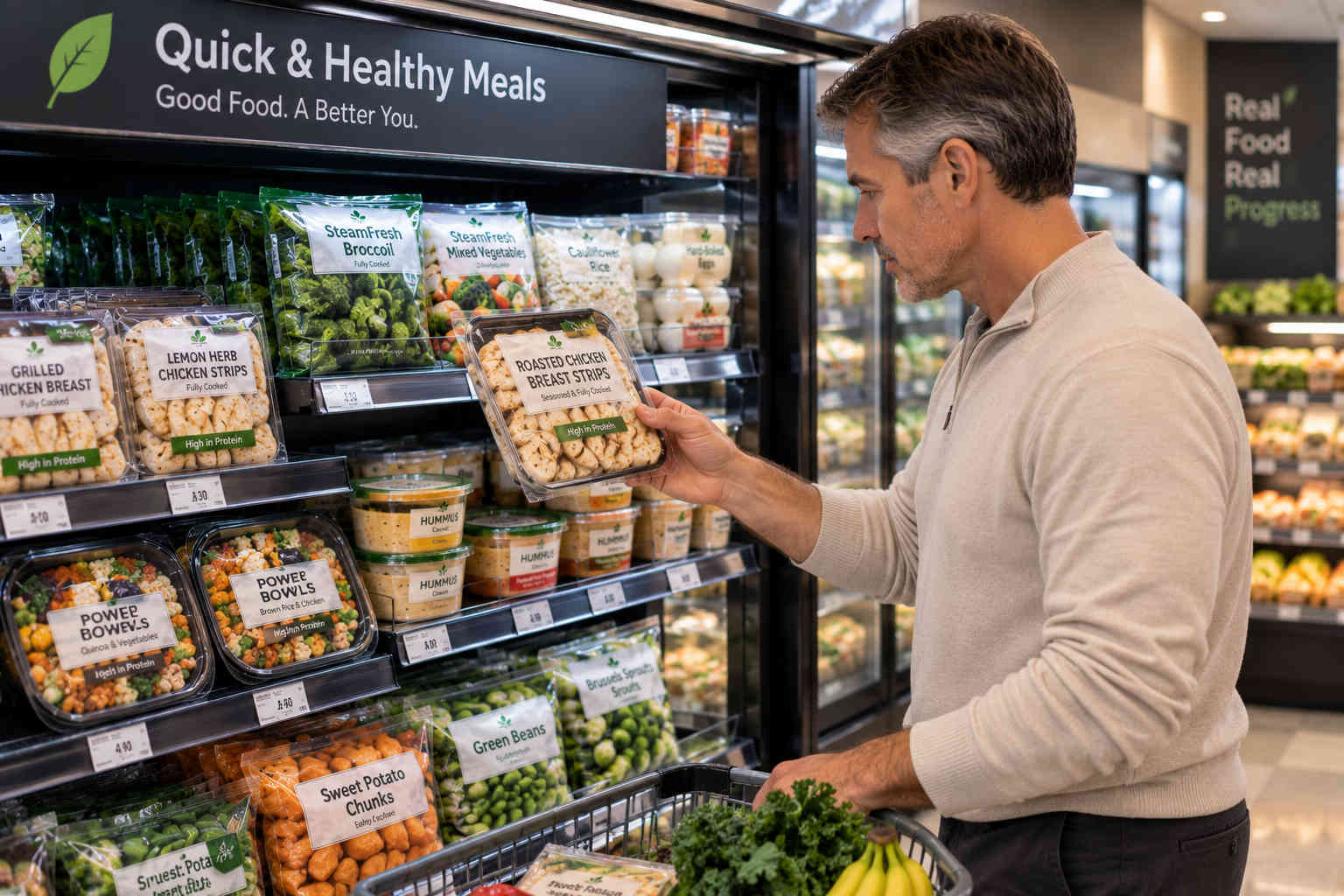
Healthy eating does not require preparing everything from scratch. Convenience can actually protect your diet when you use it deliberately. Keep two levels of food available.
Level One: I Have Time. Raw chicken, potatoes, rice, eggs, and fresh vegetables work when you have 20 to 40 minutes. Level Two: I Do Not Have Time. Precooked protein, microwaveable whole grains, frozen vegetables, Greek yogurt, fruit, prewashed greens, and similar foods work when the day has gone sideways.
If every healthy food in your house requires chopping, cooking, and washing several pans, eventually you will meet a night when you refuse to do it. Your list has to work for that version of you too. For many men, a few carefully chosen healthy convenience foods for busy weeknights do more good than an impressive cart full of ingredients that never get cooked.
Do Not Let Snacks Become Accidental Meals
When you shop for one, snack foods can quietly take over the cart. Chips here, crackers there, something sweet for the television. None of those purchases seems important by itself. Together they can create a kitchen where snacks are plentiful but an actual meal is hard to assemble.
Put snacks on your list intentionally. Pick two or three for the week—fruit, Greek yogurt, cottage cheese, nuts, popcorn, or vegetables with hummus are examples. You do not have to ban enjoyable food. The goal is simply to make sure the easiest thing to eat is not always the least filling thing you bought.
Organize The Food So You Actually Use It
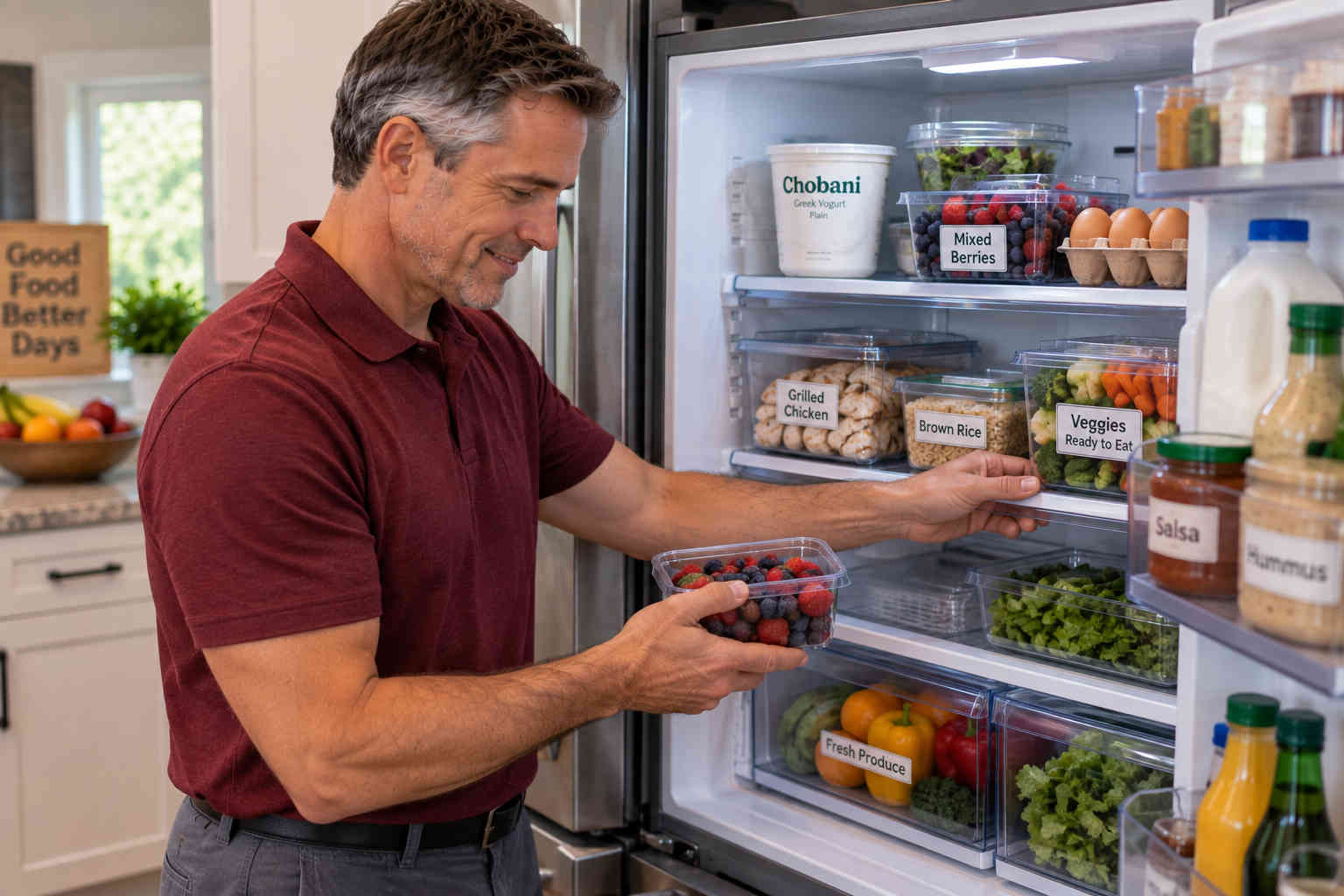
A good list does not end at checkout. When you get home, make the healthy foods easy to see. Put yogurt, washed fruit, ready-to-eat vegetables, and cooked protein near eye level. Move older foods toward the front. Portion anything you need to freeze before it disappears behind something else.
Then do a two-minute refrigerator check around Wednesday. Which vegetables need to be eaten? Are there leftovers? Did you open the chicken? Are the berries softening? Dinner that night can be based on what needs to be used rather than what sounds exciting. That is not boring. It is efficient.
Create A Permanent Always-Buy List
You should not have to reinvent your grocery list every Sunday. Build a short core list of foods you purchase most weeks: perhaps eggs, Greek yogurt, chicken, apples or bananas, frozen vegetables, oatmeal, rice or potatoes, salad greens, whole-grain bread, and coffee.
Then weekly planning becomes an editing process. What do you already have? What are you tired of eating? What is on sale? Which nights will you be home? What needs to be replaced? This can turn a 20-minute planning exercise into five minutes.
Leave one meal flexible too. A Friday lunch can become your clean-out meal: leftover chicken plus vegetables and rice becomes a bowl; eggs plus peppers and potatoes becomes a skillet; tuna plus greens becomes a wrap. Learning a few basic meal formats is more useful than collecting dozens of recipes.
Do Not Grocery Shop For The Man You Want To Become
Do not buy food for Fantasy You—the man who wakes up at 5:30 every morning, drinks a green smoothie, meal-preps seven identical containers on Sunday, and never gets tired of grilled chicken. Shop for the man you actually are, with slightly better options.
If you hate kale, do not buy kale. If you know you will not cook dried beans, buy canned beans. If cutting vegetables makes you avoid them, buy some pre-cut vegetables. If cooking rice after work feels like too much trouble, keep a quick whole-grain option available.
Healthy eating does not require proving how disciplined you are. It requires creating an environment where a reasonably good decision is easy to repeat.
Adjust The List To The Problem You Actually Need To Solve
If you are trying to lose weight after divorce, emphasize filling foods that make portion control easier: lean protein, vegetables, fruit, high-fiber carbohydrates, and sensible portions of calorie-dense foods. If you lift weights, make sure you do not reach Thursday with no convenient protein left in the house.
If takeout is your biggest problem, worry less about creating a nutritionally perfect list and more about stocking several dinners that are faster than ordering food. If spending is the problem, compare unit prices, use store brands where appropriate, and resist buying bulk quantities you will not finish.
Your grocery list should solve your biggest eating problem first. That is what makes it useful instead of generic.
Make Next Week's List Better Than This Week's
Treat the first month as an experiment. At the end of each week, ask three questions: What did I run out of? What did I throw away? What did I wish I had when I was tired? Buy slightly more of what disappeared, less of what spoiled, and add the foods that would have made the difficult nights easier.
After several weeks, you will have something more valuable than a generic healthy grocery list from the internet. You will know how many eggs you actually eat, which vegetables you enjoy, how long a bag of spinach lasts, how much chicken you use, and which quick dinners prevent takeout.

Your Grocery List Is Really A Plan For Your Future Self
Creating a weekly grocery list may seem like a small part of rebuilding your routine after divorce, but small systems matter. You are no longer shopping for the household you used to have. You are building routines for the life you have now.
Count the meals you will actually eat at home. Choose a few versatile proteins, vegetables, fruits, and carbohydrates. Give perishable foods a purpose. Keep an emergency dinner available. Use your freezer strategically. Check the refrigerator halfway through the week. Buy enough convenience to protect yourself from the nights when motivation is low.
And do not try to prove anything with what is in your cart. The goal is not to shop like the healthiest man in the store. The goal is to walk into your kitchen on a busy Wednesday night and find that eating a decent meal is the easiest option available.
The Weekly Grocery System
Make The Good Decision Before You Get Hungry
Plan around your real schedule, buy foods that can work together, protect yourself with one easy emergency dinner, and let your own leftovers and habits teach you what to buy next week. A good list makes healthy eating easier because the decision has already been made.