Lose The Divorce Belly Without Living On A Diet
There is a particular moment a lot of men have after divorce.
It isn't necessarily when the scale gives them a number they don't like.
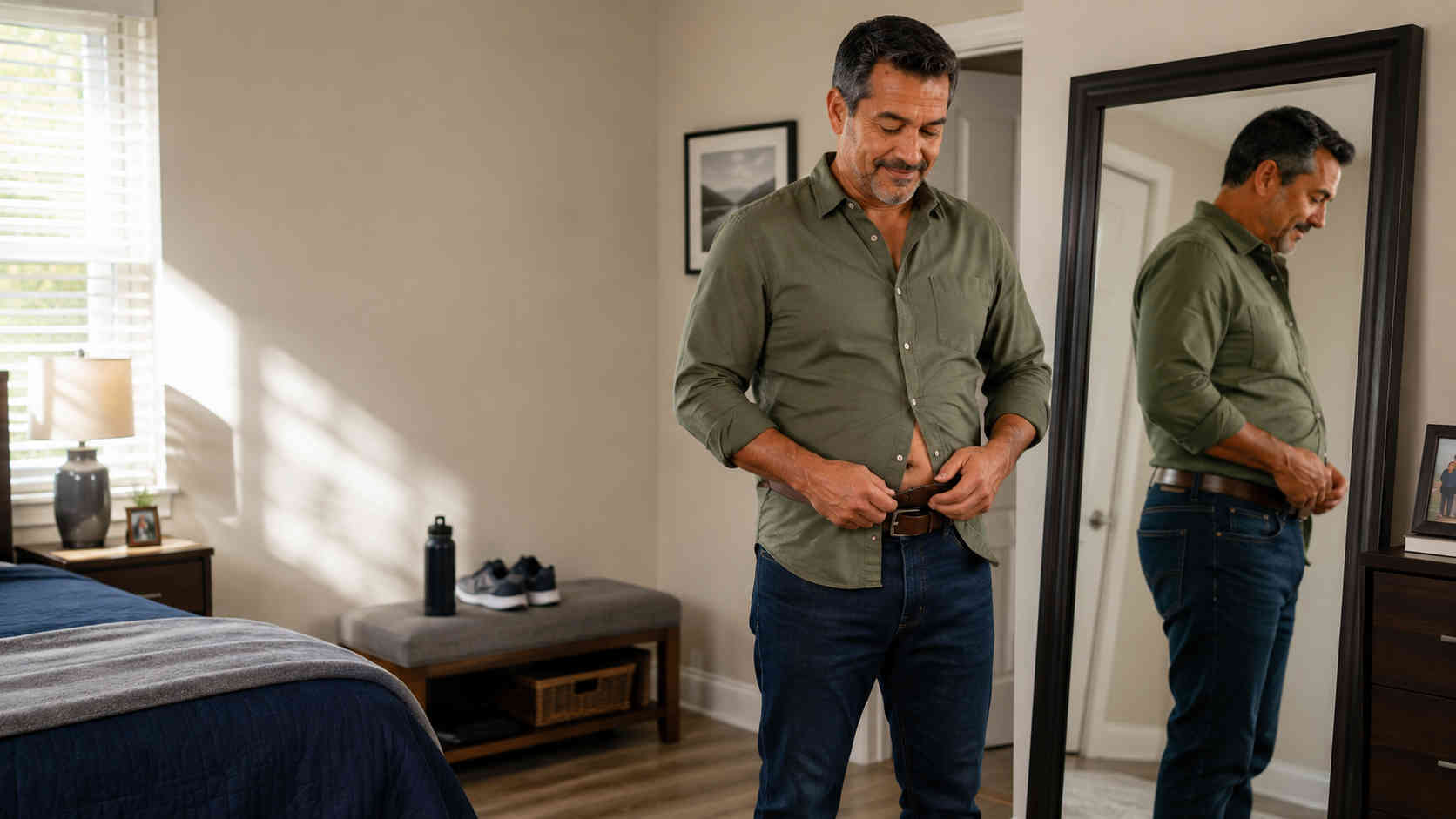
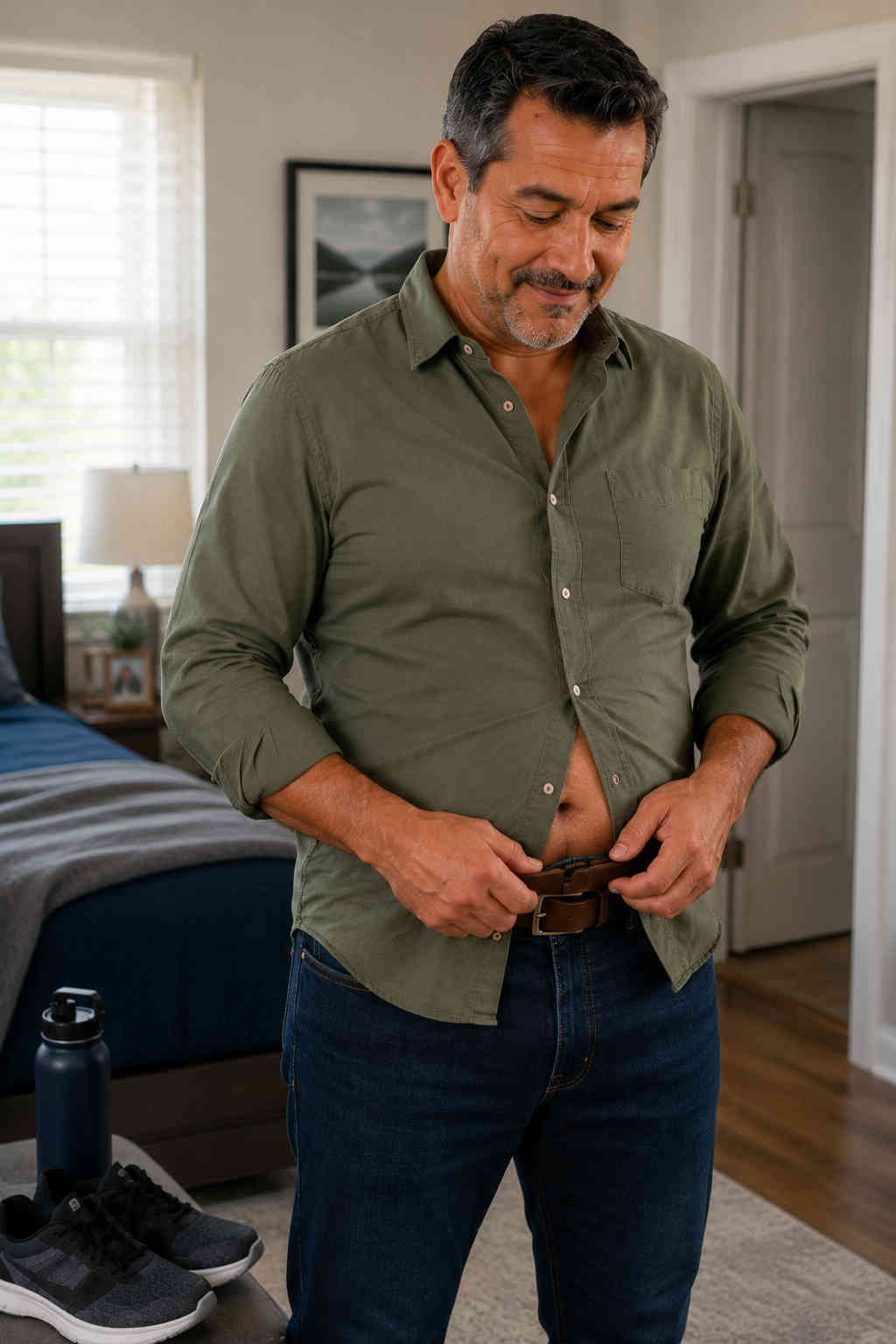
It's when they sit down and their stomach presses against the waistband of their jeans. Or when they see themselves from the side in a photograph. Or when they put on a dress shirt for a date and discover that the shirt fits everywhere except across the stomach.
That's when the thought arrives: When did I get this belly?
Sometimes the answer is obvious. Other times it isn't. You may weigh only 15 or 20 pounds more than you did several years ago, yet most of it seems to have settled around your waist. And if you're a man in your 40s, 50s or 60s, getting rid of it can seem considerably harder than gaining it was.
This is usually when extreme solutions start looking attractive: no carbohydrates, one meal a day, seven-day cleanses, two-hour workouts, "fat-burning" supplements, or living on grilled chicken until you can't stand the sight of it.
You don't need to do any of that.
If you want to know how to lose belly fat after divorce without extreme diets, start by understanding something more useful: your stomach may be showing you what happened to your lifestyle.
Change the lifestyle intelligently, and your waist can begin changing with it.
Your Belly May Be The Receipt For Your New Life
Think about your average weekday during the final years of your marriage and compare it with your average weekday now.
Don't think about dieting yet. Think about movement and routines.
Did you used to mow a larger yard? Walk around stores with your family? Take your children places more frequently? Work on projects around the house? Eat dinner at a table instead of in front of a television? Go to bed earlier? Eat fewer restaurant meals? Drink less? Spend less time sitting alone at night?
A man's calorie needs don't send him a notification when his lifestyle changes. You can keep eating approximately the same way while quietly becoming less active.
That's one reason post-divorce belly fat can feel mysterious. Nothing dramatic happened Tuesday. Or Wednesday. Or Thursday. But perhaps you drove to work, sat most of the day, drove home, ate dinner, watched three hours of television and went to bed.
Then you repeated it 250 times.
Your waistline records patterns that individual days hide.
Don't Start By Trying To Lose 30 Pounds
Let's make the first goal smaller.
Find the belt you wear most often. Put it on. What hole are you using?
That's your starting point.
For the next several months, one of your goals is simply to move that belt inward. This sounds almost ridiculously basic, but it changes the psychology of losing belly fat after divorce.
Instead of chasing an arbitrary scale number, you're measuring the area you actually want to change. You can also measure your waist periodically with a tape measure under consistent conditions.
This matters for more than appearance. Carrying excess fat around the abdomen is associated with greater health risks, and waist circumference can provide useful information that body weight alone doesn't capture.
Now you have a target that means something: make the waist smaller.
Find Your "Belly Builders"
For one week, don't diet. Instead, identify your belly builders.
These are behaviors that don't look terrible individually but become powerful when repeated. You might eat dinner at 6:30 and snack again at 9:30 every night. You may order restaurant food four times a week because cooking for one feels pointless. You might drink two beers while watching television, eat everything you're served because wasting food bothers you, finish your children's leftovers, or eat very little during the day and become ravenous at night.
Don't judge these habits yet. Just identify them.
A man who discovers that his biggest problem is nightly snacking needs a different strategy from a man eating enormous restaurant lunches.
Your waist doesn't care which diet is fashionable. It responds to what you repeatedly do.
The Empty-House Problem
One of the least discussed parts of weight gain after divorce is what happens when the house becomes quiet.
There may have been a time when your evening had structure: dinner, homework, dishes, getting children ready for bed, talking with your wife, preparing for tomorrow.
After divorce, particularly on nights when you don't have your children, you may suddenly have five hours with almost nothing scheduled.
Food easily becomes entertainment. You open the refrigerator. Nothing looks interesting. Ten minutes later you open it again. You grab crackers. Later, something sweet. Then maybe a drink.
None of this necessarily feels like overeating because you never sat down for another meal. But your stomach doesn't distinguish between calories eaten from a plate and calories eaten while standing in front of an open refrigerator.
If this describes your evenings, don't begin with stricter food rules. Give the evening somewhere else to go.
Join a gym. Take a walk after dinner. Work in the garage. Take a class. Meet a friend. Start the project you've been postponing. Read somewhere other than the kitchen. Call your children. Work on your yard.
Your solution to nighttime eating may not be more discipline. It may be having something worth doing.

Create A Kitchen That Works For One Man
Divorce often creates an awkward food problem: you're suddenly buying groceries for one.
Food spoils. Recipes make too much. Cooking seems inefficient. Takeout becomes easier.
So build what might be called a one-man kitchen.
You need foods that can be turned into decent meals quickly without requiring a Sunday afternoon of meal preparation. Keep several proteins you actually eat. Keep frozen vegetables that won't rot because you forgot about them. Keep potatoes, rice, oats or other simple staples you enjoy. Keep fruit visible. Keep a few emergency meals that can be ready faster than you can drive to a restaurant.
And stop buying family-sized quantities of foods you have trouble controlling simply because the larger package is cheaper.
Saving three dollars on a giant bag of chips isn't a bargain if you spend the week trying not to eat it.
Your kitchen should make the decision you want easier.
Shrink The Restaurant Problem Without Giving Up Restaurants
Dating after divorce often means restaurants. So does meeting friends. So does traveling.
So telling a divorced man to "just cook every meal at home" isn't particularly realistic.
Instead, change how you use restaurants.
Choose One Luxury Per Restaurant Meal
You can have the appetizer. Or the drinks. Or the large entrée. Or dessert. You don't automatically need all four.
Suppose you're meeting someone for dinner and want the steak and baked potato. Great. Maybe you don't need the giant appetizer beforehand.
If you're meeting friends specifically for beer and wings, enjoy them. Perhaps that isn't also the night for dessert.
This isn't extreme dieting. It's refusing to turn every restaurant visit into Thanksgiving.
Learn The Difference Between "Full" And "Finished"
A lot of men were taught to finish what was on their plate. That works differently when the plate contains a modern restaurant portion.
Try this experiment. Halfway through a restaurant meal, stop eating for two minutes.
Don't announce it. Don't make it weird. Just put your fork down. Talk. Drink some water.
Then ask yourself: Am I still hungry, or am I simply not finished?
Those are different things.
You don't earn anything for returning an empty plate to the server. And the remaining food doesn't have to be wasted. Take it home.
Tomorrow's lunch is sitting in front of you.

Stop Drinking Your Waistline
Alcohol deserves its own discussion because divorce can change the reason a man drinks.
There's social drinking. Then there's empty-house drinking.
One happens because you're out with friends. The other happens because it's 8:15, the house is quiet and opening a beer signals that the day is over.
If that's become an automatic nightly ritual, count how many drinks you're actually having over seven days. Don't estimate. Count.
The number sometimes surprises people.
Alcohol contains calories, and mixers can add more. It can also accompany the exact foods that are easy to overeat: pizza, wings, chips, burgers and late-night snacks.
You don't necessarily have to eliminate alcohol to lose weight. But "I only have a couple" means something very different if "a couple" happens seven nights a week.
Make drinking a decision rather than a clock-based reflex.
Beware The Divorced-Dad Food Trap
Parenting weekends can create another unusual problem.
You want your children to enjoy being at Dad's house. So Friday becomes pizza. Saturday morning becomes pancakes. Saturday lunch becomes fast food between activities. Saturday night becomes a restaurant. Sunday morning becomes doughnuts.
You aren't intentionally overeating. You're trying to create a fun weekend.
But being a good father doesn't require turning your home into an all-inclusive resort.
Let one meal be the special meal. Make the others normal.
Your children don't need every visit with you to revolve around food. Go bowling. Shoot basketball. Walk a trail. Wash the car together. Go to a park. Play miniature golf. Throw a football.
You may accidentally create a healthier weekend for them while improving your own waistline.
Rebuild The Movement Your Marriage Used To Give You
Exercise isn't the only movement that matters.
Many men lose a surprising amount of everyday activity after divorce. Maybe your old house had endless chores. Maybe family life kept you constantly moving. Now you're in an apartment or smaller house. Your children aren't there every day. Your evenings involve more sitting.
You can replace some of that lost movement deliberately.
Take phone calls while walking. Walk around the field during your child's practice. Carry groceries instead of using a cart for a tiny purchase. Do your own yard work when practical. Take the stairs. Park farther away. Walk after dinner. Clean the house aggressively enough to count as movement.
These activities don't look impressive on social media. That's fine.
Your body counts movement even when nobody calls it a workout.

Use The "Never Zero" Exercise Rule
One reason extreme fitness plans fail after divorce is that they depend on perfect weeks.
Real life doesn't provide many of those.
Try a different rule: Never zero.
Your ideal workout might be 45 minutes. But if work explodes and you only have 15 minutes, do 15. If you can't get to the gym, walk. If the weather is terrible, do something at home. If you're traveling, use the hotel gym or walk outside.
The objective is to prevent the familiar progression: "I missed Monday." Then: "This week is messed up." Then: "I'll start again next Monday." Then suddenly six weeks are gone.
A mediocre workout maintains the identity of a man who exercises. Zero slowly rebuilds the identity of a man who doesn't.
For general health, adults are advised to accumulate at least 150 minutes of moderate-intensity aerobic activity each week and perform muscle-strengthening activities on at least two days.
But you don't have to begin there. Build toward it.

Strength Train For The Man You're Becoming
There is another reason not to make your entire belly-fat strategy endless cardio.
You want to preserve muscle while losing weight. This becomes increasingly important as men get older.
Two or three strength-training sessions per week can form the backbone of a practical program. You don't need to train like a competitive bodybuilder.
Build workouts around movements that strengthen the major muscle groups. Push something. Pull something. Train your legs. Train your hips and posterior chain. Carry something. Train your core.
Progress gradually.
The visual goal isn't merely a smaller stomach. It's a better proportioned body.
A somewhat smaller waist combined with stronger shoulders, chest, back and legs can produce a dramatic difference in how you look in clothing.

Don't Try To Crunch Away A Belly
If 500 crunches removed stomach fat, gyms would be filled with men with enormous six-packs.
Abdominal exercises strengthen abdominal muscles. They don't give you the ability to select your stomach as the first place your body removes fat.
Train your abs because a stronger core is useful.
But don't mistake muscle fatigue for targeted fat loss.
Your waist will primarily shrink as your overall body fat comes down. Where it comes off first—and where it stubbornly hangs around—isn't completely under your control.
That's why patience matters.
The Shirt Test Can Tell You More Than Tuesday's Scale
Body weight fluctuates. A salty restaurant meal can move the scale. So can hydration, food still being digested and other normal changes.
Don't let one morning's number determine whether you think your plan is working.
Use several signals: your waist measurement, your belt, your average body weight over time, and something even simpler—the shirt test.
Choose one shirt that currently fits tightly around your stomach. Don't try it on every day. Try it every four weeks.
Button it. Stand normally. Look at the side.
That shirt can become one of the most satisfying progress reports you have.
Eventually, the buttons stop pulling. Then the shirt hangs differently. Then one day it isn't your "tight shirt" anymore.

Don't Diet Harder When Life Gets Harder
This is particularly important after divorce.
There will be difficult weeks. A legal issue resurfaces. Your ex says something that gets under your skin. Money gets tight. Your children are struggling. Dating disappoints you. Work becomes overwhelming.
The instinct may be: "I need to get stricter."
Usually that's exactly when an aggressive diet becomes hardest to maintain.
Instead, create a minimum standard for difficult weeks.
Your Difficult-Week Minimum
No liquid calories Monday through Thursday. Two strength workouts. A walk every day. Protein at your main meals. No eating directly from packages. One restaurant meal instead of three.
That's it.
When life calms down, tighten things slightly again.
A plan that bends is harder to break.

Give Yourself A Six-Month Runway
Extreme diets are attractive because they sell speed.
Your belly probably wasn't built in 21 days. You don't need to demand that it disappear in 21 days either.
Give yourself six months.
That sounds long until you realize six months are going to pass whether you work on yourself or not.
Imagine reaching that date with a smaller waist, better-fitting clothes, more strength, better stamina, a more active social life, a kitchen that no longer works against you, less automatic drinking, fewer empty evenings spent snacking, and a way of eating that doesn't require a "cheat day" because you never banned normal food in the first place.
That's a real transformation.

Make The Belly The Last Thing You Think About
There is an irony to successful post-divorce weight loss.
At first, you're constantly thinking about your stomach.
Eventually, you shouldn't be.
You should be thinking: I'm going to walk after dinner. I'm lifting tomorrow. I'm cooking tonight. I'm having pizza with the kids Friday. I'm taking half this restaurant meal home. I'm going to bed instead of opening another beer. I'm getting outside Sunday morning.
Those are life decisions.
But repeated often enough, they become body-composition decisions too.
That's the sustainable answer to how to lose belly fat after divorce without extreme diets.
Don't declare war on your stomach. Look at the routines that built it. Change the ones that aren't serving you anymore. Then give those changes enough time to show up in the mirror.
Your goal isn't to spend the rest of your life trying to lose your divorce belly.
It's to build a post-divorce life in which that belly has a much harder time coming back.

Your Waist-Loss Rule
Change The Life That Built The Belly
Find the few habits that repeatedly push your weight upward, replace them with routines you can actually live with, keep moving even on imperfect weeks, and give the process enough time to work.