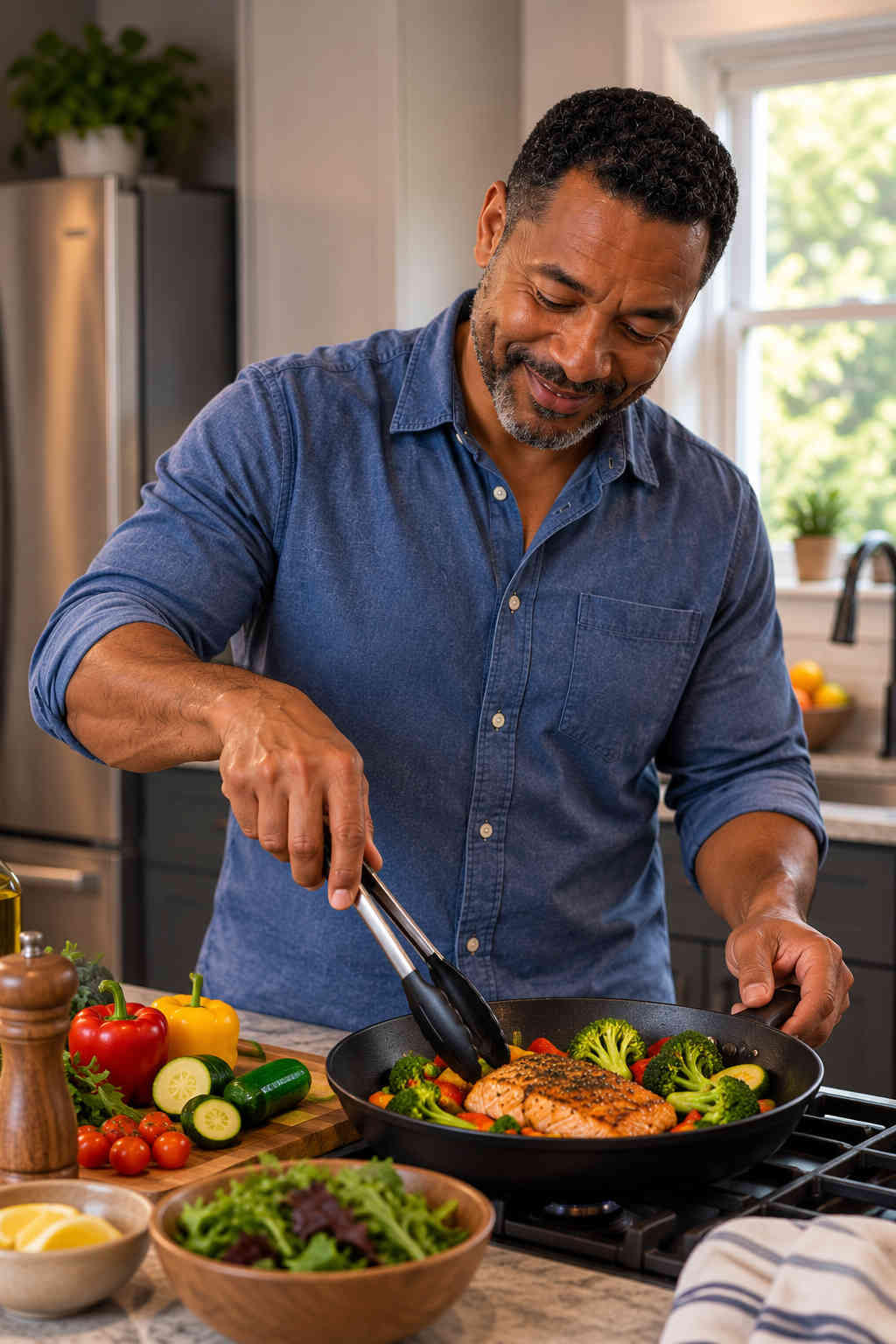
A One-Man Kitchen That Works
Healthy Eating Gets Easier When Your Kitchen Matches Your Life
After divorce, the kitchen can become one of the strangest rooms in the house.
You may have spent years buying groceries for a family, cooking portions for several people, eating dinner at roughly the same time every night, or relying on someone else to handle much of the meal planning. Then suddenly you're standing in a grocery store trying to figure out how much chicken one man actually needs.
Cooking a full dinner can seem like too much trouble. Buying fresh vegetables feels wasteful because half of them may spoil before you use them. Recipes designed to serve six aren't much help. And when nobody else is expecting dinner, grabbing a burger or eating cereal over the sink starts looking surprisingly reasonable.
Do that occasionally and it isn't a problem.
Do it five nights a week and you've accidentally created a new diet.
Learning how to eat healthy after divorce when you're cooking for one isn't primarily about becoming a better cook. It's about building a food system that makes sense for one person.
The old family system no longer fits.
You need a one-man kitchen.
Why Healthy Eating Can Get Harder After Divorce
Divorce changes more than your relationship status. It can disrupt routines that were built over many years.
Dinner may once have happened because other people were hungry. Grocery shopping may have followed a predictable family list. Leftovers disappeared because several people ate them.
When you live alone, those external forces disappear.
Nobody cares whether dinner happens at 6:30 or 9:15.
Nobody stops you from calling chips and salsa dinner.
Nobody is going to eat those strawberries before they turn into a science experiment in the refrigerator.
That freedom can be enjoyable, but it also means healthy eating now requires a little more intentional structure.
The solution isn't to create an elaborate weekly menu.
It's to make healthy food easier to use than unhealthy food.
Stop Shopping Like You're Still Feeding A Family
One of the first mistakes men make when cooking for one after divorce is continuing to shop like they did when they had a household to feed.
The grocery cart looks familiar, but the refrigerator tells a different story three days later.
Half a bag of spinach wilts. Bread gets stale. Produce goes bad. A family-sized package of chicken sits unopened because cooking all of it feels like a project.
Then you conclude that eating healthy is expensive because you're throwing away $20 worth of healthy food every week.
The problem isn't necessarily the food. It's the quantities.
When grocery shopping for one person, think in terms of usable portions, not the lowest price per ounce.
The giant container of salad greens isn't a bargain if you throw away half of it.
Buy smaller quantities of highly perishable foods when practical. Divide larger packages of meat as soon as you get home and freeze individual portions. Choose fruits with different shelf lives instead of buying six varieties that all need to be eaten immediately.
Your freezer becomes much more important when you're feeding one person. Use it.
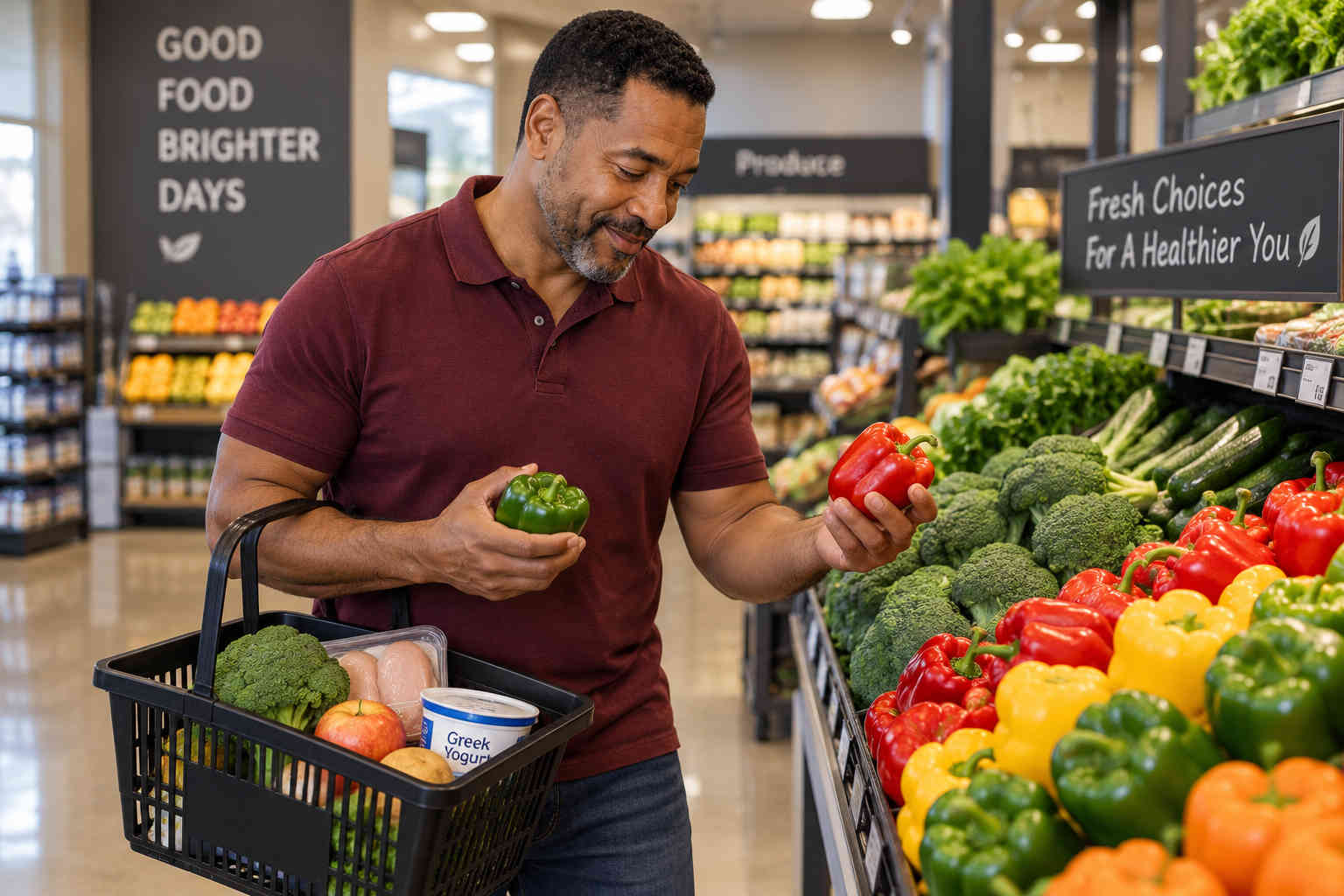
Build A "One-Man Grocery List"
Instead of starting every week with recipes, create a basic inventory of foods that can be combined in different ways.
Your list might include several proteins: chicken breasts or thighs, eggs, lean ground beef or turkey, fish, Greek yogurt, cottage cheese, canned tuna or salmon, and beans.
Then add vegetables that don't require much work: frozen broccoli, frozen mixed vegetables, spinach, peppers, onions, carrots, salad greens and potatoes.
Add several practical carbohydrates: oatmeal, rice, potatoes, whole-grain bread, tortillas and whole-grain pasta.
Keep a few fruits around: bananas, apples, oranges, berries or frozen fruit.
Finally, keep what I call meal rescue foods in the house. These are foods you can turn into dinner when you're tired and tempted to order something.
Meal Rescue Foods
Eggs, frozen vegetables, canned beans, tuna, microwaveable rice, whole-grain tortillas, and frozen chicken portions can turn a bad food night into a decent meal with almost no planning.
You're not trying to create a restaurant in your house.
You're creating enough combinations that you can eat well without needing a complicated recipe every night.
Use The 3-Part Dinner Instead Of Following Recipes
Recipes can actually make cooking for one harder.
A recipe asks for half an onion, three tablespoons of something you'll never use again, six chicken thighs and a spice you don't own.
Instead, learn to assemble meals.
Start with three parts:
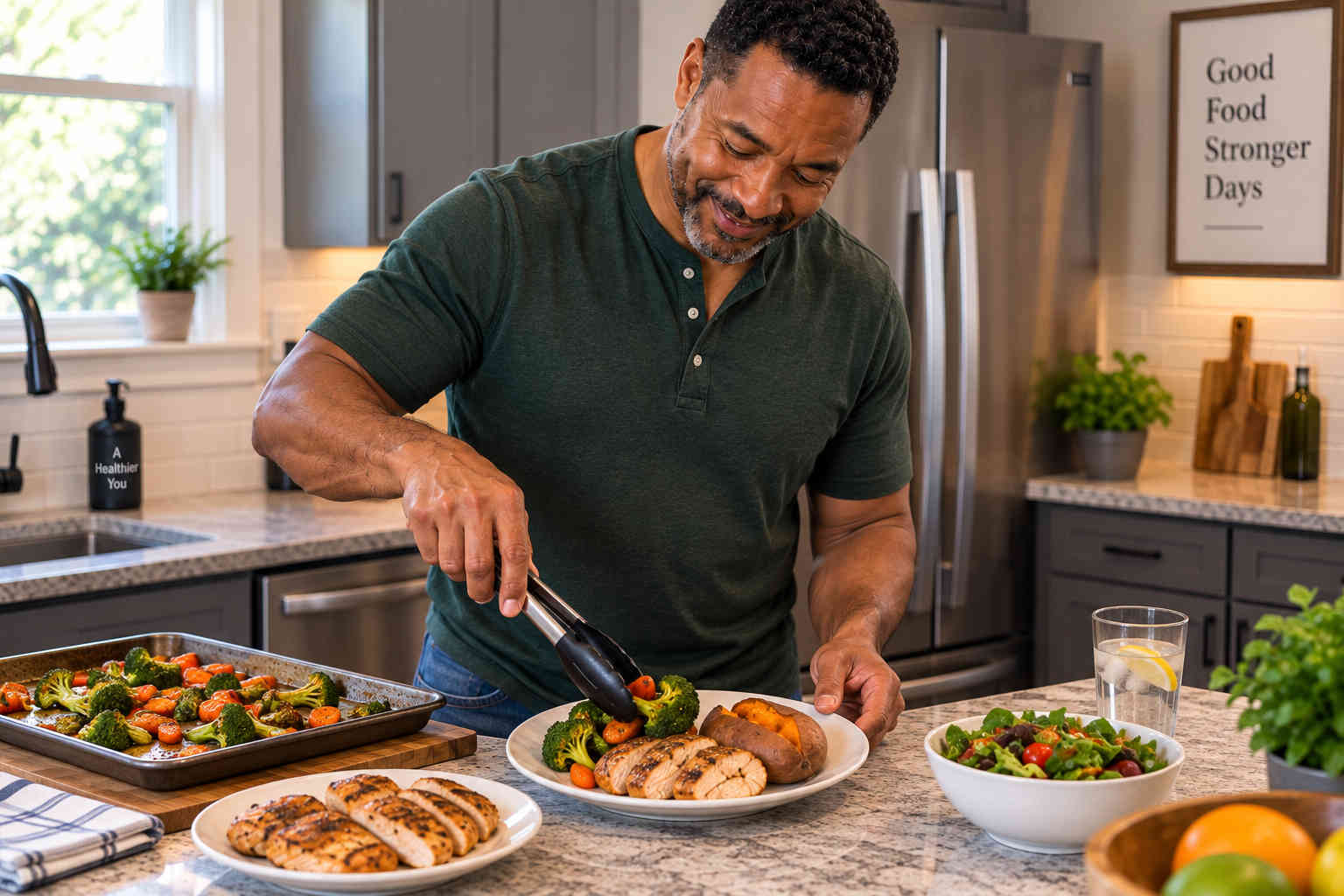
Protein + produce + useful carbohydrate
For example:
- Grilled chicken + broccoli + baked potato.
- Ground turkey + peppers and onions + rice.
- Salmon + green beans + potatoes.
- Eggs + spinach + whole-grain toast.
- Lean beef + mixed vegetables + rice.
- Tuna + large salad + whole-grain crackers.
This approach makes healthy meals for divorced men much easier because you're not starting from zero every night.
You're simply asking three questions: What's my protein? What vegetable or fruit am I eating? What carbohydrate makes sense with it?
Healthy meals don't need twelve ingredients to count as meals. Simple food still counts.
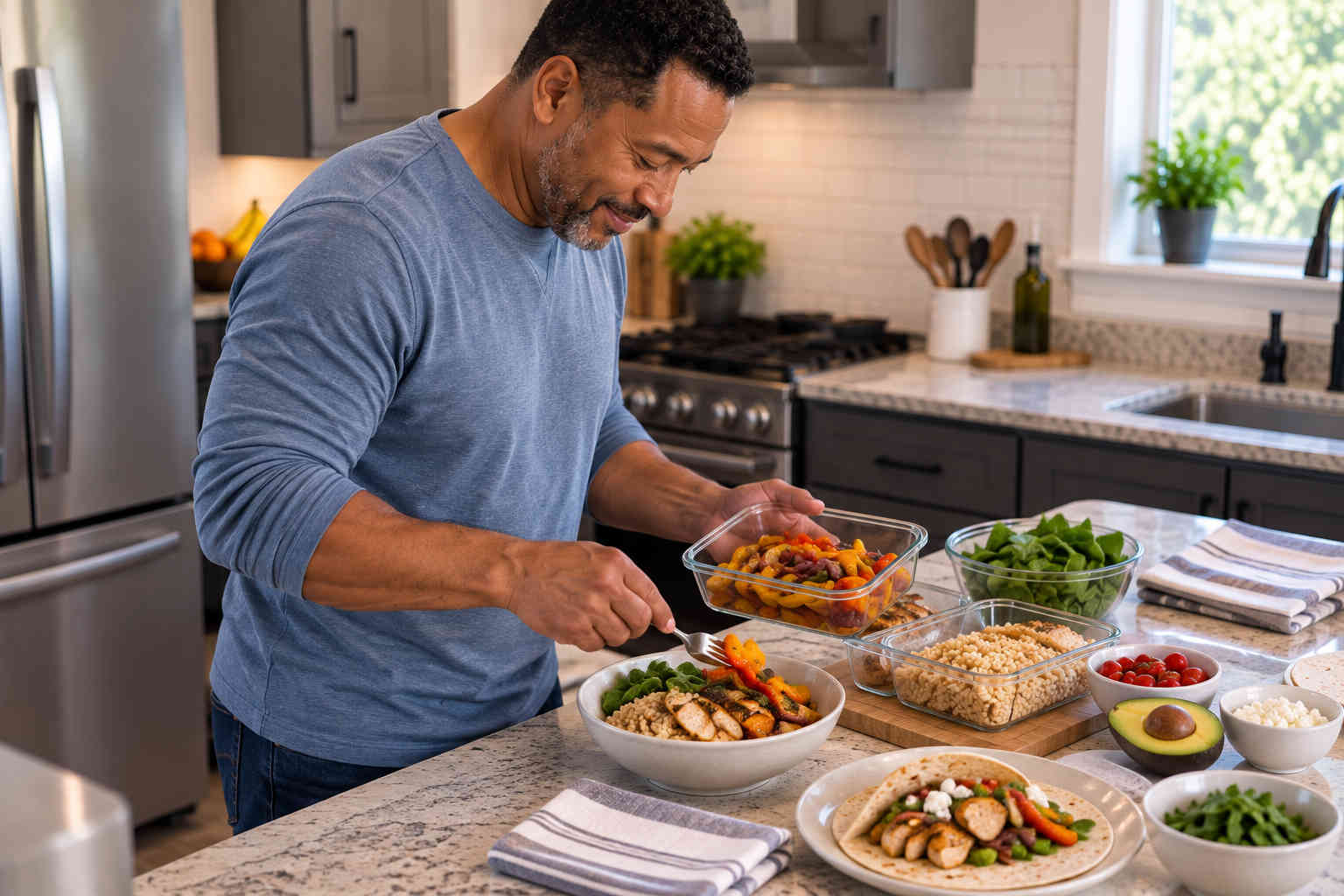
Cook Ingredients Once, Not Seven Complete Meals
Traditional meal prep often shows seven identical plastic containers lined up across a kitchen counter.
That works for some men.
For others, eating the exact same chicken, rice and broccoli for four consecutive days becomes depressing by Wednesday.
Try ingredient prep instead.
Suppose Sunday you cook chicken, rice and roasted peppers and onions.
Sunday night, you have chicken with rice and vegetables. Monday, slice the chicken and put it in a tortilla with peppers. Tuesday, add chicken to a large salad. Wednesday, combine the remaining rice, vegetables and an egg in a skillet for quick fried rice.
You're using the same ingredients without eating the same meal.
For one person, flexibility beats perfection.
Learn The "Cook Two, Freeze One" Rule
You don't need to reduce every recipe to exactly one serving.
Sometimes it's more efficient to deliberately make extra food.
The trick is preventing "extra food" from becoming "food I have to eat for the next four days."
If you're making chili, soup, stew, pasta sauce or another freezer-friendly dish, make several servings.
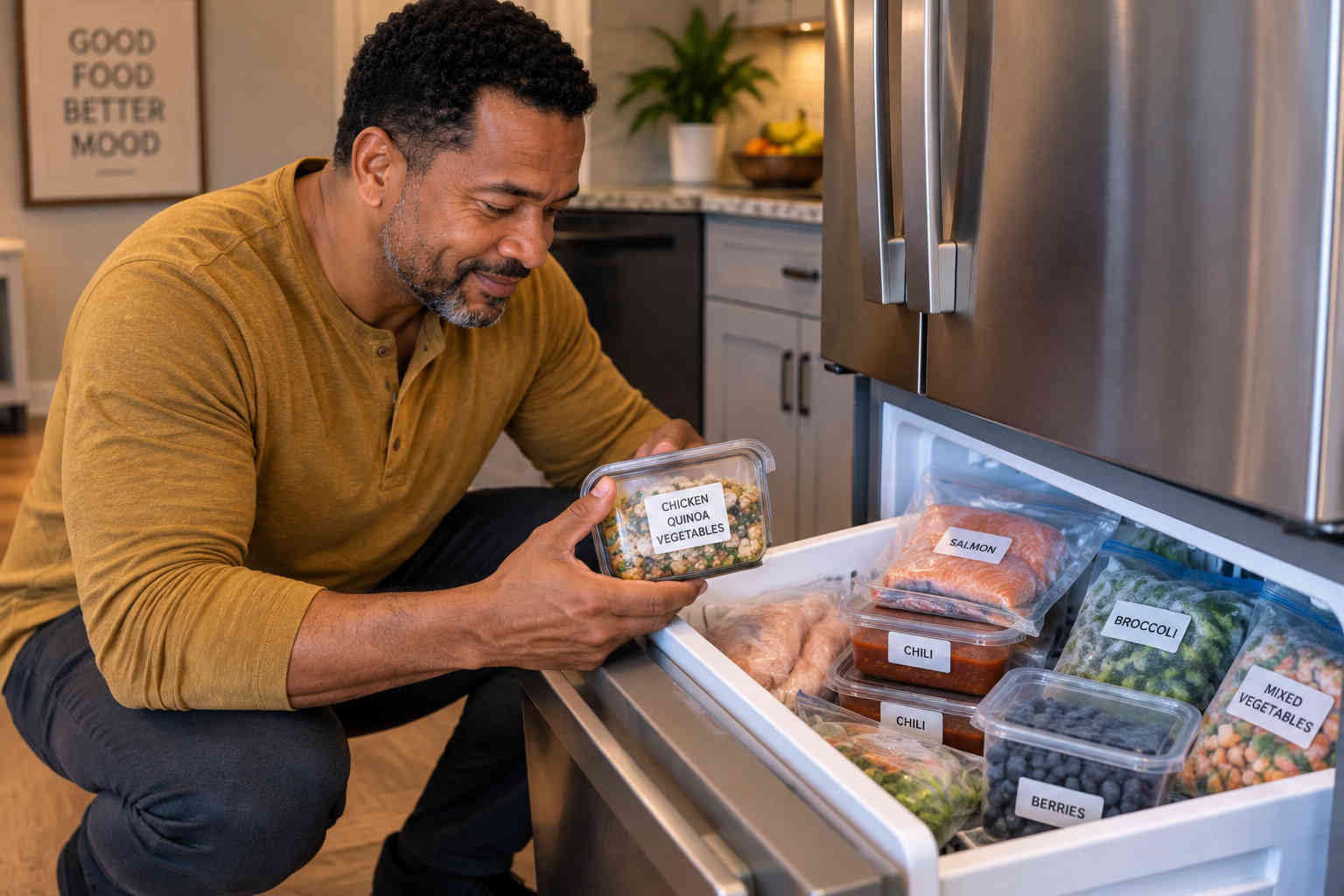
Eat one. Keep another for tomorrow or the following day. Freeze the rest in individual containers.
Now future you has homemade frozen dinners.
After several weeks, you may have chicken chili, beef stew, pasta sauce and soup waiting in the freezer. That's considerably more useful than discovering a mysterious six-month-old block of frozen casserole large enough to feed a softball team.
Label containers with the food and date. Single-serving containers matter because they allow you to thaw one dinner rather than an entire batch.
Create Three Emergency Dinners
There will be nights when you don't want to cook.
Plan for them.
Pick three dinners that take roughly ten minutes or less and require almost no decision-making.
Emergency Dinner #1: Eggs And Toast
Scramble two or three eggs with frozen spinach or vegetables. Add whole-grain toast and fruit.
Emergency Dinner #2: The Fast Burrito Bowl
Combine microwaveable rice, black beans, frozen peppers, salsa and leftover chicken. Add avocado or a small amount of cheese if you have it.
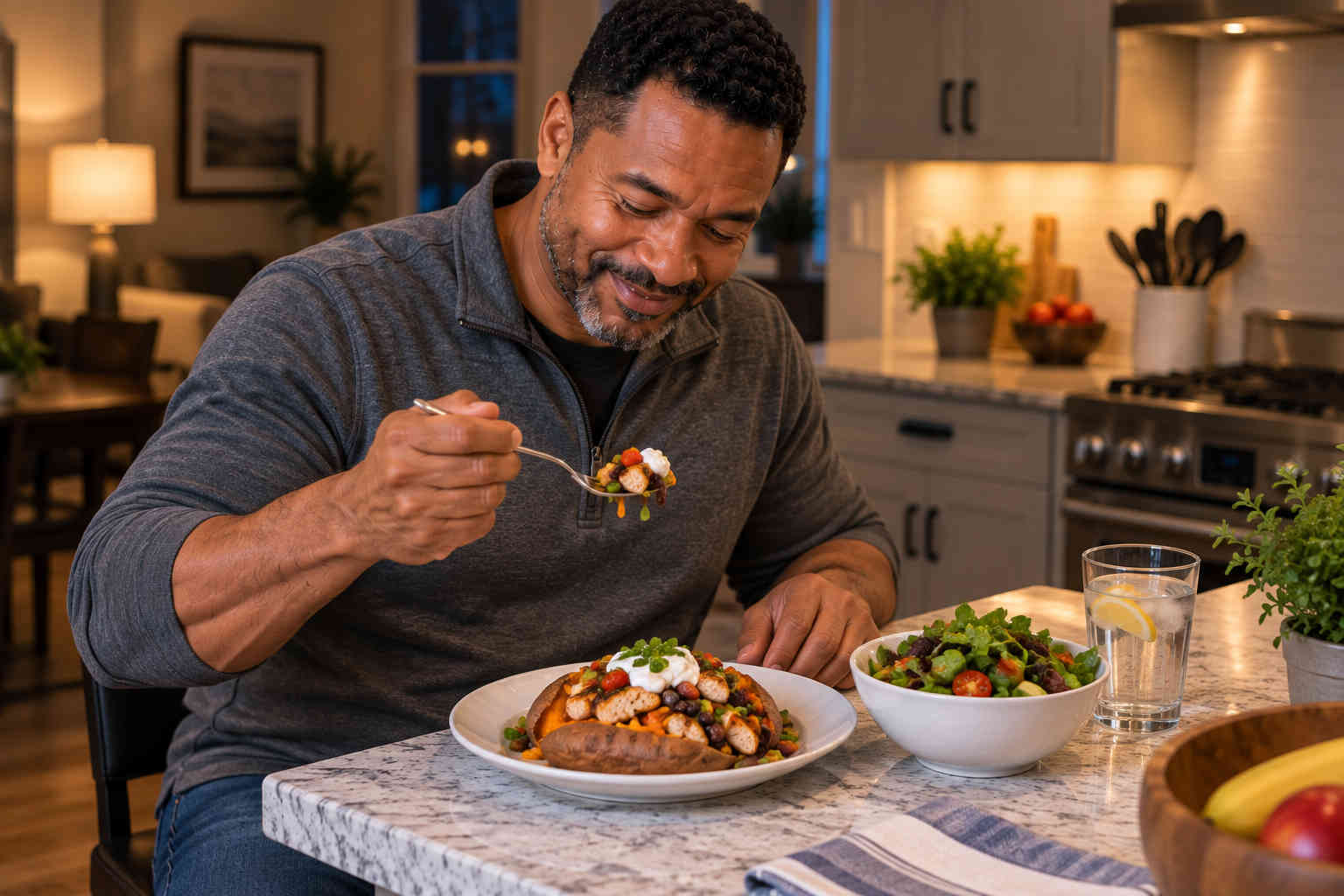
Emergency Dinner #3: Loaded Potato
Microwave a potato and top it with leftover lean meat, beans, Greek yogurt and vegetables.
These aren't culinary achievements.
That's the point.
The competition isn't a steakhouse dinner. The competition is the drive-through you pass on the way home.
Don't Let Being Alone Turn Dinner Into Grazing
There is another problem that can sneak up on newly single men.
You stop eating actual meals.
A handful of crackers becomes an appetizer. Then some cheese. Then a few cookies. Later you're still hungry, so you make a sandwich. An hour after that, you're standing in front of the refrigerator again.
You may consume plenty of calories without ever feeling like you ate dinner.
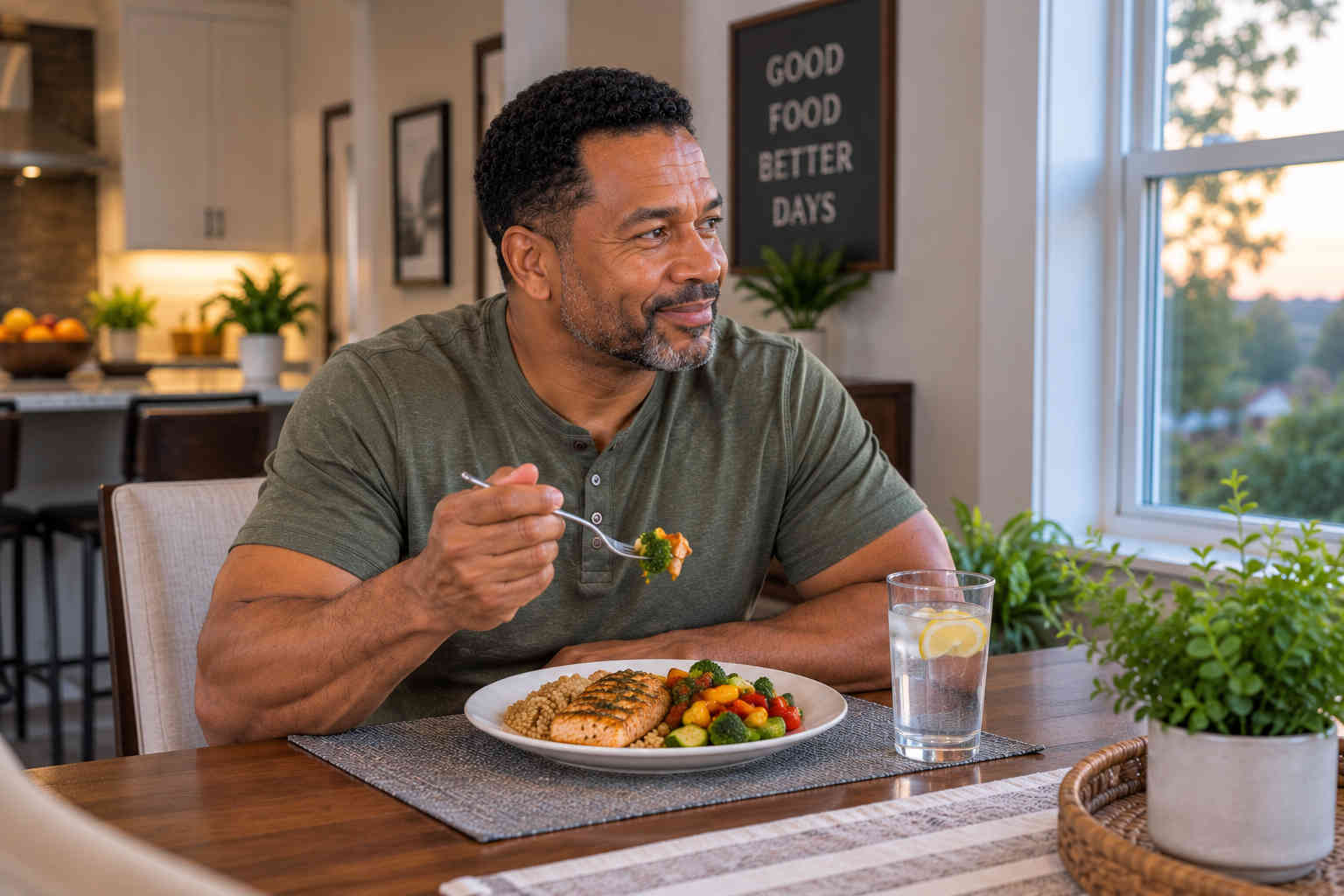
Try putting your food on a plate and sitting down to eat it.
That sounds almost ridiculously simple, but it creates a clear beginning and end to the meal.
Protein on the plate. Vegetables. A reasonable portion of rice, potatoes, pasta or another carbohydrate.
Eat. Finish. Leave the kitchen.
Living alone doesn't require you to turn dinner into an all-evening event.
Make Your Freezer Your Second Refrigerator
For a man cooking for one, frozen food can solve one of the biggest problems with healthy eating: spoilage.
Frozen broccoli doesn't care that you unexpectedly ate dinner with a friend Tuesday night.
Frozen berries aren't going bad because you forgot about them.
Frozen fish doesn't need to be eaten immediately.
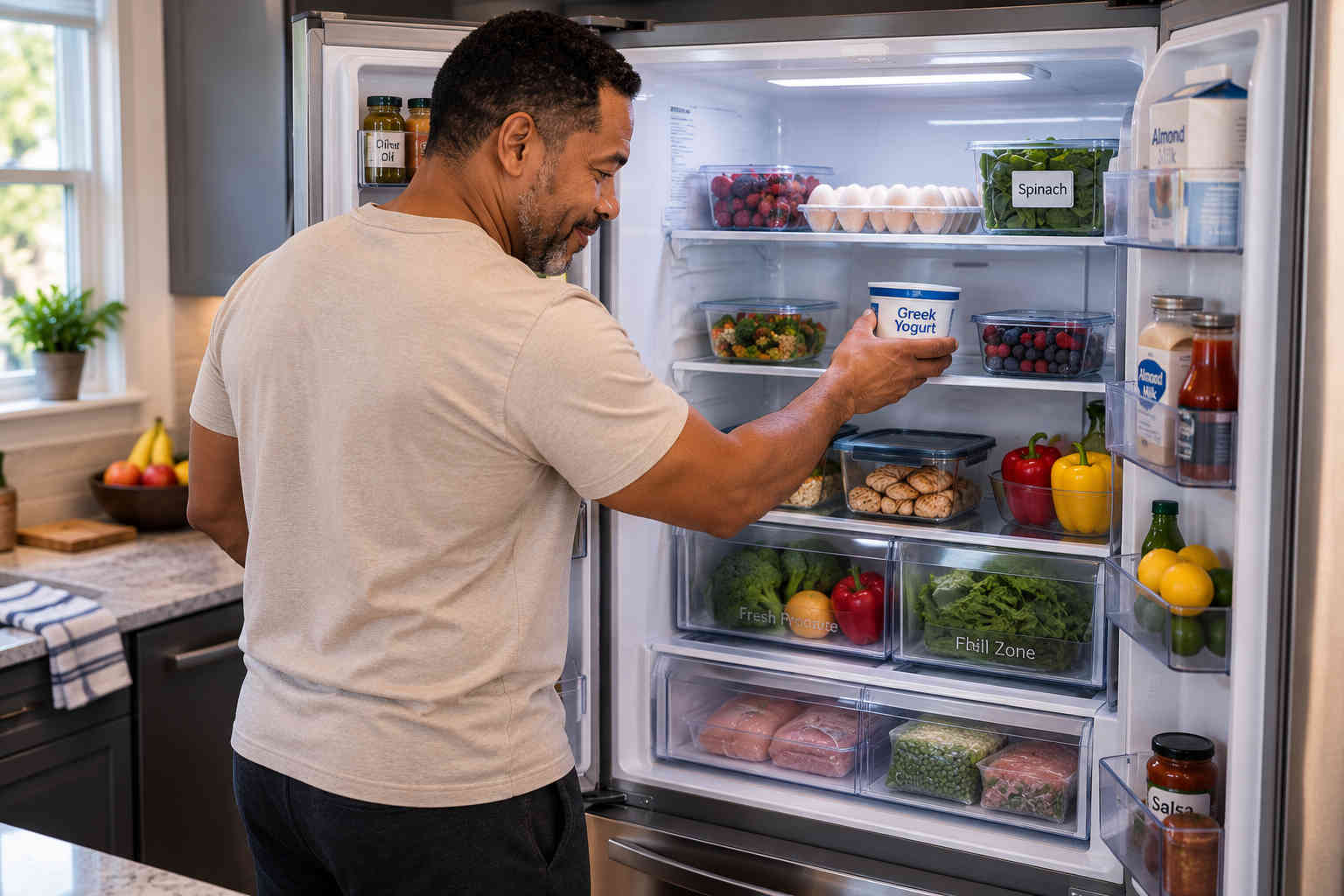
Keep individually portioned proteins and vegetables in the freezer, along with a few servings of meals you've previously cooked.
Fresh doesn't automatically mean better for your lifestyle.
The healthiest vegetable is often the one you actually eat.
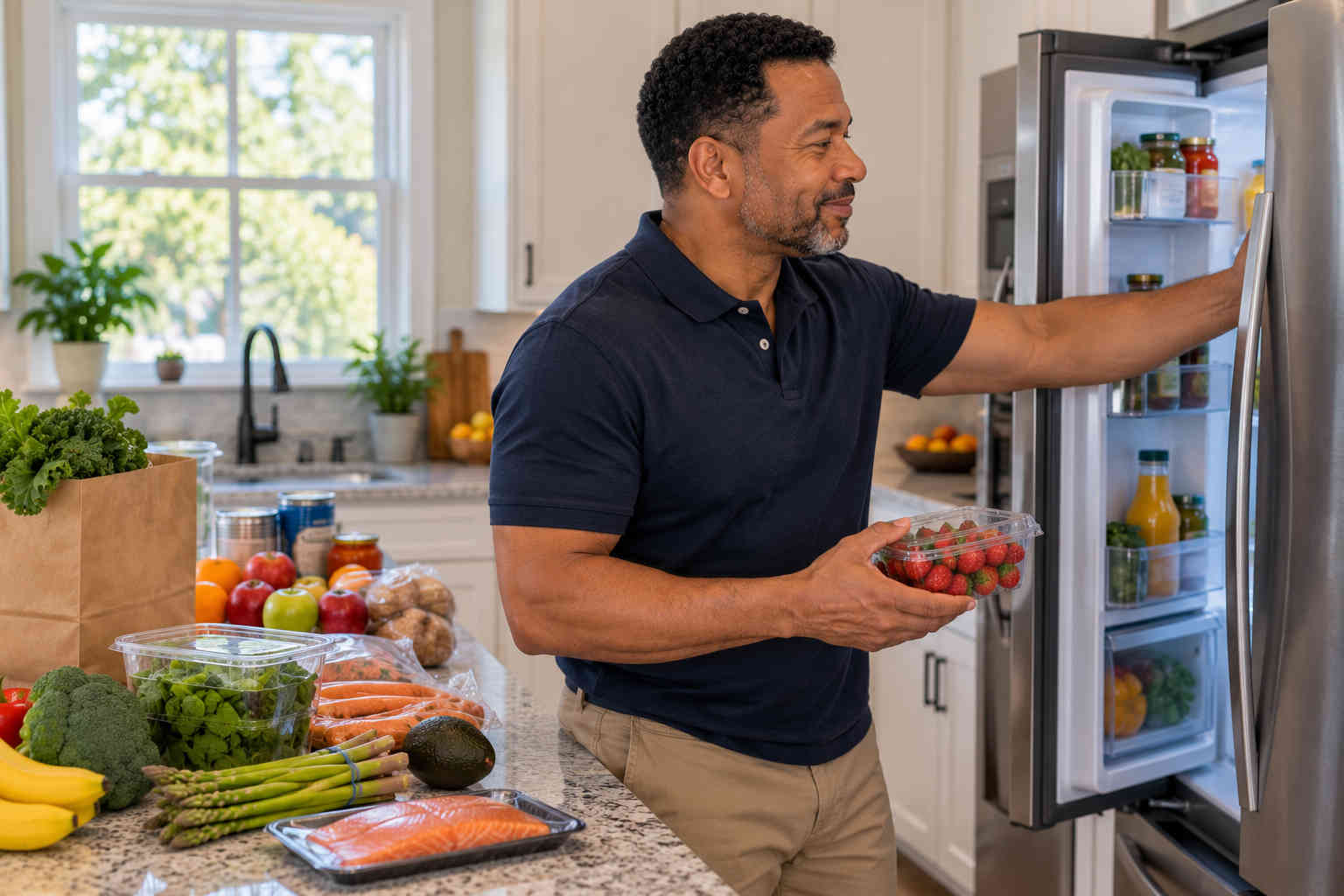
Use "Fresh First" When You Unpack Groceries
Here's a simple habit that can save money.
When you return from the grocery store, mentally divide food into two categories.
Eat first: salad greens, berries, fresh fish, ripe avocados, cut vegetables and other foods with short lives.
Eat later: apples, oranges, carrots, potatoes, frozen vegetables, canned beans, rice and frozen meat.
Build your first few meals around the foods most likely to spoil.
Later in the week, transition toward frozen and shelf-stable ingredients.
This small change can dramatically reduce the amount of healthy food that ends up in your trash.
Make Breakfast Almost Automatic
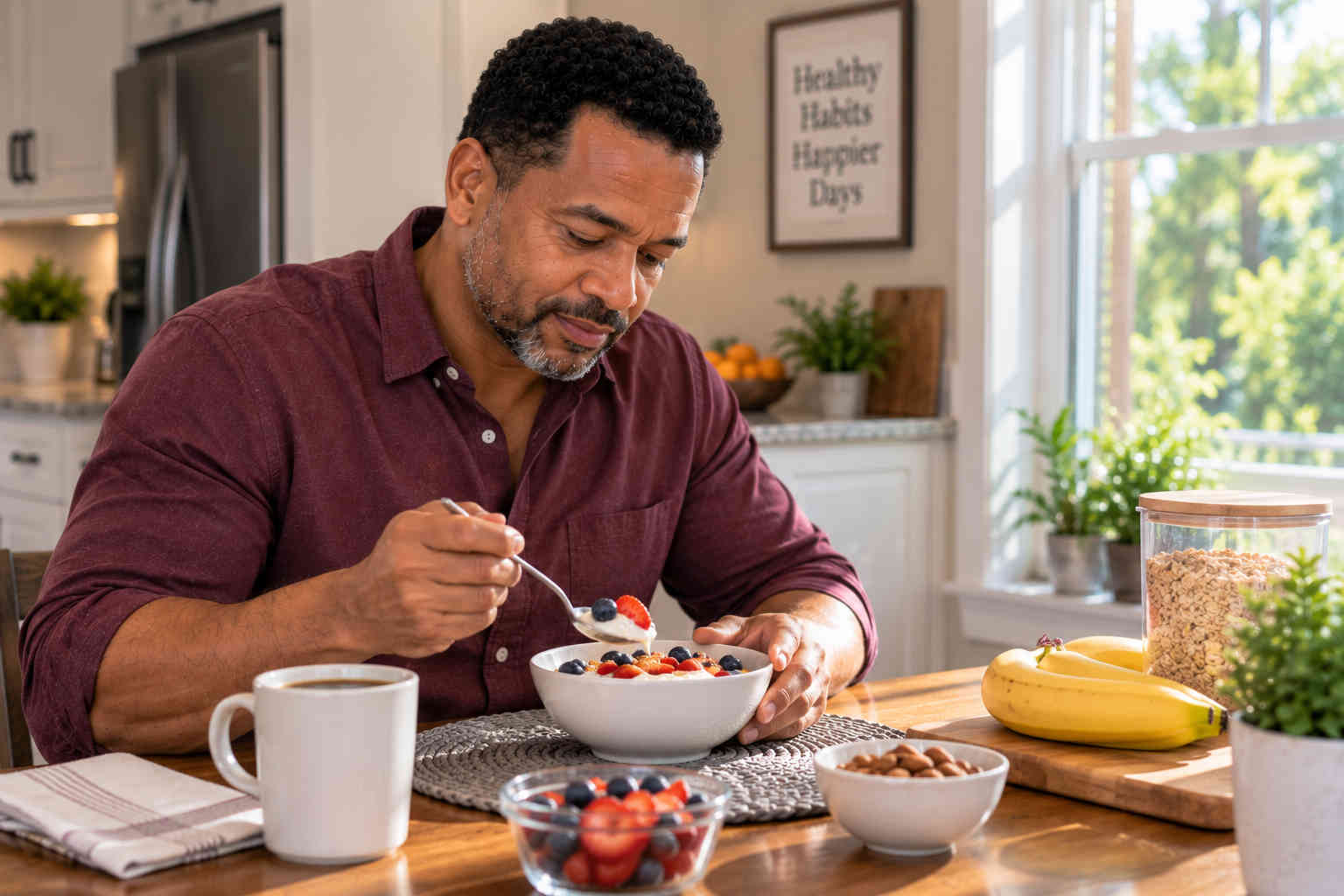
Dinner gets most of the attention, but breakfast is an easy place to simplify your diet.
You don't need seven different breakfasts.
Pick two or three.
For example:
- Eggs, whole-grain toast and fruit.
- Greek yogurt, berries and oatmeal.
- Oatmeal with banana, cinnamon and a spoonful of peanut butter.
- A vegetable omelet with fruit.
Rotate them.
Decision fatigue is real. The more decisions healthy eating requires, the easier it becomes to abandon the plan.
Save your creativity for meals where you actually want it.
Breakfast can be boring and still do its job.
Keep Lunch From Becoming Fast Food By Default
Lunch is another place where single men can quietly lose control of their diet.
If you leave the house without food and wait until you're starving, convenience usually wins.
Use dinner strategically.
Tonight's chicken can become tomorrow's chicken wrap. Leftover lean beef can go into a rice bowl. Extra vegetables can become part of an omelet. Chili can be reheated.
You don't necessarily need to "meal prep lunch."
Just make dinner produce tomorrow's lunch.
That turns one cooking session into two meals without forcing you to eat leftovers for days.
Learn Five Flavor Profiles
Healthy food gets blamed for being boring when the real problem is often seasoning.
Learn a few combinations instead of buying dozens of sauces.
- Mexican-inspired: cumin, chili powder, garlic, lime and salsa.
- Italian-inspired: garlic, basil, oregano, tomatoes and olive oil.
- Mediterranean-inspired: lemon, garlic, oregano, olive oil and black pepper.
- Smoky: paprika, garlic, onion powder and black pepper.
- Asian-inspired: ginger, garlic, reduced-sodium soy sauce and a small amount of sesame oil.
The same chicken and vegetables can taste completely different depending on how you season them.
Eating healthy becomes easier when the food tastes like something you actually want to eat.
Give Yourself Permission To Use Convenience Foods
Some men hear "healthy cooking" and imagine everything must be chopped, peeled and cooked from scratch.
Forget that.
Pre-cut vegetables are vegetables. Frozen vegetables are vegetables. Canned beans are beans. Microwaveable brown rice is still rice. A rotisserie chicken can become several useful meals. Bagged salad can save you from ordering pizza.
Convenience isn't the enemy.
The question is whether the convenience food helps you assemble a reasonable meal.
Sometimes paying an extra dollar for vegetables you'll actually cook is cheaper than throwing away vegetables you intended to chop.
Don't Try To Become A Different Man Overnight
Divorce has a strange way of inspiring dramatic reinvention.
You're going to lose 30 pounds. Never eat sugar again. Cook every meal. Go to the gym six days a week. Become the healthiest man in Mississippi by Tuesday.
Then real life shows up.
A better approach is to build a kitchen you can still operate when you're tired, busy or in a bad mood.
Start with one grocery trip. Learn three dinners. Then five. Find two breakfasts you like. Create three emergency meals. Freeze a couple of portions.
Gradually, eating at home stops feeling like something you're forcing yourself to do.
It becomes normal.
Turn Cooking For One Into An Advantage
There is something important that often gets missed in conversations about healthy eating for single men after divorce.
Cooking for one has advantages.
You don't have to convince anyone else to eat salmon.
Nobody complains about broccoli.
Nobody demands a different dinner.
You can eat breakfast for dinner.
You can make your food as spicy as you want.
You can experiment with a completely different way of eating without negotiating with an entire household.
Your grocery cart belongs to you.
That makes this an opportunity.
Instead of trying to recreate the meals you ate during your marriage, build a new way of eating around the man you're trying to become.
A Simple Seven-Day Cooking-For-One Framework
You don't need a rigid menu, but a framework can prevent the nightly "What am I going to eat?" problem.
- Monday: Cook a protein, vegetable and carbohydrate. Make enough for Tuesday's lunch.
- Tuesday: Use a second portion of the protein in a different format—a wrap, salad or bowl.
- Wednesday: Make a fast meal such as eggs, fish or a burrito bowl.
- Thursday: Use something from the freezer.
- Friday: Cook something you genuinely enjoy, even if it takes a little longer.
- Saturday: Eat out, meet friends or make something flexible at home.
- Sunday: Cook one larger meal and prepare a few ingredients for the upcoming week.
Notice what's missing.
Seven completely different recipes.
You don't need them.
A sustainable system should reduce decisions, not create more of them.
The Goal Isn't To Become A Chef
You don't need expensive cookware.
You don't need twenty spices you've never heard of.
You don't need to spend Sunday afternoon arranging meals in identical containers.
And you definitely don't need every dinner to look like something from a food magazine.
You need to be able to feed yourself well.
That's a different skill.
After divorce, learning to cook for one is part nutrition and part independence.
There is something satisfying about opening your refrigerator and knowing exactly what you can make. There is something useful about knowing that a long day doesn't automatically mean takeout. And there is something powerful about treating your own health as worth the effort even when nobody else is sitting at the table.
Start small.
Buy food in quantities that make sense. Keep protein available. Use frozen vegetables without apology. Cook ingredients that work in several meals. Freeze individual portions. Build emergency dinners. Learn what you actually enjoy eating.
Eventually, the question changes.
Instead of asking, "Why bother cooking all this just for me?"
You start thinking:
I'm exactly who I'm cooking for.
Your One-Man Kitchen Rule
Make Healthy Food Easier To Use Than Unhealthy Food
Keep enough versatile food in the refrigerator, freezer, and pantry that a tired night still has an easy answer. You do not need a perfect diet. You need a kitchen that makes the better choice practical.