
Nutrition Without The Homework
Most Men Only Need A Handful Of Numbers
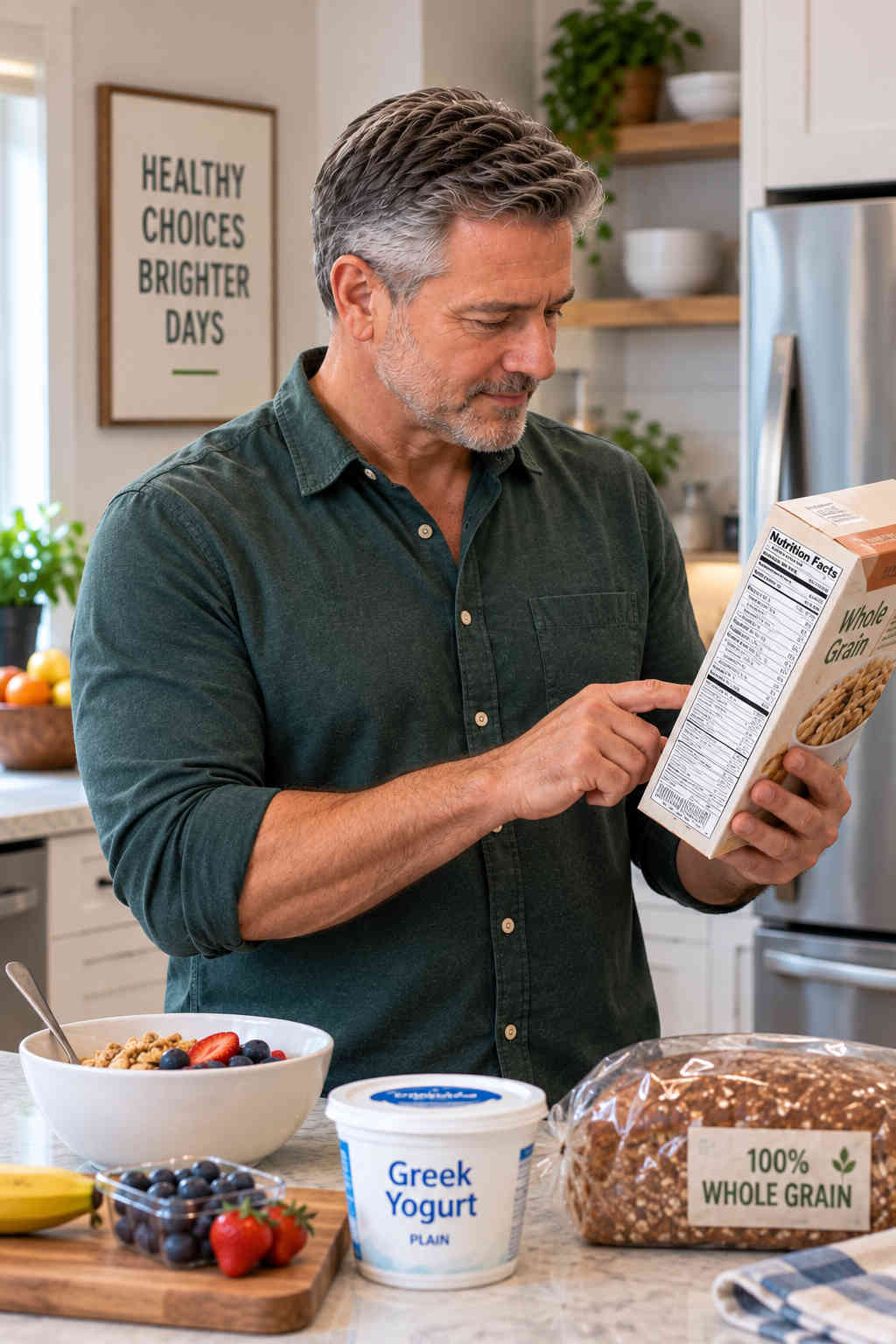
You pick up two boxes of cereal at the grocery store. One says “heart healthy” across the front. The other advertises “12 grams of whole grains.” You turn them around and find two Nutrition Facts labels filled with calories, percentages, grams, milligrams, sugars, fiber, vitamins, and ingredients you probably have not thought about since high school chemistry.
Which one should you buy?
This is where a lot of men make nutrition harder than it needs to be. You do not need to become an amateur dietitian to make better food choices. You do not need to memorize the recommended amount of every vitamin and mineral. And you certainly do not need to stand in the grocery aisle studying a box for five minutes.
Learning how to read nutrition labels without overcomplicating your diet is mostly about knowing which numbers deserve your attention and which ones usually do not.
For most men trying to lose weight, improve their diet, maintain muscle, or simply stop eating so much highly processed food, six things tell you most of what you need to know: serving size, calories, protein, fiber, added sugar, and sodium. Then take a quick look at the ingredient list.
That is usually enough.
Start With What You Are Trying To Accomplish
A food is not automatically “good” or “bad” because of one number on its label. The better question is: Does this food help me accomplish what I am trying to accomplish?
A man trying to lose 30 pounds may look at a label differently from a man who exercises heavily and is trying to maintain his weight. Someone trying to increase his protein intake has different priorities from someone who has been told to reduce sodium.
That is why blindly chasing whatever number appears healthiest can be misleading. A food labeled “low fat” could still contain a substantial amount of added sugar. A food with more calories might also provide considerably more protein and fiber. A product marketed as “high protein” might contain only a few more grams of protein than the regular version while costing considerably more.
Before examining the label, know what job you want the food to perform. Is it supposed to be a protein source? A filling snack? Something convenient for lunch? A source of fiber? A lower-calorie substitute for something you eat regularly?
Once you know the job, reading the label becomes much easier.

Step 1: Look At The Serving Size Before Anything Else
The serving size is at the top of the Nutrition Facts label for a reason. Everything underneath it is connected to that amount of food.
Suppose a bag of granola lists a serving size of one-half cup and 240 calories. If you normally pour approximately one cup into your bowl, you are eating two servings. Your 240-calorie breakfast just became 480 calories before adding milk.
This matters especially with foods that are easy to eat in larger quantities: cereal, granola, nuts, chips, crackers, salad dressing, peanut butter, ice cream, pasta, and sauces.
You do not have to weigh every bite of food for the rest of your life. But when you are buying something new, compare the label's serving size with the amount you realistically expect to eat. That is one of the fastest ways to make the label useful in the real world.

Step 2: Put Calories In Context
Calories matter, particularly if you are trying to lose weight, but the calorie number should not be judged in isolation. Ask yourself: What am I getting for those calories?
Imagine you are choosing between two snacks. Snack A has 160 calories and leaves you looking for something else to eat 30 minutes later. Snack B has 220 calories but contains significantly more protein and fiber and keeps you satisfied until dinner. The lower-calorie option is not necessarily the better choice.
Think of calories as a budget. If you are going to spend 300 calories on something, you would ideally like those calories to do something useful—provide protein, fiber, nutrients, satisfaction, or enough enjoyment that the food is actually worth eating.
This is especially important after divorce or a major lifestyle change, when convenience foods can quietly become a large part of your diet. Frozen dinners, restaurant meals, snack foods, and takeout may be easy, but you can end up consuming a surprising number of calories without eating much food that actually keeps you satisfied.
You do not need to fear calories. You need to get better value from them.

Step 3: Check The Protein
For men trying to improve body composition, lose fat while preserving muscle, or get back into shape, protein deserves a prominent place in your label-reading routine.
The useful number is simple: How many grams of protein am I actually getting per serving?
Do not let the front of the package answer this question for you. “Protein packed,” “with protein,” and similar marketing language can sound impressive. Turn the package around and look at the number.
The amount you consider good depends on what the food is supposed to be. If you are buying chicken, Greek yogurt, cottage cheese, tuna, or another food specifically because you want protein, you would expect protein to make a meaningful contribution.
If you are buying oatmeal, bread, or a side dish, protein may be a bonus rather than the primary reason you are eating it. That is an important distinction.
Do not reject a perfectly good food because it is not high in protein when protein was never supposed to be its main job. An apple does not need 20 grams of protein to be a good apple.
Step 4: Look At Fiber—Especially With Carbohydrate Foods
Fiber is one of the easiest numbers to overlook. Do not.
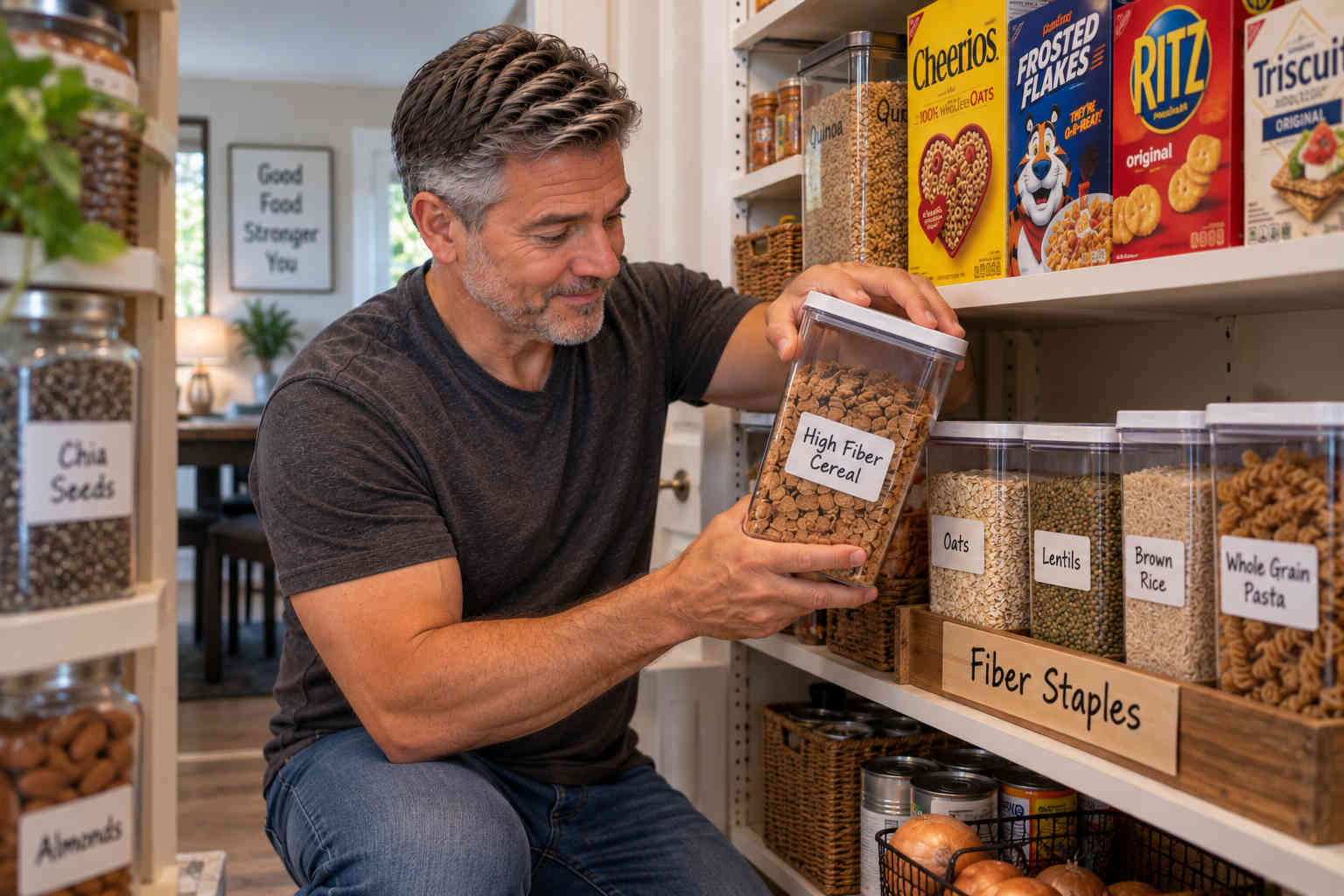
When comparing breads, cereals, tortillas, oatmeal, snack bars, and other carbohydrate-heavy foods, fiber can help separate products that merely look healthy from ones that offer more nutritional value.
You do not have to memorize a daily fiber target to shop intelligently. Instead, use fiber comparatively. If you are holding two similar products and one provides 1 gram of fiber while the other provides 5 grams for roughly similar calories, that is useful information.
Fiber can also help make meals more satisfying, which matters when you are trying to control portions without walking around hungry all afternoon.
Here is an easy rule: The more heavily a product markets itself as whole-grain, high-fiber, or healthy, the more interested you should be in seeing whether the fiber number backs up the advertising.
The front of the package is marketing. The Nutrition Facts panel is where you check the claim.
Step 5: Learn The Difference Between Total Sugar And Added Sugar
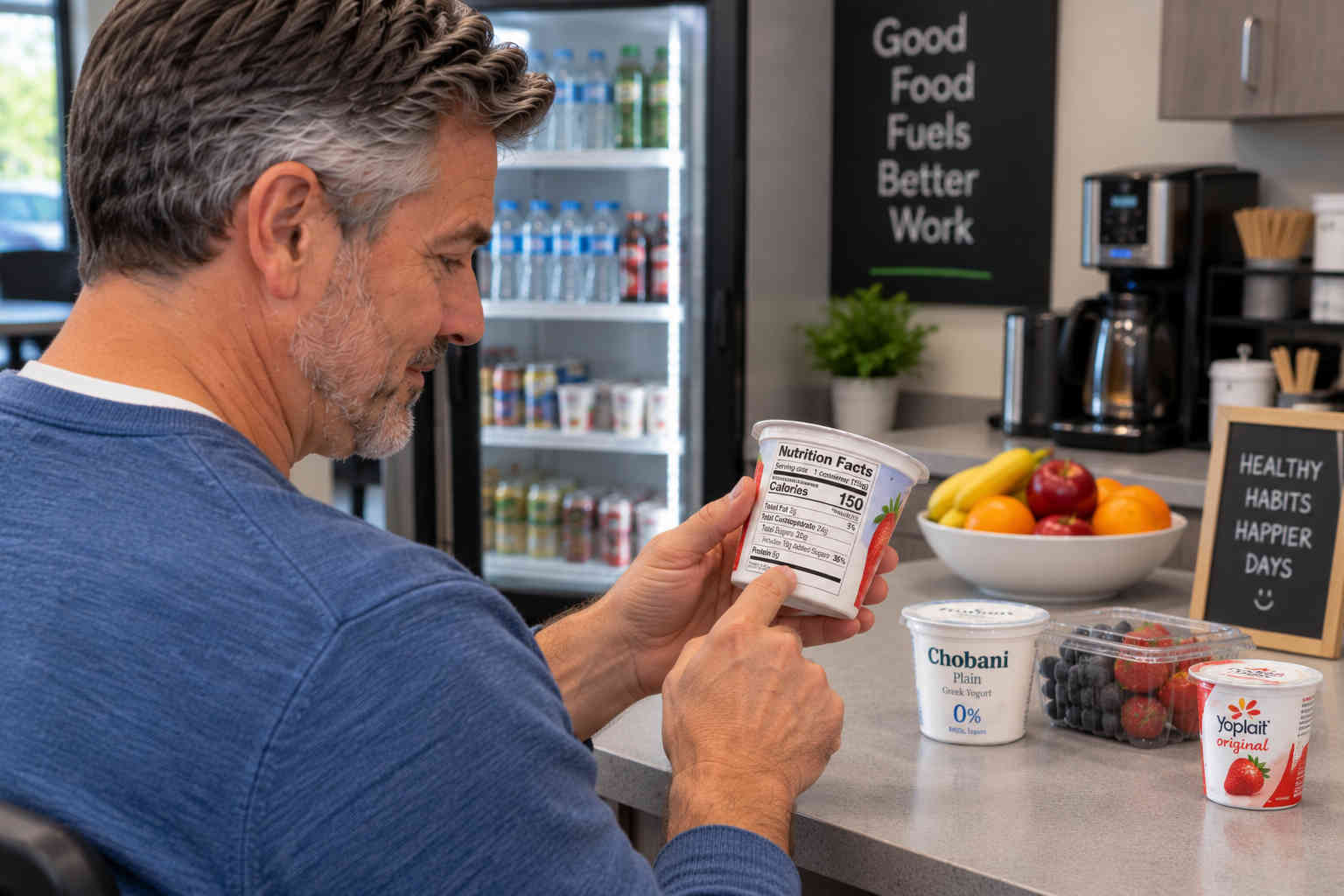
One of the most useful parts of the modern Nutrition Facts label is that it separates Total Sugars from Includes Added Sugars.
Those numbers do not mean the same thing. Total sugars can include naturally occurring sugars found in foods such as fruit and milk. Added sugars are sugars added during processing.
Consider yogurt. A yogurt could contain sugar naturally because milk contains lactose. Another yogurt may contain that natural sugar plus a substantial amount of added sweetener. Looking only at total sugars does not tell you the whole story.
The added-sugar line gives you much more context. You do not need to spend your day adding every gram. Use the number to spot foods where added sugar is unexpectedly high.
Breakfast cereal, flavored yogurt, sauces, granola bars, bottled coffee drinks, flavored oatmeal, and seemingly healthy snacks are common places worth checking.
You may decide they are still worth eating. The point is to make that decision knowingly.

Step 6: Pay Attention To Sodium Without Becoming Afraid Of Salt
Sodium is another number that makes more sense when viewed across your entire diet.
A single packaged meal can use a surprisingly large portion of a day's sodium. This does not mean you need to buy only foods with tiny sodium numbers. But if much of your diet consists of packaged foods, deli meats, canned foods, frozen meals, sauces, restaurant meals, and snacks, sodium can accumulate quickly.
Use labels to compare similar products. Suppose two cans of soup taste similar and cost about the same, but one has substantially less sodium. That is an easy change.
You have not redesigned your diet. You have not given up soup. You simply bought the version that better fits your goals. Those small decisions become meaningful when repeated week after week.
The 5% And 20% Trick Makes Percent Daily Value Easier
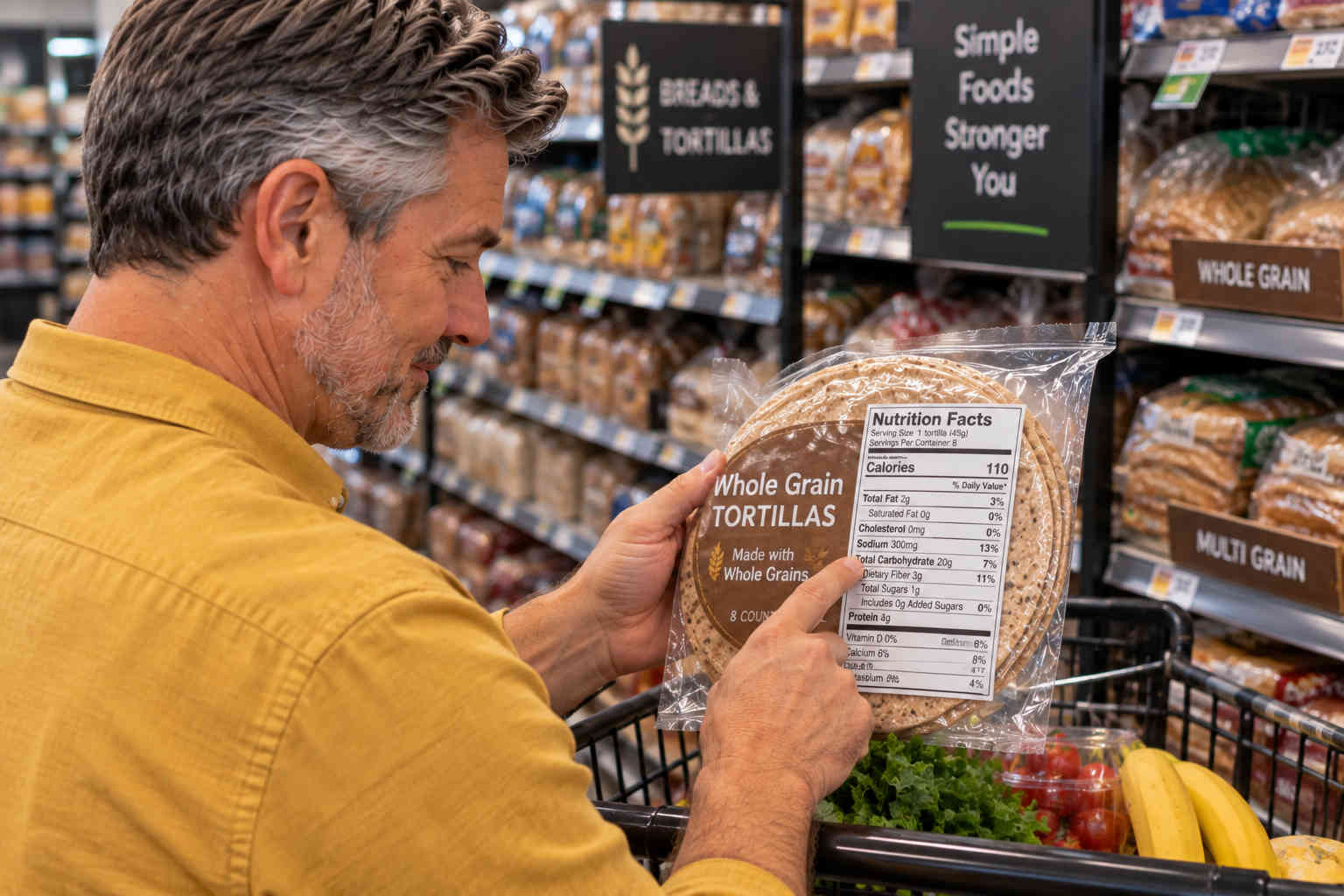
The percentage column on a nutrition label looks complicated until you know one shortcut: 5% Daily Value or less is considered low, while 20% Daily Value or more is considered high.
That is it. You do not need to calculate anything.
If a food has 25% Daily Value of sodium, that is relatively high in sodium per serving. If it has 3% Daily Value of saturated fat, that is relatively low. If it provides 22% Daily Value of fiber, that is high in fiber.
This is especially helpful when you are standing in a store comparing two products. For nutrients you generally want more of, such as fiber, a higher percentage may be useful. For nutrients you are trying to limit, such as sodium, saturated fat, or added sugars, lower percentages are generally preferable.
Think of % Daily Value as a quick traffic signal rather than a math problem.
Do Not Let “Total Carbohydrates” Scare You
Carbohydrates have become one of the most misunderstood parts of nutrition labels. Some men see Total Carbohydrate: 38g and immediately assume the food is unhealthy.
That number alone does not tell you enough. Those carbohydrates could come from beans, oats, whole grains, fruit, vegetables, added sugar, refined flour, or some combination of them.
Instead of judging carbohydrates as one giant category, look underneath the number. How much fiber? How much added sugar? Then look at the ingredient list. That gives you a much better picture of what you are actually eating.
Unless you are following a specific carbohydrate target for a medical or dietary reason, there is little benefit in treating every gram of carbohydrate as something to avoid.

Use The Ingredient List As A Tie-Breaker
After you have looked at the major numbers, glance at the ingredients. Ingredients are generally listed in descending order by weight, so the first several ingredients tell you a lot about what makes up the product.
But do not fall into another nutrition-label trap: A long ingredient list does not automatically mean a food is unhealthy. And an ingredient you cannot pronounce is not automatically dangerous.
Some perfectly ordinary food ingredients have scientific-sounding names. Instead, ask more practical questions. What are the first few ingredients? Does the product appear to be mostly what you thought you were buying? Are several forms of sweetener appearing throughout the list? Are whole grains actually near the beginning of a product advertising itself as whole grain?
The ingredient list should provide context, not become a purity test.
Stop Letting The Front Of The Package Make The Decision
Food companies know which words get your attention: “natural,” “made with whole grains,” “high protein,” “multigrain,” “light,” “plant based,” and “no added sugar.”
Some of those claims can provide useful information. None of them should replace reading the back of the package.
Imagine you are choosing bread. Bread A has rustic packaging, wheat stalks on the bag, and “MULTIGRAIN” printed across the front. Bread B looks ordinary. Turn them around and Bread B may have more fiber, similar calories, less added sugar, and a whole grain as its first ingredient.
The less impressive package could be the better fit.
Give the front of the package about three seconds. Give the Nutrition Facts panel ten.
Compare Foods That Actually Compete With Each Other
One of the best ways to use nutrition labels is comparison shopping. But compare foods that perform the same job.
Compare Greek yogurt with Greek yogurt. Bread with bread. Frozen dinners with frozen dinners. Breakfast cereals with breakfast cereals. Pasta sauces with pasta sauces.
You do not need to decide whether almonds are “healthier” than chicken breast. They serve different purposes in your diet.
When comparing similar products, make sure the serving sizes are reasonably comparable. Then look for meaningful differences. Maybe one has 80 fewer calories, twice the protein, three times the fiber, half the added sugar, or substantially less sodium.
Now the label is helping you make a decision instead of simply throwing numbers at you.
Do Not Try To Find The “Perfect” Food
This is where nutrition-label reading can go wrong. You learn what all the numbers mean and suddenly nothing at the grocery store seems good enough.
Too much sodium. Not enough fiber. Five grams of added sugar. Too many carbohydrates. Not enough protein. An ingredient you do not recognize.
That mindset turns eating well into an exhausting search for nutritional perfection.
A healthy diet is not built by finding foods with flawless labels. It is built by combining foods intelligently. Your turkey sandwich does not need to contain every nutrient you require that day. Your yogurt does not need to be perfect. Your dinner can contain more sodium if the rest of your day was relatively low in sodium.
Your diet matters more than any individual package.
The 15-Second Nutrition Label Test
1. Serving size: Is that close to the amount I am actually going to eat?
2. Calories: Are the calories reasonable for the job this food is supposed to perform?
3. Protein: Does it provide enough protein if I am buying it as a protein source?
4. Fiber: If it is a carbohydrate-heavy food, am I getting meaningful fiber?
5. Added sugar: Is there more added sugar than I expected?
6. Sodium: Is the sodium unusually high compared with similar products?
7. Ingredients: Do the first few ingredients make sense for what I think I am buying?
Done. You do not need to analyze every vitamin and mineral every time you buy a box of crackers.
What This Looks Like In A Real Grocery Store
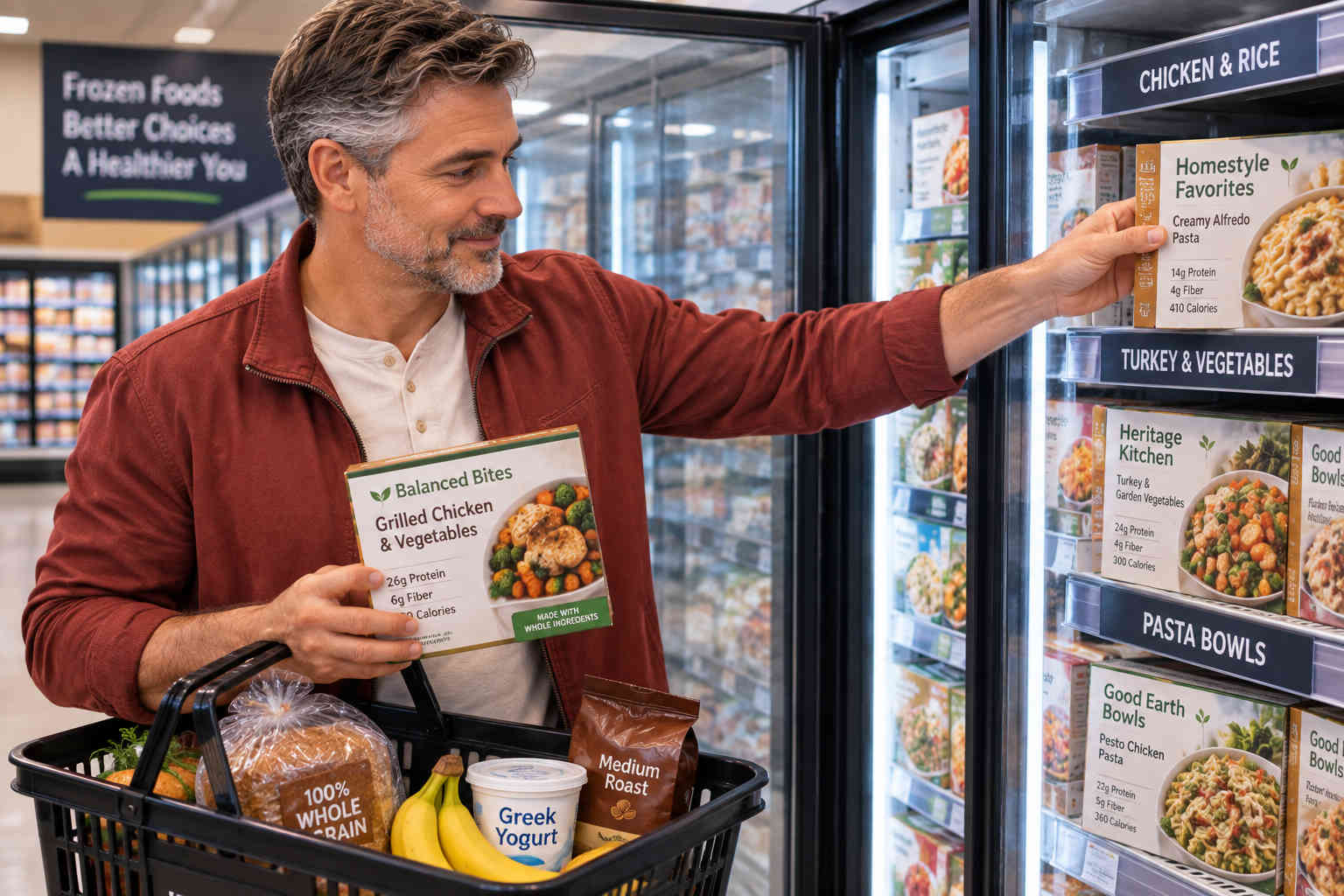
Suppose you are buying a frozen meal because you need something you can microwave after work.
Meal A: 390 calories, 14 grams of protein, 3 grams of fiber, 8 grams of added sugar, and 1,050 milligrams of sodium.
Meal B: 430 calories, 27 grams of protein, 7 grams of fiber, 3 grams of added sugar, and 680 milligrams of sodium.
Somebody focused only on calories might immediately grab Meal A because it has 40 fewer calories. But Meal B gives you considerably more protein and fiber while containing less added sugar and sodium.
Depending on your goals, those additional 40 calories might be an excellent trade.
This is exactly why nutrition labels should be read, not simply scanned for the smallest calorie number.
You Do Not Have To Read Labels Forever
Here is something rarely mentioned in articles about nutrition labels: eventually, you should not need to read very many of them.
Most people buy many of the same foods repeatedly. Once you have compared five or six Greek yogurts and found one you like, you do not need to re-investigate it every Saturday. Once you have found bread with a nutritional profile that works for you, put it in the cart.
Do the same with your cereal, oatmeal, frozen meals, tortillas, pasta sauce, snacks, and other staples.
Label reading is most valuable when you are choosing a new product or comparing alternatives. The goal is not to become a permanent grocery-store detective. The goal is to create a collection of reliable foods that make eating well easier.
Use Labels To Simplify Your Diet, Not Control It
Learning how to read nutrition labels without overcomplicating your diet should give you more freedom, not less.
You do not need to memorize every Daily Value. You do not need an app open every time you walk through the grocery store. And you do not need to reject foods because one number is not ideal.
Start with the serving size. Check the calories in context. Pay attention to protein and fiber. Watch for unexpectedly high added sugar and sodium. Use the 5% and 20% Daily Value shortcut. Glance at the ingredients.
Then make a decision and move on.
The real advantage of understanding nutrition labels is not knowing exactly how many milligrams of everything you consumed today. It is being able to walk into a grocery store, ignore most of the marketing, turn a package around, and quickly answer one useful question:
Does this food make it easier or harder for me to eat the way I want to eat?
If you can answer that, you already know enough to make a better choice.

The Simple Rule
Read Enough To Decide—Then Move On
Serving size, calories, protein, fiber, added sugar, sodium, and the first few ingredients will answer most of the questions you actually need answered. Use the label to simplify your choices, not to turn eating into another source of stress.