
Carbs Without The Fear
You Do Not Need To Declare War On Bread, Potatoes And Fruit
If you're a man over 40 trying to lose weight, carbohydrates have probably been blamed for at least some of your problems.
Bread makes you fat. Potatoes go straight to your stomach. Rice has too many carbs. Fruit has too much sugar. Pasta is off-limits until you reach your goal weight.
Follow enough weight-loss advice online and eventually it can seem as though the solution is to remove every carbohydrate from your kitchen and live on grilled chicken, eggs, protein shakes, and vegetables.
That isn't necessary.
For most men trying to lose weight after 40, the more useful question isn't "How do I stop eating carbs?" It's "Which carbs make it easier for me to control calories without feeling like I'm dieting all day?"
That's a much better way to look at carbohydrates.
A bowl of lentils and a bowl of sugary cereal both contain carbohydrates, but they don't provide the same combination of fiber, protein, nutrients, volume, or satisfaction. A baked potato and a plate of French fries both start with potatoes, but they're very different foods once calories, cooking methods, and portion sizes enter the picture.
The best carbs for men trying to lose weight after 40 tend to have one thing in common: they earn their place on your plate.

Why Men Over 40 Don't Need To Be Afraid Of Carbs
Weight loss still depends heavily on energy balance. If you consistently consume fewer calories than your body uses, your stored energy has to make up the difference.
Carbohydrates don't somehow cancel that process.
The problem is that certain carbohydrate-heavy foods make it incredibly easy to consume a lot of calories without feeling particularly satisfied. A large bag of chips can disappear during a football game. Several cookies can disappear while you're standing in the kitchen. A giant restaurant basket of tortilla chips can be half-empty before your meal arrives. A 500-calorie coffee drink may barely register as food.
Those are very different experiences from eating a bowl containing black beans, rice, vegetables, salsa, and grilled chicken.
This distinction becomes especially useful after 40 because extreme dieting usually isn't the goal. You need an eating strategy you can maintain while working, traveling, dating, exercising, spending time with your children, and living a normal life.
Instead of declaring carbohydrates the enemy, become more selective about which carbohydrates you eat regularly.
The "Carb Test" For Men Trying To Lose Weight
Here's a simple system you can use before putting a carbohydrate into your regular diet. Ask three questions:
- Does it provide meaningful fiber or nutrition?
- Does it help me stay satisfied?
- Can I eat a reasonable portion without immediately wanting three more portions?
The more yes answers a food receives, the more useful it tends to be during weight loss.
An apple passes the test easily for many men. So do oatmeal, beans, lentils, potatoes, berries, and several whole grains. Cookies probably don't.
That doesn't mean you can never eat cookies. It simply means cookies shouldn't occupy the same nutritional category in your mind as beans because both contain carbohydrates.
Once you stop treating all carbs as interchangeable, choosing them becomes much easier.
1. Oatmeal: One Of The Best Breakfast Carbs After 40
Oatmeal deserves a place near the top of this list because it solves a practical problem: breakfast.
Many common breakfasts are combinations of refined carbohydrates, added sugar, and fat. Doughnuts, pastries, giant muffins, sugary cereals, and oversized biscuits can pack considerable calories into surprisingly small meals.
Plain oatmeal gives you a much better foundation. The real advantage isn't that oats possess some special fat-burning property. They don't. The advantage is that oats contain fiber and can be turned into a substantial meal without requiring enormous calories.
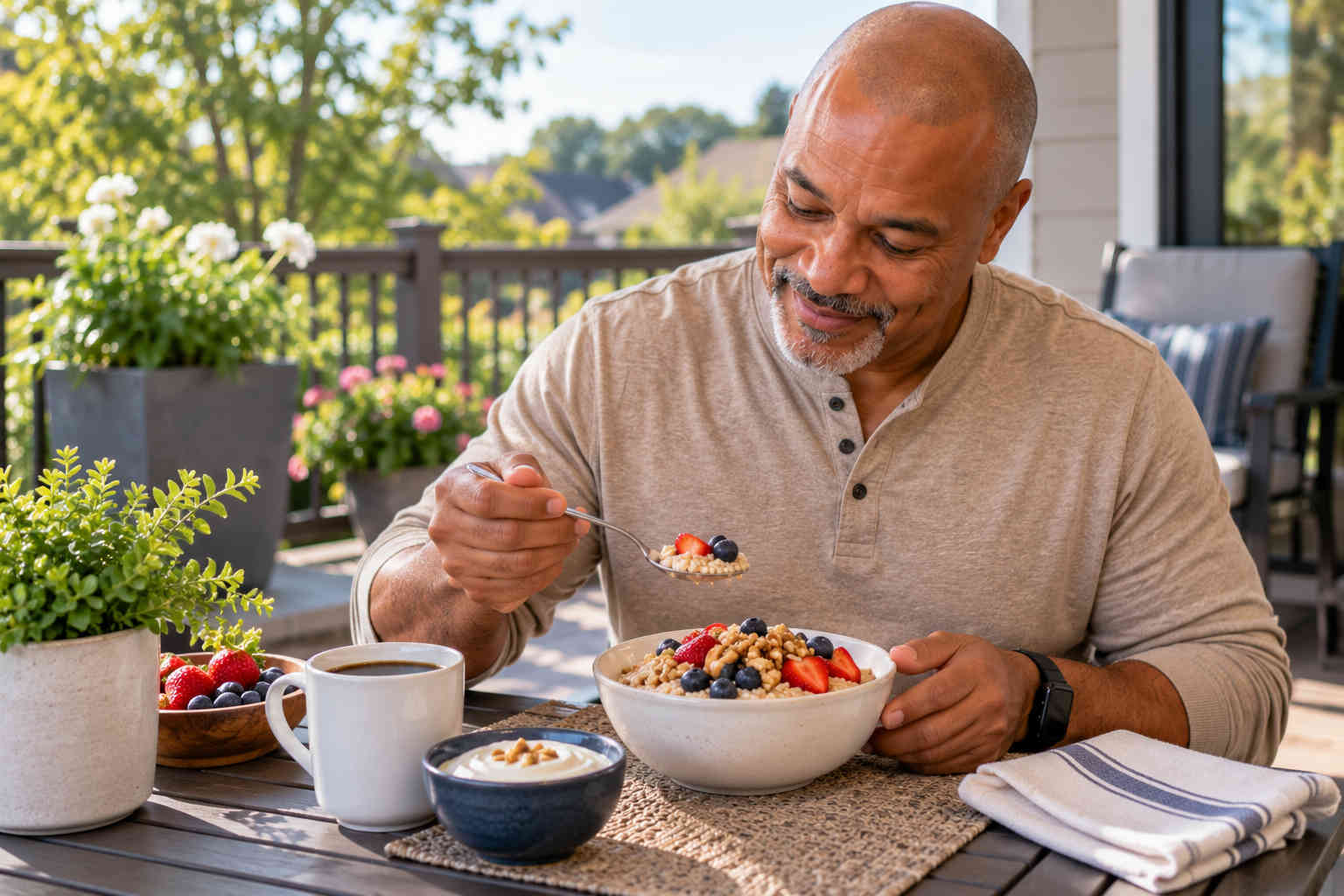
The mistake is transforming oatmeal into dessert. A reasonable bowl of oats can quickly become a calorie bomb after adding large quantities of brown sugar, honey, granola, dried fruit, peanut butter, and nuts.
Instead, build the meal deliberately. Try oatmeal with berries, cinnamon, and Greek yogurt on the side. Or add a modest amount of nuts and pair the oatmeal with eggs.
You're not trying to make breakfast as low-calorie as physically possible. You're trying to make breakfast satisfying enough that the vending machine doesn't start looking irresistible at 10:30 a.m.
2. Potatoes: The Carb Many Dieters Unnecessarily Eliminate
Potatoes have suffered from guilt by association. French fries are calorie-dense. Loaded potato skins are calorie-dense. Potato chips are extremely easy to overeat. Therefore, potatoes must be bad for weight loss.
That's faulty reasoning.
A plain potato is nothing like a basket of fries that has absorbed oil and arrived with dipping sauce.
Potatoes can actually be extremely useful when you're trying to build satisfying meals. They provide substantial food volume, they're inexpensive, and they work with dozens of lean proteins.

Try a baked potato with grilled chicken and vegetables. Roast potato wedges using a controlled amount of oil. Dice potatoes and combine them with eggs and vegetables for breakfast. Use a smaller baked potato alongside steak and a large salad.
The calorie problem often isn't the potato. It's everything we do to the potato.
Butter, cheese, bacon, sour cream, oil, ranch dressing, and oversized portions can transform an otherwise reasonable food. So don't automatically remove potatoes from your diet. Change the preparation.
3. Beans: The Carb That Doesn't Behave Like A Typical Carb
If you want one food that deserves more attention from men trying to lose weight, it's beans.
Black beans, kidney beans, pinto beans, chickpeas, navy beans, and similar legumes offer an unusual combination: carbohydrates plus fiber plus plant protein.
That makes them particularly useful for building filling meals.
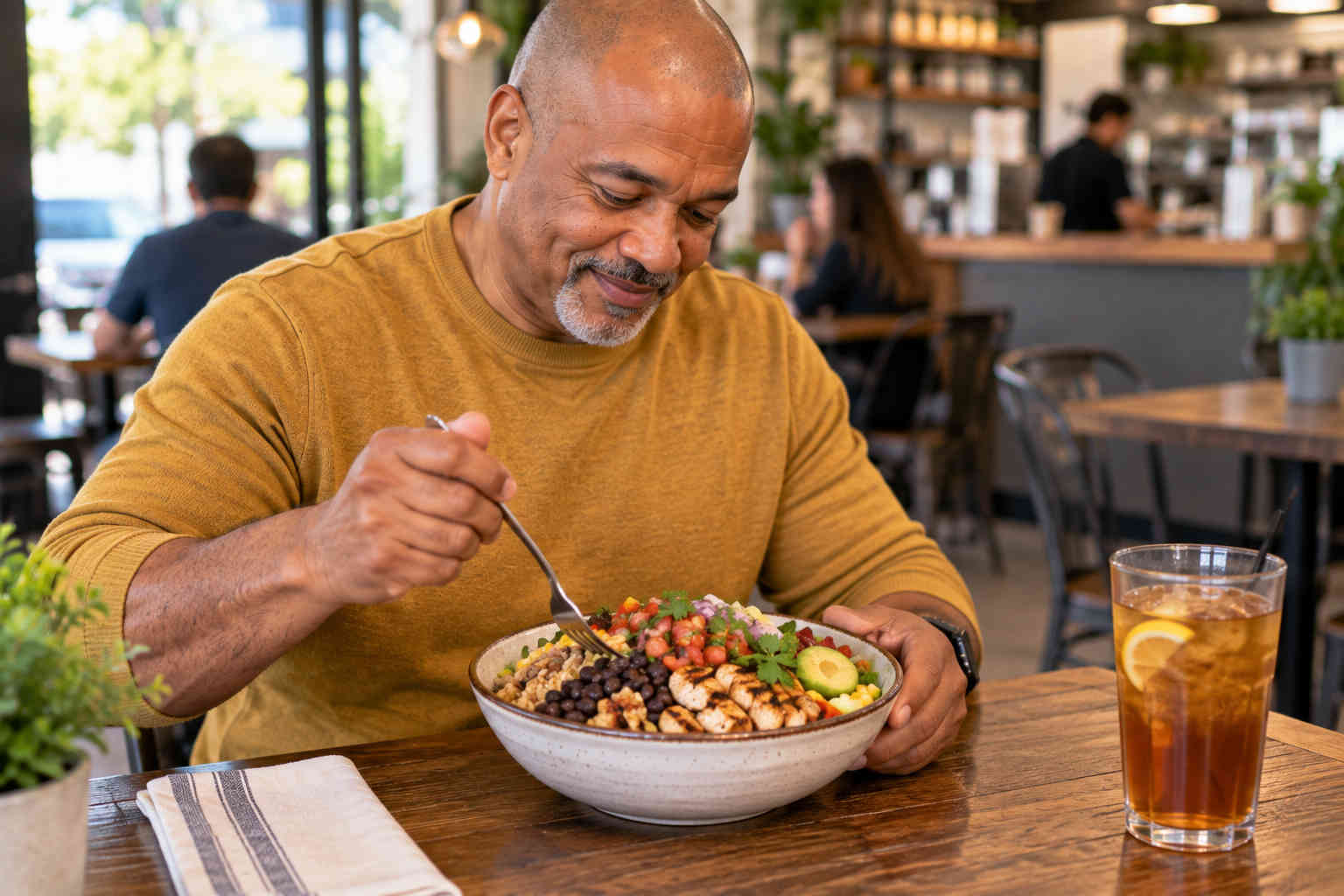
Instead of thinking of beans as a side dish that appears beside Mexican food, start using them as a meal-building ingredient. Add black beans to a chicken burrito bowl. Put kidney beans into chili. Add chickpeas to a large salad. Mix beans with lean ground beef to increase the volume of taco filling. Make a simple bean soup for lunches.
This is also an effective strategy for men who think healthy eating is too expensive. Dried beans and many canned beans are inexpensive compared with many specialized "diet" products.
Just check canned varieties for sodium if that's something you need to monitor, and rinse them when appropriate.
4. Lentils: An Underrated Weight-Loss Food For Men
Lentils aren't exactly glamorous. Nobody is building an advertising campaign around a bowl of brown lentils.
That's part of what makes them useful.
Lentils aren't engineered to make you keep eating them after you're full. They're simply a nutrient-dense staple containing carbohydrates, fiber, and protein.
They're particularly useful in soups and stews because they add thickness and substance without requiring heavy cream or large quantities of meat.
Try adding lentils to vegetable soup, combining them with lean ground meat, or serving them alongside chicken and vegetables.
If you've never eaten lentils regularly, don't suddenly consume enormous quantities. Increase high-fiber foods gradually and give your digestive system time to adjust. The objective isn't to win a fiber contest. It's to build a diet you can comfortably maintain.
5. Berries: A Better Way To Handle A Sweet Tooth
One reason diets fail is that people pretend cravings won't happen. They will.
Instead of relying entirely on willpower, keep foods available that can satisfy the desire for something sweet without turning a small craving into a 1,000-calorie event.

Berries are excellent for this. Strawberries, blueberries, blackberries, and raspberries provide sweetness along with water, fiber, and nutrients.
Combine berries with Greek yogurt. Add them to oatmeal. Mix frozen berries into a smoothie with a controlled list of ingredients. Or simply keep washed strawberries in the refrigerator where they're easier to grab than cookies.
Fruit doesn't need to replace every dessert for the rest of your life. But if fruit replaces a high-calorie dessert several times each week, you've created a meaningful change without banning dessert altogether.
6. Apples, Oranges And Pears: Carbs You Have To Chew
One of the easiest ways to improve carbohydrate quality is remarkably simple: eat more of your carbs instead of drinking them.
An orange requires peeling and chewing. Orange juice can be swallowed quickly. An apple takes several minutes to eat. A sweetened fruit drink can disappear in seconds.
Whole fruits such as apples, pears, and oranges provide fiber and physical volume along with their natural sugars.
They're also portable. That matters more than it sounds. The "best" weight-loss food isn't very helpful if it's sitting in your refrigerator while you're hungry at a gas station.
Keeping an apple or another durable fruit available gives you an alternative when convenience food is the only other option.
7. Brown Rice, Quinoa And Other Whole Grains
Rice is another food that men frequently believe they must eliminate to lose belly fat. Usually, the bigger issue is portion size.
A giant restaurant serving of rice alongside tortillas, chips, cheese, and a high-calorie entree is one thing. A measured serving of rice alongside lean protein and vegetables is something entirely different.
Brown rice, quinoa, barley, farro, and other minimally processed grains can provide useful carbohydrates and fiber.

But here's an important distinction: "Healthy" does not mean "unlimited."
You can absolutely overeat whole grains. If you're trying to lose weight, think of grains as one component of the meal rather than the foundation of an enormous bowl.
Build the meal around protein and vegetables, then add the grain. That small mental shift can dramatically change the calorie density of your dinner.
8. Whole-Grain Bread: Read The Label Instead Of The Front Of The Bag
Bread packaging is a master class in making food sound healthier than it necessarily is.
You may see phrases such as "made with whole grain," "multigrain," "wheat bread," "12 grain," or "natural." None automatically tells you exactly what you're getting.
Turn the package around. Look at the ingredient list and Nutrition Facts panel.
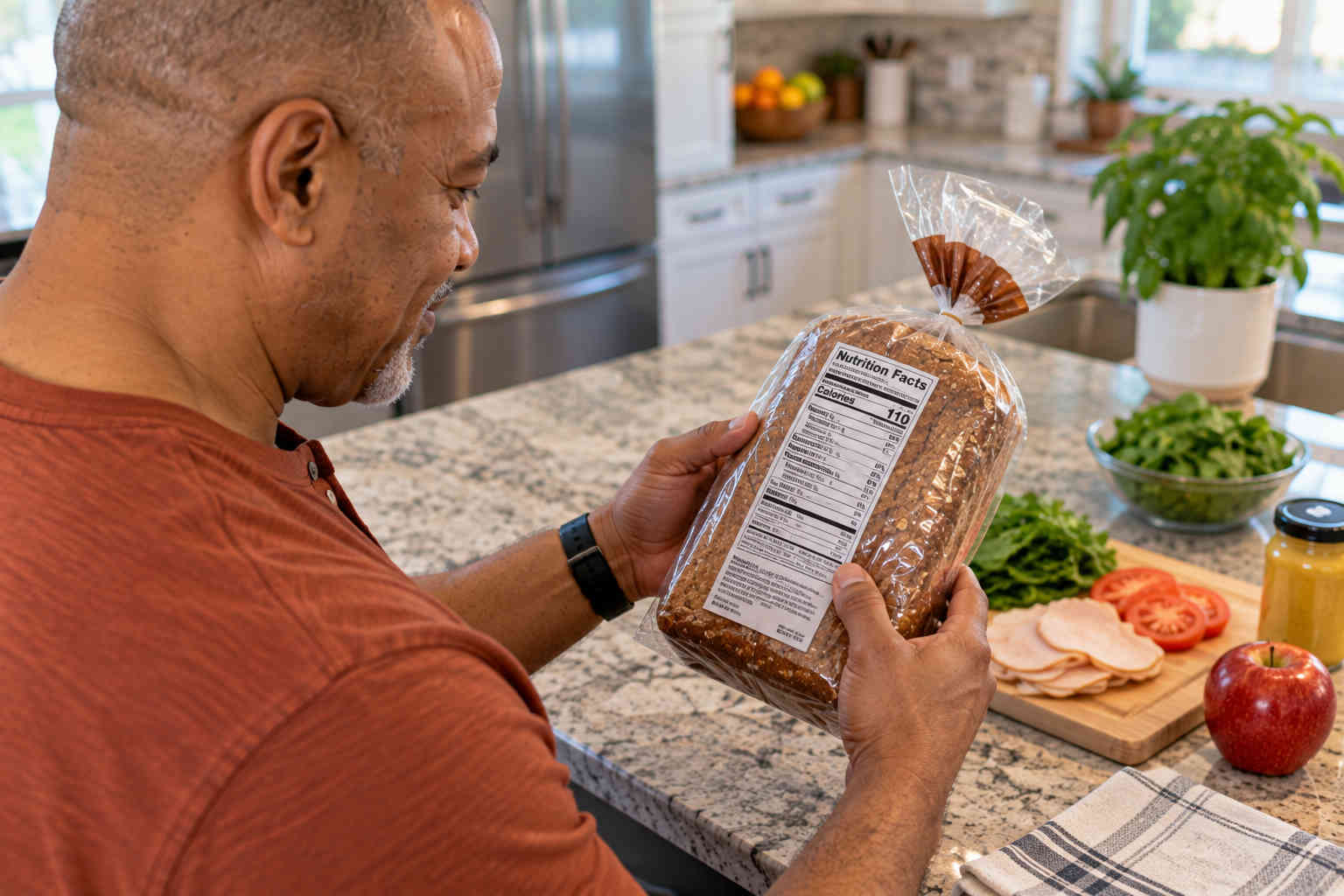
If you're buying bread specifically because you want a higher-fiber whole-grain option, look for a whole grain prominently listed among the first ingredients and compare fiber between products.
Then consider what goes between the slices. Whole-grain bread doesn't magically make a sandwich low-calorie if you add several slices of cheese, processed meat, mayonnaise, and chips.
The bread is only one part of the equation.
9. Sweet Potatoes: Good, But Not Magical
Sweet potatoes have acquired an interesting reputation in fitness culture. Regular potato: bad. Sweet potato: fitness food.
Reality is less dramatic. Both can fit into a weight-loss diet.
Sweet potatoes are useful because they're flavorful without requiring much added fat, and their natural sweetness works well with cinnamon and savory seasonings.
Bake one and serve it with lean protein. Cube and roast it with vegetables. Use it as the carbohydrate portion of a meal-prep container.
Just don't assume sweet potato fries become a low-calorie food because the word "sweet" appears before "potato." Preparation still matters.
10. Popcorn: A Useful Carb When You Want To Snack
For many men, the hardest time to control calories isn't breakfast or lunch. It's 8:30 at night.
Dinner is finished. You're watching television. You're not exactly hungry, but you want something.

That's where popcorn can be useful. Air-popped or lightly prepared popcorn provides much more physical volume than many calorie-dense snack foods.
The important distinction is what you put on it. Movie-theater-style butter, caramel coatings, and heavy oil can completely change the calorie equation.
But a reasonable bowl of lightly seasoned popcorn can satisfy the desire to sit down with an actual snack rather than pretending a glass of water is just as enjoyable.
Sometimes successful weight loss is about finding the better version of something you already want to do.
The Best Carb Is Sometimes The One You Eat After Exercise
Carbohydrates can also be strategically useful around physical activity.
If you're lifting weights, walking regularly, cycling, playing recreational sports, or doing other exercise, you don't necessarily benefit from trying to keep carbohydrates as low as possible.
A meal containing protein, vegetables, and a sensible serving of potatoes, rice, beans, fruit, or whole grains can fit perfectly well into a fat-loss plan.
This becomes especially important if overly restrictive eating leaves you tired and makes your workouts worse.
Remember the larger objective. You aren't trying to prove that you can survive without bread. You're trying to build a leaner, healthier body you can maintain.
What About White Rice And Regular Pasta?
Here's where nutrition advice often becomes unnecessarily rigid.
If you prefer white rice to brown rice, you don't automatically need to stop eating white rice. If you enjoy regular pasta, you don't have to swear it off forever.
Portion and meal composition matter. A modest portion of white rice eaten with grilled chicken, broccoli, and beans is different from an enormous bowl of rice covered in a calorie-dense sauce. Pasta with lean meat sauce and vegetables is different from restaurant pasta swimming in cream sauce with garlic bread on the side.
Higher-fiber versions may provide advantages, but your diet doesn't have to become nutritionally perfect before it can produce results.
Sometimes the sustainable choice is keeping a food you genuinely enjoy while changing the portion.
The Carbs To Eat Less Often
You don't need a forbidden-food list. Instead, identify carbohydrates that give you a poor return on your calorie investment.
These often include pastries, doughnuts, candy, sugary cereals, cookies, chips, sweetened drinks, giant muffins, heavily sweetened coffee drinks, and many ultra-processed snack foods.
Notice the wording: eat less often, not "never eat again."
That's intentional. The moment you decide you'll never eat another doughnut, pizza, cookie, or bowl of ice cream, you've created a diet that may be unnecessarily difficult to maintain.
Instead, make these foods occasional choices rather than everyday defaults. That's a much more realistic strategy for losing weight after 40 and keeping it off.
Build Your Plate Instead Of Counting Every Carb
If you don't want to weigh and track every gram of carbohydrate, use a simple visual system. Start with protein. Add a generous amount of vegetables. Then add a controlled portion of a high-quality carbohydrate.
Simple Meal Combinations
Grilled chicken + broccoli + roasted potatoes.
Lean steak + large salad + baked potato.
Salmon + green beans + brown rice.
Eggs + vegetables + oatmeal and berries.
Turkey chili + kidney beans + vegetables.
Greek yogurt + berries + oats.
Notice what isn't happening. The carbohydrate isn't occupying 70 percent of the plate. It's part of the meal.
This approach allows you to continue eating foods you enjoy while naturally controlling how much carbohydrate and total energy you're consuming.
A Simple Carb Upgrade System
You don't have to rebuild your diet overnight. Make substitutions where they're easy.
If breakfast is sugary cereal, try oatmeal. If your afternoon snack is chips, try fruit and Greek yogurt. If you regularly eat French fries, occasionally substitute a baked potato. If dinner is mostly pasta with a little meat, reduce the pasta portion and increase the lean protein and vegetables.
If you're drinking several hundred calories of carbohydrates each day, start drinking more water, unsweetened tea, or another low-calorie beverage. If your burrito bowl is mostly rice, use less rice and add beans, protein, salsa, and vegetables.
These aren't dramatic changes. That's precisely why they can work.
You don't need dramatic changes for three weeks. You need reasonable changes you can still be making three years from now.
Don't Confuse Low-Carb With Automatic Weight Loss
Some men do very well eating fewer carbohydrates. Reducing carbs may naturally remove foods they tend to overeat, and that can make maintaining a calorie deficit easier.
There's nothing inherently wrong with that approach.
The mistake is assuming carbohydrate restriction itself gives you permission to ignore everything else.
A low-carb diet containing enormous quantities of cheese, butter, fatty meat, nuts, oils, and calorie-dense snacks can still provide more calories than you need.
Likewise, a diet containing potatoes, oats, beans, fruit, and whole grains can still support weight loss when total intake is appropriate.
The better question isn't whether your diet qualifies as "low-carb." It's whether your eating pattern allows you to control calories, get adequate protein and fiber, maintain your activity, manage hunger, and stick with the plan.
Your Carb Quality Matters More Than The Carb Fear
After 40, you may have spent decades bouncing between conflicting diet rules. Fat was bad. Then carbs were bad. Then breakfast was mandatory. Then breakfast was supposedly making everyone fat.
This constant search for one dietary villain distracts from a simpler reality.
Most men don't need a perfect diet. They need a repeatable one.
If you're trying to lose weight, build most of your carbohydrate intake around foods such as oatmeal, beans, lentils, potatoes and sweet potatoes, berries, apples, oranges, pears, brown rice, quinoa, whole grains, higher-fiber breads, vegetables, and lightly prepared popcorn.
You don't need every food on that list. Choose the ones you actually enjoy, then manage quantity based on your calorie needs, activity level, hunger, and progress.

The Bottom Line
The best carbs for men trying to lose weight after 40 aren't exotic foods sold in the supplement aisle. They're mostly ordinary foods that have been around for generations.
Oats. Potatoes. Beans. Lentils. Fruit. Whole grains. Vegetables.
The real skill is learning to distinguish between a carbohydrate that helps build a satisfying meal and one that simply makes it easy to consume another 500 calories.
That's why eliminating all carbohydrates is usually an unnecessarily crude solution.
Upgrade your carbs before you eliminate them.
Choose foods with fiber. Watch portions of calorie-dense starches. Eat more whole fruit and fewer liquid calories. Pair carbohydrates with protein. Pay attention to cooking methods and toppings. Keep highly processed snacks as occasional foods rather than daily staples.
Most importantly, judge your diet by what happens over weeks and months—not by whether you ate a potato at dinner.
At 40, 50, or 60, successful weight loss doesn't require being afraid of carbohydrates. It requires becoming much better at choosing the ones that are worth eating.
The Carb Rule
Make Your Carbs Earn Their Place
Choose the carb that adds fiber, volume, nutrition, or real satisfaction to the meal. Then control the portion and build the rest of the plate around protein and vegetables.