Security After Divorce
Give Your Child Back A Piece Of His World
A child rarely gets a vote on divorce. He does not choose when Dad moves out. He does not decide which bedroom becomes his, which parent gets Thanksgiving, or whether his favorite basketball hoop stays at the old house. Adults make the decisions, and then adults often tell the child, “Everything is going to be okay.”
There is nothing wrong with reassurance. But after enough of his world has changed without his permission, words alone may not make a child feel safe. He needs something else. He needs to discover that although he cannot control the divorce, he has not lost all influence over his own life.
That is an important distinction for fathers. Learning how to make your child feel safe after divorce is not only about protecting him from bad things. It is about helping him recover a sense of belonging, personal control, competence, and permanence after the structure around him has changed.
Instead of asking only, “How can I reassure my child?” ask a different question:
What parts of my child's world can I give back to him?
That question changes the focus from trying to make divorce feel harmless to helping your child build a life that feels like his again.
Your Child May Have Lost More Than A Two-Parent Household
Adults usually describe divorce in terms of relationships: “We separated.” “Your mother and I are not together anymore.” “We are going to live in different houses.” That is the adult version of the event.
Your child's version may be completely different. Maybe he lost the tree outside his old bedroom window. Maybe she no longer sees the neighborhood friend who used to knock on the door every afternoon. Maybe Dad does not make breakfast on Tuesdays anymore. Maybe the dog lives primarily at the other house. Maybe the old kitchen table disappeared.
These losses can appear insignificant compared with a marriage ending. To a child, they are not necessarily insignificant. Children build security from hundreds of ordinary details that tell them, This is my life. Divorce can scramble those details.
That means rebuilding emotional security after divorce should not begin with trying to recreate the old family. It begins by helping your child establish ownership of the new one.
Give Your Child A Territory, Not Just A Bedroom
Suppose you move into a new apartment after divorce. You buy your son a bed, put a dresser against the wall, hang a television, and tell him, “Here is your new room.” You have provided a bedroom. But have you given him a territory?
There is a difference. A territory contains evidence of the person who belongs there.
Instead of completely designing your child's new space yourself, leave some decisions unfinished. Ask where the bed should go. Let him choose which shelf holds his baseball stuff. Let your daughter decide which wall becomes the accent wall or where her favorite pictures belong. For a younger child, the decisions can be as simple as choosing a blanket, lamp, or place for books.

The purpose is not interior decorating. The message is: Something in this changed world belongs to you, and your opinion can change what happens inside it.
Create A “You Don't Have To Ask” Zone
One simple way to help children feel secure after divorce is to identify things at Dad's house that they do not need permission to use.
Maybe there is a kitchen shelf with snacks, a refrigerator drawer with drinks, a cabinet containing bowls and cups, a basket with chargers, or a place for towels. Tell your child, “You do not need to ask me for anything on this shelf. This stuff is yours too.”
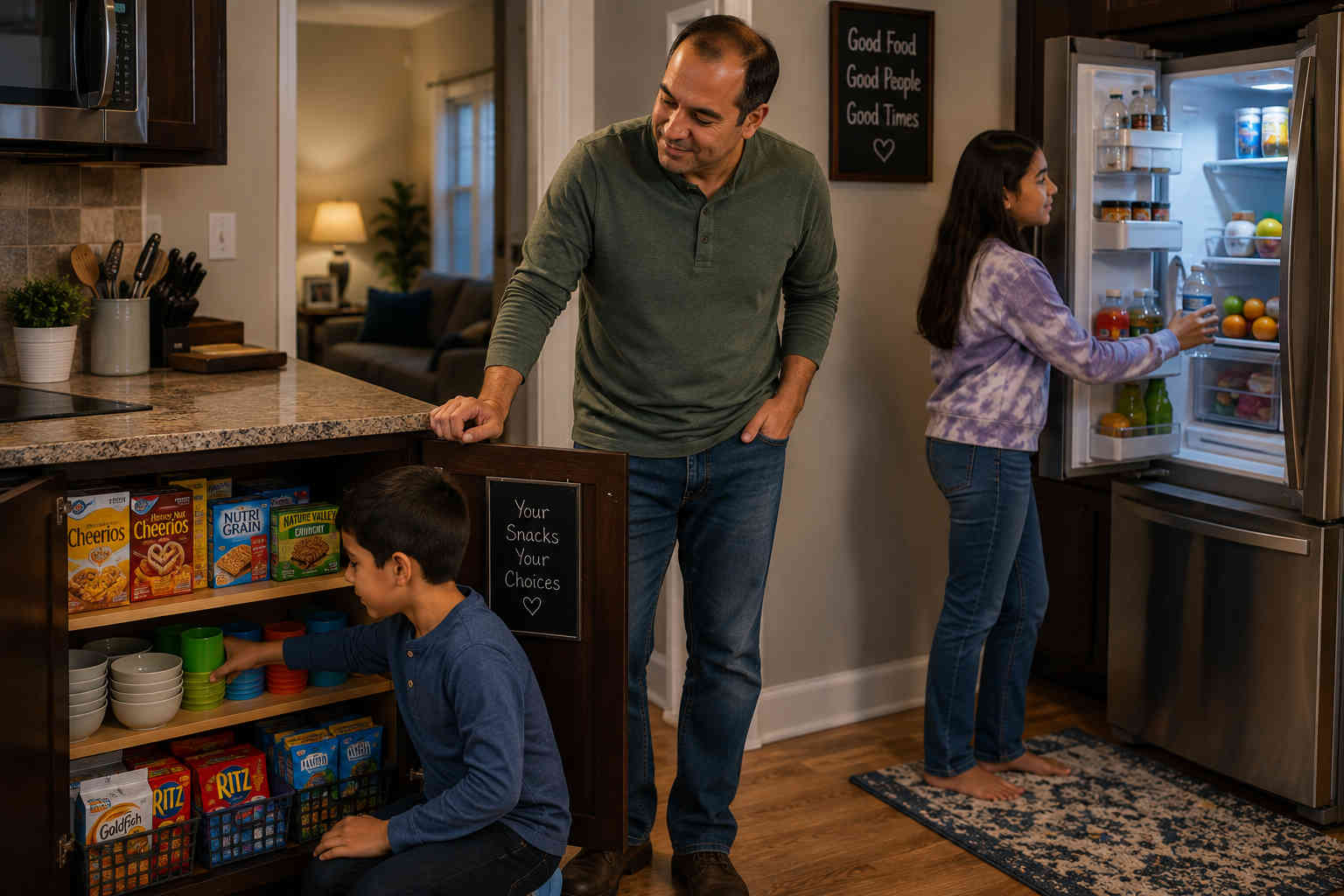
It sounds minor, but a child who constantly asks, “Can I get a drink?” “Can I use this?” or “Where are the towels?” can unconsciously feel like a visitor. Visitors ask permission. Family members know where things are.
Don't Make Your Child Carry His Life In A Bag
Look at your child's backpack or overnight bag. It may tell you something. If your child constantly transports toiletries, pajamas, chargers, clothes, school supplies, and favorite possessions between houses, he can begin living like a commuter.
Some transportation between homes is unavoidable. But reduce it where practical. Buy another toothbrush. Keep pajamas at your house. Get an inexpensive second phone charger. Keep basic school supplies. If your child plays a sport and inexpensive duplicate items make sense, keep some at both homes.
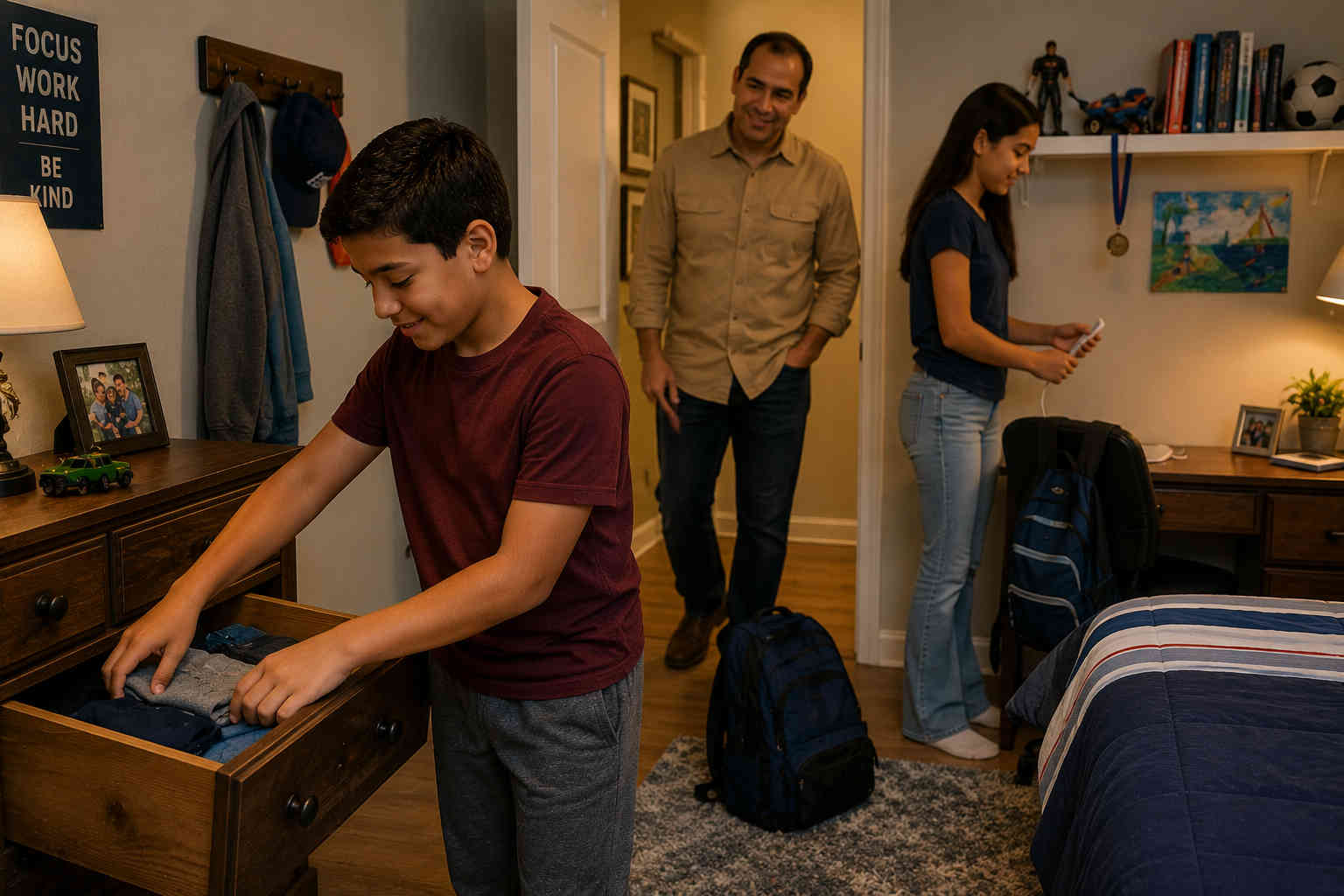
There is an important psychological message in leaving something behind: I will be back. A toothbrush waiting in the bathroom is mundane. That is exactly why it works.
Let Your Child Permanently Change Something
Give your child a chance to improve something in your home in a way that remains after he leaves. Not just decorate something temporarily. Change it.
Maybe you and your son build a shelf. Your daughter chooses plants for the patio. Your child helps paint an old dresser. You hang hooks at the height your younger child can reach. You reorganize a room together.
Every time the child returns, something says, I helped make this place. You are converting your child from occupant to contributor.
Give Them A Job That Matters
After divorce, adults sometimes become so concerned about children's feelings that they unintentionally turn children into fragile passengers. Everything is done for them. Everything is arranged around them. Everyone asks how they are feeling.
But security does not come only from being protected. It can also come from feeling capable.

Give your child an age-appropriate responsibility that actually matters. Your ten-year-old might feed the dog Saturday morning. Your twelve-year-old might make pancakes. Your teenager might choose the music while you both cook dinner. A younger child might put napkins on the table.
Do not manufacture meaningless busy work. Give them something that contributes to family life. Then say, “Thanks. That helped.” You are telling your child: This family still needs something from me.
Stop Trying To Replace What Was Lost
A father can become obsessed with compensating after divorce. The old house had a swimming pool, so Dad feels he needs an apartment complex with a pool. Mom took the kids somewhere expensive, so Dad feels he needs an equally impressive weekend. Your child mentions missing the old neighborhood, and you immediately start searching for something “better.”
Be careful. You may accidentally teach your child that the old life was so valuable that the new life must constantly compete with it.
It does not. Your new home does not have to be better. Your weekends do not have to be better. Your Christmas does not have to beat Mom's Christmas. Your life with your child needs its own identity.
Preserve One Piece Of The Old World
Creating a new life does not mean erasing the previous one. In fact, one carefully preserved connection to your child's pre-divorce life can provide a bridge between “before” and “after.”
Maybe it is Dad's Saturday pancakes. Maybe it is reading together before bed, fishing at the same lake every spring, decorating the Christmas tree while playing the same music, or attending the same local football games.
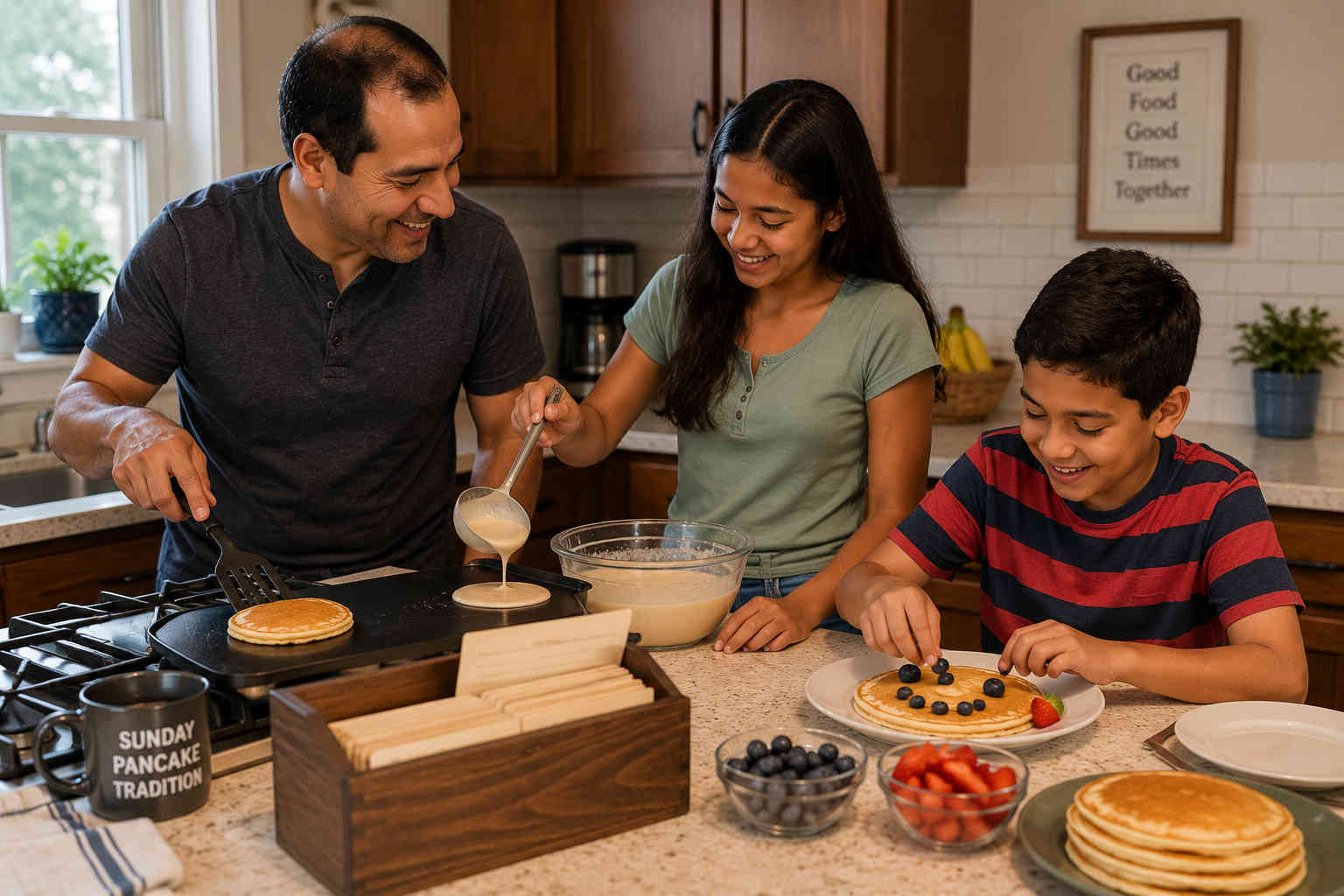
Preserve something. You are not pretending the family has not changed. You are teaching your child that change does not erase everything that came before it. Some things can survive.
Give Your Child A Small Budget To Control
For an older child, consider giving him a modest budget for something related to his life at your house. Maybe $30 to improve his room, $20 to choose snacks for the weekend, or a fixed amount for a father-child Saturday.
Then let him make the decisions within the limit. Do not rescue every imperfect choice. This is not really a lesson about money. It is an exercise in agency.
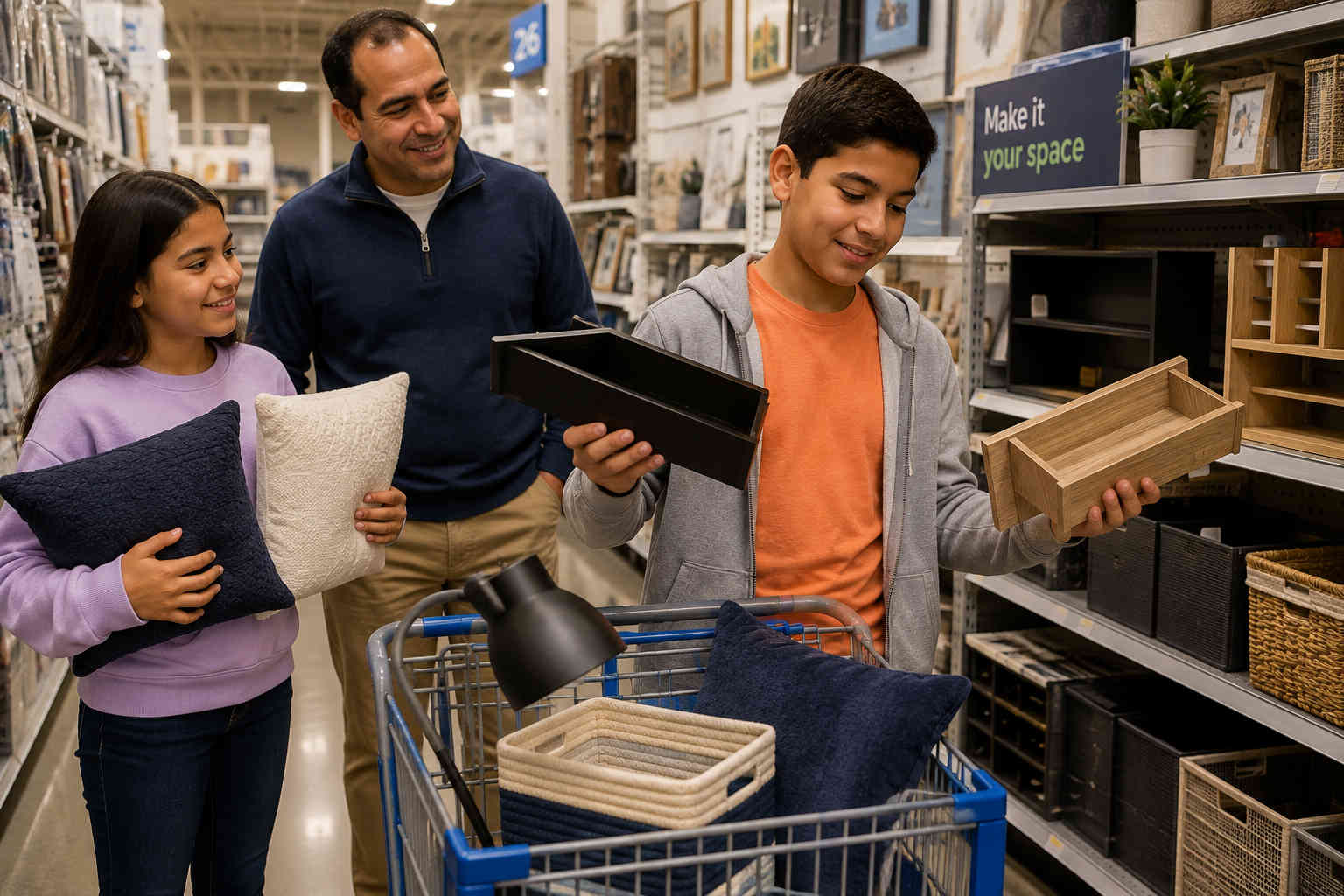
The child has experienced adults making enormous decisions that changed his life. Now he gets to make a small decision that produces a real result.
Don't Ask Your Child To Choose Between Parents
Giving your child more control does not mean asking, “Do you want to live with me or your mother?” “Whose house do you like better?” or “Who do you want Christmas with?” Those questions can place a child in an impossible loyalty conflict.
Give choices inside the child's world instead. “Do you want to stay home Saturday morning or go to the park?” “Want your birthday dinner here or at your favorite restaurant?” “Should we invite Grandpa?” “Do you want me at practice or just the game?”
These are manageable decisions. Your child gets a voice without being handed responsibility for the family.
Build A Map Of Your Child's New Life
Younger children sometimes understand places better than abstract schedules. Try physically showing your child how his new world fits together.
There is Mom's house. There is Dad's house. Here is school. Here is Grandma. Here is the soccer field. Here is your best friend's neighborhood. You might even drive the route together.
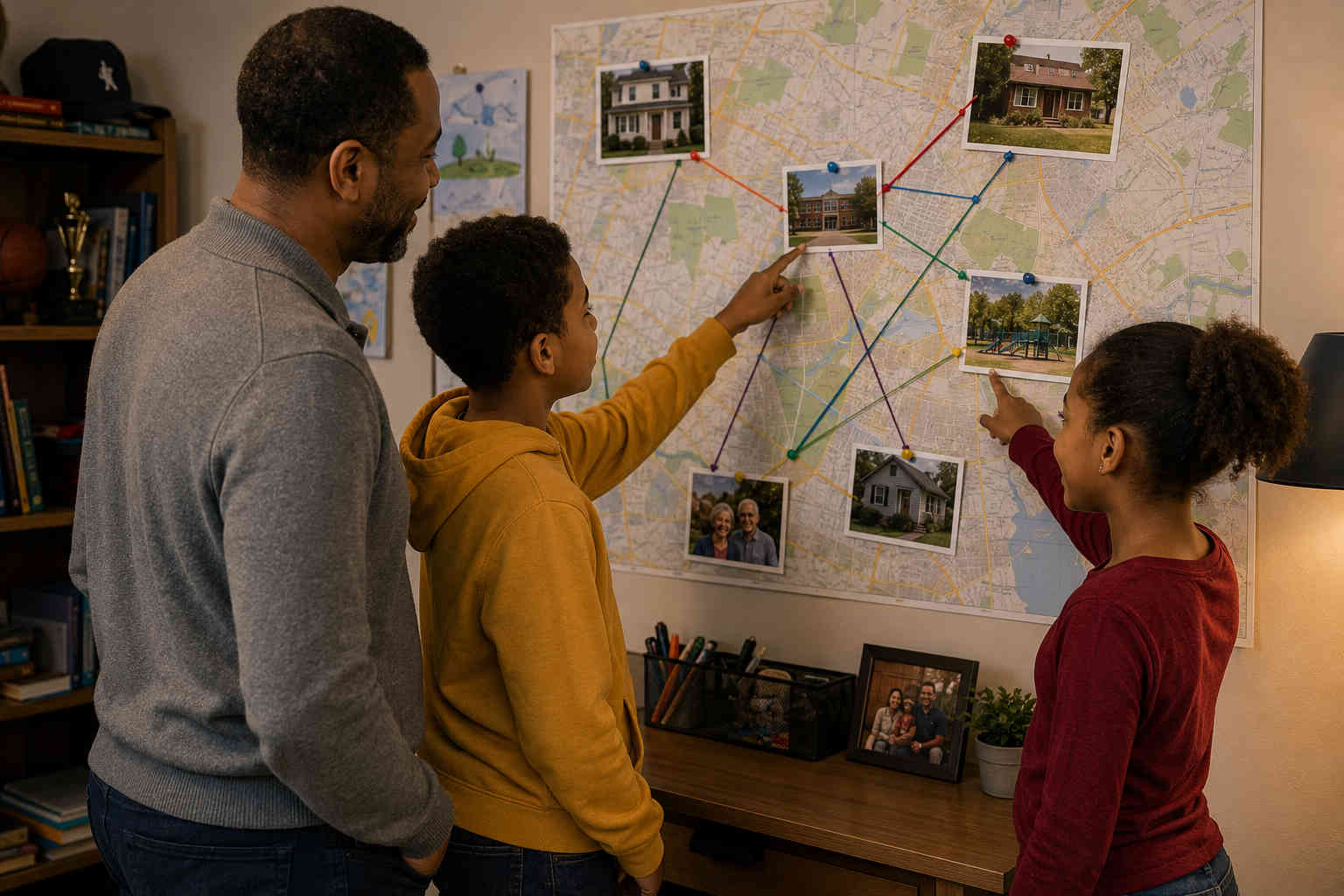
Divorce can make a child's world feel as though it has exploded into unrelated pieces. A map turns the pieces back into one world. Your child has not been split into “Mom's life” and “Dad's life.” He still has one life. It simply contains more locations now.
Create A Family Artifact That Keeps Growing
Instead of repeatedly talking about whether your family is still a family, create physical evidence of it.
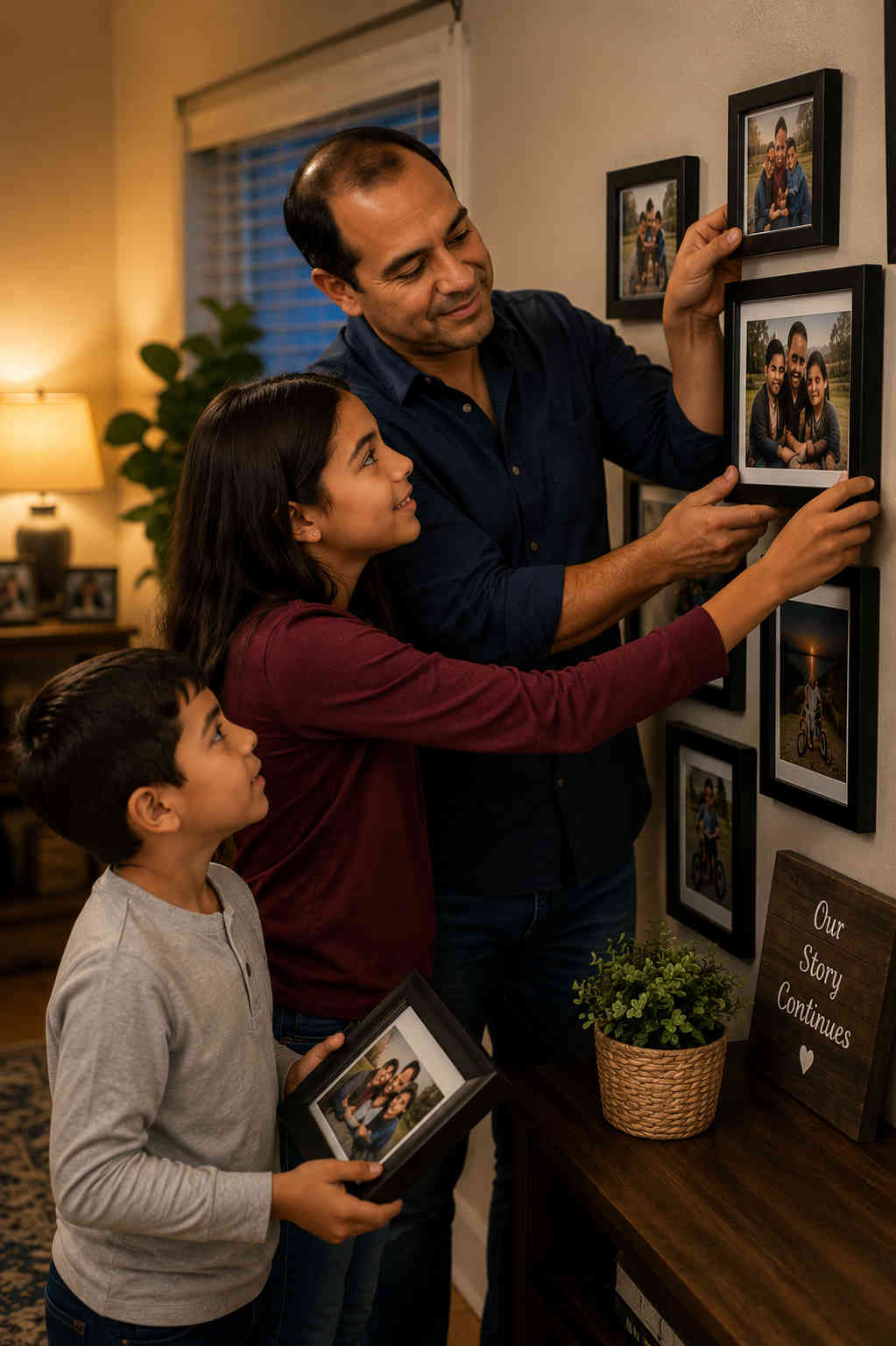
Start something that continues. Maybe it is a photo wall. Put up a picture from your first weekend in the new house. Then the fishing trip. Then your daughter's school concert. Then the terrible pancakes your son burned. Then Halloween. Keep adding to it.
Months later, your child can physically see something powerful: We have a history here. The divorce may represent an ending in your child's mind. Your job is to provide visible evidence that his life did not stop at the ending.
Make Space For Objects That Have No Practical Value
Adults sometimes underestimate sentimental objects: an old stuffed animal, a trophy, a cheap souvenir, a photograph, a blanket, or a broken toy a child refuses to throw away.
Do not immediately purge those things because you are trying to create a fresh start. Objects can become anchors during periods of change.
If your daughter wants an old family photograph in her room, do not assume she is rejecting the divorce. If your son wants to keep something from the old house, do not automatically replace it with something newer. Children do not always process loss through conversation. Sometimes they process it by keeping a piece of the world that existed before.
Allow Your Child To Have A Private Life
As children get older, security increasingly includes privacy. Your teenager should not feel that everything he tells Dad will be immediately reported, analyzed, or turned into a co-parenting conference.
Obviously, information involving safety has to be handled appropriately. But ordinary thoughts? Embarrassing school stories? A crush? An argument with a friend? Something he is worried about? Let some conversations simply belong to the two of you.

Your teenager needs to discover: I can have an individual relationship with my father.
Let Your Child Discover That Change Doesn't Always Mean Loss
Divorce can teach a dangerous lesson: change means something disappears. Parents separate. Someone moves. A house gets sold. Possessions are divided. Schedules change. Holidays change.
Your child may begin bracing whenever another change appears. You can gradually teach a different lesson. Change can also mean growth.
Learn to cook a new meal. Rearrange the backyard and build something together. Take a different route home and discover a park. Let your child graduate from helping wash the car to learning how to check the oil. Give an older child more independence.
Create evidence that some changes add to life rather than subtract from it.
Occasionally Ask A Completely Different Question
Parents often ask, “Are you okay?” It is a loving question. It is also remarkably easy to answer with, “Yeah.”
Try something more specific:
“What's one thing about living between two houses that adults don't understand?”
Then do not defend yourself. You might hear, “I hate bringing my backpack everywhere.” “I don't know where any of my stuff is.” “You both ask me what happens at the other house.” “I hate when everyone acts weird at my games.” “I wish you had the cereal I like.”
That last answer might sound insignificant. Do not dismiss it. Go buy the cereal. Not because cereal cures divorce, but because your child just identified a tiny piece of his world that you actually have the power to fix. And you listened.
Give Your Child Proof That The Future Exists
After divorce, adults spend enormous amounts of energy managing the present: who is picking up the kids, who is paying for camp, where the soccer uniform is, and what time the exchange happens.
Children also need evidence that life extends beyond next weekend.
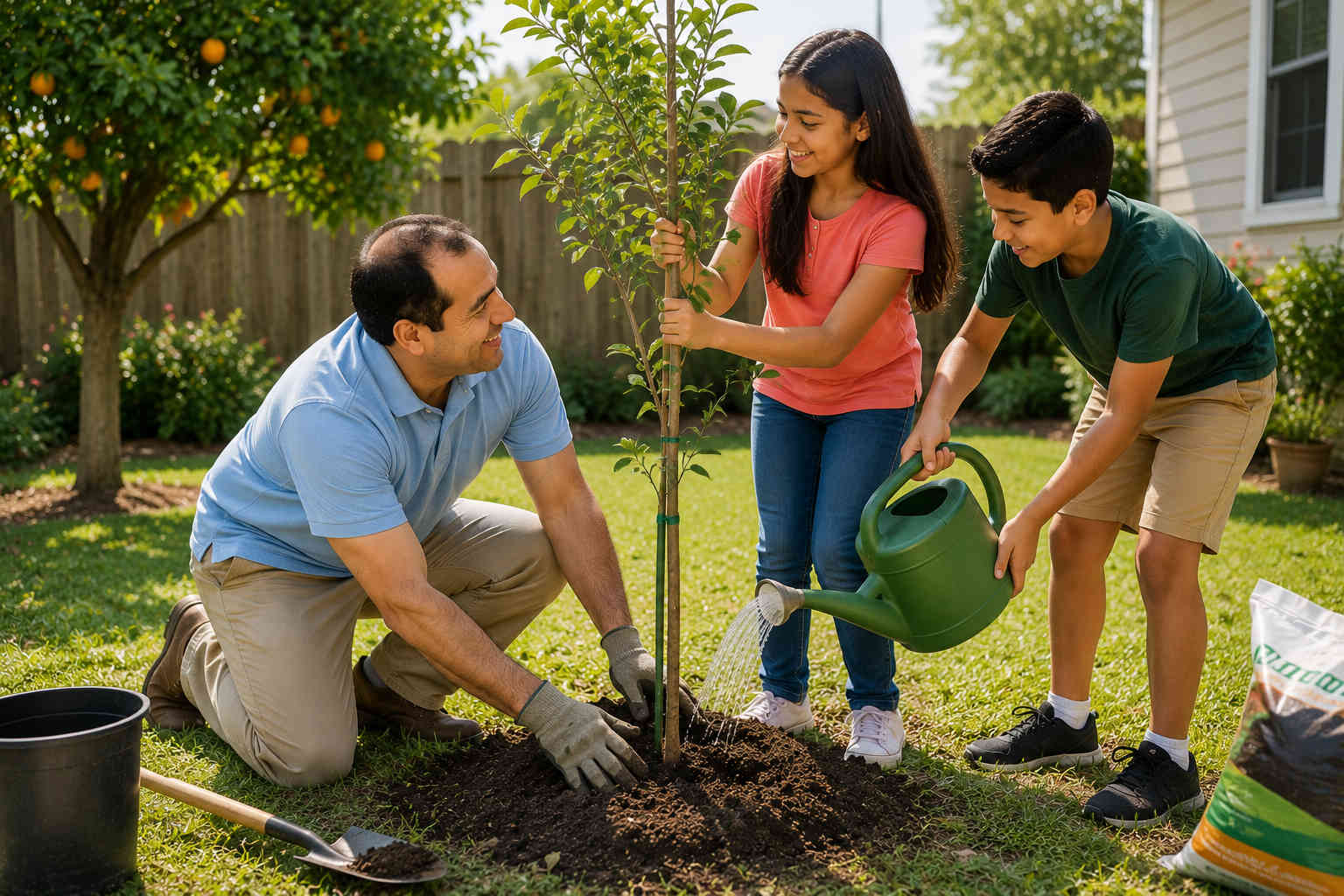
Make future plans. They do not have to be expensive. “In October, let's carve pumpkins out back.” “When you're old enough, I'll teach you to drive.” “Next summer, let's finally go camping.” “When we finish this project, we'll start the bigger one.”
Your child needs to hear himself included in your future tense. That communicates something deeper than reassurance: Dad expects me to still be here.
Safety Eventually Becomes Belonging
When fathers think about how to make a child feel safe after divorce, the natural instinct is to protect. Protect your child from conflict. Protect him from uncertainty. Protect her from adult problems. Those things matter.
But emotional security after divorce can become something bigger than protection. It becomes belonging.
Your child does not merely visit your home. He affects it. She does not simply follow a parenting schedule. She has a life there. Your son does not have to carry everything he values in a backpack because there are things waiting for him when he returns. Your daughter sees photographs accumulating on the wall and realizes there is a history after the divorce.
Your child can open the refrigerator without asking permission. He can tell you something without wondering whether it will become part of an adult dispute. She can change her bedroom. He can contribute to dinner. She can complain about something inconvenient and sometimes watch you actually fix it.
These are small experiences. Together, they answer one of the biggest questions divorce can leave inside a child:
“Where do I belong now?”
The answer should not merely be something you tell them. Build the answer around them. Give your child a shelf, a voice, a responsibility, a history, some choices, something permanent, something to look forward to, and a place in your life that does not feel temporary.
Eventually, your child may stop thinking of Dad's house as the place he goes after divorce.
It simply becomes home.
The Belonging Test
Build Security Into Ordinary Life
Ask yourself whether your child can see evidence that he belongs in your home, influences what happens there, contributes to family life, keeps meaningful possessions there, and is included in your future. Those ordinary signals often do more than another promise that everything will be okay.