
Strength After Change
Divorce Gives Children A Lesson You Never Wanted Them To Need
Divorce teaches children something most parents would rather postpone: life does not always go according to plan. Their family changed without their permission. They may now sleep in two bedrooms, keep clothes in two closets, celebrate birthdays differently, travel between parents, and discover that “home” no longer means exactly what it used to mean.
A father cannot erase that experience. But he can influence what his children eventually learn from it.
One child can come away from divorce believing that change is dangerous, relationships are unreliable, and disappointment means something is wrong. Another can gradually learn a different set of lessons: I can be upset without falling apart. I can adapt when plans change. I can solve problems instead of panicking about them. I can miss someone and still enjoy where I am. I do not control everything that happens, but I do have some control over what I do next.
That is the kind of emotional resilience children need after divorce. It is not toughness, emotional numbness, or pretending the divorce did not hurt. It is the ability to experience a difficult moment without allowing that moment to dictate the entire story.
Stop Trying To Make Divorce “Not Affect Them”
Divorced fathers sometimes set themselves an impossible goal: “I do not want the divorce to affect my kids.” But of course it affects them. Dad lives somewhere else. Mom lives somewhere else. Schedules exist that did not exist before. Some traditions disappear. New ones replace them.
Pretending those changes do not matter does not make children stronger. It can make it harder for them to understand their own reactions. A better goal is simpler and more realistic: let the divorce affect them without allowing it to define them.
Your child can hate switching houses and still become adaptable. Your daughter can miss the old family Christmas and eventually enjoy the new one. Your son can be angry that you are not there every morning and still develop an extremely close relationship with you.
Two things can be true at the same time.

Use The “Two Things Can Be True” Rule
Children often think emotionally in absolutes. If Dad missed my game, Dad does not care. If I enjoy being at Mom's house, I am betraying Dad. If Dad has a girlfriend, he is replacing Mom. If our family changed once, something else could disappear too.
Instead of arguing against every conclusion, introduce a simple idea: two things can be true.
Your daughter can miss her mother and enjoy being with you. Your son can be angry with you and love you. Your child can dislike the parenting schedule and still have a good weekend. You can be disappointed about something without allowing it to ruin everything else.
If your daughter says, “I wish Mom were here,” you do not need to compete with the feeling. You can say, “I understand. You can miss Mom and still have a good day with me. Both can be true.” You are teaching emotional complexity: a resilient person does not need every feeling to line up perfectly before moving forward.
Build A “What Happens Next?” Reflex
Divorce can train children to become preoccupied with what already happened. Why did Mom and Dad divorce? Why cannot we all live together? Why do I have to go back Sunday? Why was Dad not there?
Some of those questions deserve answers. But resilient children also need another mental habit: What happens next?
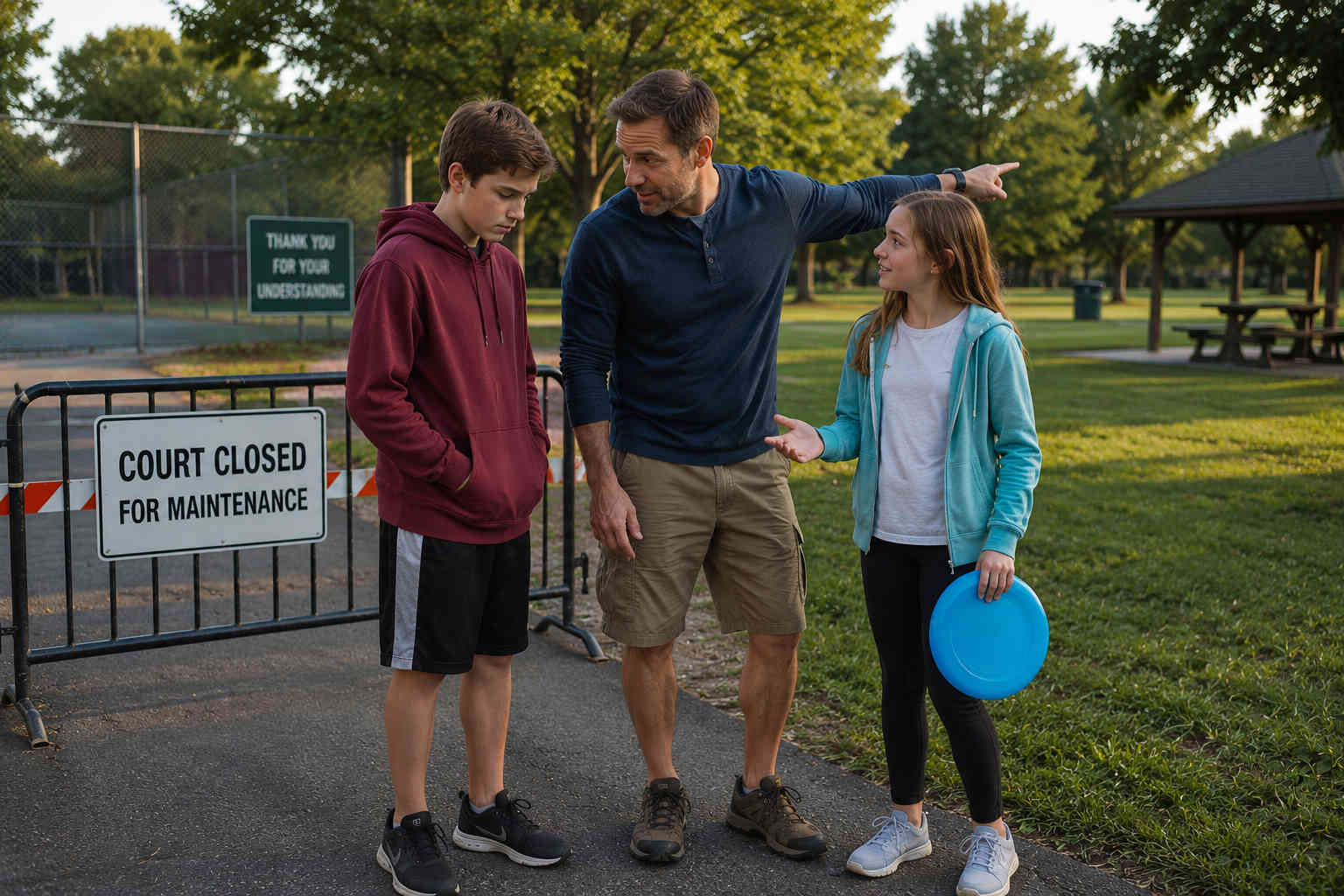
The soccer game gets canceled because of rain. What happens next? Your weekend plans fall apart. What happens next? Your daughter forgot something important at her mother's house. What happens next? Your son did not make the team. What happens next?
Do not immediately provide the answer. Ask the child: “Okay, this is not what we wanted. What is our next move?” The solution does not have to be perfect. The point is to change the child's relationship with setbacks. A setback stops being the end of the story and becomes the point where the next decision begins.
Create A Family Rule: We Do Not Waste The Whole Day
Children need permission to be upset. They do not necessarily need permission to surrender the entire day to one disappointment.
Consider creating a simple family rule: we do not waste the whole day because one part of it went badly.
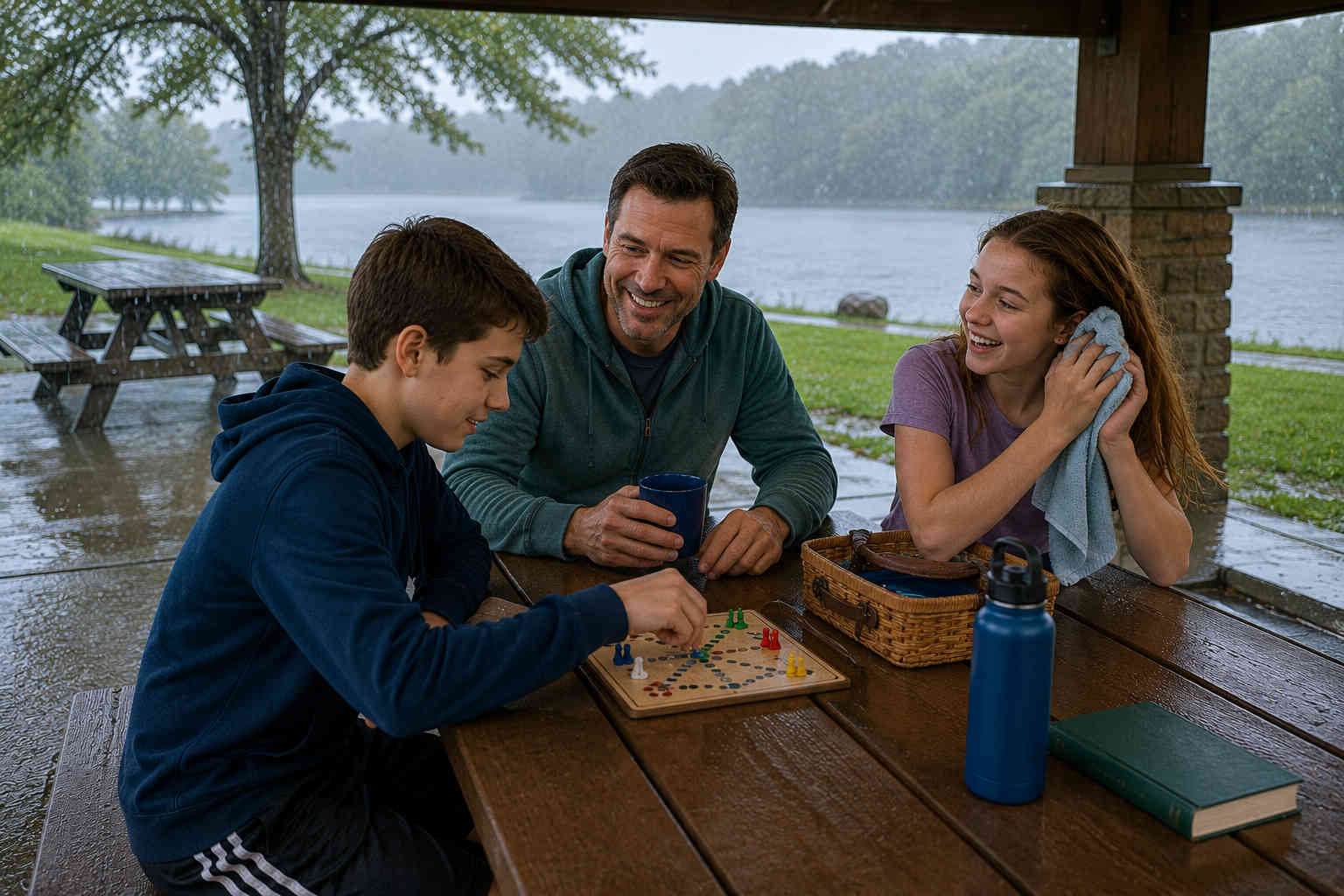
Suppose you planned a Saturday picnic and a downpour arrives. Do not tell your disappointed child, “It is no big deal.” It may be a big deal to him. Acknowledge that first. Then ask what else the day could become.
Maybe you move under a pavilion and play a game. Maybe you stop for lunch somewhere. Maybe you go home wet and make hot chocolate. The replacement does not have to beat the original plan. That is the point. Your child learns that disappointment can be real without becoming total.
Give Your Children Small Problems You Refuse To Solve For Them
One of the easiest ways to accidentally weaken resilience is to become too efficient. Your daughter cannot find her shoes, so you find them. Your son forgot something, so you retrieve it. Your teenager has a disagreement with a teacher, so you immediately send the email.
Sometimes intervention is necessary. But sometimes the better response is, “What do you think you should do?”
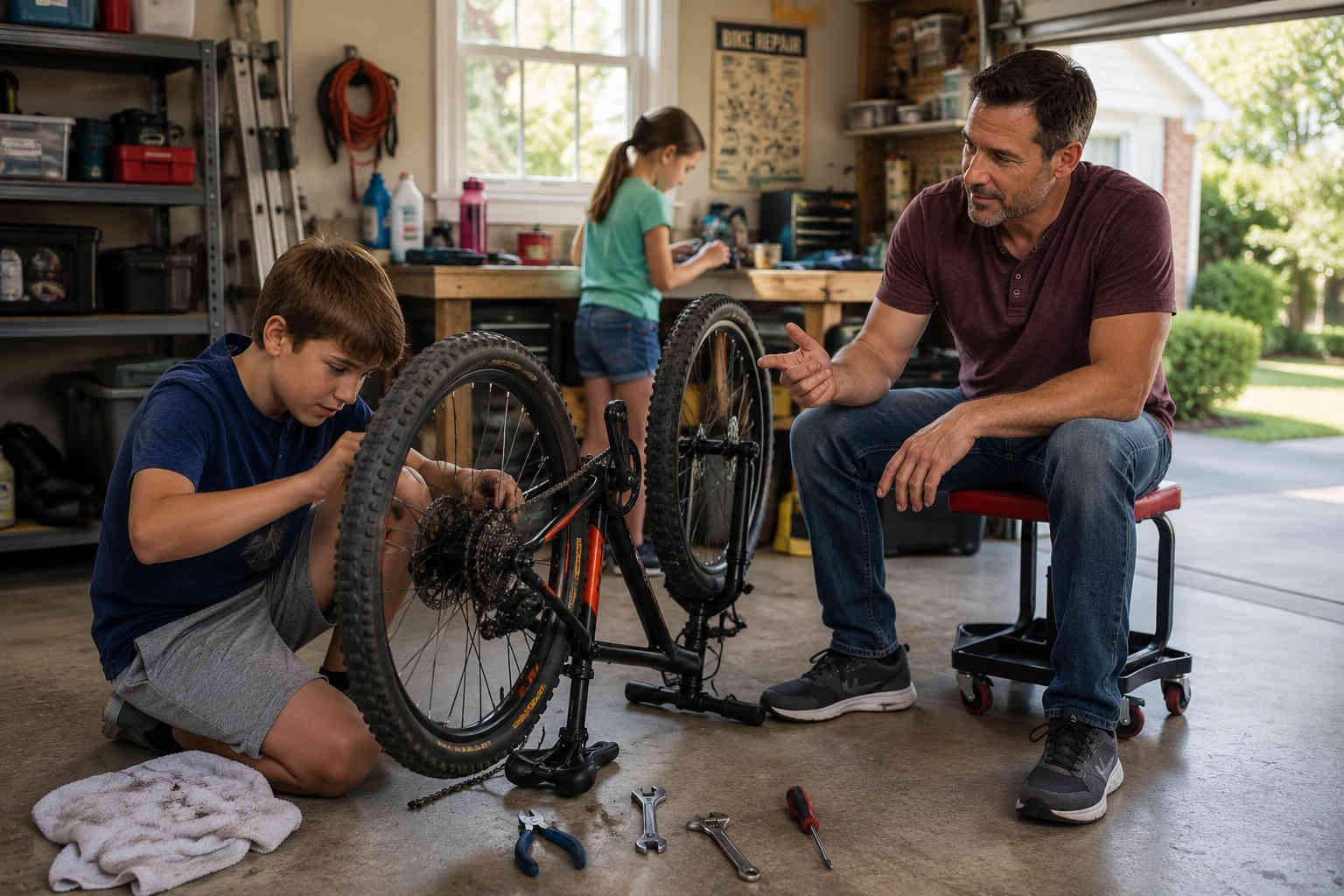
If your son's bicycle chain comes off, resist turning the moment into a demonstration of how quickly Dad can repair it. Give him the tools. Offer a clue if he needs one. Let him struggle just long enough to discover that frustration is not the same thing as failure.
The lesson is bigger than the bicycle: problems have solutions, and I can participate in finding them.
Teach Them The Difference Between “Hard” And “Bad”
Children often confuse difficulty with disaster. Homework is hard, therefore school is bad. A conversation is uncomfortable, therefore the relationship is bad. Dad's new house feels unfamiliar, therefore Dad's house is bad.
Ask a useful question: Is this bad, or is this hard?
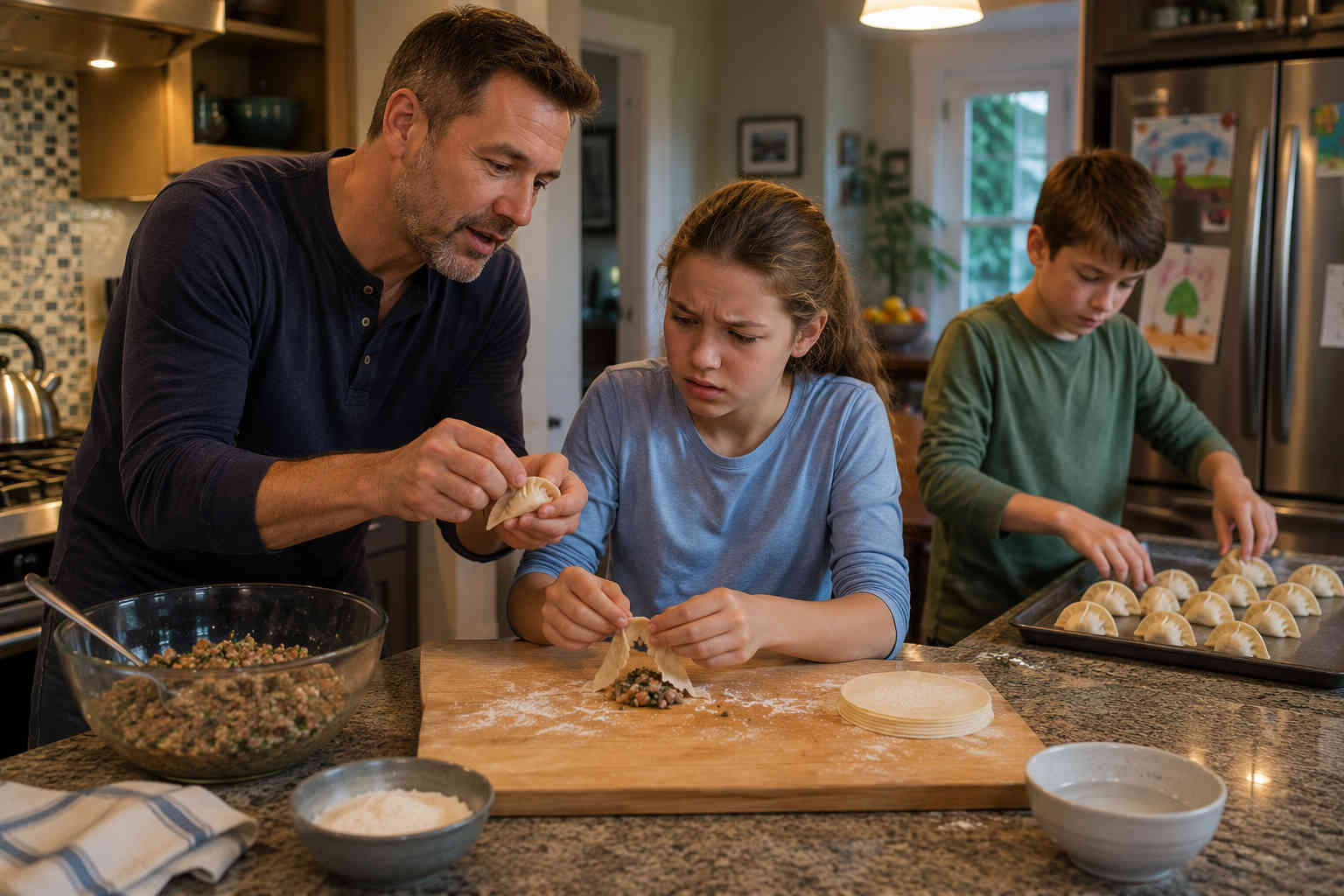
A torn dumpling wrapper, a difficult school assignment, an awkward new routine, or a frustrating conversation can all feel unpleasant without meaning something has gone terribly wrong. Hard things can be practiced. Hard things can improve. Hard things can eventually become familiar.
You are not minimizing your child's frustration. You are helping put it in the right category.
Use Your Own Mistakes As Training Material
Divorced fathers sometimes feel pressure to appear especially competent. Resist it. When you make a mistake that affects your child, admit it clearly.
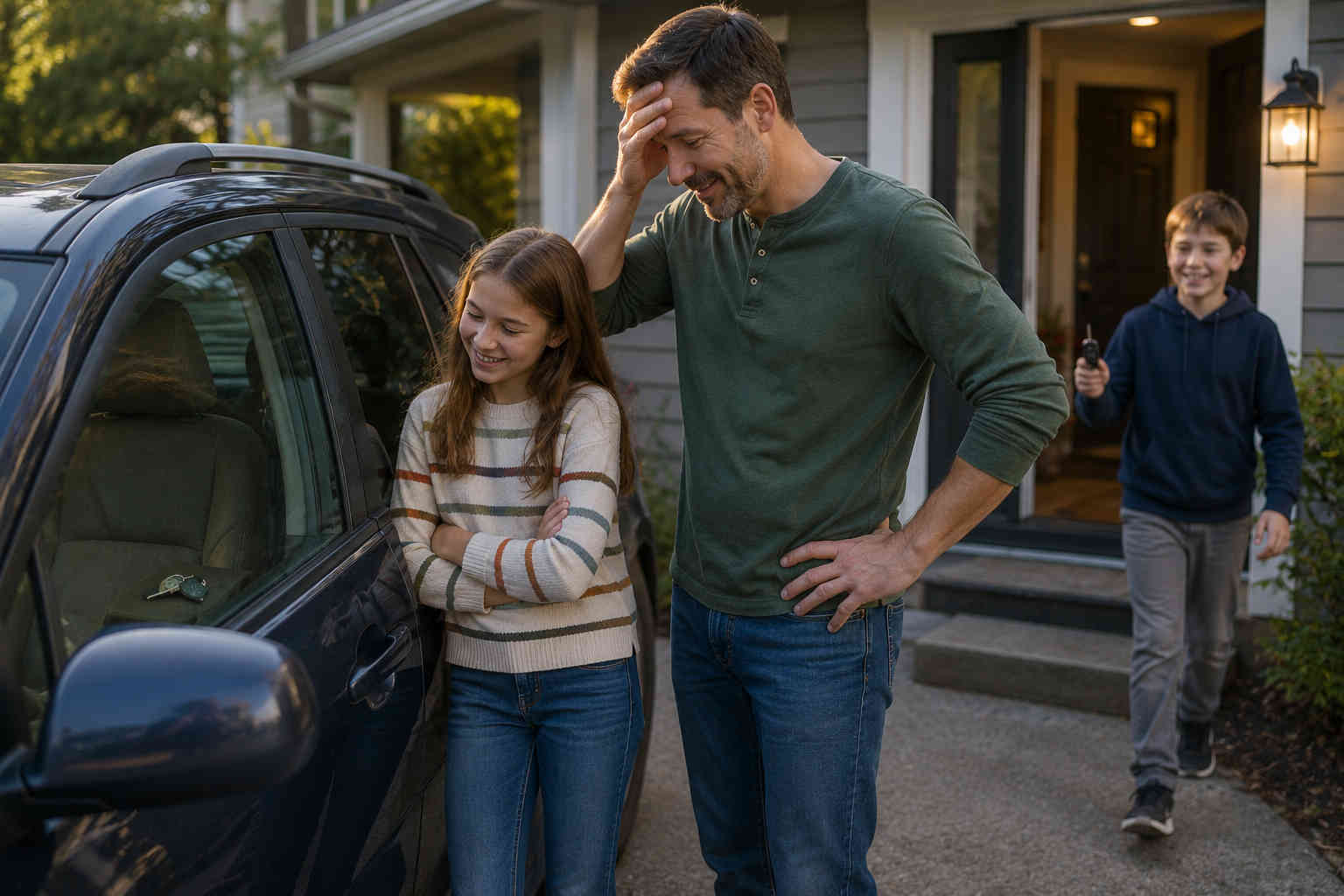
If you lock your keys in the car, forget an appointment, take the wrong exit, or assemble something backward, your reaction becomes part of the lesson. You can get angry, blame somebody, and make the mistake emotionally expensive for everyone—or you can acknowledge it and solve the next problem.
When the mistake is more personal, be direct: “I told you we would leave at three, and I kept working until four. That was not fair to you. Here is what I am going to do differently next time.”
Children need to see that mistakes do not require denial or shame. They require ownership and repair.
Do Not Turn Every Bad Mood Into A Divorce Conversation
After divorce, a father can become hyper-alert to every sign that his child might be struggling. Your daughter rolls her eyes and you wonder if she is angry about the custody schedule. Your son is quiet and you wonder whether he misses his mother. Your teenager gets irritated and you assume the divorce has finally caught up with him.
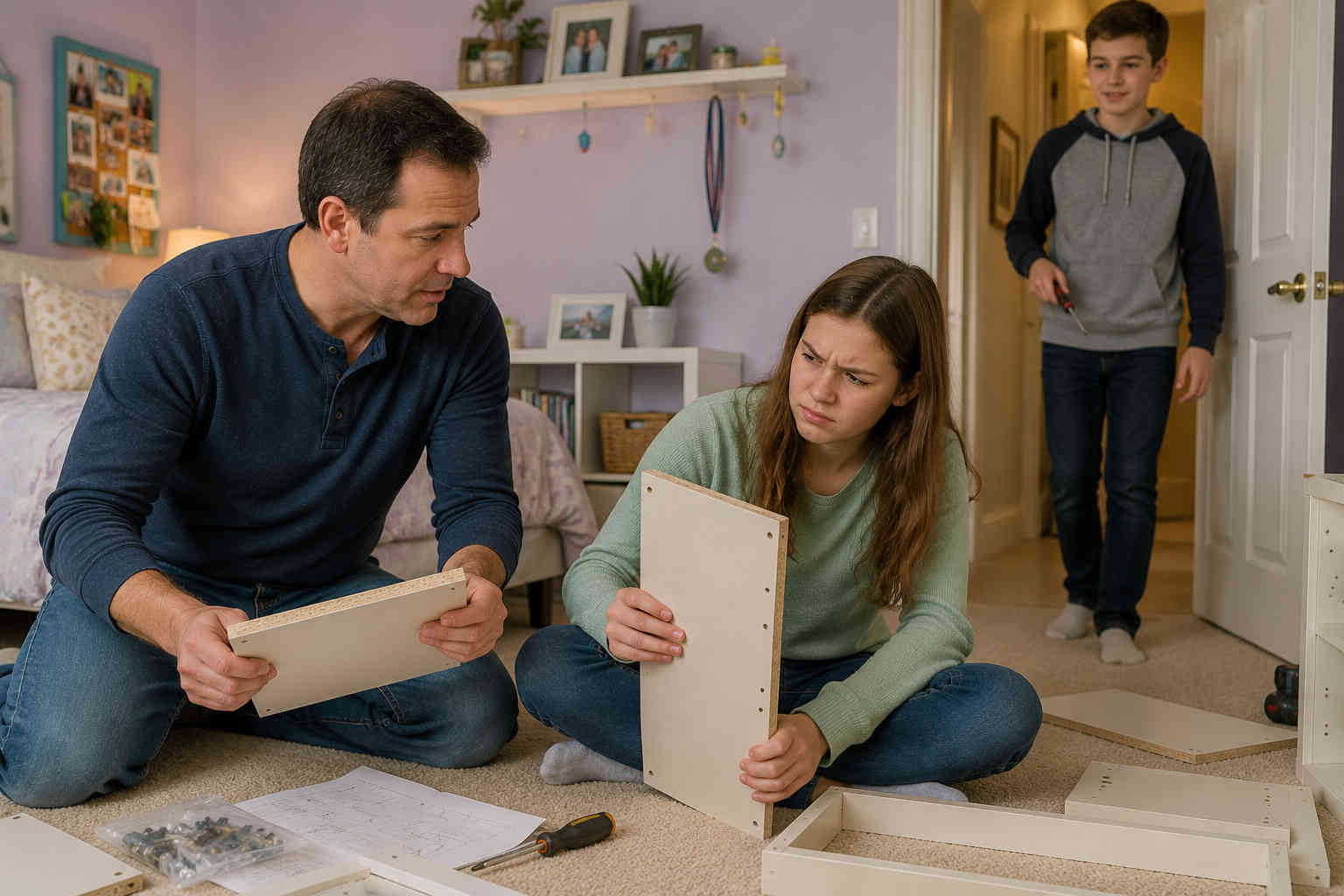
Sometimes a bad mood is just a bad mood. Sometimes the bookshelf will not line up, homework is irritating, a friend said something stupid, or your child did not sleep well.
Notice patterns, but do not make your child feel as though every emotion has to be explained through the divorce. Emotional resilience includes being allowed to experience ordinary frustration without Dad turning it into a diagnosis.
Keep A Quiet Record Of Victories
Do not merely tell children that they are strong. Give them evidence.
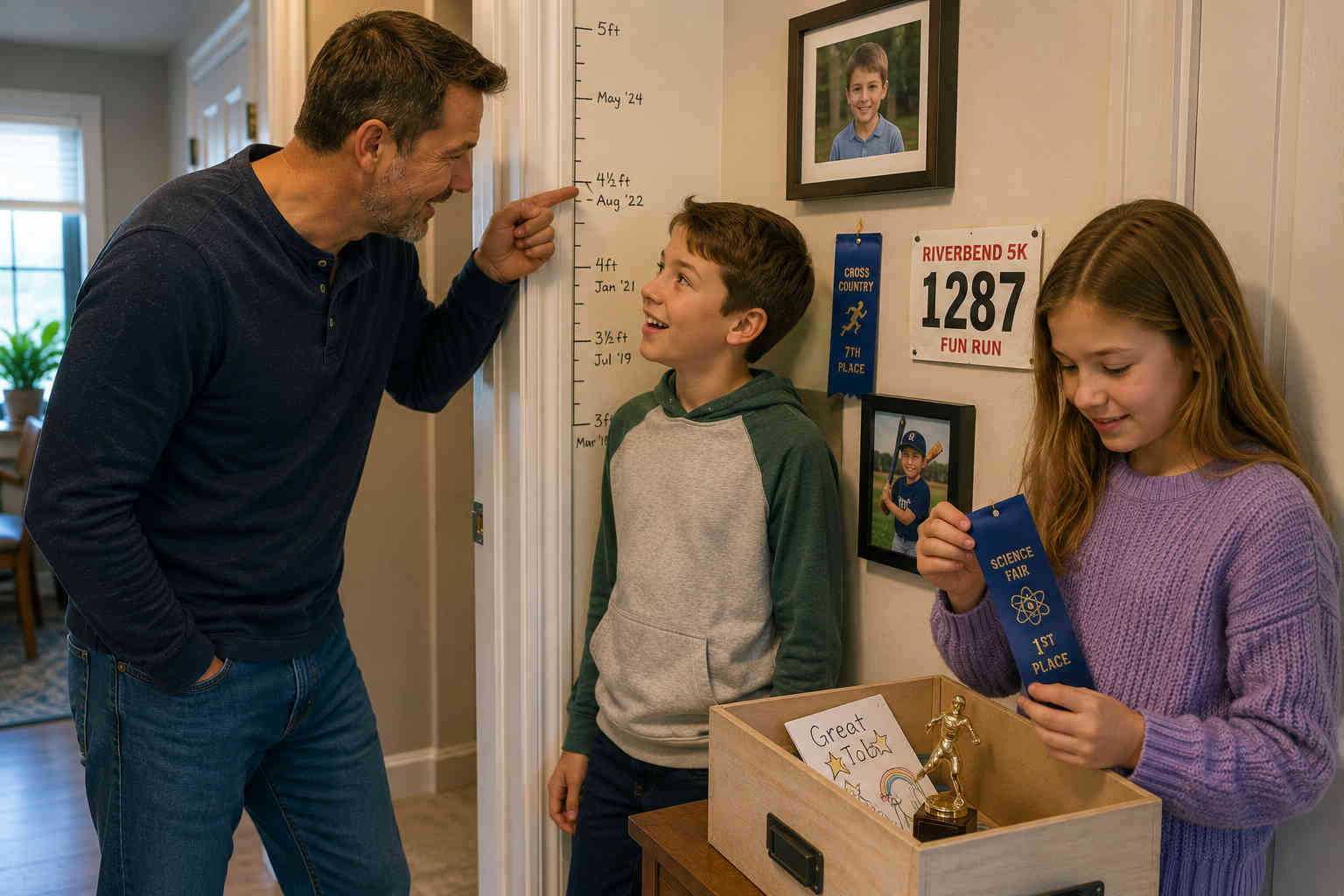
Remember the first overnight stay that was difficult. The first school year after the divorce. The first holiday divided between homes. The friendship problem they eventually solved. The class they thought they would fail. The activity they almost quit but finished.
Later, when another difficult moment arrives, remind them. “Remember when you thought you would never get used to the new school?” Your child may roll his eyes. That is fine. You are quietly giving him receipts.
The internal story gradually changes from “bad things happen to me” to “I have handled hard things before.” Those are very different identities.
Let Your Children Watch You Become A Beginner Again
There may be no resilience lesson more convincing than watching Dad rebuild his own life.
That does not require a dramatic reinvention. It can mean learning something you are not good at, taking a class, making new friends, improving your health, traveling somewhere unfamiliar, or developing a skill you always postponed.

If your children see you try pottery and produce a lopsided mess while they make better bowls than you, that is not embarrassing. It is useful. Dad can be a beginner. Dad can laugh at himself. Dad can improve.
Children absorb the larger message without a speech: the old chapter ended, but Dad did not stop developing.
A Better Definition Of Strength
A hardened child learns, “Do not trust anybody.” A resilient child learns, “I can recover when somebody disappoints me.” A hardened child learns, “Never need anyone.” A resilient child learns, “I can ask for help without becoming helpless.” A hardened child expects things to go wrong. A resilient child knows that when something does go wrong, there will still be a next move.
Your Children Do Not Need To Become “Tough” Because Of The Divorce
There is a difference between a hardened child and a resilient child.
A hardened child learns not to care too much. A resilient child learns that he can care deeply and survive disappointment. A hardened child avoids needing people. A resilient child develops relationships while knowing that disappointment does not erase his ability to recover.
You are not trying to convince your children that divorce was secretly good for them. You are not trying to manufacture hardship so they become stronger. Life will provide enough hardship on its own.
Your job is to help them discover what they can do after something difficult happens.
Let them be disappointed. Then ask what comes next. Let them encounter small problems. Then let them attempt solutions. Let them miss the other parent without competing with the feeling. Let plans fail occasionally and build Plan B together. Let them see you make mistakes and then watch you repair them.
When Your Child Needs More Than A Resilience Lesson
Resilience should never become an excuse for ignoring genuine distress. Pay attention to significant or persistent changes such as prolonged withdrawal, serious sleep problems, major academic decline, intense aggression, loss of interest in normal activities, severe anxiety, repeated physical complaints without a clear cause, or risky behavior in older children.
If something feels beyond the tools you and your child currently have, involve a pediatrician, school counselor, or qualified child mental-health professional. Getting appropriate help reinforces a resilience lesson rather than contradicting one: when a problem is bigger than your current tools, you find better tools.
The Goal Is Not To Give Them Their Old Life Back
You probably cannot restore your children's old family structure. Trying to recreate it indefinitely can keep everyone emotionally attached to something that no longer exists.
Your children need confidence in the life that is actually in front of them. They need to know Dad will show up. They need routines they can trust, permission to miss what they lost, freedom to love both parents, opportunities to solve problems, and a father who can listen without trying to erase every difficult emotion.
Most of all, they need evidence that disappointment is not permanent and change does not automatically mean disaster.
Years from now, your children may describe their parents' divorce as one of the hardest experiences of their childhood. That does not automatically mean you failed them. The more important question is what they learned about themselves while going through it.
The Resilience Lesson
Something Can Hurt Without Destroying Me
Something can change without ruining everything. I can lose the original plan and still create a good Plan B. I do not control everything that happens next, but I am not powerless either. That is emotional resilience.